 flip
flipMostaccioli with Honey and Spices
Mostaccioli with Honey and Spices
Why this dish? Artemisia traveled relentlessly — Rome, Florence, Venice, Naples, all the way to London to join her father Orazio. Hard honey-and-spice biscuits, which keep for weeks, were the ideal travel food: sturdy, fragrant, easy to slip into a chest between rolled canvases.
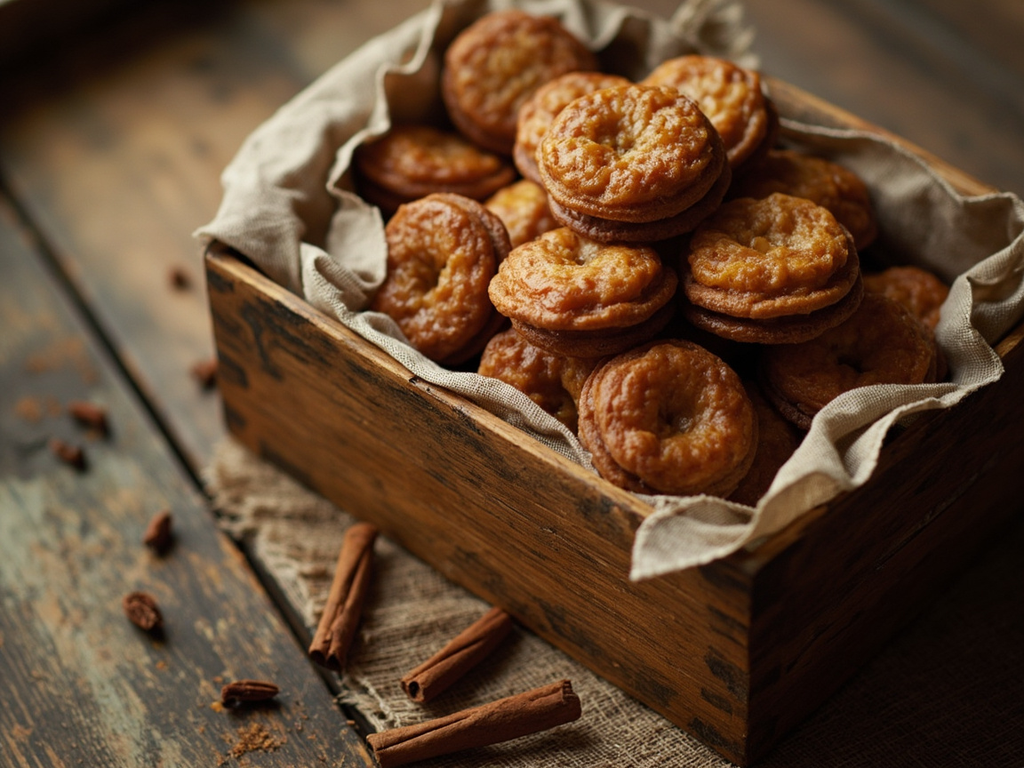
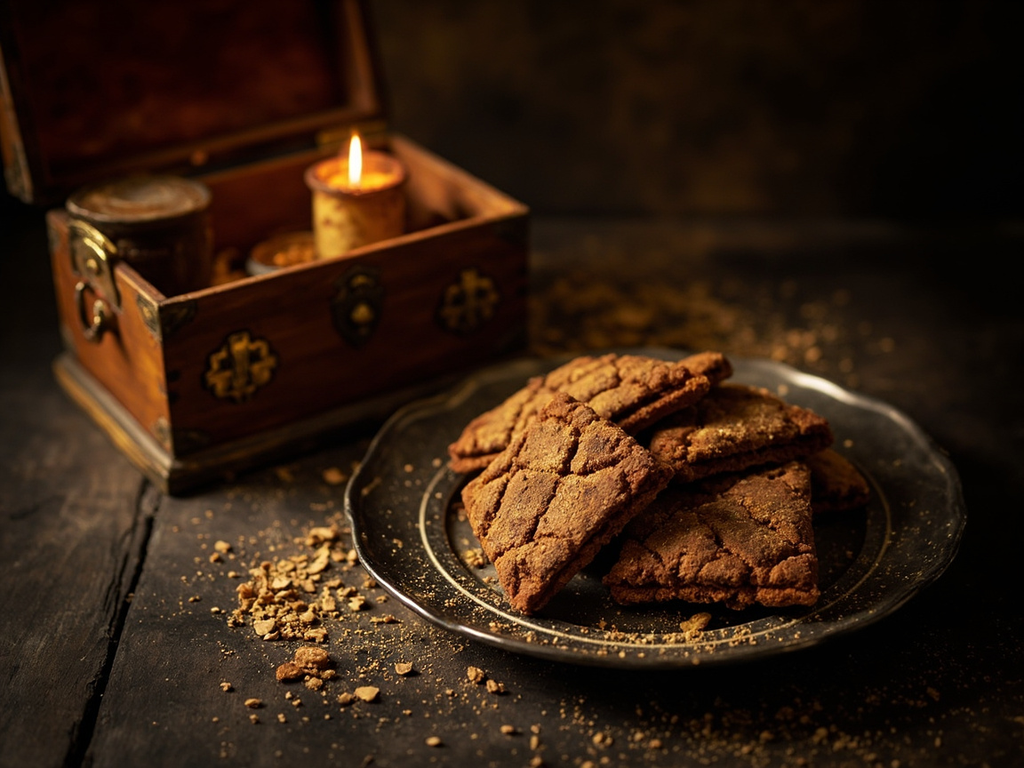
Small, hard, dry biscuits flavored with honey, cinnamon, clove, and cooked must, sometimes studded with almonds. They are dipped in a little wine or *sapa* to soften them. They keep for a long time and accompany long journeys.
I traveled more roads than a woman of my time should have known: from Rome to Florence, from Venice to Naples, and all the way to London across the seas. In my chest, near the brushes, I always slipped some of these *mostaccioli* — hard as stone, but they last for weeks and smell of spice. We kneaded them with honey and *sapa*, put in cinnamon and clove, and in the oven they took a dark crust. On the road, dipped in a finger of wine, they restored my courage: a little sweetness when the journey is long and the path uncertain.
- •Wheat flour — enough for a firm dough (structure)
- •Honey — generously (binder and sweetness)
- •Sapa (cooked must) — a drizzle (color and flavor)
- •Cinnamon, clove, nutmeg — a good pinch of each (spices)
- •Almonds — a handful, chopped (garnish (optional))
Mostaccioli with Honey and Spices
Small, hard, dry biscuits flavored with honey, cinnamon, clove, and cooked must, sometimes studded with almonds. They are dipped in a little wine or *sapa* to soften them. They keep for a long time and accompany long journeys.
Why this dish? Artemisia traveled relentlessly — Rome, Florence, Venice, Naples, all the way to London to join her father Orazio. Hard honey-and-spice biscuits, which keep for weeks, were the ideal travel food: sturdy, fragrant, easy to slip into a chest between rolled canvases.
I traveled more roads than a woman of my time should have known: from Rome to Florence, from Venice to Naples, and all the way to London across the seas. In my chest, near the brushes, I always slipped some of these *mostaccioli* — hard as stone, but they last for weeks and smell of spice. We kneaded them with honey and *sapa*, put in cinnamon and clove, and in the oven they took a dark crust. On the road, dipped in a finger of wine, they restored my courage: a little sweetness when the journey is long and the path uncertain.
Ingredients (period version)
- Wheat flour — enough for a firm dough (structure)
- Honey — generously (binder and sweetness)
- Sapa (cooked must) — a drizzle (color and flavor)
- Cinnamon, clove, nutmeg — a good pinch of each (spices)
- Almonds — a handful, chopped (garnish (optional))
Ingredients
- Wheat flour — 300 g (structure)
- Honey — 180 g (binder and sweetness)
- Sapa or dark honey (as substitute) — 2 tbsp (color and flavor)
- Ground cinnamon — 1 tsp (spice)
- Ground clove — 1/4 tsp (spice)
- Grated nutmeg — 1 pinch (spice)
- Chopped almonds — 50 g (garnish (optional))
- Warm water — a little, if needed (adjust dough)
Method
- Warm the honey with the *sapa* until fluid.
- Mix the flour and spices in a bowl, make a well, pour in the warm honey mixture, and knead into a firm, homogeneous dough (add a splash of warm water if too dry). Incorporate the almonds.
- Roll out the dough to 1 cm thick, cut into diamonds (the traditional shape of *mostaccioli*).
- Place on a baking sheet and bake at 170°C for 18 to 22 minutes, until firm and golden-brown.
- Let cool and harden completely. Store in an airtight container; they keep for several weeks.
- When serving, dip if desired in a little sweet wine or diluted *sapa*.
How it was made : *Mostaccioli* (from *mosto*, must) are very ancient keeping biscuits made of flour, honey, and cooked must, spiced with costly Oriental spices. Their low moisture content and honey's preservative power made them ideal travel and storage food, long before ship's biscuits. They appear from Roman antiquity to the confections of southern Italy today.
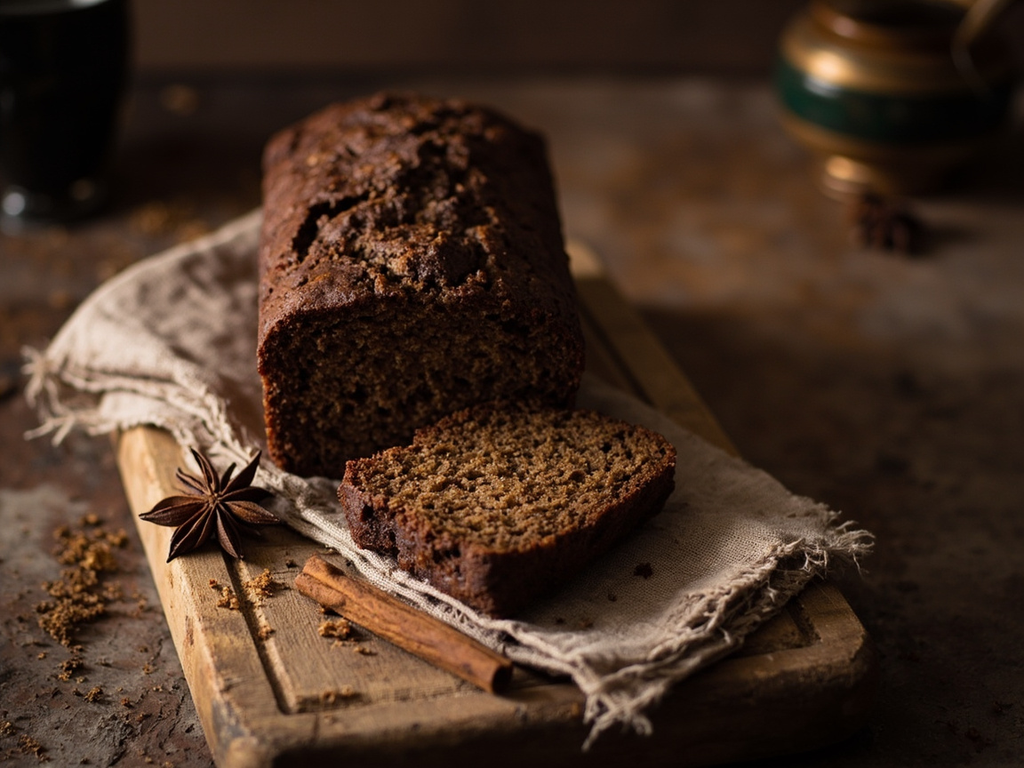
The contemporary twist : A veil of *sapa* to glaze them as they come out of the oven, and a stacked presentation on a dark board: diamonds of shadow and spice to offer in a travel box.
Sources : Bartolomeo Scappi, Opera dell'arte del cucinare, Venice, 1570 · Bartolomeo Sacchi (Platina), De honesta voluptate et valetudine, 1474
Artemisia Gentileschi · Charactorium