 flip
flipCarne-de-sol com macaxeira na nata
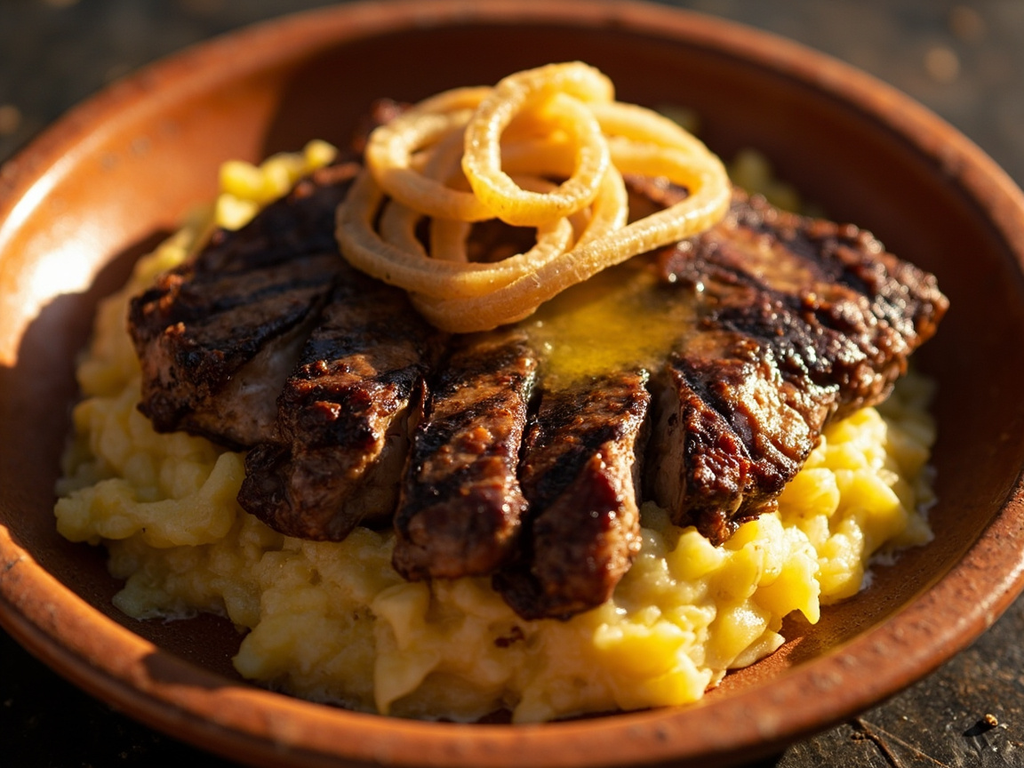
Carne-de-sol com macaxeira na nata
Why this dish? Chateaubriand was born in 1892 in Umbuzeiro, in the sertão of Paraíba, a harsh land where meat was preserved with salt and sun for lack of ice. Carne-de-sol is the taste of his Northeastern childhood, the one he carried with him as he became the greatest media magnate in Latin America.
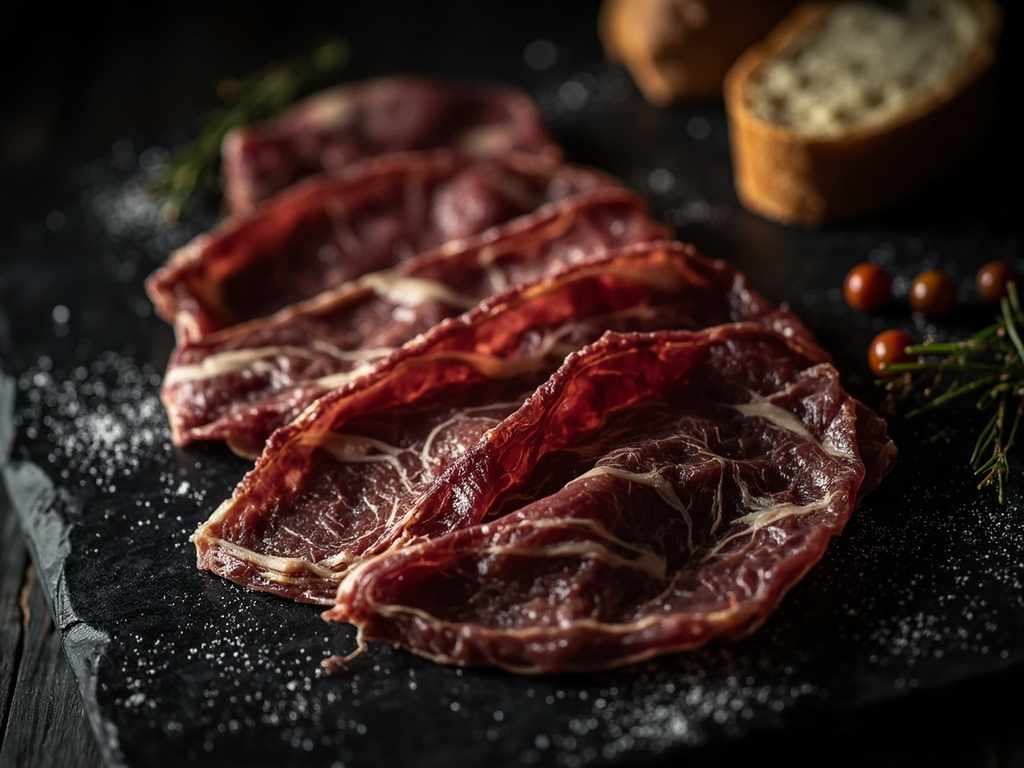
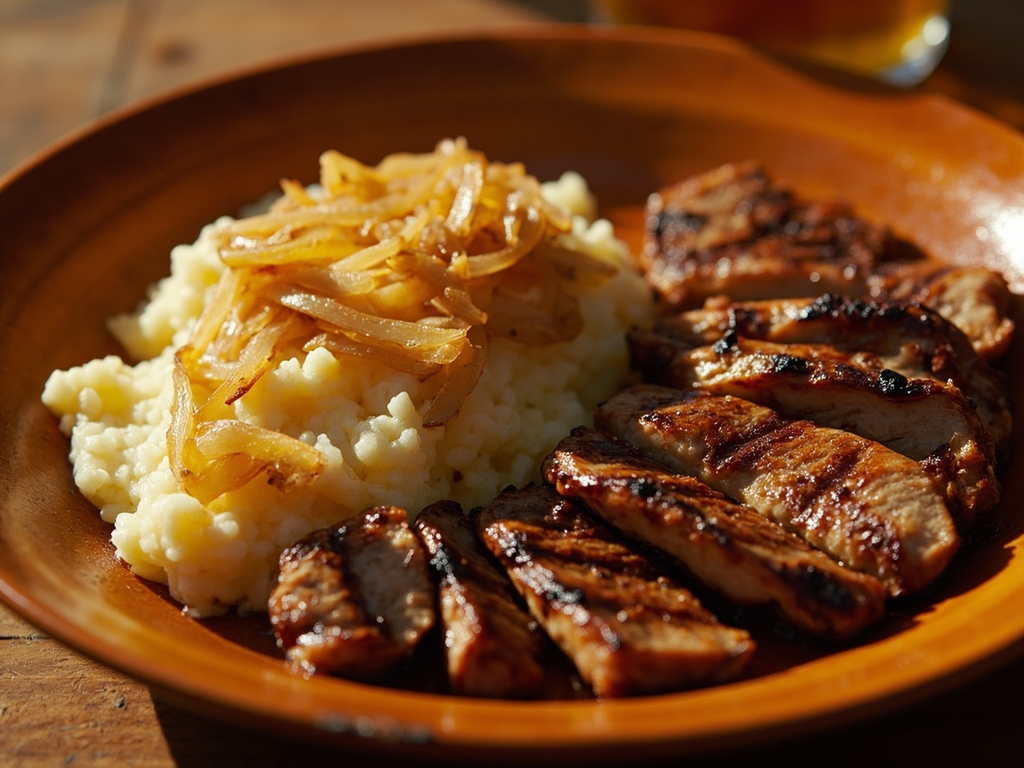
Lightly salted and air-dried beef, desalted then grilled, served with creamy boiled manioc (macaxeira). The emblematic dish of the Northeast, born of the need to preserve meat under the dry climate.
You see, I am a son of the sertão, and there, in the Paraíba of my childhood, nothing was wasted: meat was rubbed with coarse salt and hung in the scorching wind until it kept for weeks without rotting. This carne-de-sol was desalted in cool water in the morning, grilled over embers, and served with melting macaxeira drenched in cream. Since then I have dined in every palace in Europe, but no table in London has ever erased that taste.
- •Beef (bottom round or rump) — a fine piece (meat to preserve)
- •Coarse salt — in abundance (salting and preserving)
- •Manioc (macaxeira / aipim) — several roots (starch)
- •Milk cream (nata) — a bowl (creaminess)
- •Farm butter and onion — to taste (garnish)
Carne-de-sol com macaxeira na nata
Lightly salted and air-dried beef, desalted then grilled, served with creamy boiled manioc (macaxeira). The emblematic dish of the Northeast, born of the need to preserve meat under the dry climate.
Why this dish? Chateaubriand was born in 1892 in Umbuzeiro, in the sertão of Paraíba, a harsh land where meat was preserved with salt and sun for lack of ice. Carne-de-sol is the taste of his Northeastern childhood, the one he carried with him as he became the greatest media magnate in Latin America.
You see, I am a son of the sertão, and there, in the Paraíba of my childhood, nothing was wasted: meat was rubbed with coarse salt and hung in the scorching wind until it kept for weeks without rotting. This carne-de-sol was desalted in cool water in the morning, grilled over embers, and served with melting macaxeira drenched in cream. Since then I have dined in every palace in Europe, but no table in London has ever erased that taste.
Ingredients (period version)
- Beef (bottom round or rump) — a fine piece (meat to preserve)
- Coarse salt — in abundance (salting and preserving)
- Manioc (macaxeira / aipim) — several roots (starch)
- Milk cream (nata) — a bowl (creaminess)
- Farm butter and onion — to taste (garnish)
Ingredients
- Carne-de-sol (or flank/rump salted 24 h at home) — 600 g (main meat)
- Coarse salt — 150 g (for home salting) (salting)
- Fresh or frozen manioc (macaxeira) — 800 g (melting starch)
- Thick cream — 200 g (topping)
- Butter — 40 g (cooking)
- Onion — 1 large (grilled garnish)
Method
- For homemade carne-de-sol: cover the meat with coarse salt on all sides, refrigerate 24 h, then rinse and let air-dry in the cool for half a day.
- Desalt the meat (store-bought or homemade) in cold water for 1 to 2 hours, changing the water.
- Peel the manioc, remove the central fiber, and boil in salted water until very tender (30 to 40 min).
- Drain the manioc, top with cream and a knob of butter, keep warm.
- Dry the meat, sear it over high heat in butter, then finish cooking according to thickness; it should remain juicy inside.
- Brown the sliced onion in the same fat.
- Slice the meat, serve with creamy manioc and browned onion.
How it was made : Before refrigeration, the Northeastern sertão preserved beef by light salting and wind-drying — carne-de-sol, less salty and drier than the carne-seca used in feijoada. It was a response to the climate and extensive cattle ranching. The meat was grilled over embers and served with manioc, Brazil's staple starch inherited from indigenous peoples.
The contemporary twist : Shred the grilled carne-de-sol and serve as small bites on roasted manioc rounds, a Northeastern tapas-style appetizer.
Sources : Luís da Câmara Cascudo, História da Alimentação no Brasil, 1967 · Câmara Cascudo, Dicionário do Folclore Brasileiro, 1954
Assis Chateaubriand · Charactorium