 flip
flipHoneyed Wine with Cinnamon and Pomegranate
Honeyed Wine with Cinnamon and Pomegranate
Why this dish? Wine and libations were central to the cults of Astarte; and cinnamon (cassia), a luxury spice, was precisely traded by Phoenician merchants. A cup of honeyed wine, perfumed with cinnamon and tart with pomegranate, evokes the sensual splendor of the goddess who, under medieval pen, became the vain Astaroth.
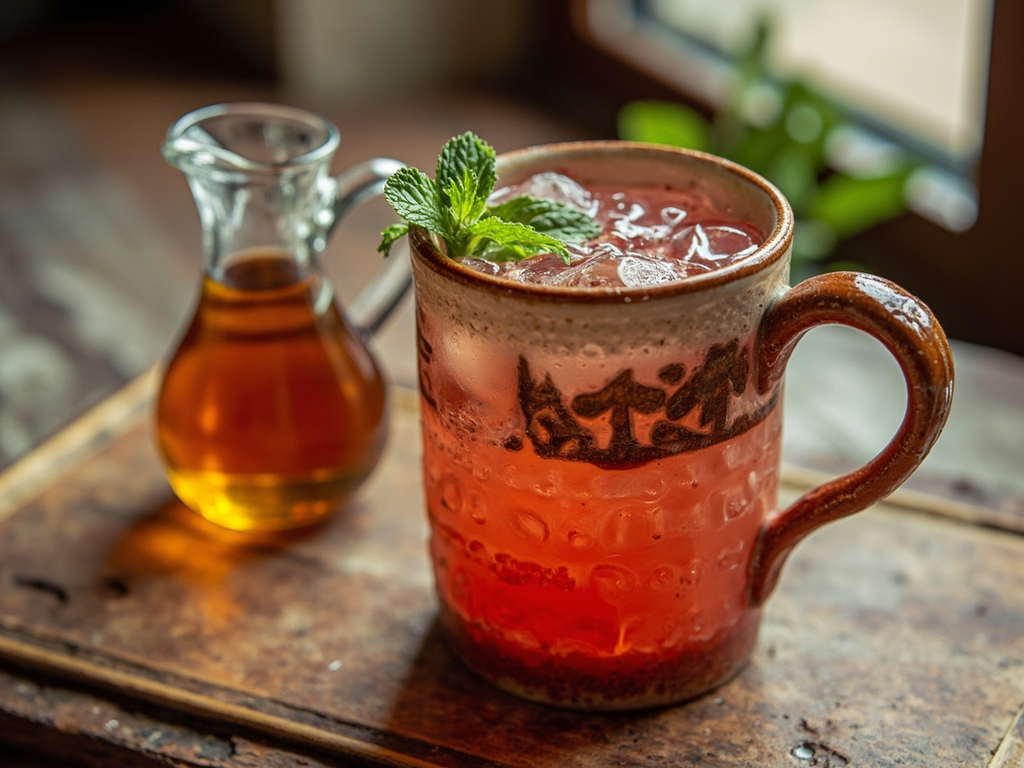
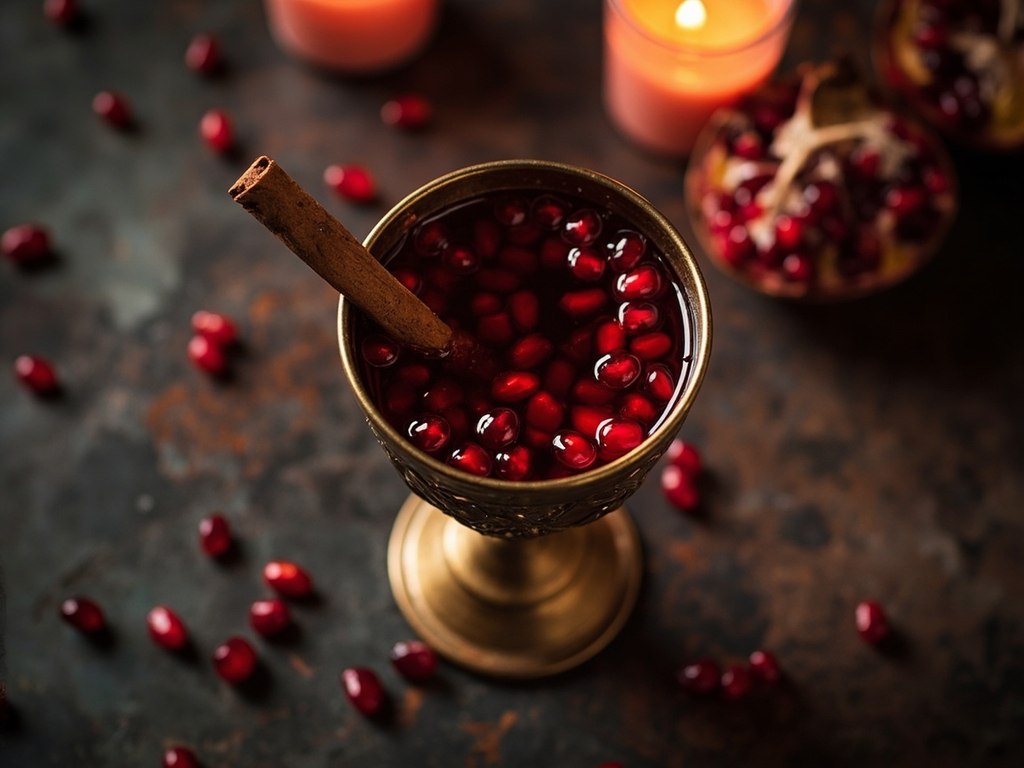
Red wine warmed with honey, cinnamon and pomegranate juice, served hot or cold. Sweet, spicy and pleasantly tart, it is the festive drink — the same that was also poured as a libation on the altar.
Raise the cup, and drink to my vanity, for it is worth as much as yours. For me, the wine of the hillsides was warmed, honey was melted into it, and that fragrant bark that my merchants brought from the ends of the earth was grated into it. A tear of pomegranate to sting the tongue, and the first sip was poured upon the altar stone — for the goddess, that is, for me. Drink slowly: a prince never hurries.
- •Red wine — a pitcher (base)
- •Honey — to taste (sweetness)
- •Cinnamon (cassia) — one stick (luxury spice, signature)
- •Pomegranate juice — a cup (acidity and color)
- •Water — to dilute the wine (lightening (ancient custom))
Honeyed Wine with Cinnamon and Pomegranate
Red wine warmed with honey, cinnamon and pomegranate juice, served hot or cold. Sweet, spicy and pleasantly tart, it is the festive drink — the same that was also poured as a libation on the altar.
Why this dish? Wine and libations were central to the cults of Astarte; and cinnamon (cassia), a luxury spice, was precisely traded by Phoenician merchants. A cup of honeyed wine, perfumed with cinnamon and tart with pomegranate, evokes the sensual splendor of the goddess who, under medieval pen, became the vain Astaroth.
Raise the cup, and drink to my vanity, for it is worth as much as yours. For me, the wine of the hillsides was warmed, honey was melted into it, and that fragrant bark that my merchants brought from the ends of the earth was grated into it. A tear of pomegranate to sting the tongue, and the first sip was poured upon the altar stone — for the goddess, that is, for me. Drink slowly: a prince never hurries.
Ingredients (period version)
- Red wine — a pitcher (base)
- Honey — to taste (sweetness)
- Cinnamon (cassia) — one stick (luxury spice, signature)
- Pomegranate juice — a cup (acidity and color)
- Water — to dilute the wine (lightening (ancient custom))
Ingredients
- Red wine — 500 ml (base)
- Honey — 3 tbsp (sweetness)
- Cinnamon stick — 1 (signature spice)
- Pomegranate juice — 150 ml (acidity and color)
- Pomegranate seeds — 1 handful (decoration and freshness)
Method
- Pour the wine, honey, pomegranate juice and cinnamon stick into a saucepan.
- Heat gently without boiling, stirring to dissolve the honey; let infuse for 10 minutes at a low simmer.
- Taste and adjust honey according to the tartness of the pomegranate.
- Serve warm in cups, or let cool and serve chilled in summer.
- Garnish each cup with a few pomegranate seeds.
How it was made : In the ancient Levant and throughout the Mediterranean, wine was commonly flavored (honey, spices, resin, sea water) and drunk diluted with water — drinking wine neat was considered excessive. Cinnamon and cassia, imported via Phoenician trade routes, were among the most precious spices, and the pomegranate, emblematic fruit of Astarte, adorned even the columns of her temples.
The contemporary twist : Non-alcoholic version for the family table: replace the wine with red grape juice and a dash of pomegranate vinegar — the same deep red color, the same spice aroma, named 'Queen of Heaven's Cup'.
Astaroth · Charactorium