 flip
flipGravlax (Dill-Cured Salmon)
Gravlax (Dill-Cured Salmon)
Why this dish? When entertaining—and Strindberg, despite his torments, loved tables where the world was remade—the cured salmon reigned at the center of the smörgåsbord. A prestige dish from northern rivers, it marked feast days for the Scandinavian bourgeoisie.
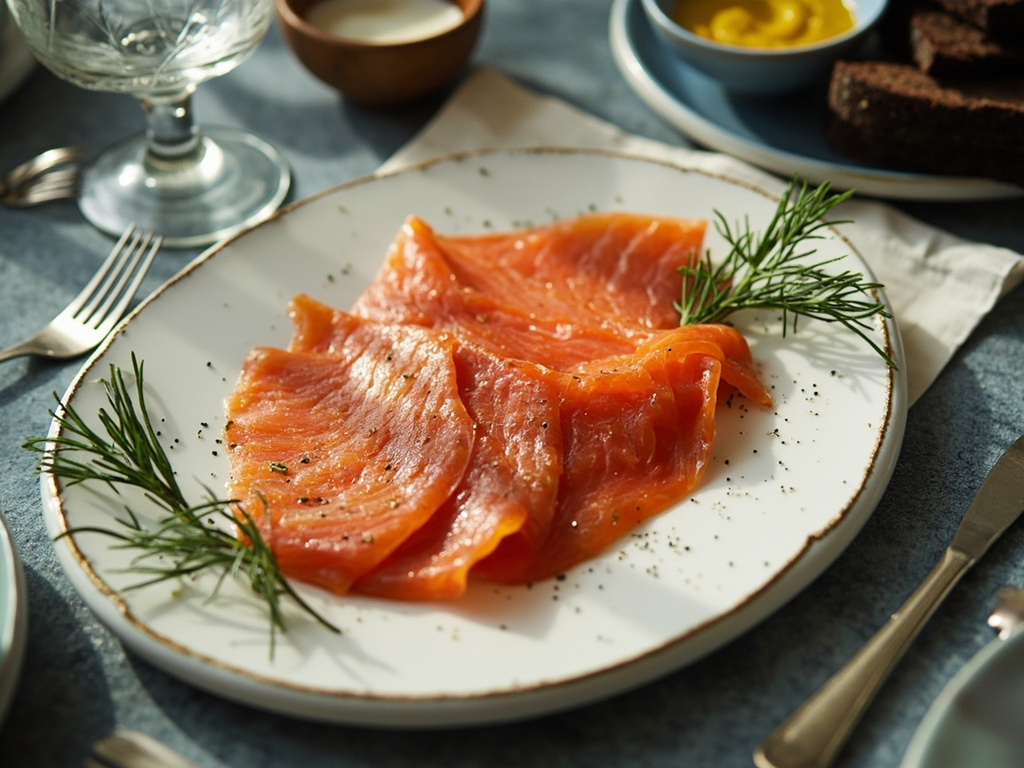
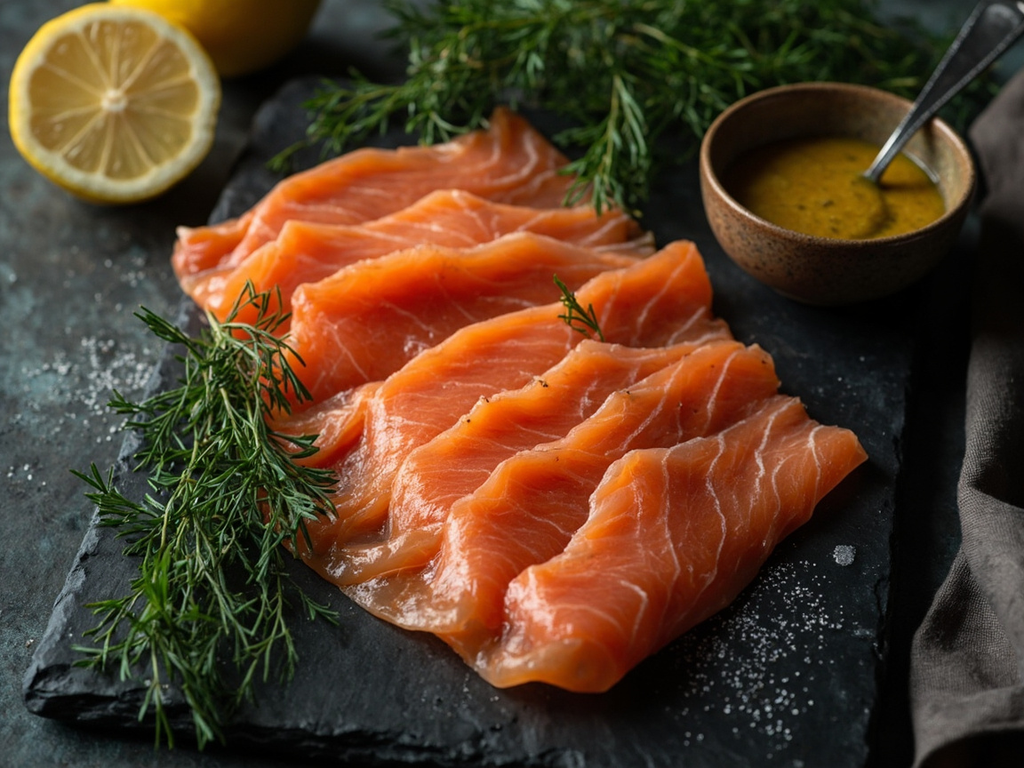
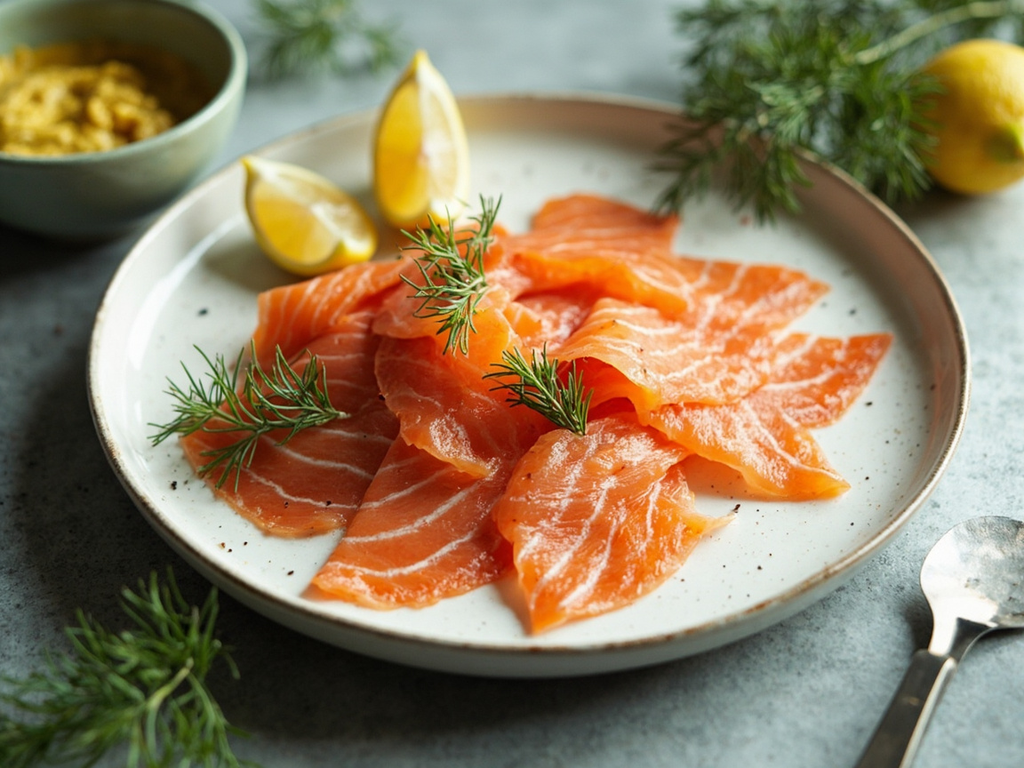
A salmon fillet buried for several days in a mixture of salt, sugar, and dill, without cooking. The flesh becomes silky and translucent; it is sliced thinly and served with a mustard-dill sauce (hovmästarsås).
Here is the dish for great occasions, the one brought in with a little ceremony. The salmon is not cooked: it is buried—gravlax, the salmon of the pit—in salt and sugar, under a blanket of dill, and left to ripen for three days under a weight, like an idea left to mature. Slice it thin as letter paper, coat it with a sauce where mustard and dill quarrel, and you will see the guests fall silent for a minute—which, believe me, is already a miracle.
- •Fresh salmon fillet — a fine piece (fish)
- •Coarse salt — two parts (curing)
- •Sugar — one part (balance)
- •Dill — in abundance (signature aroma)
- •Crushed pepper — a little (spice)
Gravlax (Dill-Cured Salmon)
A salmon fillet buried for several days in a mixture of salt, sugar, and dill, without cooking. The flesh becomes silky and translucent; it is sliced thinly and served with a mustard-dill sauce (hovmästarsås).
Why this dish? When entertaining—and Strindberg, despite his torments, loved tables where the world was remade—the cured salmon reigned at the center of the smörgåsbord. A prestige dish from northern rivers, it marked feast days for the Scandinavian bourgeoisie.
Here is the dish for great occasions, the one brought in with a little ceremony. The salmon is not cooked: it is buried—gravlax, the salmon of the pit—in salt and sugar, under a blanket of dill, and left to ripen for three days under a weight, like an idea left to mature. Slice it thin as letter paper, coat it with a sauce where mustard and dill quarrel, and you will see the guests fall silent for a minute—which, believe me, is already a miracle.
Ingredients (period version)
- Fresh salmon fillet — a fine piece (fish)
- Coarse salt — two parts (curing)
- Sugar — one part (balance)
- Dill — in abundance (signature aroma)
- Crushed pepper — a little (spice)
Ingredients
- Salmon fillet with skin, very fresh — 800 g (fish)
- Coarse salt — 60 g (curing)
- Sugar — 50 g (balance)
- Crushed black pepper — 1 tsp (spice)
- Fresh dill — 2 bunches (signature aroma)
- Mild mustard, vinegar, oil, dill (for the sauce) — for hovmästarsås (accompaniment)
Method
- Mix the salt, sugar, and pepper. Coarsely chop one bunch of dill.
- Place the fillet skin-side down in a dish, rub the flesh with the salt-sugar mixture, and cover with chopped dill.
- Cover with plastic wrap, place a board and a weight on top, then refrigerate for 48 to 72 hours, turning the fillet once a day and basting with the released juices.
- Prepare the sauce: whisk together mustard, sugar, vinegar, then emulsify with oil and add chopped dill.
- Wipe the fillet, slice it very thinly on the bias, and serve with the sauce, bread, and lemon wedges.
How it was made : Gravlax descends from an old medieval Scandinavian method where fish fermented buried in sand and salt along riverbanks. In the 19th century, fermentation gave way to simple salt-and-sugar curing, yielding the refined version of bourgeois tables.
The contemporary twist : A few drops of aquavit or a grating of lemon zest in the curing mixture add a very contemporary Nordic freshness.
Sources : Charles Emil Hagdahl, Kokkonsten som vetenskap och konst (1879)
August Strindberg · Charactorium