 flip
flipImperial Kitchen Peking Duck
Imperial Kitchen Peking Duck
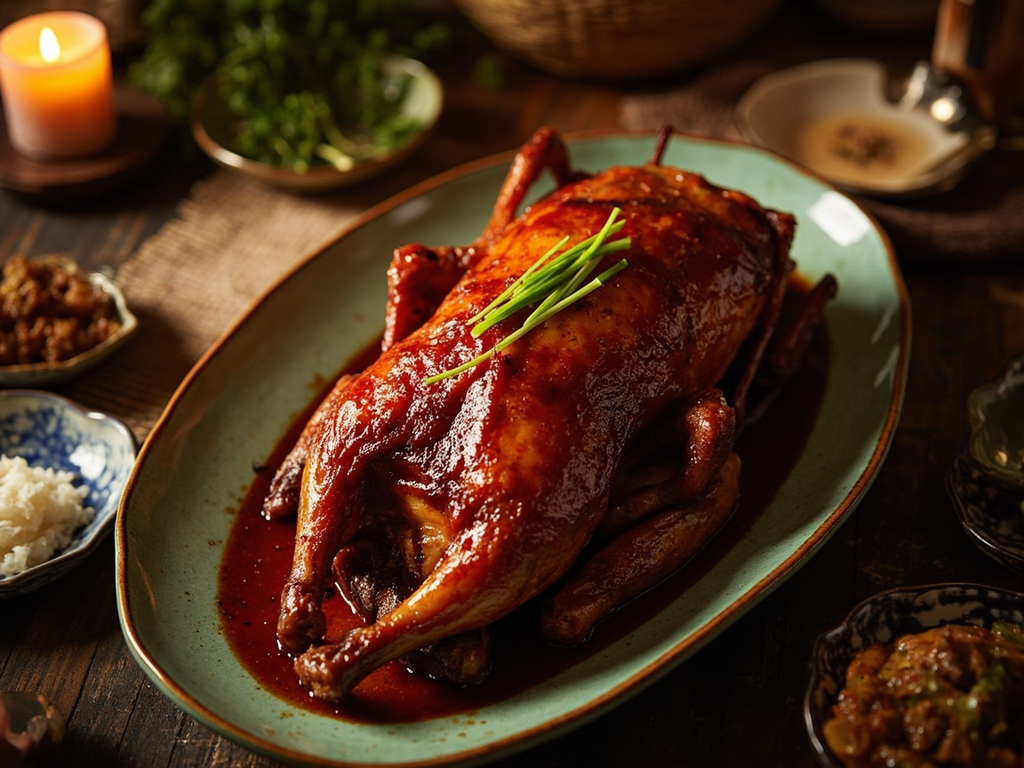
Why this dish? Peking duck was among the dishes appreciated by Ci'an, served at court meals. An iconic dish of Beijing elevated by Qing kitchens, it crowned banquet days at the Forbidden City.
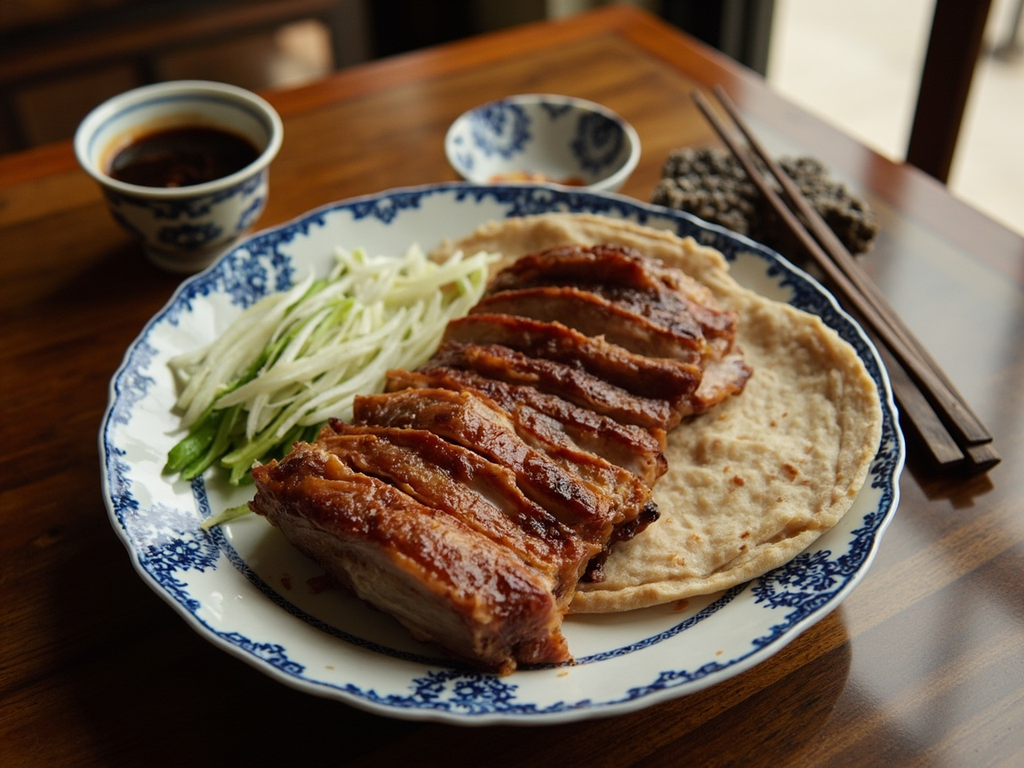
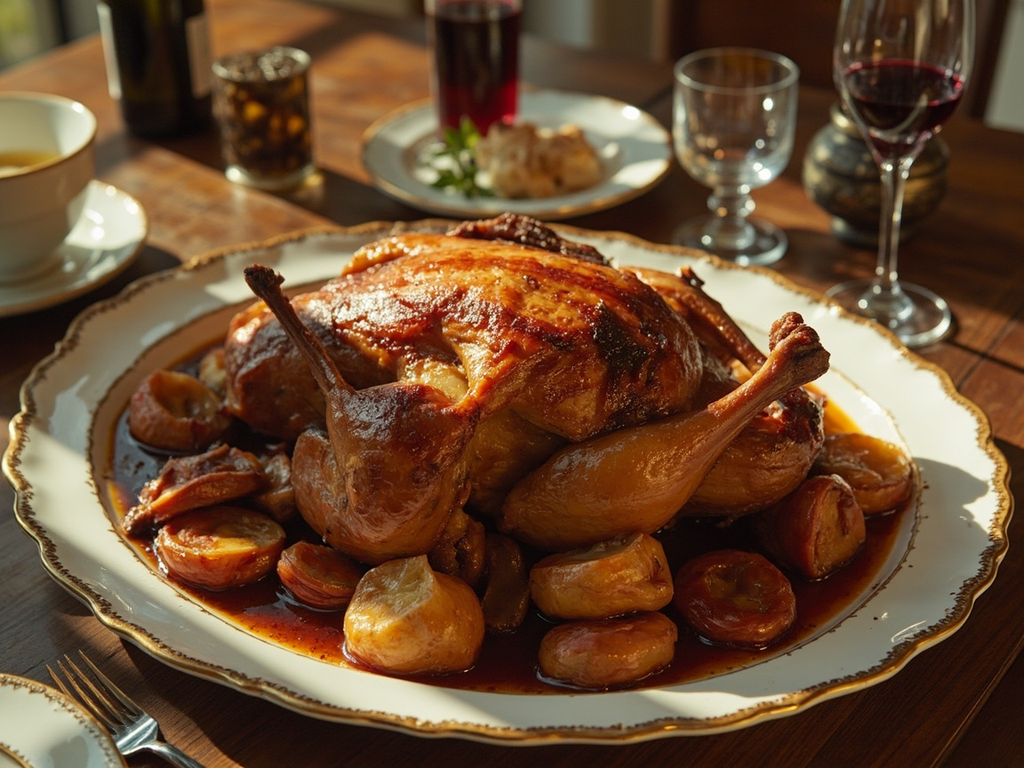
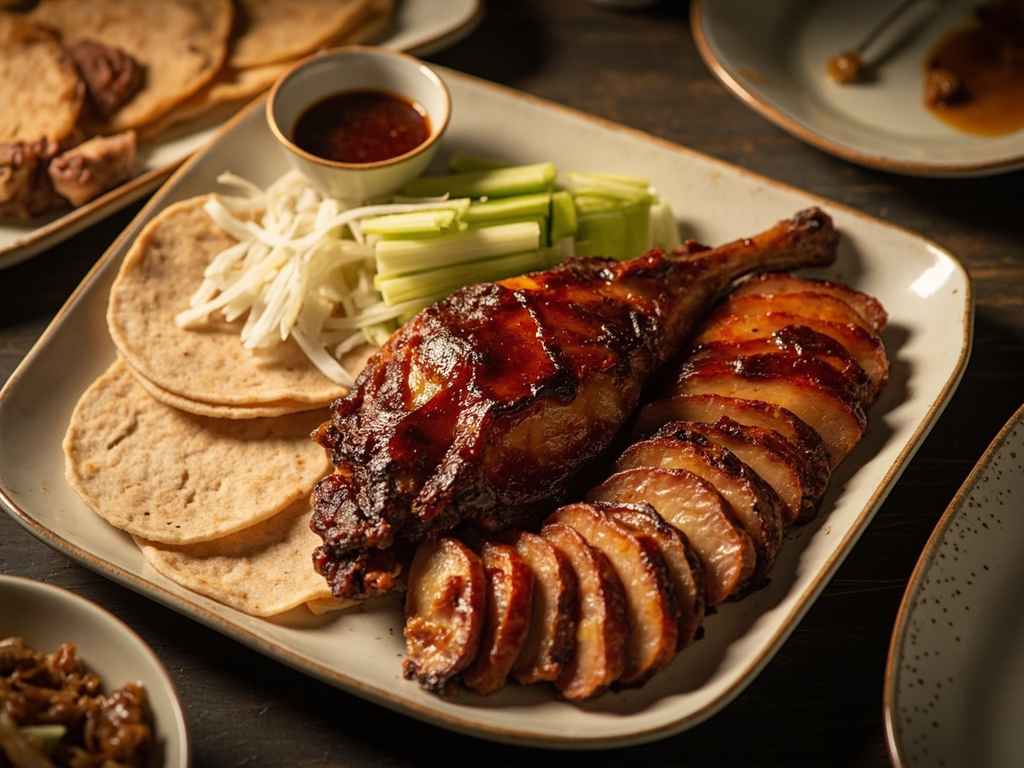
A duck with lacquered, amber, crispy skin, whose meat is enjoyed wrapped in thin pancakes with scallion and sweet soy sauce. The splendor of Beijing served with ceremony.
Here is the dish of festive days, the one brought out when the household receives guests. The secret is not in the sauce but in the skin: air is blown under the skin, it is coated with maltose, then left to dry in the wind before being roasted slowly, until it sings under the knife. At my table, the duck is sliced before the guests, and each rolls their bite in a pancake thin as a veil. But know this: on fasting days, I do not touch it — everything in its time, and pleasure then yields to prayer.
- •Fat Peking duck — one, whole (centerpiece)
- •Maltose (麥芽糖) — for glazing (amber crispy lacquer)
- •Wheat pancakes (薄餅) — a basket (wrapper)
- •Chinese scallion — julienned (pungent freshness)
- •Sweet soy sauce (甜麵醬) — a bowl (condiment)
Imperial Kitchen Peking Duck
A duck with lacquered, amber, crispy skin, whose meat is enjoyed wrapped in thin pancakes with scallion and sweet soy sauce. The splendor of Beijing served with ceremony.
Why this dish? Peking duck was among the dishes appreciated by Ci'an, served at court meals. An iconic dish of Beijing elevated by Qing kitchens, it crowned banquet days at the Forbidden City.
Here is the dish of festive days, the one brought out when the household receives guests. The secret is not in the sauce but in the skin: air is blown under the skin, it is coated with maltose, then left to dry in the wind before being roasted slowly, until it sings under the knife. At my table, the duck is sliced before the guests, and each rolls their bite in a pancake thin as a veil. But know this: on fasting days, I do not touch it — everything in its time, and pleasure then yields to prayer.
Ingredients (period version)
- Fat Peking duck — one, whole (centerpiece)
- Maltose (麥芽糖) — for glazing (amber crispy lacquer)
- Wheat pancakes (薄餅) — a basket (wrapper)
- Chinese scallion — julienned (pungent freshness)
- Sweet soy sauce (甜麵醬) — a bowl (condiment)
Ingredients
- Whole duck (for roasting, about 2 kg) — 1 (main piece)
- Maltose or honey — 3 tbsp diluted in hot water (crispy glaze)
- Rice vinegar — 1 tbsp (helps crisp the skin)
- Duck pancakes (mandarin crepes) — 12 (wrapper)
- Scallions / spring onions — 4, cut into thin strips (garnish)
- Cucumber — 1/2, cut into sticks (freshness)
- Hoisin sauce or sweet bean sauce (tianmianjiang) — 4 tbsp (condiment)
Method
- Briefly blanch the duck to tighten the skin, then pat dry.
- Brush the skin with the maltose/vinegar/water mixture and let dry in the refrigerator, uncovered, ideally overnight.
- Roast in the oven at 180°C for about 1 hour 30 minutes, basting little, until the skin is amber brown and crispy.
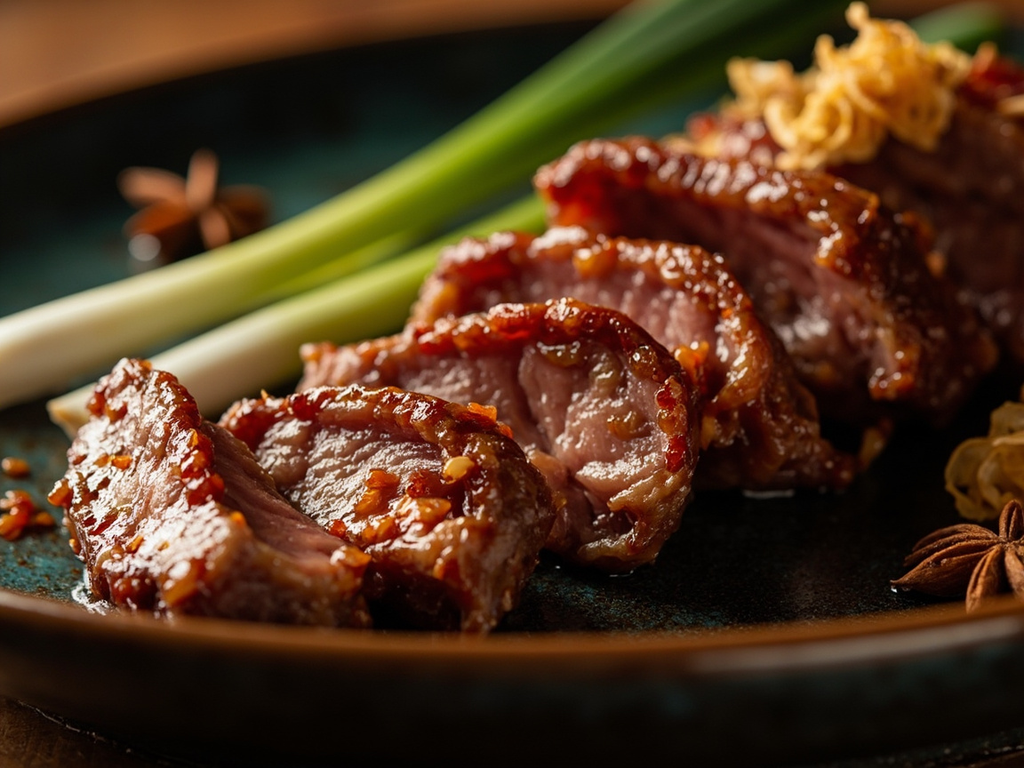
- Let rest 10 minutes, then thinly slice skin and meat.
- Steam the pancakes to warm them.
- Fill each pancake with sauce, scallion, cucumber, and a few slices of duck, roll, and enjoy.
How it was made : During the Qing era, duck was often roasted in closed ovens or hung over fruitwood embers. The drying of the skin and maltose glaze, inherited from court kitchens, produced the desired crispness. The service by slicing, piece by piece, was part of the banquet spectacle.
The contemporary twist : Present the slices fanned out on a slate, pancakes folded into cones, and a trio of condiments in spoons, tasting-style.
Ci'an · Charactorium