 flip
flipPomeranian Roast Goose with Apples and Marjoram (Martinsgans)
Pomeranian Roast Goose with Apples and Marjoram (Martinsgans)
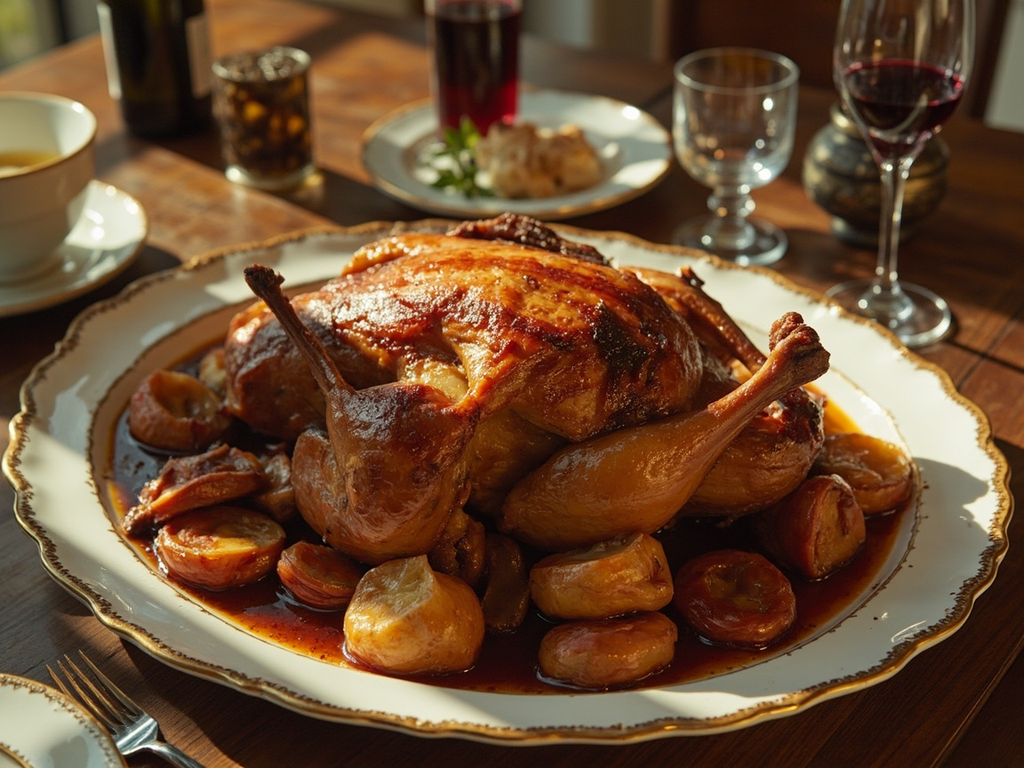
Why this dish? Friedrich's Pomerania was goose-raising country; the St. Martin's goose (November 11) marked the transition to winter and the only real roast a modest household allowed itself. The painter, raised in this Lutheran calendrical ritual, knew its scent.
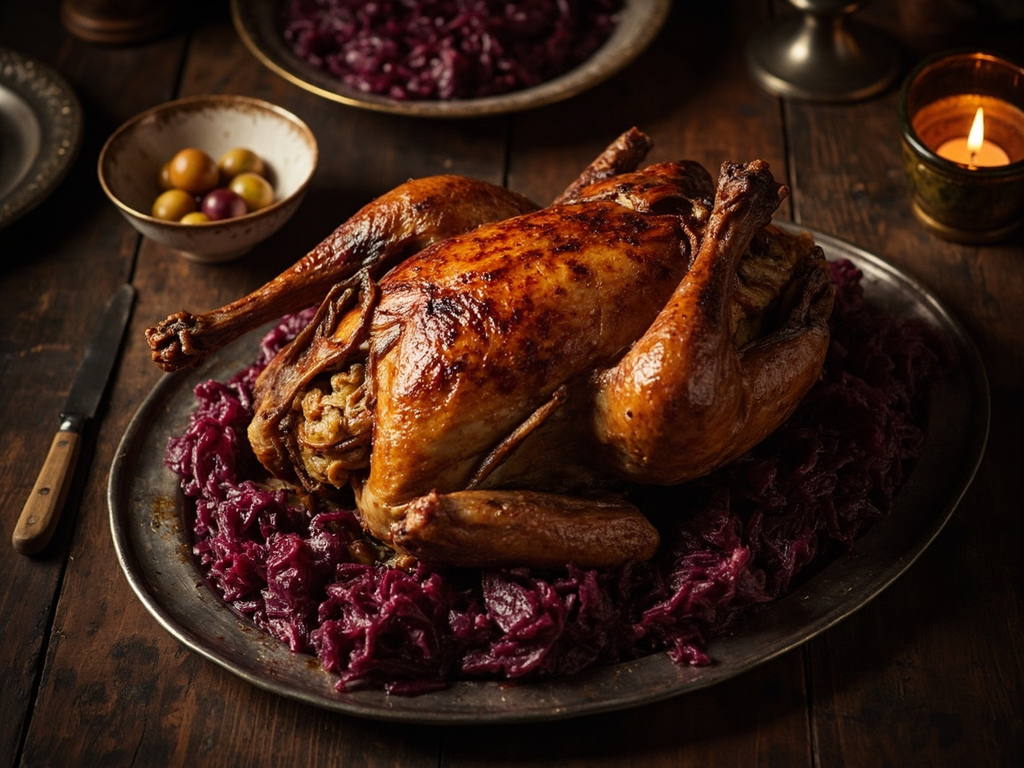
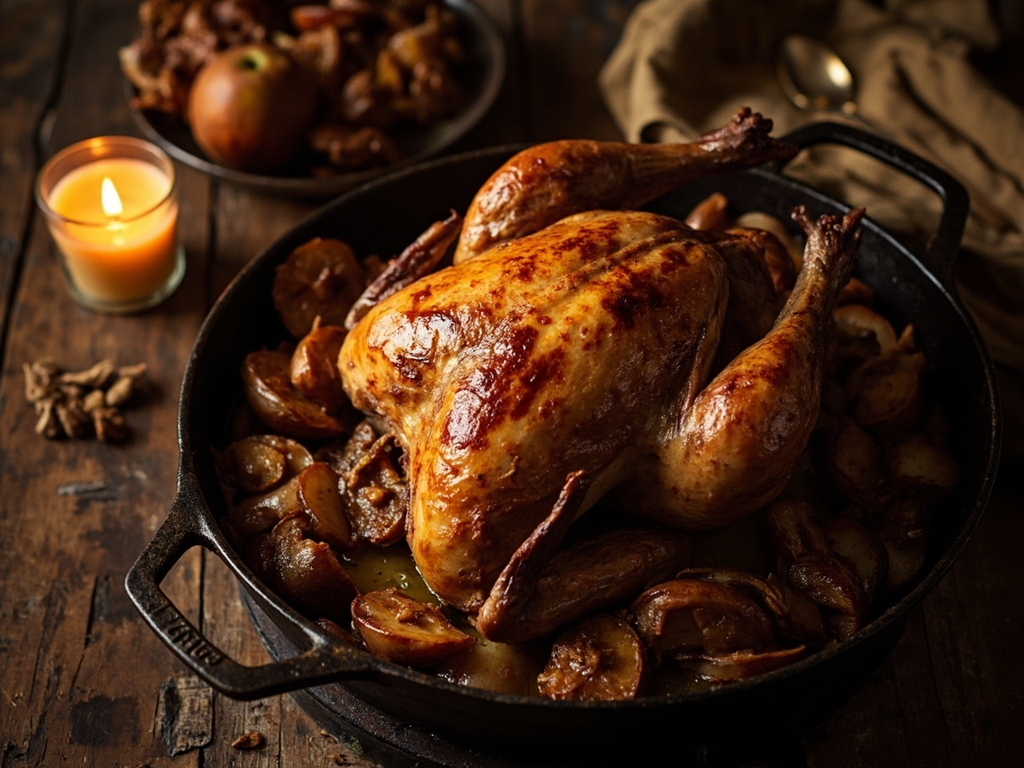
A golden roasted goose, its skin crackling, stuffed with apples and marjoram, yielding precious fat. The festive dish of the Protestant North, shared once or twice a year around the same table.
Once a year, at St. Martin's, when the cold descends from the Baltic, the goose is killed and the whole house smells of marjoram and baked apple. I am not a man of feasts, you know, but this roast I honour: it speaks of the year ending and the gratitude we owe. Keep its fat carefully; it will spread on black bread until spring.
- •Fat Pomeranian goose — 1 (festive centerpiece)
- •Tart apples — several (sweet-sour stuffing)
- •Dried marjoram — a good pinch (Northern goose herb)
- •Onions — 2 (aromatic base)
- •Salt, caraway seeds — to taste (seasoning and digestion)
Pomeranian Roast Goose with Apples and Marjoram (Martinsgans)
A golden roasted goose, its skin crackling, stuffed with apples and marjoram, yielding precious fat. The festive dish of the Protestant North, shared once or twice a year around the same table.
Why this dish? Friedrich's Pomerania was goose-raising country; the St. Martin's goose (November 11) marked the transition to winter and the only real roast a modest household allowed itself. The painter, raised in this Lutheran calendrical ritual, knew its scent.
Once a year, at St. Martin's, when the cold descends from the Baltic, the goose is killed and the whole house smells of marjoram and baked apple. I am not a man of feasts, you know, but this roast I honour: it speaks of the year ending and the gratitude we owe. Keep its fat carefully; it will spread on black bread until spring.
Ingredients (period version)
- Fat Pomeranian goose — 1 (festive centerpiece)
- Tart apples — several (sweet-sour stuffing)
- Dried marjoram — a good pinch (Northern goose herb)
- Onions — 2 (aromatic base)
- Salt, caraway seeds — to taste (seasoning and digestion)
Ingredients
- Free-range goose — 1 (approx. 4 kg) (festive centerpiece)
- Boskoop or other tart apples — 4 (sweet-sour stuffing)
- Dried marjoram — 2 tsp (Northern goose herb)
- Onions — 2 (aromatic base)
- Caraway seeds — 1 tsp (flavor and digestion)
- Salt, pepper — to taste (seasoning)
Method
- Salt the goose inside and out, rub with marjoram and caraway.
- Stuff with apple wedges and one onion.
- Place breast-side down on the remaining onions in a large roasting pan, add a little water.
- Roast in a low oven (160°C) for 3 to 4 hours, basting regularly and turning halfway.
- Increase to 200°C for the last 20 minutes to crisp the skin. Reserve the rendered fat.
- Let rest 15 minutes before carving. Serve with the apples and rye bread.
How it was made : The goose fattened until autumn provided both meat, preserving fat (Schmalz, which replaced butter in winter) and feathers. Slow cooking in the communal bread oven after the bread bake was the norm in Pomeranian villages. Marjoram and caraway are the traditional aromatics of North German goose.
The contemporary twist : Serve the goose fat separately, melted with a little apple and marjoram, as Griebenschmalz to spread on black bread: the starter Friedrich would have kept for the next day.
Caspar David Friedrich · Charactorium