 flip
flipGravlax med hovmästarsås — cured salmon with mustard-dill sauce
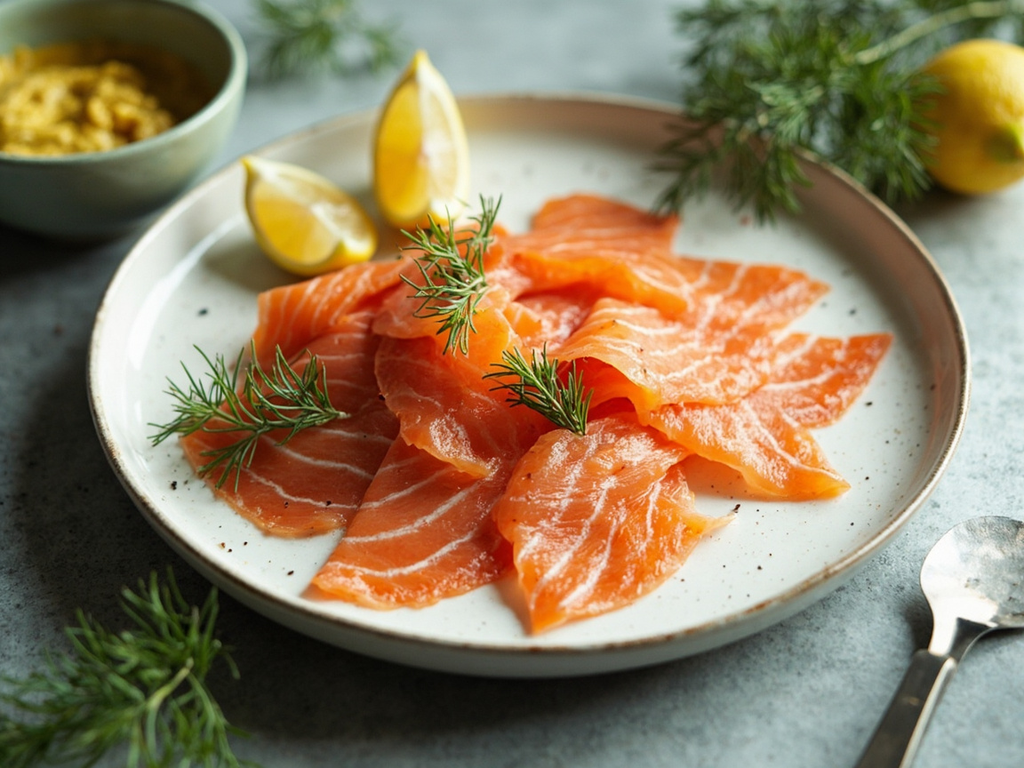
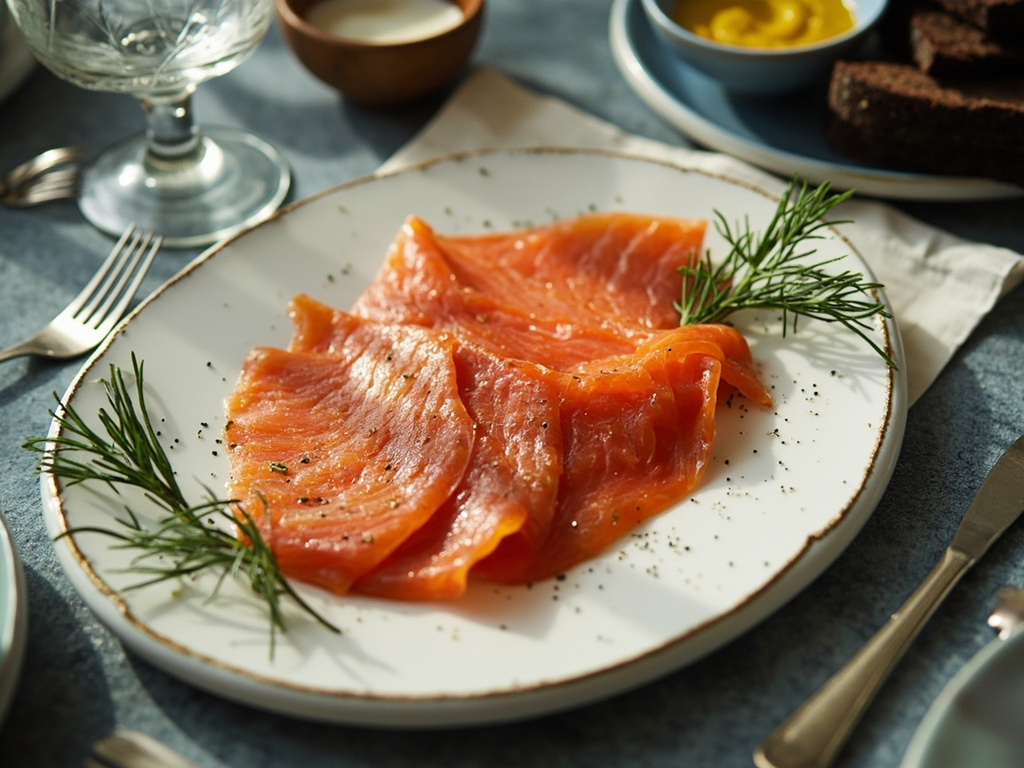
Gravlax med hovmästarsås — cured salmon with mustard-dill sauce
Why this dish? Salmon was one of the noble fish of the Swedish table, and gravlax the showpiece of grand receptions. Mittag-Leffler, who held salons and hosted the greatest mathematicians of Europe in his Djursholm villa, could not offer a festive smörgåsbord without this rosy splendor.
A raw salmon fillet cured for several days in salt, sugar and dill, thinly sliced and served with a sweet-sour mustard and dill sauce. The great classic of Scandinavian banquets.
Here, my dear colleagues, is what I reserve for grand occasions — when mathematicians from Berlin, Paris and Göttingen crowd under my roof. The salmon, we bury for three days in salt, sugar and an abundance of dill; in olden days it was even buried in the sand of the shore, hence its name. We slice it as thinly as a page of my Acta Mathematica, and nap it with a sauce where mustard contends with dill. Serve this with a small glass of ice-cold aquavit, and I guarantee the scholarly conversation will be all the more brilliant.
- •Fresh salmon fillet with skin — one fine side (centerpiece)
- •Salt — two parts (salting/preservation)
- •Sugar — one part (balance, texture)
- •Fresh dill — in abundance (signature flavor)
- •Coarsely crushed white pepper — a little (piquancy)
Gravlax med hovmästarsås — cured salmon with mustard-dill sauce
A raw salmon fillet cured for several days in salt, sugar and dill, thinly sliced and served with a sweet-sour mustard and dill sauce. The great classic of Scandinavian banquets.
Why this dish? Salmon was one of the noble fish of the Swedish table, and gravlax the showpiece of grand receptions. Mittag-Leffler, who held salons and hosted the greatest mathematicians of Europe in his Djursholm villa, could not offer a festive smörgåsbord without this rosy splendor.
Here, my dear colleagues, is what I reserve for grand occasions — when mathematicians from Berlin, Paris and Göttingen crowd under my roof. The salmon, we bury for three days in salt, sugar and an abundance of dill; in olden days it was even buried in the sand of the shore, hence its name. We slice it as thinly as a page of my Acta Mathematica, and nap it with a sauce where mustard contends with dill. Serve this with a small glass of ice-cold aquavit, and I guarantee the scholarly conversation will be all the more brilliant.
Ingredients (period version)
- Fresh salmon fillet with skin — one fine side (centerpiece)
- Salt — two parts (salting/preservation)
- Sugar — one part (balance, texture)
- Fresh dill — in abundance (signature flavor)
- Coarsely crushed white pepper — a little (piquancy)
Ingredients
- Very fresh salmon fillet with skin — 800 g to 1 kg (centerpiece)
- Salt — 60 g (salting)
- Sugar — 40 g (balance)
- Fresh dill — 2 large bunches (signature flavor)
- Coarsely crushed white pepper — 1 tsp (piquancy)
- Swedish mild mustard (or softened Dijon) — 3 tbsp (sauce base)
- White vinegar — 1 tbsp (sauce acidity)
- Sugar — 2 tbsp (sweet-sour sauce)
- Neutral oil — 100 ml (sauce emulsion)
Method
- Mix the salt, sugar and white pepper. Rub the salmon fillet all over with this mixture.
- Cover the salmon with a thick layer of chopped dill. If you have two fillets, sandwich them flesh to flesh; otherwise place the dill on top.
- Wrap tightly, place in a dish, set a weight on top and refrigerate for 48 to 72 hours, turning morning and evening and basting with the released juices.
- Prepare the sauce: whisk the mustard, sugar and vinegar, then emulsify by pouring in the oil in a thin stream like a mayonnaise. Stir in chopped dill.
- Wipe the salmon, scrape off the dill, then slice very thinly on the bias, removing the skin.
- Arrange the slices in a fan and serve with the sauce and rye bread.
How it was made : The word gravlax comes from gräva ('to dig'): in the Middle Ages, Scandinavian fishermen lightly fermented salmon by burying it salted in the sand above the tide line. By Mittag-Leffler's time, fermentation had given way to simple salting with salt and sugar, yielding the 'mild' gravlax we know today.
The contemporary twist : A thin layer of grated beetroot in the cure colors the salmon edges a brilliant pink — a spectacular presentation for a festive table.
Gösta Mittag-Leffler · Charactorium