 flip
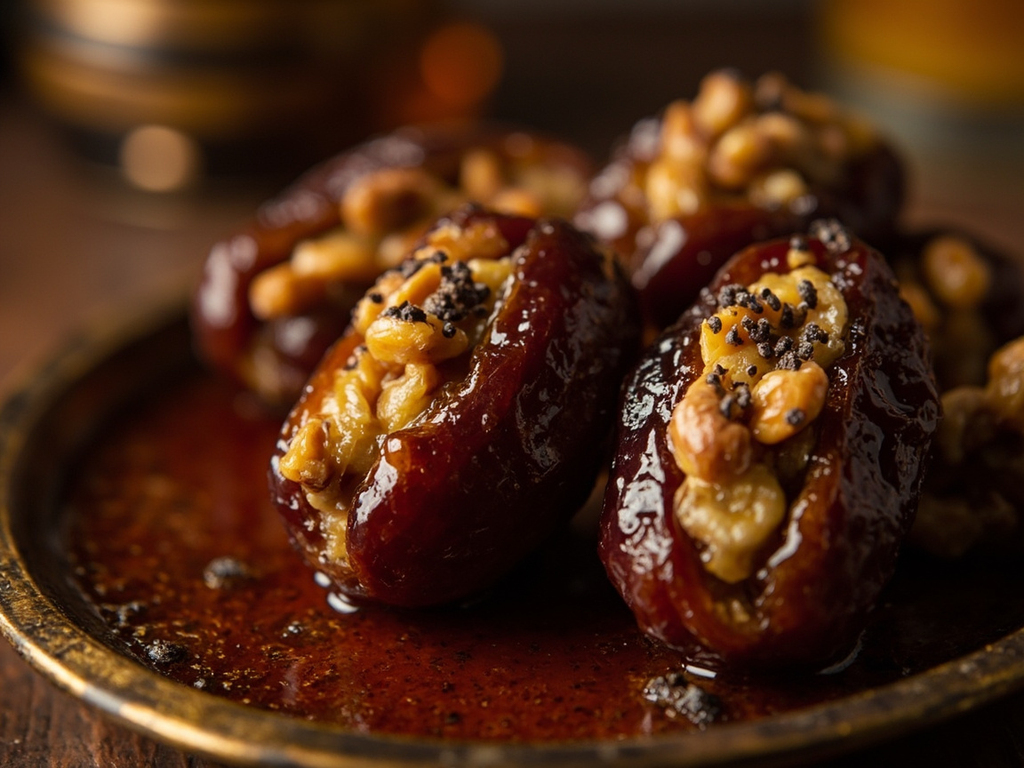
flipDulcia domestica: dates stuffed with pine nuts, fried in honey and pepper
Dulcia domestica: dates stuffed with pine nuts, fried in honey and pepper
Why this dish? At the banquets Augustus gave to honor his guests or celebrate his triumphs, the mensa secunda brought these refined sweets from Apicius's book. Even a sober emperor offered his guests these stuffed dates: a luxury imported from the East, a sign of the peace and abundance he claimed as his work.
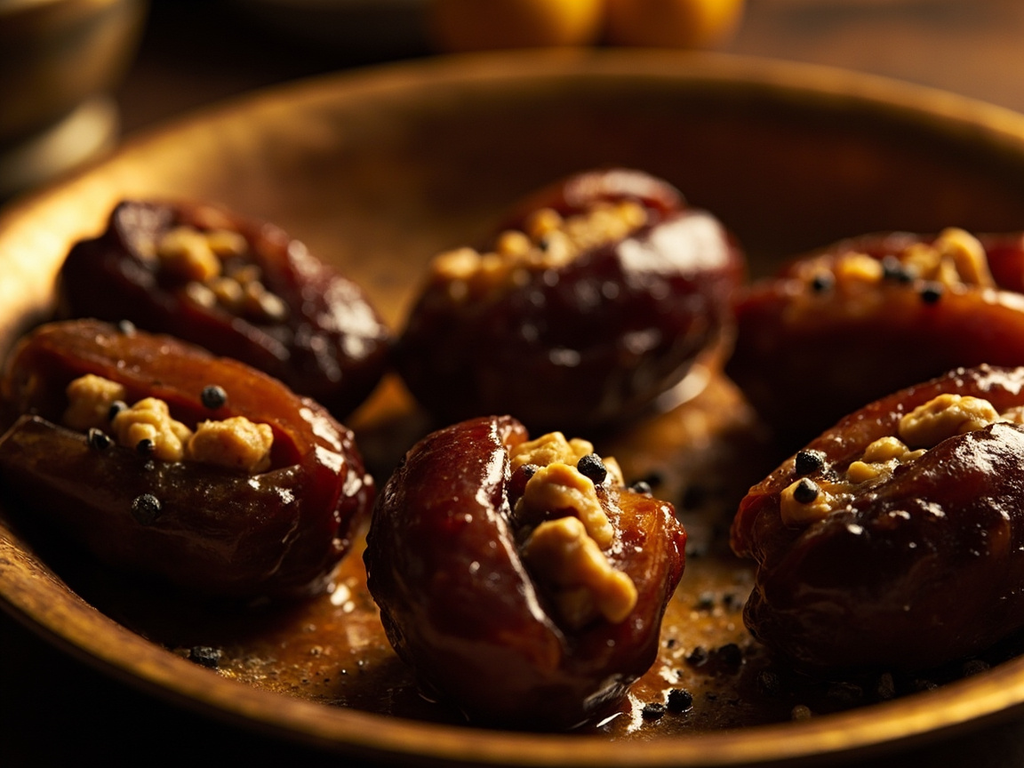
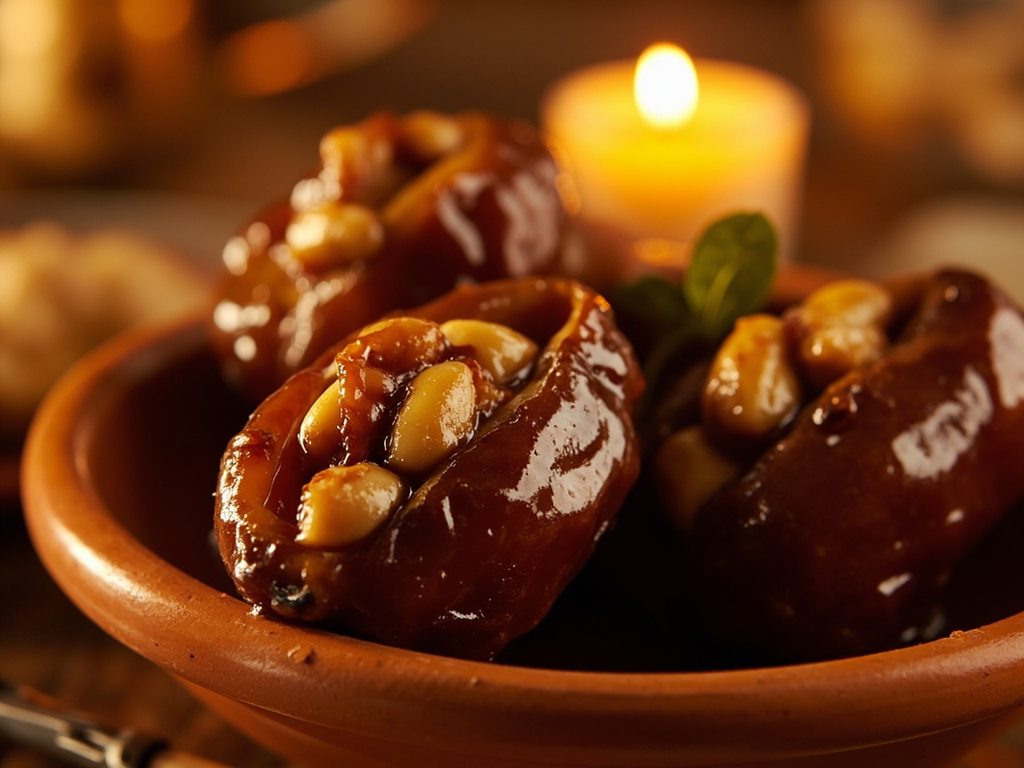
Pitted dates filled with chopped pine nuts and walnuts, rolled in salt, then confit in hot honey perfumed with pepper. A melting, glossy bite, sweet and spicy, that closed festive Roman meals.
When I receive at my table those who have served Rome well, I let abundance speak for me: these dates from the East, swollen with pine nuts and bathed in hot honey, say better than any speech the peace I have brought to the world. The pepper comes from even farther than the dates, and I like it to bite under the sweetness, as a reminder that nothing great is achieved without a little fire. Take one in your mouth, but only one: moderation, even in pleasure, remains my law.
- •Dried dates — a dozen (sweet, melting shell)
- •Pine nuts — a small handful (crunchy filling)
- •Chopped walnuts — a handful (filling)
- •Fine salt — a pinch (salty contrast before frying)
- •Honey — a generous bowl (sweet cooking bath)
- •Ground black pepper — to taste (signature spice)
Dulcia domestica: dates stuffed with pine nuts, fried in honey and pepper
Pitted dates filled with chopped pine nuts and walnuts, rolled in salt, then confit in hot honey perfumed with pepper. A melting, glossy bite, sweet and spicy, that closed festive Roman meals.
Why this dish? At the banquets Augustus gave to honor his guests or celebrate his triumphs, the mensa secunda brought these refined sweets from Apicius's book. Even a sober emperor offered his guests these stuffed dates: a luxury imported from the East, a sign of the peace and abundance he claimed as his work.
When I receive at my table those who have served Rome well, I let abundance speak for me: these dates from the East, swollen with pine nuts and bathed in hot honey, say better than any speech the peace I have brought to the world. The pepper comes from even farther than the dates, and I like it to bite under the sweetness, as a reminder that nothing great is achieved without a little fire. Take one in your mouth, but only one: moderation, even in pleasure, remains my law.
Ingredients (period version)
- Dried dates — a dozen (sweet, melting shell)
- Pine nuts — a small handful (crunchy filling)
- Chopped walnuts — a handful (filling)
- Fine salt — a pinch (salty contrast before frying)
- Honey — a generous bowl (sweet cooking bath)
- Ground black pepper — to taste (signature spice)
Ingredients
- Pitted Medjool dates — 12 (sweet, melting shell)
- Pine nuts — 30 g (crunchy filling)
- Shelled walnuts — 30 g (filling)
- Fine salt — 1 pinch (salty contrast)
- Honey — 150 g (sweet cooking bath)
- Freshly ground black pepper — 1/2 tsp (signature spice)
Method
- Coarsely chop the pine nuts and walnuts, then stuff each pitted date with the mixture.
- Close the dates and roll them very lightly in fine salt.
- Gently heat the honey in a small pan until it becomes fluid and glossy.
- Add the dates and let them confit for 2 to 3 minutes, turning them delicately.
- Arrange on a plate, drizzle with a little of the cooking honey, and grind some pepper on top. Serve warm.
How it was made : The recipe for *dulcia domestica* appears almost verbatim in the *De re coquinaria* attributed to Apicius: pitted dates stuffed with nuts, pine nuts, or ground pepper, rolled in salt, then fried in cooked honey. Pepper, imported from India at great expense, signaled a luxury dish.
The contemporary twist : Serve them on a slate board like 'imperial candies,' with a single golden pine nut stuck on top and a pinch of fleur de sel to make the contrast sing.
Sources : Apicius, *De re coquinaria*, Book VII (*Dulcia domestica*)
Augustus · Charactorium