 flip
flipPatina of Pears with Pepper and Honey
Patina of Pears with Pepper and Honey
Why this dish? Nero's banquets, theatrical and sumptuous, ended with sweet dishes that surprised the palate. This sweet-peppered patina, where garum hides even in a dessert, embodies the Roman taste for contrast and the splendor of the imperial mensa secunda.
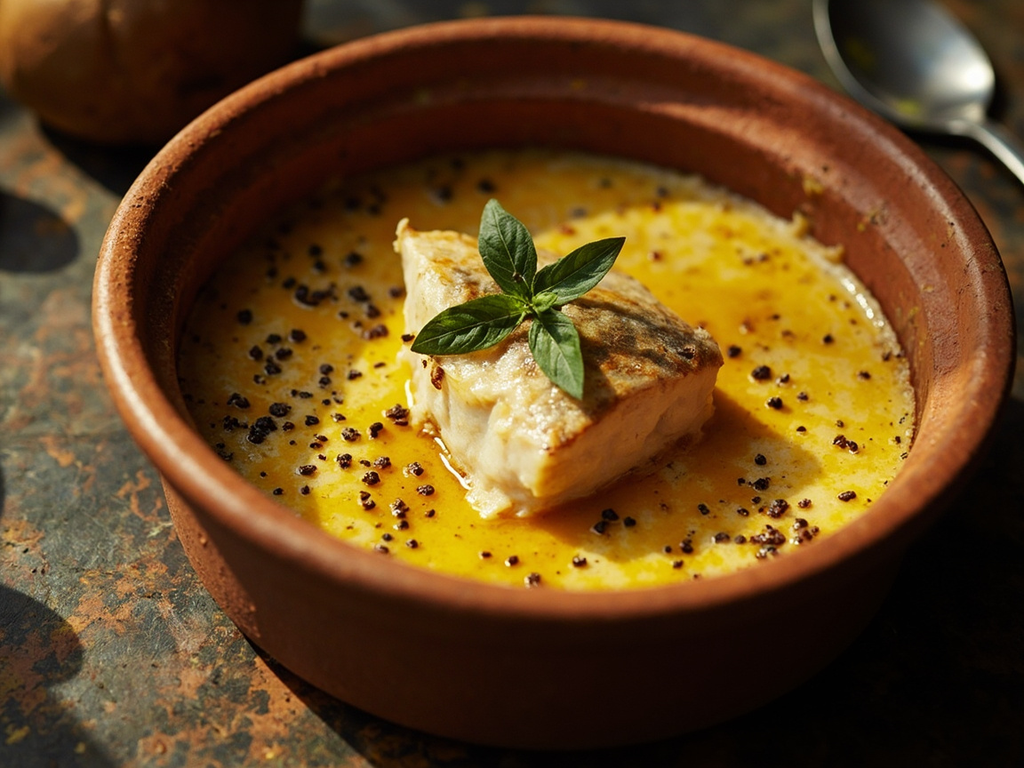
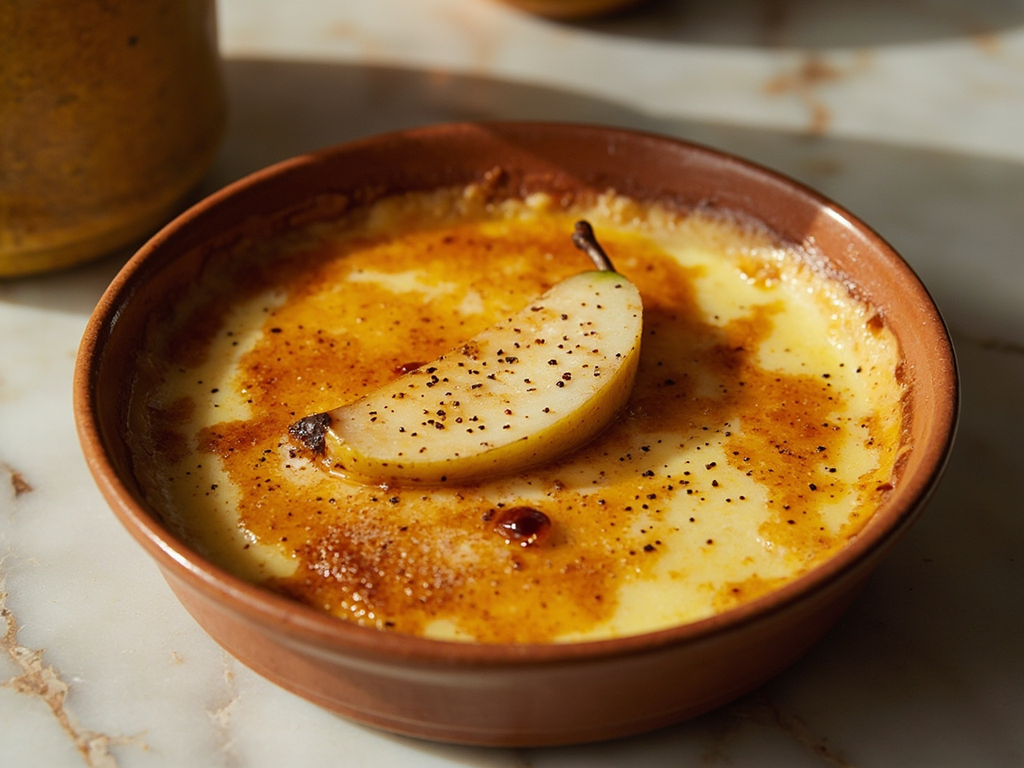
A pear flan flavored with pepper, cumin, and honey, bound with eggs and baked. Surprising to us: a hint of garum enhances the sweetness, typical of the Roman palate that loved to blur the lines between savory and sweet.
The feast is not over: one must surprise, always surprise—that is my art, at table as on stage! Here is a patina of pears: they are crushed with honey, pepper, cumin, bound with beaten eggs and a dash of garum, then cooked in a heat bath until set. You frown? Garum in a dessert, yes! Taste before judging—the hidden salt makes the sugar sing, and my guests ask for more. An emperor never serves what is expected.
- •Very ripe pears — a basketful (fruity base)
- •Honey — generously (sweetness)
- •Pepper — freshly ground (spice)
- •Cumin — a pinch (warm spice)
- •Eggs — several (flan binder)
- •Passum (raisin wine) — a dash (sweet fragrance)
- •Garum — a few drops (salty enhancer (umami))
- •Olive oil — a drizzle (binder)
Patina of Pears with Pepper and Honey
A pear flan flavored with pepper, cumin, and honey, bound with eggs and baked. Surprising to us: a hint of garum enhances the sweetness, typical of the Roman palate that loved to blur the lines between savory and sweet.
Why this dish? Nero's banquets, theatrical and sumptuous, ended with sweet dishes that surprised the palate. This sweet-peppered patina, where garum hides even in a dessert, embodies the Roman taste for contrast and the splendor of the imperial mensa secunda.
The feast is not over: one must surprise, always surprise—that is my art, at table as on stage! Here is a patina of pears: they are crushed with honey, pepper, cumin, bound with beaten eggs and a dash of garum, then cooked in a heat bath until set. You frown? Garum in a dessert, yes! Taste before judging—the hidden salt makes the sugar sing, and my guests ask for more. An emperor never serves what is expected.
Ingredients (period version)
- Very ripe pears — a basketful (fruity base)
- Honey — generously (sweetness)
- Pepper — freshly ground (spice)
- Cumin — a pinch (warm spice)
- Eggs — several (flan binder)
- Passum (raisin wine) — a dash (sweet fragrance)
- Garum — a few drops (salty enhancer (umami))
- Olive oil — a drizzle (binder)
Ingredients
- Ripe pears — 4 (approx. 500 g) (fruity base)
- Liquid honey — 3 tbsp (sweetness)
- Black pepper from the mill — 3 turns (spice)
- Ground cumin — 1 pinch (warm spice)
- Eggs — 3 (flan binder)
- Sweet wine (muscat/passito) or grape juice — 3 tbsp (sweet fragrance)
- Nuoc mam or garum — 3 drops (discreet salty enhancer)
- Mild olive oil — 1 tbsp (binder)
Method
- Preheat the oven to 170°C.
- Peel the pears, remove cores, and mash or blend into a purée.
- Add honey, pepper, cumin, sweet wine, oil, and the 3 drops of garum.
- Incorporate the beaten eggs and mix well.
- Pour into a greased dish and bake in a water bath for 35 to 40 minutes, until the flan is set.
- Let cool slightly, dust lightly with pepper before serving.
How it was made : Apicius describes several sweet fruit *patinae* (pears, peaches) bound with eggs, seasoned with pepper, cumin, honey, passum, and… garum. This marriage of fermented saltiness and sweetness, disconcerting to us, was the signature of refined Roman gastronomy.
The contemporary twist : Serve in individual verrines with a turn of pepper and a fresh pear slice—the *Roman flan* that intrigues and then converts.
Sources : Apicius, De re coquinaria, IV (Patinae) and VII (Dulcia domestica)
Nero · Charactorium