 flip
flipRoasted Lamb Shoulder with Honey, Cumin, and Coriander
Roasted Lamb Shoulder with Honey, Cumin, and Coriander
Why this dish? Lamb is the noble meat of Syrian banquets and Roman Eastern elites. When Zenobia receives ambassadors and generals in her palace at Antioch, these roasts glazed with honey and rubbed with spices brought by caravans are served — the opulence of a court that rivaled Rome.
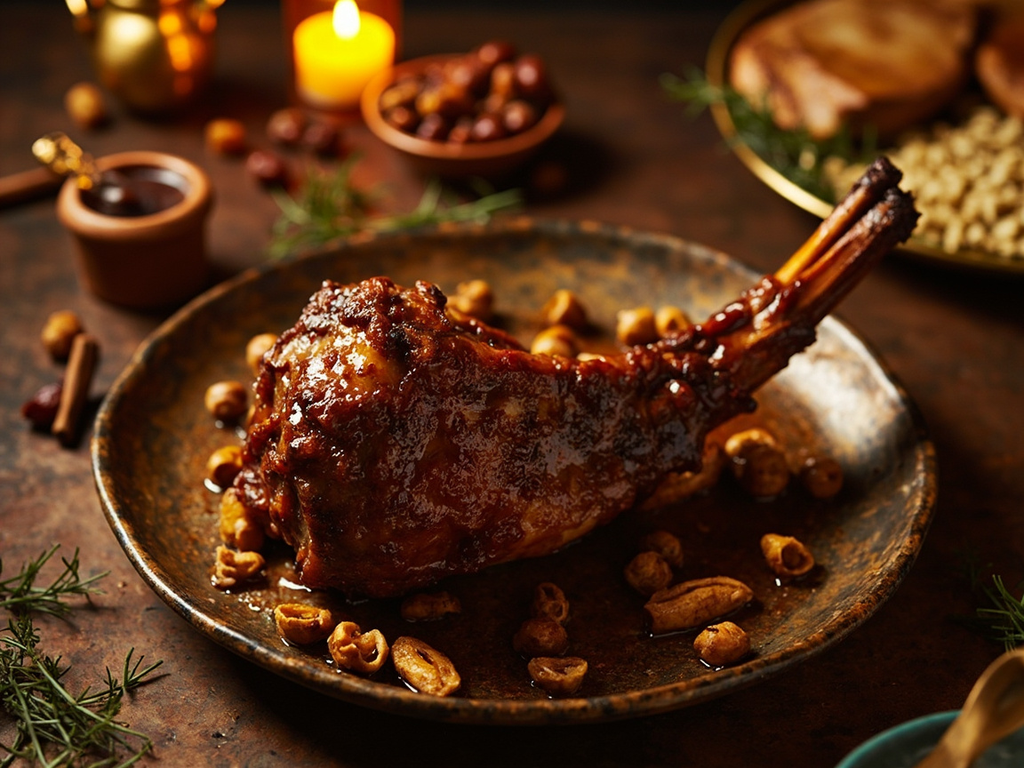
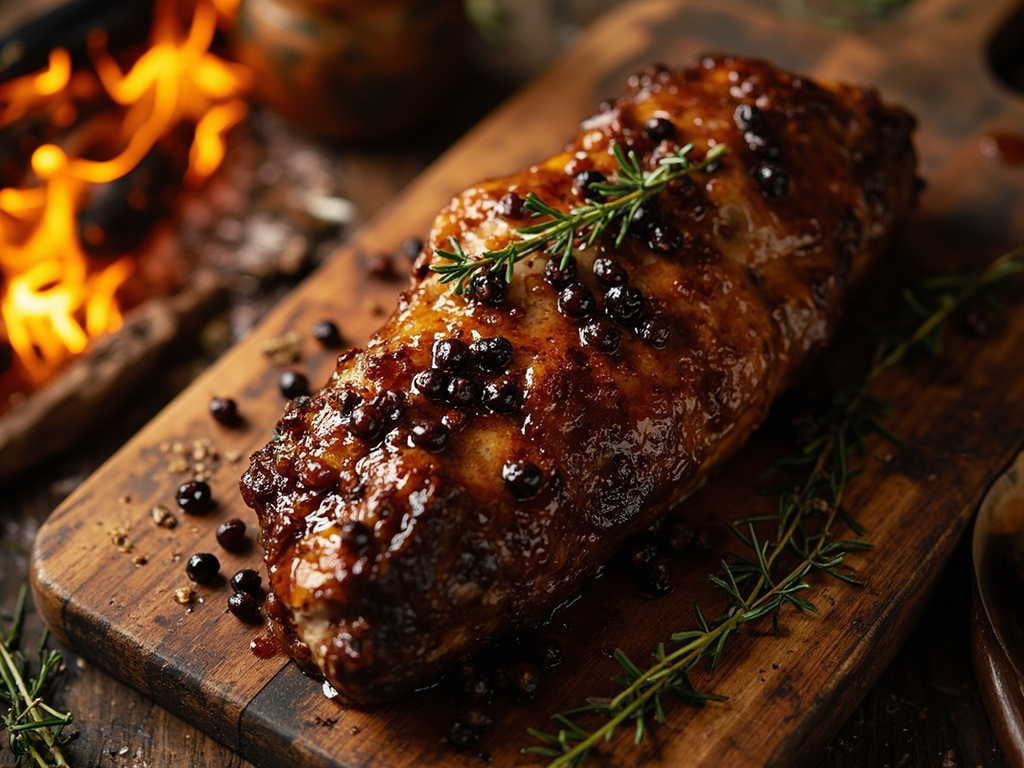
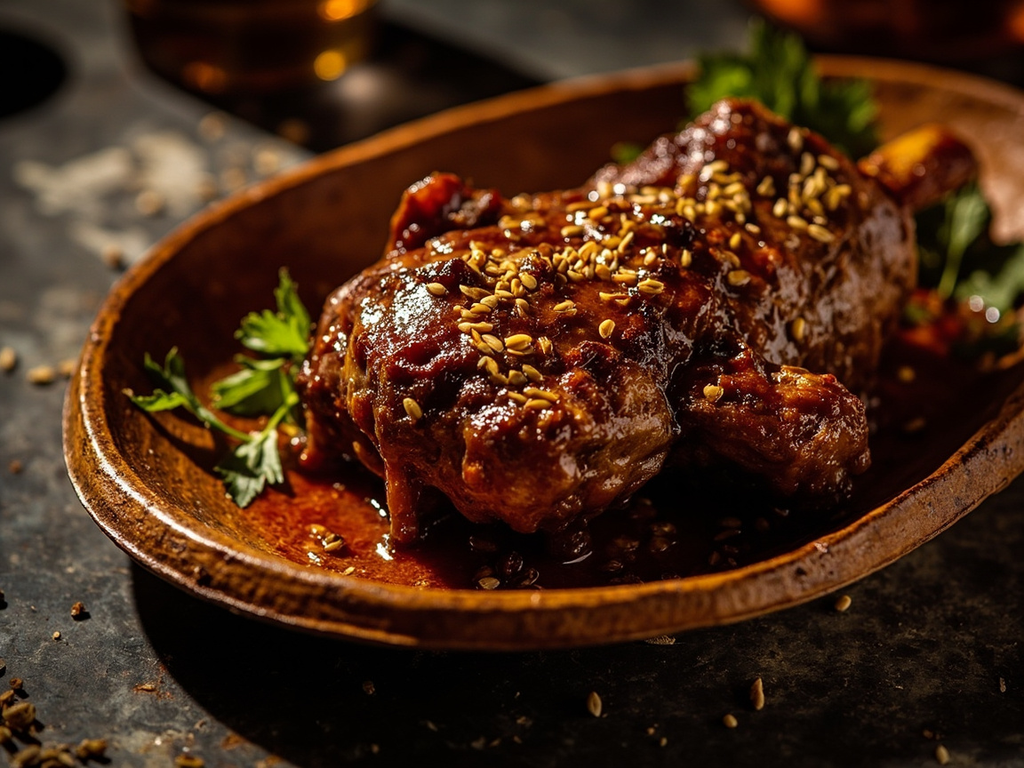
A slow-roasted lamb shoulder, rubbed with cumin, coriander, and pepper, glazed with honey and reduced wine. Tender meat, fragrant amber crust.
When I receive envoys from Rome or Persia, I want my table to speak for Palmyra. We choose the finest lamb, rub it with cumin and coriander that my caravans bring from distant roads, then glaze it with honey and reduced wine until it shines like the gold of Emesa. Let the ambassador leave satisfied — and let him tell his master that the Queen of the East does not keep a court of paupers.
- •Lamb shoulder — one whole piece (noble meat)
- •Honey — generously (glaze and sweetness)
- •Reduced wine (defrutum) — a bowl (aromatic binder)
- •Cumin, coriander seeds, pepper — ground in mortar (caravan spices)
- •Garum — a dash (deep salt)
- •Olive oil — for coating (roasting)
Roasted Lamb Shoulder with Honey, Cumin, and Coriander
A slow-roasted lamb shoulder, rubbed with cumin, coriander, and pepper, glazed with honey and reduced wine. Tender meat, fragrant amber crust.
Why this dish? Lamb is the noble meat of Syrian banquets and Roman Eastern elites. When Zenobia receives ambassadors and generals in her palace at Antioch, these roasts glazed with honey and rubbed with spices brought by caravans are served — the opulence of a court that rivaled Rome.
When I receive envoys from Rome or Persia, I want my table to speak for Palmyra. We choose the finest lamb, rub it with cumin and coriander that my caravans bring from distant roads, then glaze it with honey and reduced wine until it shines like the gold of Emesa. Let the ambassador leave satisfied — and let him tell his master that the Queen of the East does not keep a court of paupers.
Ingredients (period version)
- Lamb shoulder — one whole piece (noble meat)
- Honey — generously (glaze and sweetness)
- Reduced wine (defrutum) — a bowl (aromatic binder)
- Cumin, coriander seeds, pepper — ground in mortar (caravan spices)
- Garum — a dash (deep salt)
- Olive oil — for coating (roasting)
Ingredients
- Lamb shoulder — 1.5 kg (noble meat)
- Honey — 3 tbsp (glaze and sweetness)
- Red wine reduced by half (or reduced grape juice) — 150 ml (aromatic binder)
- Ground cumin — 1.5 tsp (spice)
- Ground coriander seeds — 1.5 tsp (spice)
- Black pepper — 1 tsp (spice)
- Fish sauce (failing garum) — 1 tbsp (deep salt)
- Olive oil — 2 tbsp (roasting)
Method
- Mix cumin, coriander, pepper, olive oil, and fish sauce into a paste; rub all over the lamb and let rest 1 hour.
- Preheat oven to 160°C. Place lamb in a dish, add a splash of water, cover with foil, and roast for 2.5 hours.
- Reduce the wine with honey to a light syrup.
- Uncover the meat, brush with the honey-wine glaze, and increase oven to 200°C for 25–30 minutes, glazing 2–3 times, until an amber crust forms.
- Let rest 15 minutes, then shred or slice and drizzle with pan juices.
How it was made : Roman cuisine, as compiled by Apicius, relishes these sweet-and-sour pairings: meats glazed with honey and defrutum (reduced grape must), heightened by garum and imported spices. In Syria, cumin and coriander, abundant, marked the local taste.
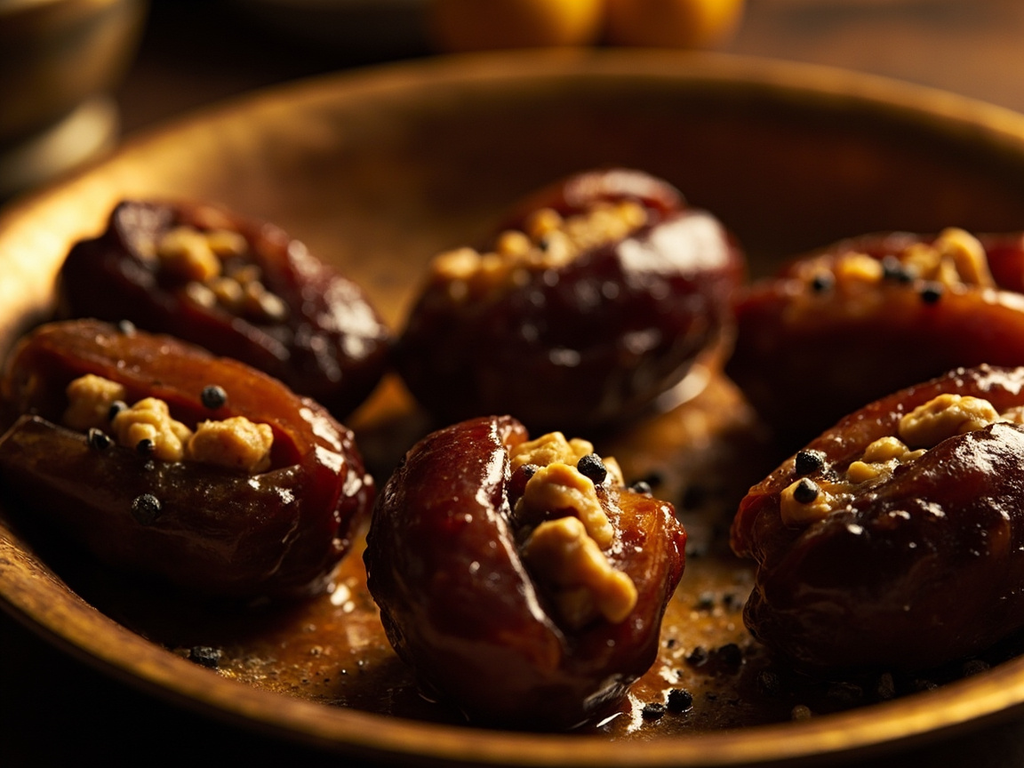
The contemporary twist : Serve the shredded lamb on a large board, scattered with toasted coriander seeds and a few roasted dates — a dish to share 'Palmyrene style.'
Sources : Apicius, De re coquinaria (honey and defrutum meats) · Columella, De re rustica (defrutum) · Athenaeus, Deipnosophistae (ancient banquets)
Zenobia · Charactorium