 flip
flipRed palm oil game stew, royal feast
Red palm oil game stew, royal feast
Why this dish? Founding Queen Aura Pokou presided over feasts where bushmeat—antelope, agouti, porcupine—was the prestige food, the hunter's share honored at the sovereign's table. Serving game long-simmered in palm oil affirmed rank and sealed the alliance of a new people.
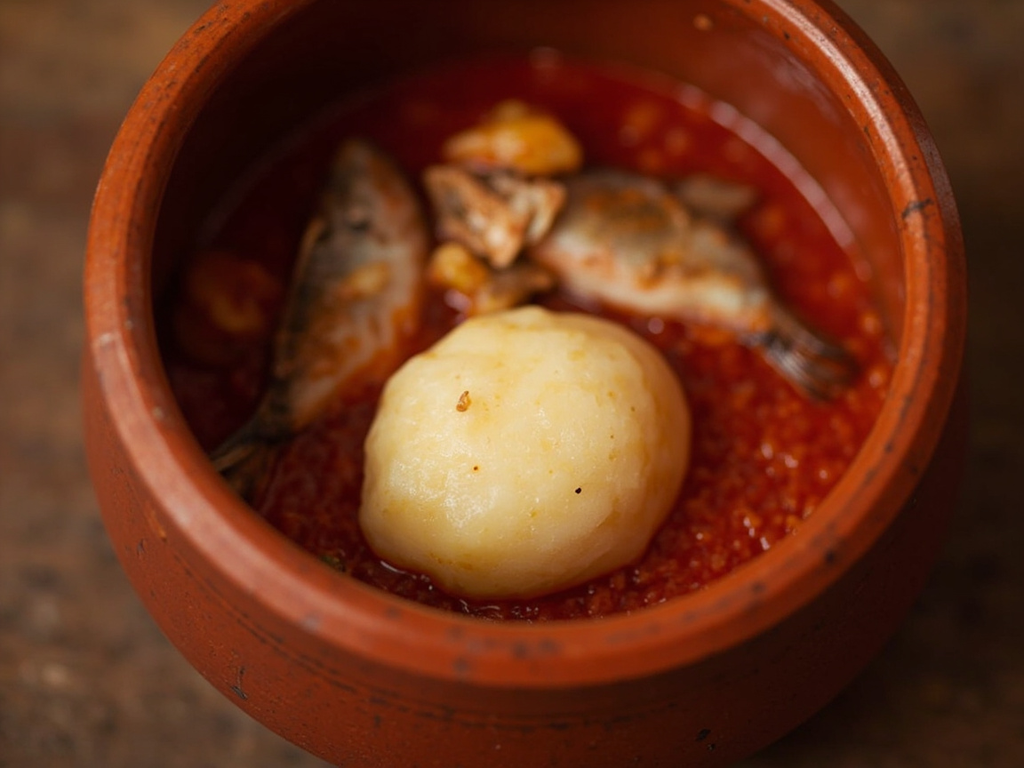
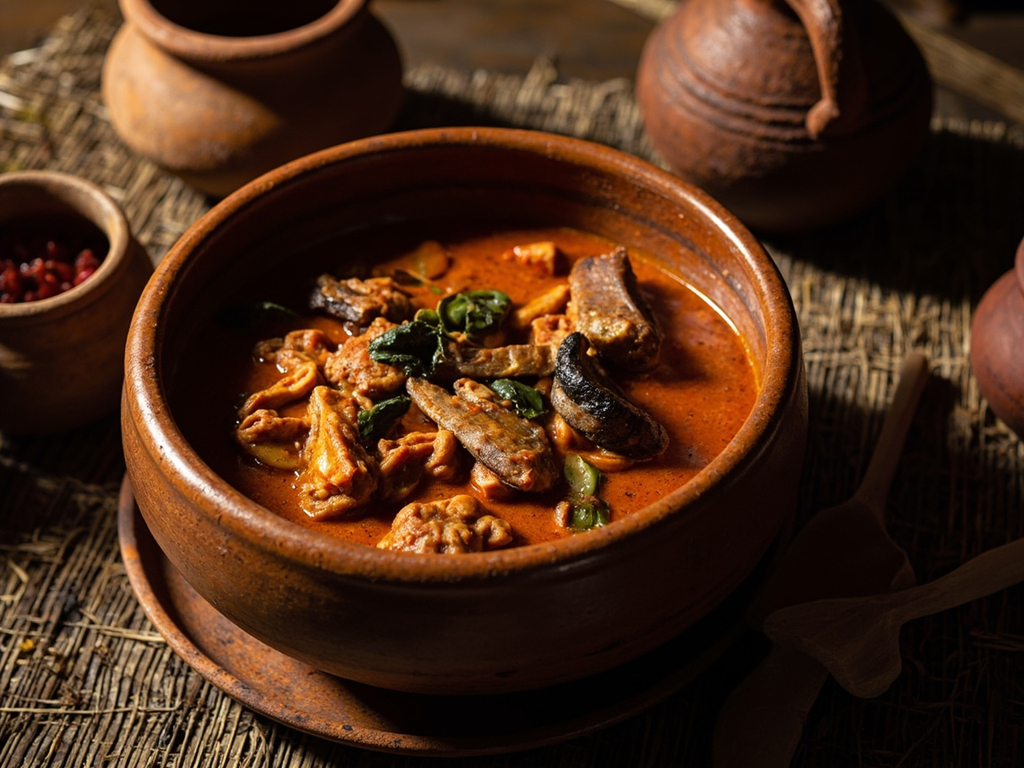
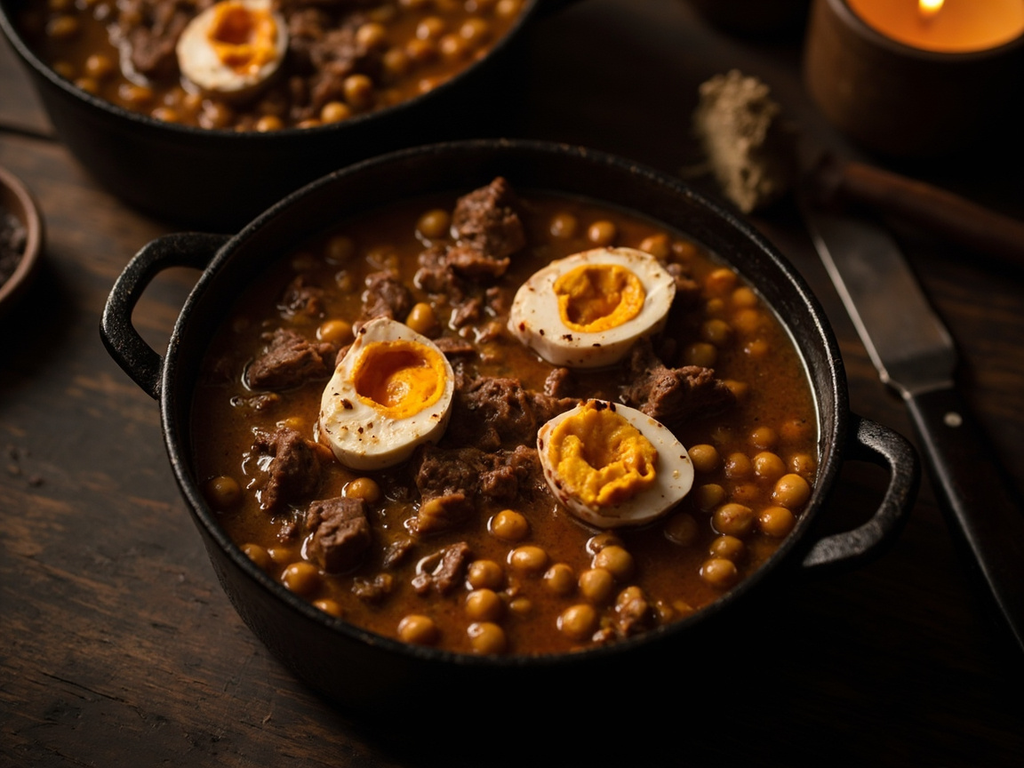
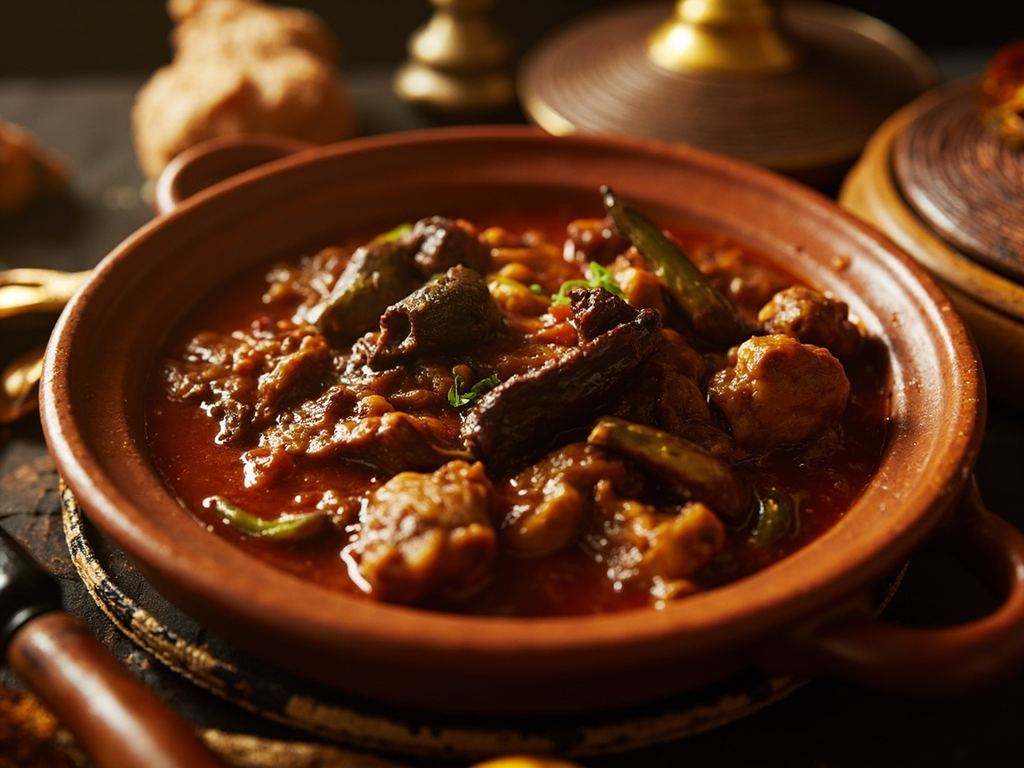
A hunting meat simmered for hours in a thick red palm oil sauce, soured with bitter African eggplant, spiced with grains of paradise and ginger. A dense, amber dish that takes time and was reserved for great occasions.
When the hunter lays the game at my feet, he honors the whole people, and I return that honor at the table. Brown the meat, then drown it in the red oil of the palm until it falls apart under the finger; add the bitter eggplant, the ginger, and the biting grains of paradise. This sauce is not served on an ordinary day, remember: it tells the guests they have entered the queen's house.
- •Game meat (antelope, agouti, porcupine) — a fine piece (heart of the prestige dish)
- •Red palm oil — generous (fat and amber binder)
- •Bitter African eggplants (gnagnan) — a handful (bitterness and binder)
- •Fresh ginger and grains of paradise — to taste (warming spices)
- •Forest onion — a few (aromatic base)
- •Salt — to taste (seasoning)
Red palm oil game stew, royal feast
A hunting meat simmered for hours in a thick red palm oil sauce, soured with bitter African eggplant, spiced with grains of paradise and ginger. A dense, amber dish that takes time and was reserved for great occasions.
Why this dish? Founding Queen Aura Pokou presided over feasts where bushmeat—antelope, agouti, porcupine—was the prestige food, the hunter's share honored at the sovereign's table. Serving game long-simmered in palm oil affirmed rank and sealed the alliance of a new people.
When the hunter lays the game at my feet, he honors the whole people, and I return that honor at the table. Brown the meat, then drown it in the red oil of the palm until it falls apart under the finger; add the bitter eggplant, the ginger, and the biting grains of paradise. This sauce is not served on an ordinary day, remember: it tells the guests they have entered the queen's house.
Ingredients (period version)
- Game meat (antelope, agouti, porcupine) — a fine piece (heart of the prestige dish)
- Red palm oil — generous (fat and amber binder)
- Bitter African eggplants (gnagnan) — a handful (bitterness and binder)
- Fresh ginger and grains of paradise — to taste (warming spices)
- Forest onion — a few (aromatic base)
- Salt — to taste (seasoning)
Ingredients
- Stewing meat (beef shank, chuck, or rabbit/guinea fowl to evoke game) — 1 kg (heart of the dish)
- Red palm oil — 5 tbsp (fat and color)
- Bitter African eggplants (or regular eggplant + a squeeze of lemon juice) — 200 g (bitterness and binder)
- Fresh grated ginger — 1 tbsp (warming spice)
- Ground grains of paradise — 1 tsp (lemony heat)
- Onions — 2 (aromatic base)
- Salt — to taste (seasoning)
- Water or broth — 500 ml (braising liquid)
Method
- Sear the meat pieces in a pot with a little palm oil until well browned; set aside.
- Melt the sliced onions in the remaining red palm oil over low heat.
- Return the meat, add ginger, grains of paradise, bitter eggplant pieces, salt, and enough water to cover.
- Cover and simmer over low heat for 1.5 to 2 hours, until the meat is tender and the sauce thick and amber; mash some eggplant to thicken.
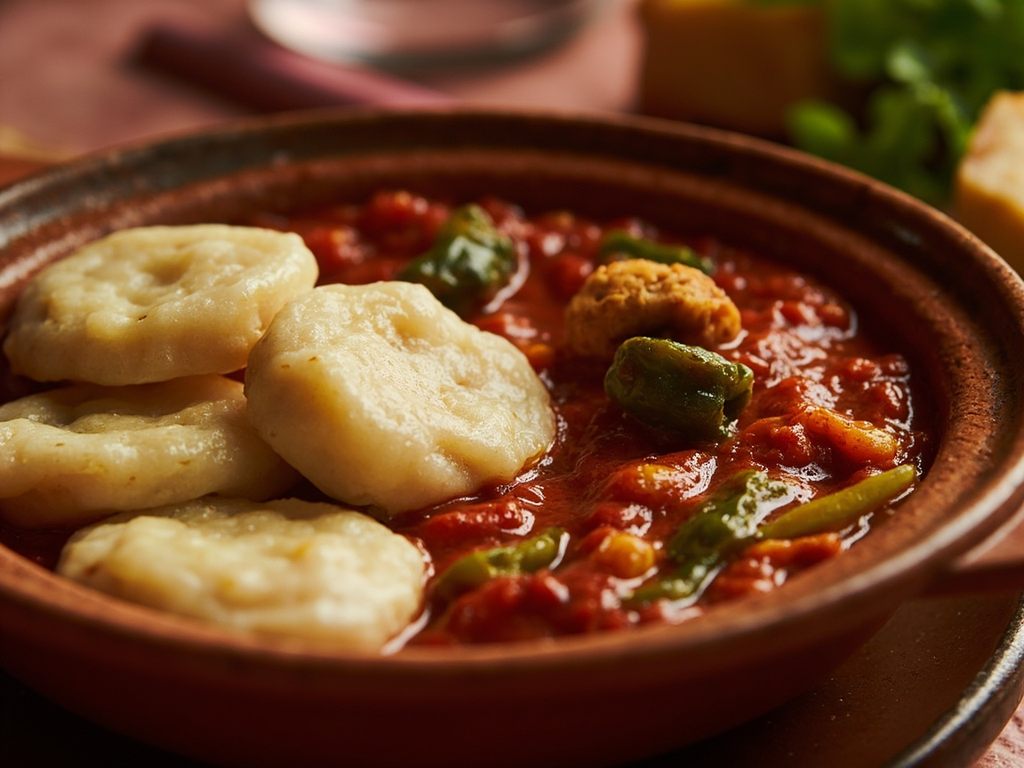
- Serve hot with yam fufu or boiled plantains.
How it was made : Forest game was a high-status food: its distribution at feasts followed strict etiquette according to the guests' rank. Bitter eggplant (gnagnan) and grains of paradise belong to the ancient West African aromatic repertoire—no American chili was needed to give the sauce heat.
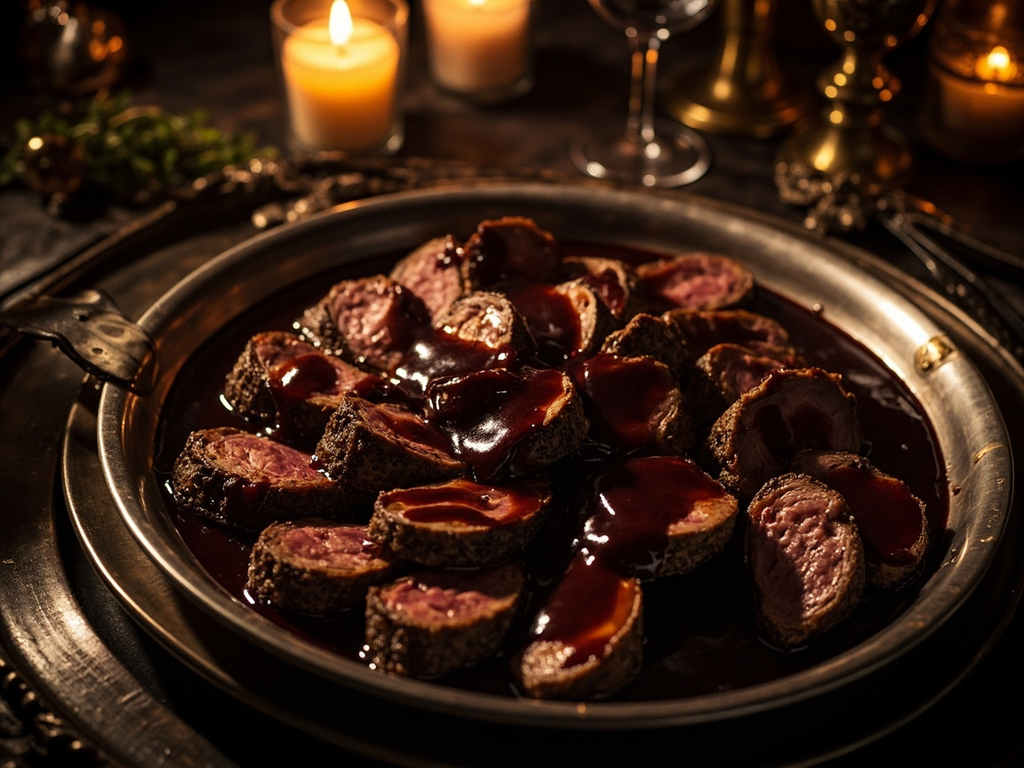
The contemporary twist : Lacking game, a farm-raised guinea fowl or rabbit braised honestly pays homage to the spirit of the dish; you can plate the meat napped with its amber sauce, sprinkled with a little fresh grated ginger for aroma.
Aura Pokou · Charactorium