 flip
flipMoretum — Herb and Garlic Cheese Spread
Moretum — Herb and Garlic Cheese Spread
Why this dish? Moretum is the snack of the peasant and the hurried city-dweller: a paste that keeps and travels, made from cheese and garden herbs. Originally from Hispania like Seneca (born in Corduba), it evokes the simple table of his native province, a world away from the Roman excesses he denounces.
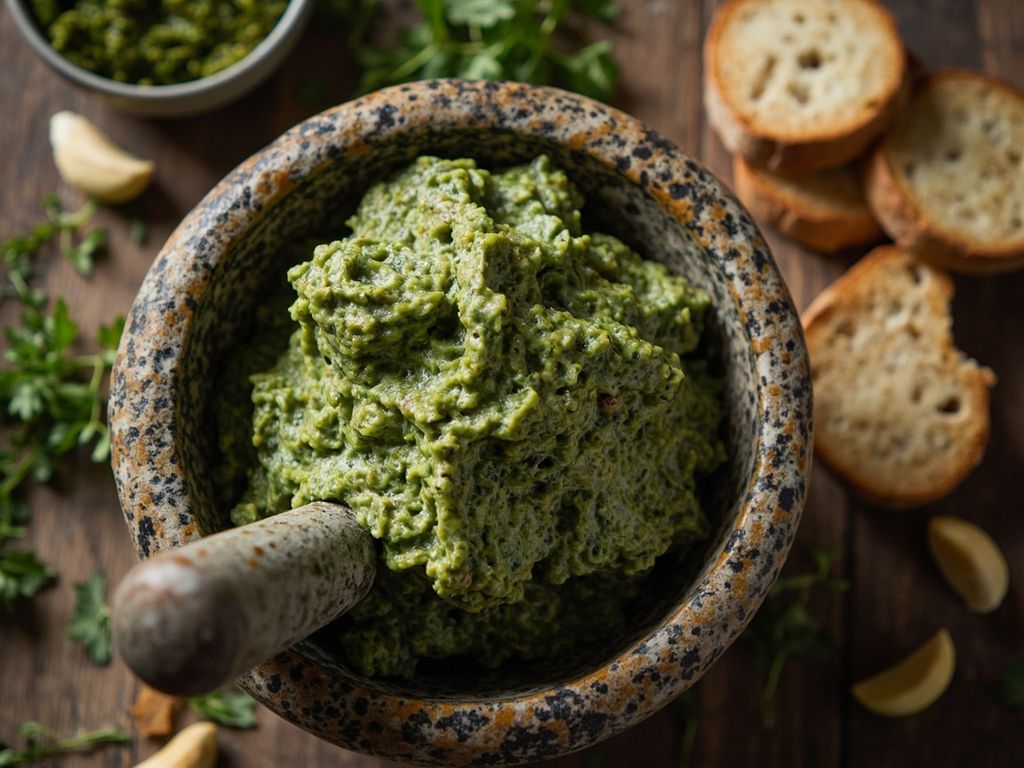
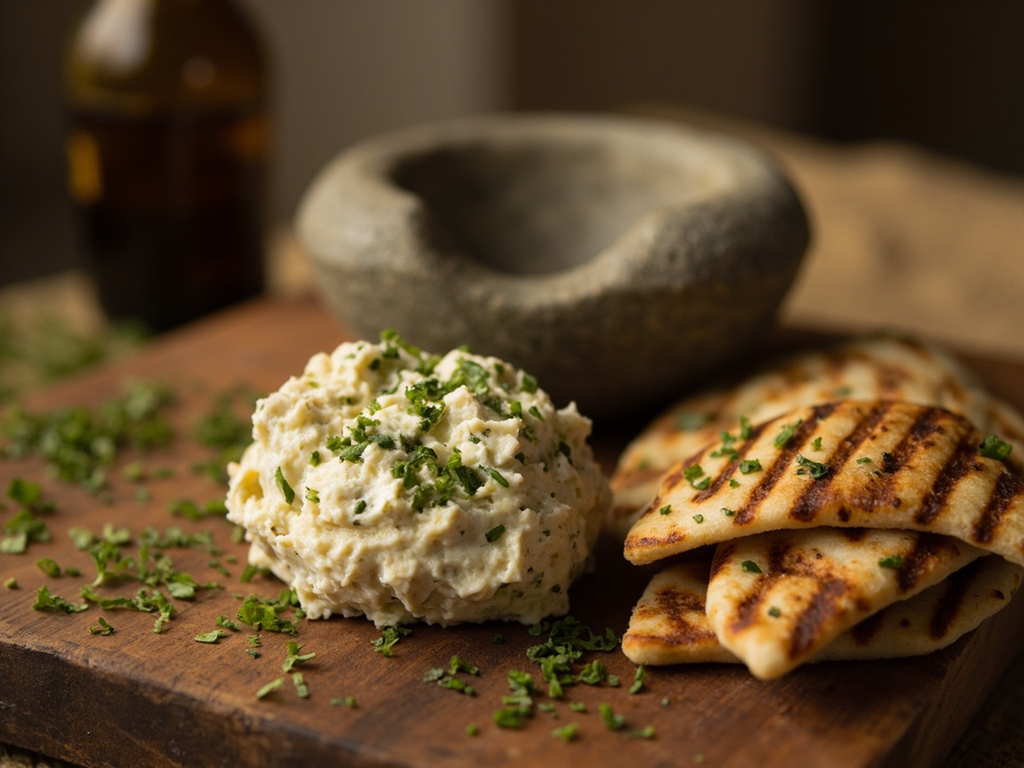
A firm paste of cheese crushed in a mortar with garlic, fresh herbs, salt, vinegar, and oil. It is spread on bread or rolled into a ball to preserve and carry.
Take the mortar, throw in the cheese, garlic, rue, and coriander, a little salt, and turn the pestle until all becomes one — thus is formed the soul of the wise, blending a thousand lessons into a single wisdom. What I love in this dish is that it comes from the land of my fathers, there in Baetica, where they do not lie about what they eat. Roll it into a ball, keep it for the road: a man nourished on little is never far from home. Frugality, you see, is a wealth you carry everywhere.
- •Fresh firm cheese (sheep's milk) — one lump (base)
- •Garlic — a few cloves (aromatic punch)
- •Fresh herbs (coriander, celery, rue) — a bunch (flavor)
- •Vinegar — a dash (acidity and preservation)
- •Olive oil — enough to bind (binder)
- •Salt — a pinch (seasoning and preservation)
Moretum — Herb and Garlic Cheese Spread
A firm paste of cheese crushed in a mortar with garlic, fresh herbs, salt, vinegar, and oil. It is spread on bread or rolled into a ball to preserve and carry.
Why this dish? Moretum is the snack of the peasant and the hurried city-dweller: a paste that keeps and travels, made from cheese and garden herbs. Originally from Hispania like Seneca (born in Corduba), it evokes the simple table of his native province, a world away from the Roman excesses he denounces.
Take the mortar, throw in the cheese, garlic, rue, and coriander, a little salt, and turn the pestle until all becomes one — thus is formed the soul of the wise, blending a thousand lessons into a single wisdom. What I love in this dish is that it comes from the land of my fathers, there in Baetica, where they do not lie about what they eat. Roll it into a ball, keep it for the road: a man nourished on little is never far from home. Frugality, you see, is a wealth you carry everywhere.
Ingredients (period version)
- Fresh firm cheese (sheep's milk) — one lump (base)
- Garlic — a few cloves (aromatic punch)
- Fresh herbs (coriander, celery, rue) — a bunch (flavor)
- Vinegar — a dash (acidity and preservation)
- Olive oil — enough to bind (binder)
- Salt — a pinch (seasoning and preservation)
Ingredients
- Fresh sheep's cheese or low-salt feta — 200 g (base)
- Garlic — 1–2 cloves (aromatic)
- Coriander and flat-leaf parsley (rue is hard to find, so omit or add a touch of celery) — 1 small bunch (herbs)
- White wine vinegar — 1 tsp (acidity)
- Olive oil — 2–3 tbsp (binder)
- Salt — 1 pinch (seasoning)
Method
- Peel the garlic and pound it in a mortar with a pinch of salt (or mash with a fork).
- Add the chopped herbs and continue pounding to release the aromas.
- Add the crumbled cheese and mash until a homogeneous paste forms.
- Loosen with vinegar, then oil, working until smooth and firm.
- Serve on toasted bread, or roll into a ball, wrap, and refrigerate for 3–4 days.
How it was made : Moretum is celebrated in a short Latin poem (the Appendix Vergiliana) describing a peasant preparing it at dawn in a mortar — hence its name, from the verb 'to grind.' Its content of salt, vinegar, and garlic made it a food that kept well, ideal for field work and travel.
The contemporary twist : At 2000 years' distance, it is the direct ancestor of pesto and fresh herb cheeses: serve it in a glass with breadsticks for an 'antique chic' appetizer.
Sources : Appendix Vergiliana, Moretum · Columella, De re rustica, XII
Seneca · Charactorium