 flip
flipBiwa in Syrup — Candied Japanese Loquats
Biwa in Syrup — Candied Japanese Loquats
Why this dish? A mischievous wink: biwa (枇杷), the Japanese loquat, shares its name with the biwa (琵琶), the lute that Benzaiten always holds. A sweet-tart summer fruit, it is preserved in vine syrup to last beyond its short season — as one keeps a melody in memory. A sweetness that sings the very name of the goddess of music.
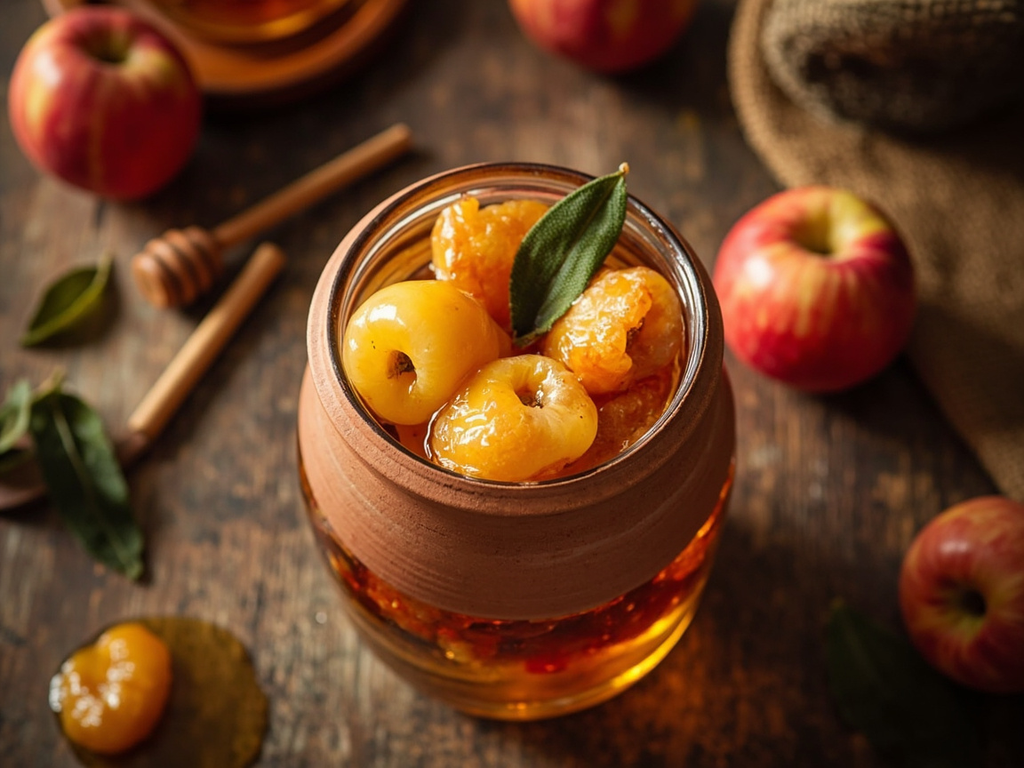
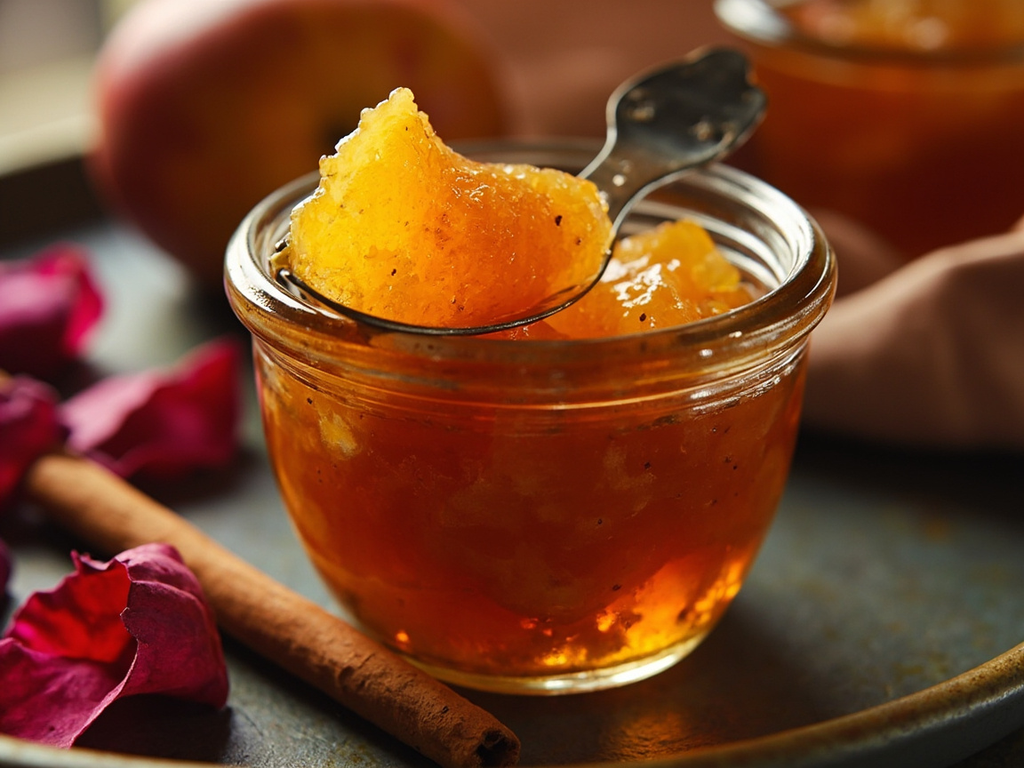
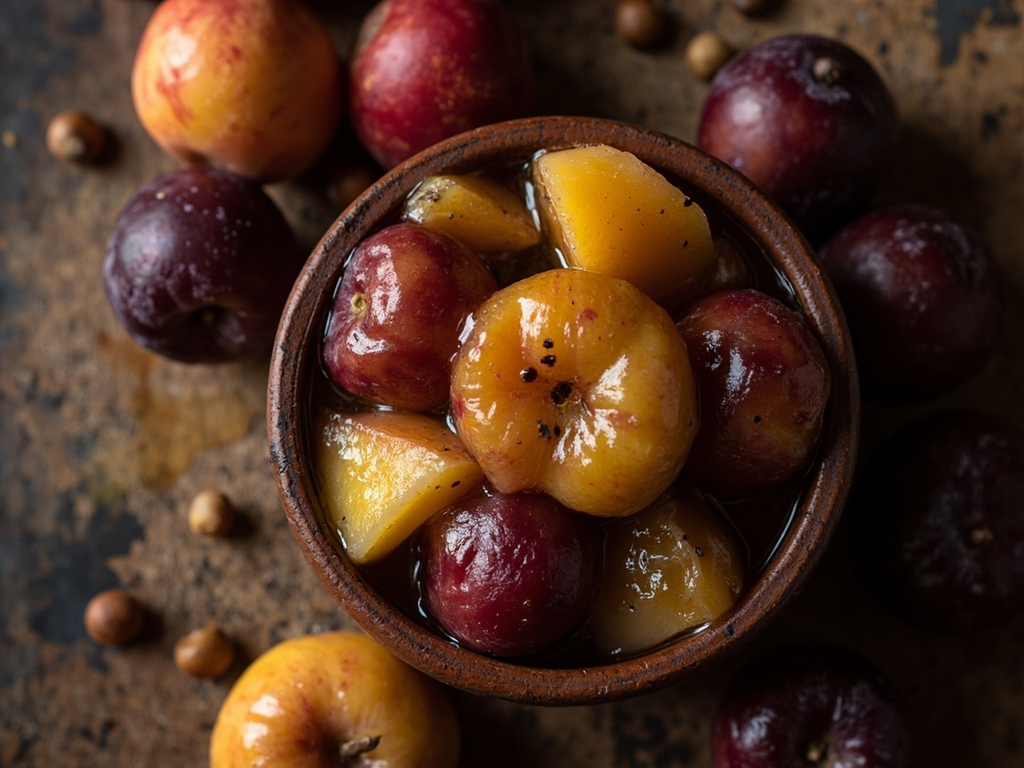
Japanese loquats gently poached in a fragrant syrup until translucent and tender, retaining their tangy edge. An end-of-meal confection that keeps, and whose name brings a smile to anyone who knows the goddess's lute.
Do you hold my lute in your eyes? It is called biwa — and this golden fruit is also called biwa: a game the gods never tire of. Its season is brief as a held note; so my maids preserve it in vine syrup so it may last. Eat it slowly, and let the sweet-sour linger on your tongue like a tune you cannot forget.
- •Japanese loquats (biwa) — a basket (seasonal fruit)
- •Amazura syrup (reduced vine sap) — to cover (candying and preservation)
- •Spring water — a little (thins the syrup)
Biwa in Syrup — Candied Japanese Loquats
Japanese loquats gently poached in a fragrant syrup until translucent and tender, retaining their tangy edge. An end-of-meal confection that keeps, and whose name brings a smile to anyone who knows the goddess's lute.
Why this dish? A mischievous wink: biwa (枇杷), the Japanese loquat, shares its name with the biwa (琵琶), the lute that Benzaiten always holds. A sweet-tart summer fruit, it is preserved in vine syrup to last beyond its short season — as one keeps a melody in memory. A sweetness that sings the very name of the goddess of music.
Do you hold my lute in your eyes? It is called biwa — and this golden fruit is also called biwa: a game the gods never tire of. Its season is brief as a held note; so my maids preserve it in vine syrup so it may last. Eat it slowly, and let the sweet-sour linger on your tongue like a tune you cannot forget.
Ingredients (period version)
- Japanese loquats (biwa) — a basket (seasonal fruit)
- Amazura syrup (reduced vine sap) — to cover (candying and preservation)
- Spring water — a little (thins the syrup)
Ingredients
- Japanese loquats (loquats) — 8 to 10 fruits (base)
- Sugar or mizuame — 80 g (syrup)
- Water — 200 ml (syrup)
- Dash of yuzu or lemon juice — 1 tsp (awakens acidity, prevents browning)
Method
- Gently peel the loquats, cut in half, remove the large glossy pits and thin membranes.
- Make a light syrup: bring water and sugar/mizuame to a simmer.
- Add the fruit, lower the heat, poach for 10–15 min at a very gentle simmer until translucent.
- Add the yuzu/lemon juice, let the fruit cool in the syrup.
- Store in the fridge in the syrup, in a jar — best after a night's rest.
How it was made : The biwa fruit, originally from China and naturalized early in Japan, was also valued for its leaves in medicinal infusions. Lacking sugar, fruits were preserved in honey or amazura, or dried. Candying extended a season of barely a few weeks.
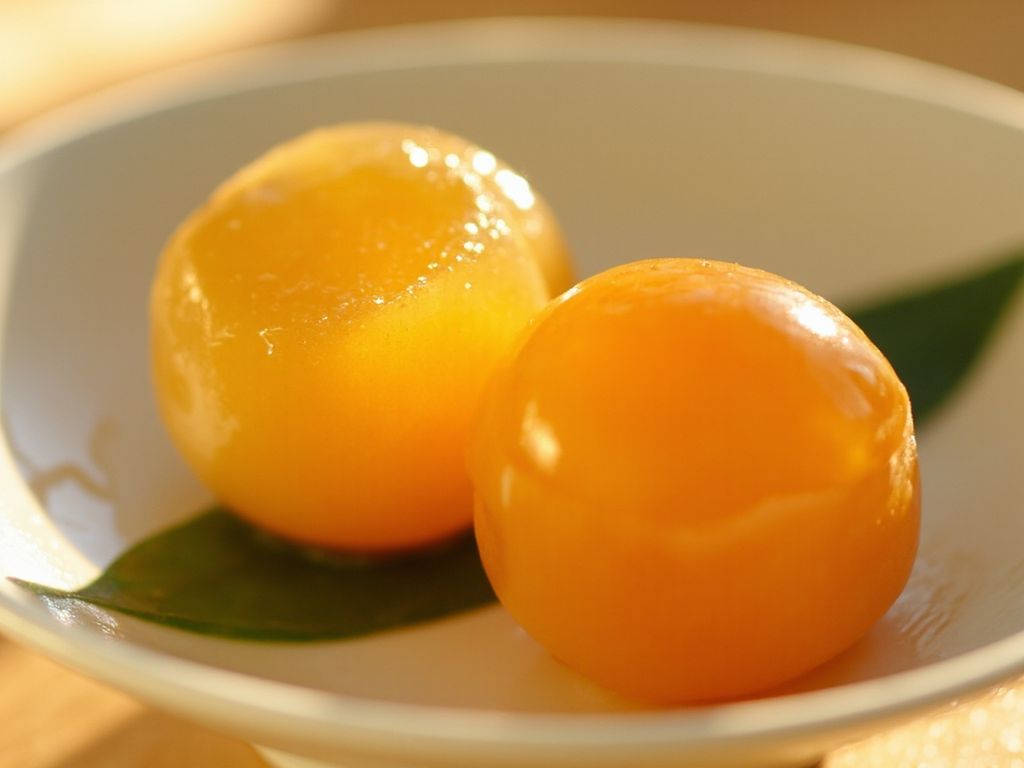
The contemporary twist : Serve a glossy half loquat on a green leaf, the syrup like varnish, beside a cup of tea: a wagashi minute that bears the name of the goddess's lute.
Sources : Makura no Sōshi (枕草子), Sei Shōnagon — use of amazura for sweets · Traditions of fruit preservation in honey/syrup (Heian period)
Benzaiten · Charactorium