 flip
flipHeqet — Sweet Emmer Beer
Heqet — Sweet Emmer Beer
Why this dish? Priest turned pharaoh, Ay poured beer as a libation to the gods he worked to restore after Akhenaten's heresy. Heqet was not mere pleasure: it accompanied every temple offering and, along with bread, formed the wages of workers and provisions for the dead.
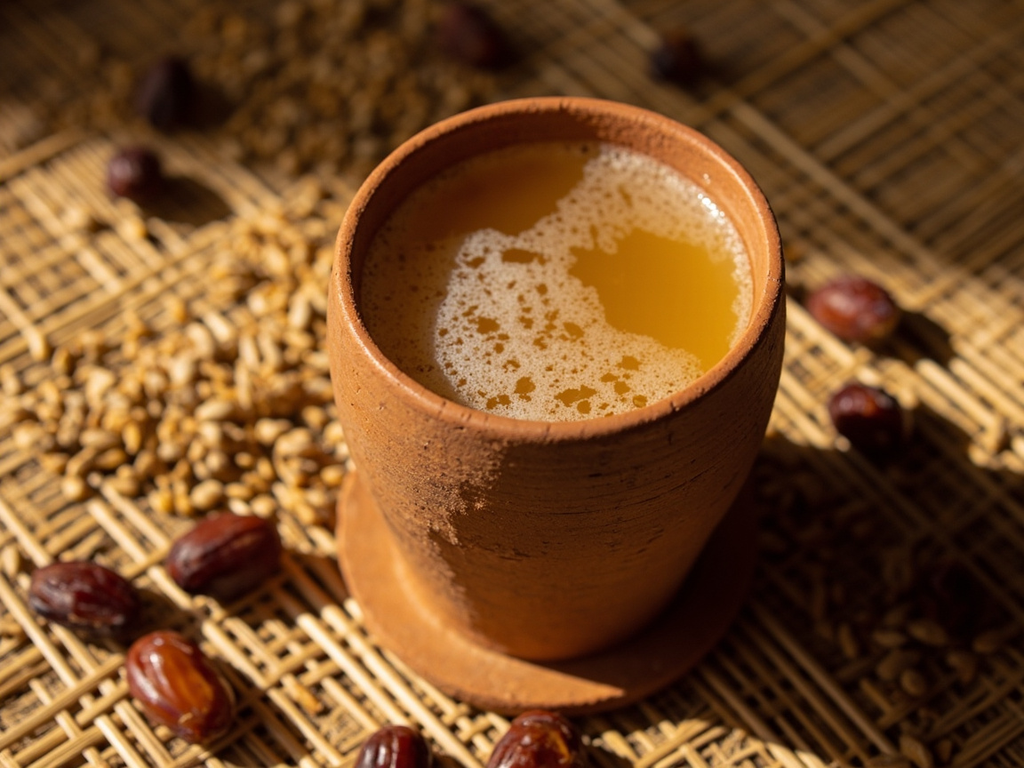
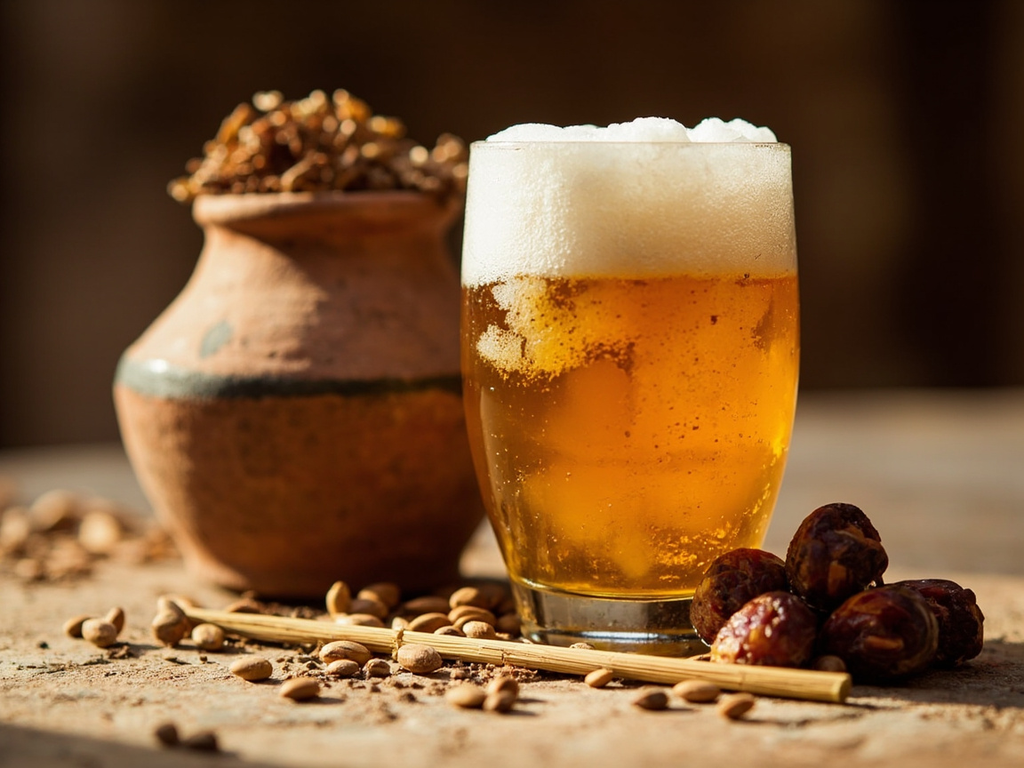
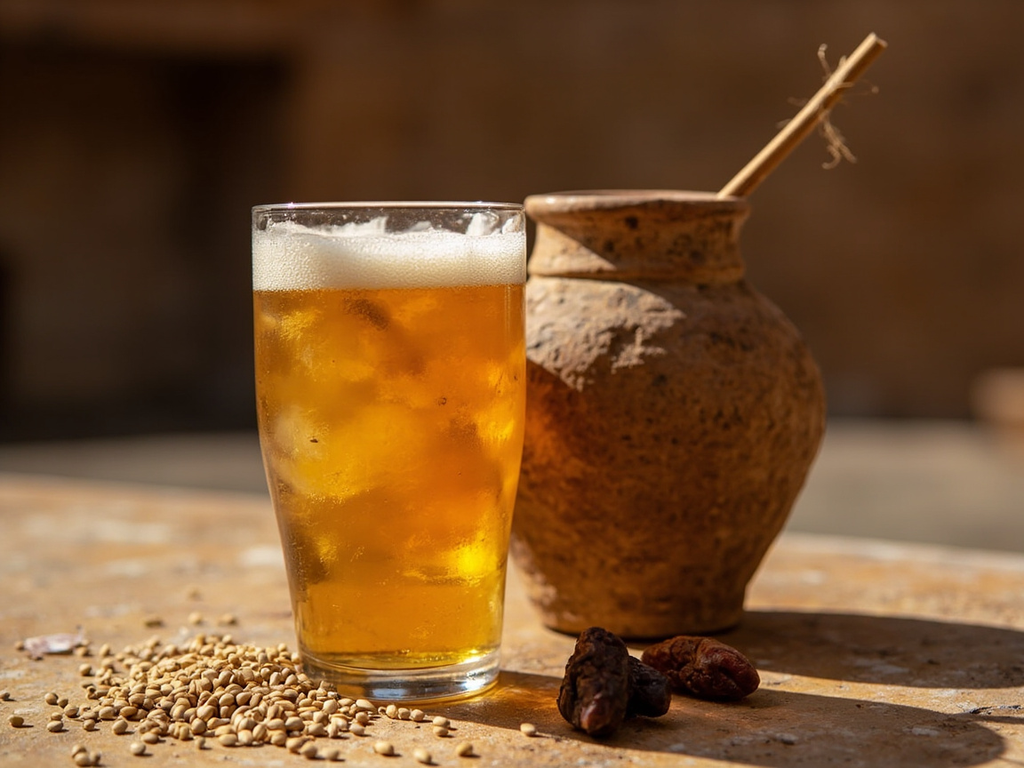
A thick, cloudy, low-alcohol beer, halfway between drink and liquid porridge. Slightly sweet from dates, tangy from fermentation, nourishing: it is the daily 'milk' of ancient Egypt.
Listen, you who will read my name: before I was king, I poured heqet upon the altars, for the gods are thirsty like men. We make barley and emmer swell, we bake barely set loaves, we crumble them into fresh water with dates, and let the brew work on its own until it sparkles. Strain it through a basket, drink it thick: it satisfies as much as it quenches, and it is this that I offered to Amun so that his temple might live again.
- •Barely baked emmer bread loaves — several (fermentable base)
- •Sprouted barley grains (malt) — one measure (sugars)
- •Ripe dates — a handful (sweetness and yeasts)
- •Fresh water — one jar (liquid)
Heqet — Sweet Emmer Beer
A thick, cloudy, low-alcohol beer, halfway between drink and liquid porridge. Slightly sweet from dates, tangy from fermentation, nourishing: it is the daily 'milk' of ancient Egypt.
Why this dish? Priest turned pharaoh, Ay poured beer as a libation to the gods he worked to restore after Akhenaten's heresy. Heqet was not mere pleasure: it accompanied every temple offering and, along with bread, formed the wages of workers and provisions for the dead.
Listen, you who will read my name: before I was king, I poured heqet upon the altars, for the gods are thirsty like men. We make barley and emmer swell, we bake barely set loaves, we crumble them into fresh water with dates, and let the brew work on its own until it sparkles. Strain it through a basket, drink it thick: it satisfies as much as it quenches, and it is this that I offered to Amun so that his temple might live again.
Ingredients (period version)
- Barely baked emmer bread loaves — several (fermentable base)
- Sprouted barley grains (malt) — one measure (sugars)
- Ripe dates — a handful (sweetness and yeasts)
- Fresh water — one jar (liquid)
Ingredients
- Crushed barley malt (or hulled sprouted barley) — 300 g
- Unsalted whole wheat bread, underbaked, crumbled — 200 g
- Pitted dates — 150 g
- Spring water — 2 liters
- Pinch of baker's yeast (optional, to kick-start) — 1 g
Method
- Heat (without boiling) the water with the crushed malt at 65 °C for 1 hour to release the sugars, then let cool.
- Crumble the bread and blend the dates with a little liquid; incorporate everything into the mixture.
- Pour into a wide container covered with a cloth and let ferment for 2 to 3 days at room temperature (add the pinch of yeast to ensure fermentation starts).
- Stir daily; the mixture fizzes and turns sour.
- Strain through a fine sieve or cloth (the Egyptian basket-filter gesture). Drink fresh within 1 to 2 days. Very low alcohol beverage — a non-fermented version is possible by stopping after the sweetening step.
How it was made : For a long time, Egyptian beer was thought to be made from crumbled bread; microscopic analyses by Delwen Samuel revealed a more subtle process combining malt and separately heated starch. Strained through baskets, stored in sealed jars, it had low alcohol content and was drunk thick, sometimes through a straw. Men, women, and children consumed it daily: it was as much a food as a drink.
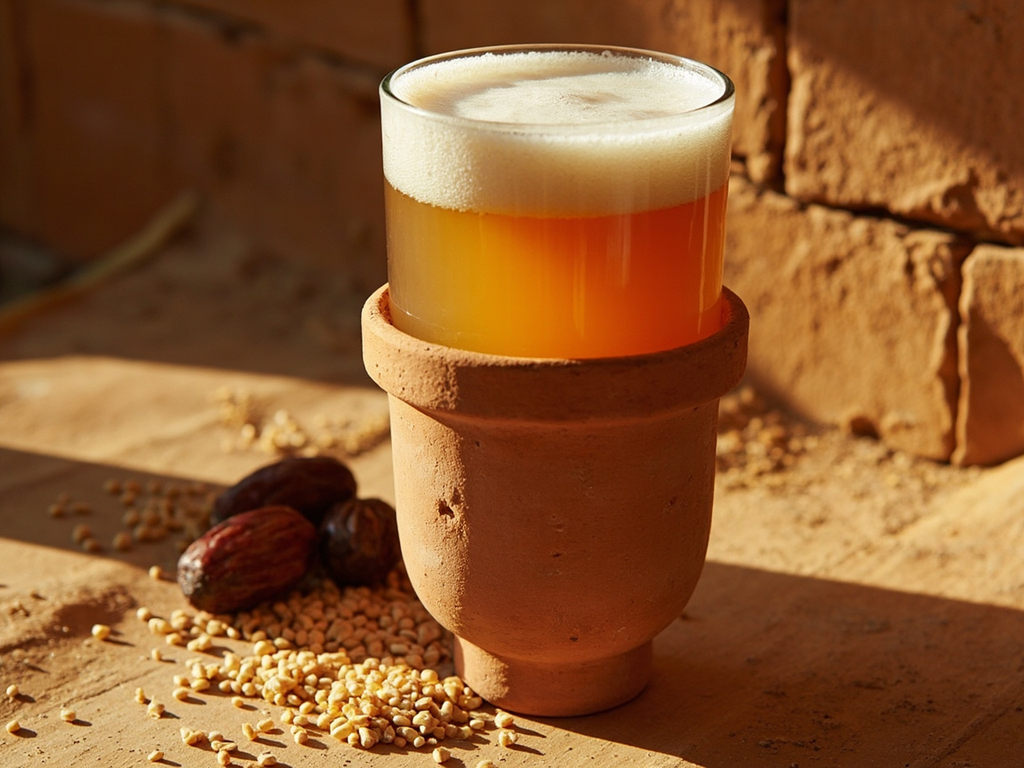
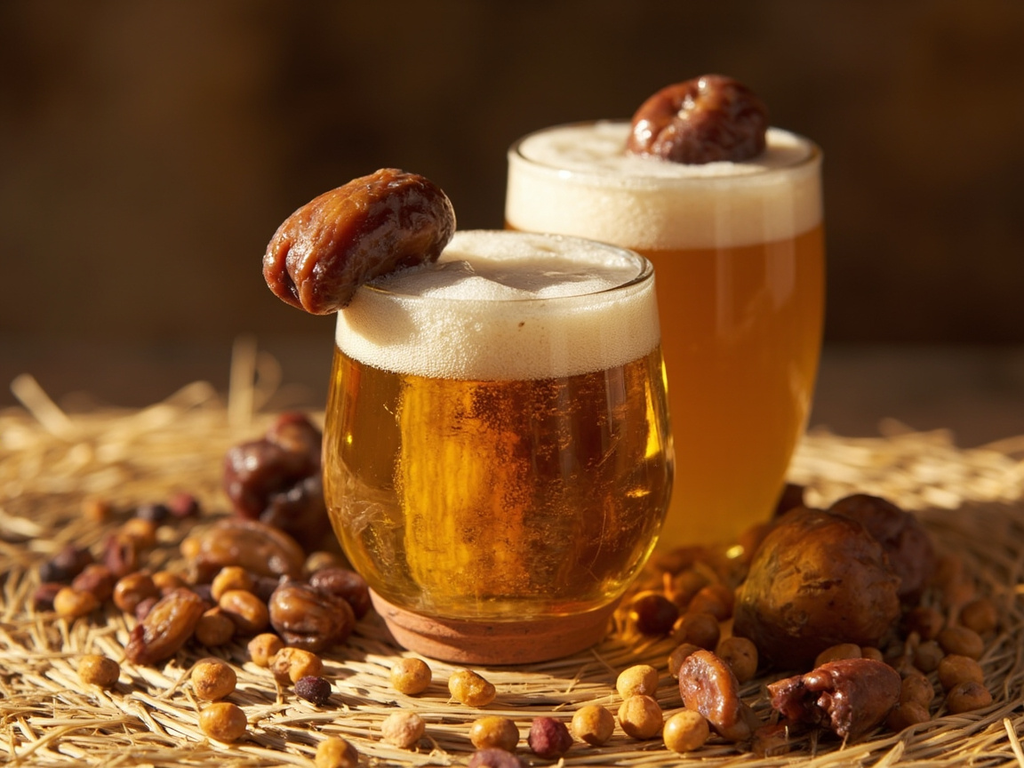
The contemporary twist : Serve chilled in a terracotta cup with a date perched on the rim — a cloudy golden 'pharaoh's beer' to present as an aperitif for a themed dinner.
Sources : Delwen Samuel, "Investigation of Ancient Egyptian Baking and Brewing Methods by Correlative Microscopy", Science, 1996 · Pierre Tallet, La cuisine des pharaons, Actes Sud, 2015
Ay · Charactorium