 flip
flipChelow ba za'farán — Festive Persian Saffron Rice
Chelow ba za'farán — Festive Persian Saffron Rice
Why this dish? Persian-style rice was the dish of honor, served to guests and on feast days. Born into a noble family in Tehran before exile, Bahá'u'lláh knew this refined cuisine: a chelow crowned with its golden crust (tahdíg) and perfumed with saffron from Khorasan.
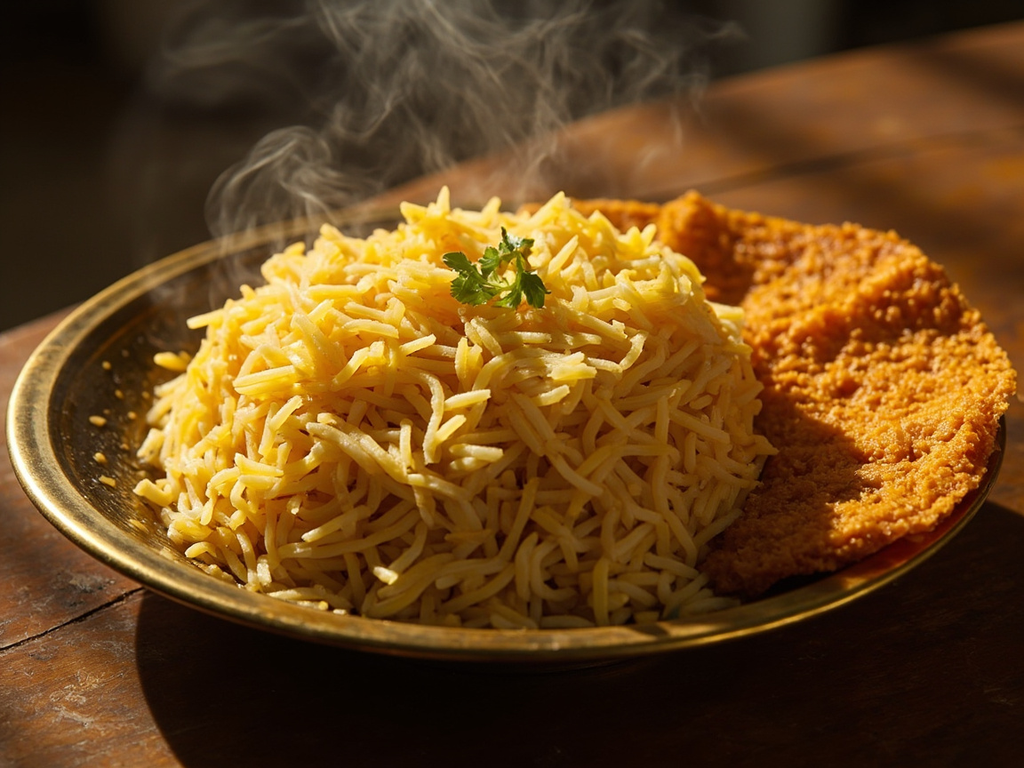
Persian rice in its glory: long grains washed, parboiled, then steamed until a crispy golden crust forms underneath, the famous tahdíg. It is veiled with saffron-tinted rice and served as a fragrant mound, the pride of every Persian household.
In the days when my father's house received guests, they brought the rice as one brings a crown. Look carefully: each grain must stand alone, long and light like a verse of poetry, never clinging to its neighbor. At the bottom of the pot forms the tahdíg, that golden crust the children argue over — patience and low heat are its only secrets. And over it, I pour the saffron dissolved in a little hot water, so that the white is illuminated with amber. Help yourself, and may the table be blessed.
- •Long-grain rice (Gilan rice) — as needed (base)
- •Saffron — a pinch infused (fragrance, color, prestige)
- •Clarified butter (roghan) — generous (crispness of tahdíg)
- •Salt — for soaking and water (seasoning)
Chelow ba za'farán — Festive Persian Saffron Rice
Persian rice in its glory: long grains washed, parboiled, then steamed until a crispy golden crust forms underneath, the famous tahdíg. It is veiled with saffron-tinted rice and served as a fragrant mound, the pride of every Persian household.
Why this dish? Persian-style rice was the dish of honor, served to guests and on feast days. Born into a noble family in Tehran before exile, Bahá'u'lláh knew this refined cuisine: a chelow crowned with its golden crust (tahdíg) and perfumed with saffron from Khorasan.
In the days when my father's house received guests, they brought the rice as one brings a crown. Look carefully: each grain must stand alone, long and light like a verse of poetry, never clinging to its neighbor. At the bottom of the pot forms the tahdíg, that golden crust the children argue over — patience and low heat are its only secrets. And over it, I pour the saffron dissolved in a little hot water, so that the white is illuminated with amber. Help yourself, and may the table be blessed.
Ingredients (period version)
- Long-grain rice (Gilan rice) — as needed (base)
- Saffron — a pinch infused (fragrance, color, prestige)
- Clarified butter (roghan) — generous (crispness of tahdíg)
- Salt — for soaking and water (seasoning)
Ingredients
- Basmati rice — 400 g (2 cups) (base)
- Saffron threads — 1 pinch, ground, infused in 3 tbsp hot water (fragrance, color)
- Butter or ghee — 60 g (crispy tahdíg)
- Neutral oil — 2 tbsp (cooking base)
- Salt — generously (seasoning)
- Yogurt + a slice of lavash bread (optional) — 1 pot (tahdíg variation)
Method
- Rinse the rice several times until water runs clear, then soak in salted water for 1 hour.
- Plunge the rice into a large pot of boiling salted water for 6–8 min: it should be tender outside, firm at the core. Drain.
- In the pot, heat oil and a little butter. For the tahdíg, spread a layer of rice (or potato slices / buttered lavash bread).
- Pour the remaining rice in a mound, make a few holes with a spoon handle for steam. Cover with a cloth and the lid.
- Cook on low heat for 40–50 min: steam lifts the rice, the bottom turns golden into tahdíg.
- Scoop out a few spoonfuls of rice, mix with infused saffron. Mound the white rice, sprinkle with saffron rice, break and serve the golden tahdíg separately.
How it was made : Mastery of steamed rice (polow/chelow with its tahdíg) has been the quintessential Persian culinary art since Safavid times. Saffron, cultivated in Khorasan, was worth its weight in gold and signaled a dish of honor. A good cook was judged by the grain's separation and the perfection of the golden crust.
The contemporary twist : Unmold the chelow like a cake to reveal the tahdíg on top, "tarte tatin of rice" style, and crown with saffron threads and rose petals.
Sources : Margaret Shaida, The Legendary Cuisine of Persia · Najmieh Batmanglij, Food of Life
Bahá'u'lláh · Charactorium