 flip
flipSamovar Chái — Persian Saffron and Cardamom Tea
Samovar Chái — Persian Saffron and Cardamom Tea
Why this dish? The teapot and samovar are among Bahá'u'lláh's typical objects. Tea is the soul of Persian hospitality: offering a glass of chái to anyone who enters is a sacred duty, and one easily imagines the steaming samovar during meetings at the Mansion of Bahjí, where pilgrims and visitors came.
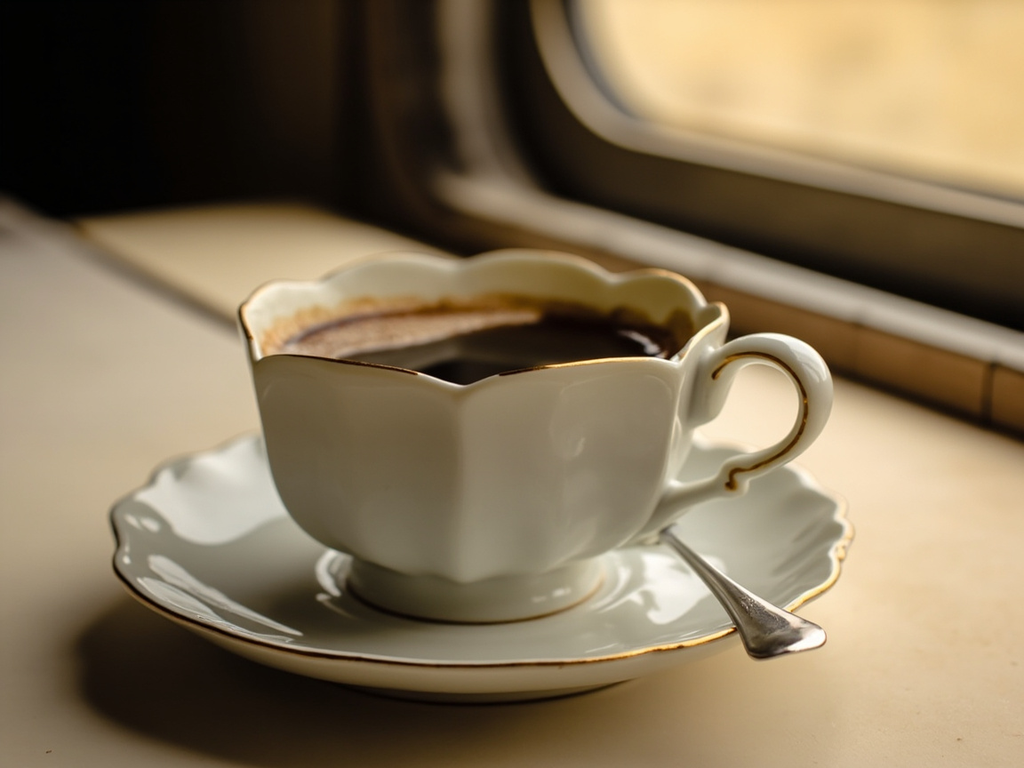
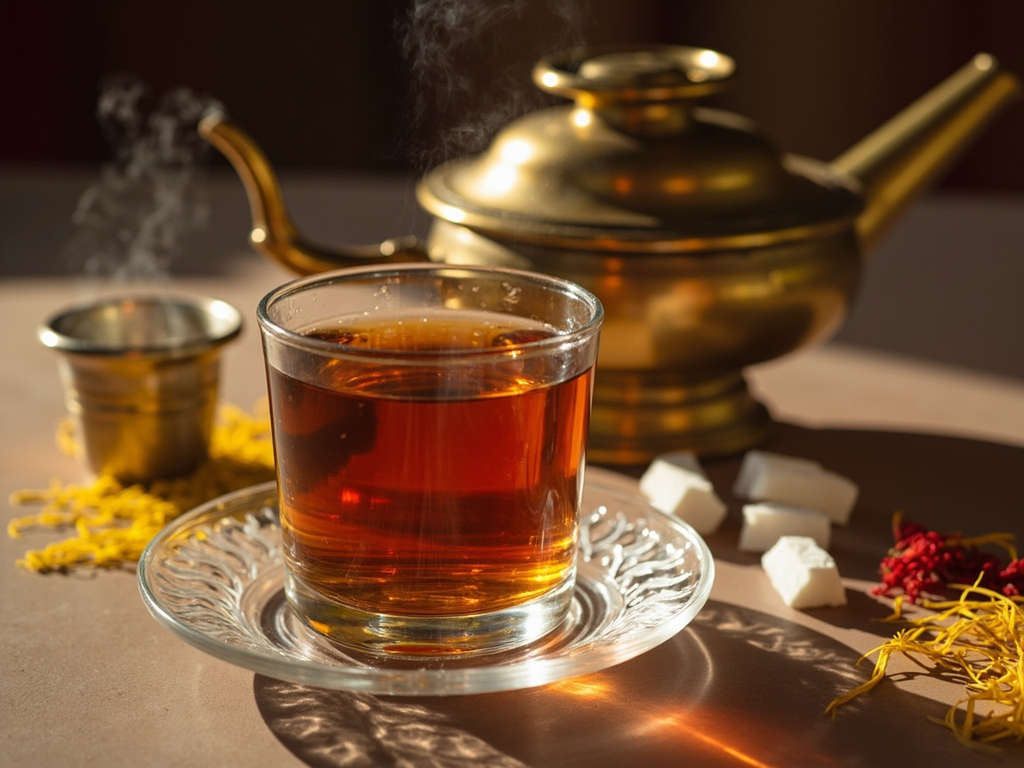
A strong black tea, brewed atop the samovar then diluted with boiling water at serving time. It is perfumed with a hint of saffron and cardamom, and drunk in small glasses (estekán), often with a sugar cube held between the teeth.
Sit down, the samovar is already singing. See the teapot crowning the brazier like a dervish crowns his táj: above, the strong essence of tea; below, the water that boils without rest. I pour a finger of the brew, then clear water, and each one adjusts the strength according to his heart. Take this sugar cube between your lips and let the tea flow over it — thus we spoke for hours, hosts and travellers, for no one leaves this house without having drunk.
- •Black tea leaves — a few spoonfuls (concentrated mother infusion)
- •Boiling water (from samovar) — as needed (dilutes the infusion)
- •Saffron — a few threads (fragrance and golden color)
- •Green cardamom — 1 crushed pod (aroma)
- •Lump sugar (qand) — to taste (to crunch or melt)
Samovar Chái — Persian Saffron and Cardamom Tea
A strong black tea, brewed atop the samovar then diluted with boiling water at serving time. It is perfumed with a hint of saffron and cardamom, and drunk in small glasses (estekán), often with a sugar cube held between the teeth.
Why this dish? The teapot and samovar are among Bahá'u'lláh's typical objects. Tea is the soul of Persian hospitality: offering a glass of chái to anyone who enters is a sacred duty, and one easily imagines the steaming samovar during meetings at the Mansion of Bahjí, where pilgrims and visitors came.
Sit down, the samovar is already singing. See the teapot crowning the brazier like a dervish crowns his táj: above, the strong essence of tea; below, the water that boils without rest. I pour a finger of the brew, then clear water, and each one adjusts the strength according to his heart. Take this sugar cube between your lips and let the tea flow over it — thus we spoke for hours, hosts and travellers, for no one leaves this house without having drunk.
Ingredients (period version)
- Black tea leaves — a few spoonfuls (concentrated mother infusion)
- Boiling water (from samovar) — as needed (dilutes the infusion)
- Saffron — a few threads (fragrance and golden color)
- Green cardamom — 1 crushed pod (aroma)
- Lump sugar (qand) — to taste (to crunch or melt)
Ingredients
- Loose black tea (Ceylon or Darjeeling) — 3 tsp (mother infusion)
- Simmering water — 1 liter (dilution)
- Saffron threads — 1 small pinch (fragrance, color)
- Green cardamom — 2 crushed pods (aroma)
- Lump sugar or sugar crystals (nabât) — as desired (to crunch)
- Rose water (optional) — a few drops (floral note)
Method
- Bring water to a boil. Pour a little over the tea leaves in a teapot, add crushed cardamom and saffron.
- Place the teapot on top of the boiling water reservoir (or keep very hot) and steep for 10–15 min: you get a dark mother infusion.
- In each small glass, pour a base of mother infusion then top up with boiling water: little for light tea (kam-rang), much infusion for strong tea (por-rang).
- Serve boiling hot, with sugar cubes on the side. Add a drop of rose water if desired.
- Drink by placing the sugar between your teeth and sipping the tea over it, Persian style.
How it was made : The samovar (Russian in origin) spread to Persia in the 19th century via trade with Russia. The central hearth heated the water, and the teapot (qoorí) sat on top to stay hot. Tea then supplanted coffee as the national drink. It was rarely sweetened in the cup: sugar was crunched on the side.
The contemporary twist : Serve in transparent estekán glasses to admire the amber color, with a saffron sugar crystal (nabât) to swirl in the tea.
Sources : Najmieh Batmanglij, Food of Life · Rudolph Matthee, The Pursuit of Pleasure: Drugs and Stimulants in Iranian History
Bahá'u'lláh · Charactorium