 flip
flipKåldolmar — stuffed cabbage leaves Bender-style
Kåldolmar — stuffed cabbage leaves Bender-style
Why this dish? After the crushing defeat at Poltava (1709), Charles XII took refuge for five years in Bender, in Ottoman territory. Tradition says he brought back a taste for dolma — stuffing rolled in a leaf — which Swedish cooks adapted to northern cabbage for lack of vine leaves. Kåldolmar would thus be the trace, on the plate, of the king's Eastern exile.
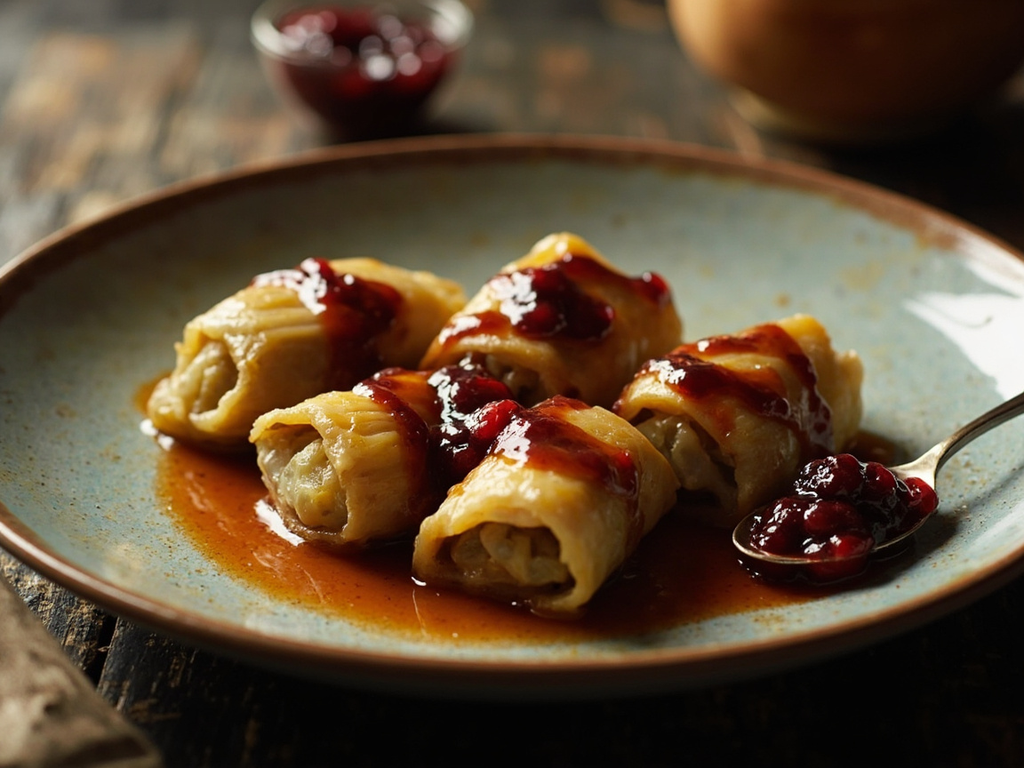
Blanched cabbage leaves filled with a mixture of minced meat and rice, rolled and gently braised, served with a thickened gravy and lingonberries. The marriage of Nordic cabbage and Ottoman dolma technique.
They thought me lost, stranded five years with the Sultan in Bender, far from my snows. But I learned something there: the Turks roll their meat and rice in a leaf, tight as a soldier in his coat. Back home, I wanted that taste again — no vine leaves under our skies, so cabbage it is! Scald the leaf, lay the stuffing on it, roll it tight, and braise slowly. Eat them hot, with those red forest berries: it's the Orient and the North in one mouthful.
- •White cabbage — one, with large leaves (wrapper)
- •Minced meat (beef and pork) — a good portion (filling)
- •Rice — a handful, already cooked (binder for filling)
- •Onion — one, finely chopped (aromatic)
- •Milk or cream — a little (moistness)
- •White pepper and salt — to taste (seasoning)
- •Lingonberries — for serving (tart accompaniment)
Kåldolmar — stuffed cabbage leaves Bender-style
Blanched cabbage leaves filled with a mixture of minced meat and rice, rolled and gently braised, served with a thickened gravy and lingonberries. The marriage of Nordic cabbage and Ottoman dolma technique.
Why this dish? After the crushing defeat at Poltava (1709), Charles XII took refuge for five years in Bender, in Ottoman territory. Tradition says he brought back a taste for dolma — stuffing rolled in a leaf — which Swedish cooks adapted to northern cabbage for lack of vine leaves. Kåldolmar would thus be the trace, on the plate, of the king's Eastern exile.
They thought me lost, stranded five years with the Sultan in Bender, far from my snows. But I learned something there: the Turks roll their meat and rice in a leaf, tight as a soldier in his coat. Back home, I wanted that taste again — no vine leaves under our skies, so cabbage it is! Scald the leaf, lay the stuffing on it, roll it tight, and braise slowly. Eat them hot, with those red forest berries: it's the Orient and the North in one mouthful.
Ingredients (period version)
- White cabbage — one, with large leaves (wrapper)
- Minced meat (beef and pork) — a good portion (filling)
- Rice — a handful, already cooked (binder for filling)
- Onion — one, finely chopped (aromatic)
- Milk or cream — a little (moistness)
- White pepper and salt — to taste (seasoning)
- Lingonberries — for serving (tart accompaniment)
Ingredients
- White cabbage — 1 large head (wrapper)
- Minced beef and pork (half and half) — 500 g (filling)
- Cooked round rice — 150 g (cooked weight) (binder for filling)
- Onion — 1, finely chopped (aromatic)
- Cream or milk — 80 ml (moistness)
- White pepper — 1/2 tsp (signature period spice)
- Ground allspice — 1 pinch (modern option) (warm oriental note)
- Butter — 30 g (braising)
- Broth — 300 ml (braising liquid)
- Lingonberry jam — for serving (tart accompaniment)
Method
- Detach cabbage leaves, blanch in salted boiling water for 3-4 minutes until pliable, then drain and flatten the central rib.
- Mix the minced meat, cooked rice, onion, cream, white pepper (and allspice if desired), and salt.
- Place a spoonful of filling on each leaf, fold in the sides, and roll tightly.
- Brown the rolls in butter in a casserole dish, seam side down.
- Add the broth, cover, and braise over low heat for 45 minutes to 1 hour, basting occasionally.
- Thicken the cooking juices and serve the kåldolmar coated with the gravy, with lingonberry jam on the side.
How it was made : Rice, imported and costly, made kåldolmar a dish for the well-off or for festive occasions, not a soldier's everyday fare. The attribution to Charles XII is a persistent popular tradition rather than proven fact — but the Swedish court returning from the Ottoman Empire was indeed a channel for Eastern influences in the 18th century.
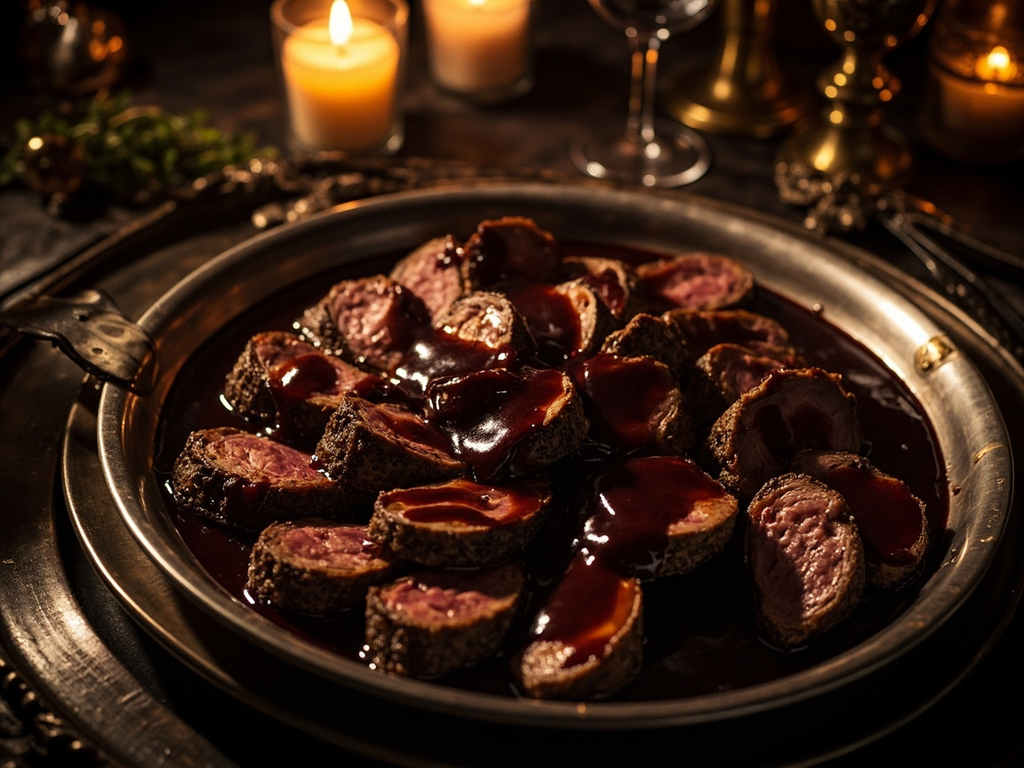
The contemporary twist : In Sweden, November 30 — the anniversary of the king's death — is unofficially 'kåldolmar day'. Arrange them in a staggered row, glazed with shiny gravy and a streak of lingonberries.
Sources : Cajsa Warg, Hjelpreda i Hushållningen för Unga Fruentimber (1755) · Swedish folk tradition linking kåldolmar to Charles XII's exile in Bender
Charles XII of Sweden · Charactorium