 flip
flipMorning Barley Flatbread with Oil
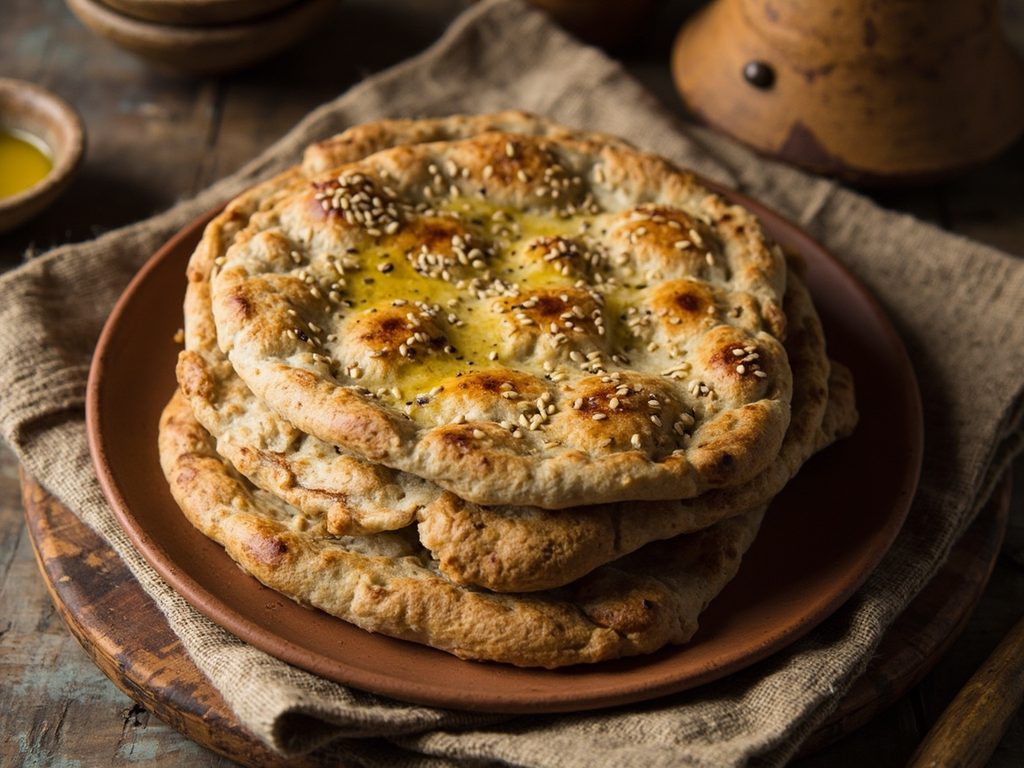
Morning Barley Flatbread with Oil
Why this dish? The bread baked each day was the humblest and most constant offering in Semitic temples: it was set before the god before the priests ate it. For the deity of Ekron as for all, warm barley bread with oil was the daily bread.
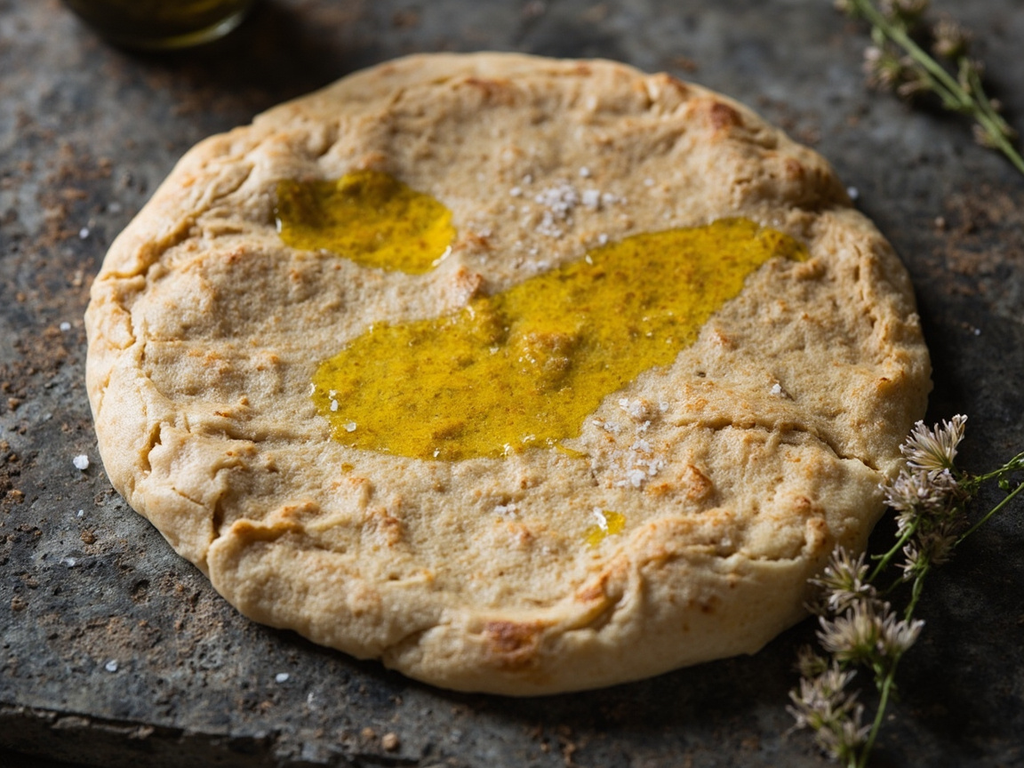
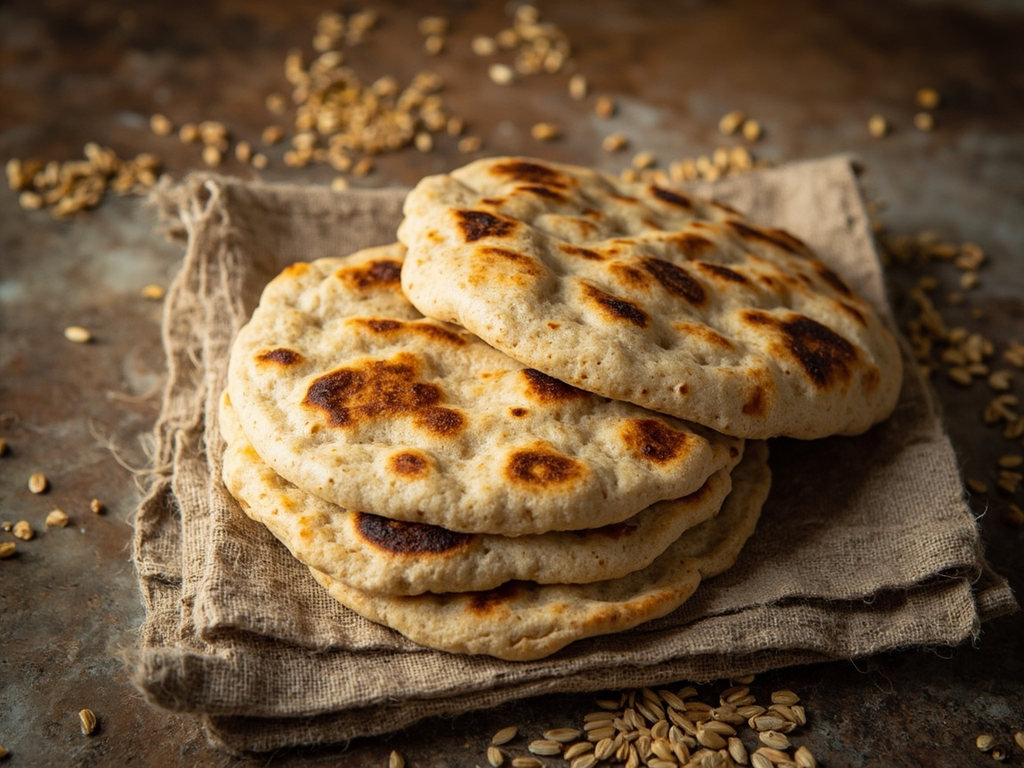
Flatbread of barley and wheat, kneaded with water and olive oil, baked on a hot stone or against the wall of a clay oven. Dense, rustic, perfumed with sesame — the ordinary bread of the ancient Levant.
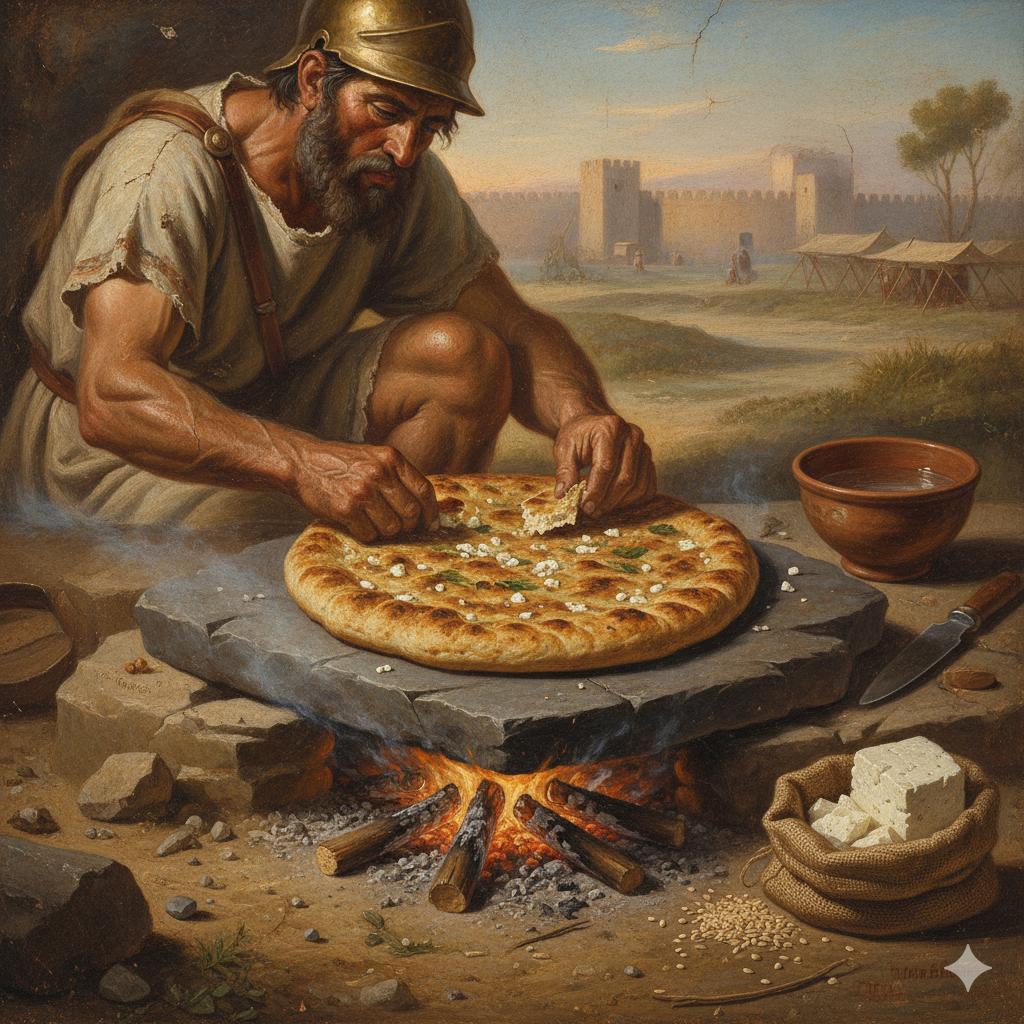
You think I feast only on flesh and terror? Every dawn, my temple smelled of warm barley: my servants kneaded the dough before daybreak, flattened it with their palms, stuck it on the oven stone. They set a steaming portion for me before biting into it themselves. Pour oil on it without measure — in Ekron it flowed like a river — and sprinkle with sesame: this is the bread that those who served me ate.
- •Barley and wheat flour — mixed in parts (base)
- •Ekron olive oil — a good drizzle (softness and flavor)
- •Water — as needed (binder)
- •Sesame seeds — a handful (garnish)
- •Salt — a pinch (seasoning)
Morning Barley Flatbread with Oil
Flatbread of barley and wheat, kneaded with water and olive oil, baked on a hot stone or against the wall of a clay oven. Dense, rustic, perfumed with sesame — the ordinary bread of the ancient Levant.
Why this dish? The bread baked each day was the humblest and most constant offering in Semitic temples: it was set before the god before the priests ate it. For the deity of Ekron as for all, warm barley bread with oil was the daily bread.
You think I feast only on flesh and terror? Every dawn, my temple smelled of warm barley: my servants kneaded the dough before daybreak, flattened it with their palms, stuck it on the oven stone. They set a steaming portion for me before biting into it themselves. Pour oil on it without measure — in Ekron it flowed like a river — and sprinkle with sesame: this is the bread that those who served me ate.
Ingredients (period version)
- Barley and wheat flour — mixed in parts (base)
- Ekron olive oil — a good drizzle (softness and flavor)
- Water — as needed (binder)
- Sesame seeds — a handful (garnish)
- Salt — a pinch (seasoning)
Ingredients
- Barley flour — 150 g (base)
- Wheat flour (T80) — 150 g (base, structure)
- Extra virgin olive oil — 4 tbsp (softness)
- Warm water — 180 ml approx. (binder)
- Sesame seeds — 2 tbsp (garnish)
- Salt — 1 tsp (seasoning)
Method
- Mix flours and salt, add oil then water little by little until a soft, non-sticky dough forms.
- Knead for 5 minutes, cover, and let rest for 30 minutes.
- Divide into balls, flatten thinly by hand or rolling pin into 15 cm discs.
- Cook on a hot stone or cast-iron pan for 2-3 minutes per side, until golden blisters appear.
- Brush with olive oil upon removal, sprinkle with sesame, and serve warm.
How it was made : Barley was the everyday grain of the poor; wheat, more expensive, signaled wealth. Unleavened flatbreads were baked on hot stones or against the wall of a tannour clay oven, several times a day, since bread staled quickly. Olive oil, a major resource of Ekron, accompanied nearly every bite.
The contemporary twist : Fold the warm flatbread around a spoonful of za'atar and oil: the world's simplest snack, three thousand years old.
Sources : Nathan MacDonald, What Did the Ancient Israelites Eat? · Archaeobotanical studies of the Iron Age Levant (barley, wheat, sesame)
Beelzebub · Charactorium