 flip
flipRoasted Lamb with Bitter Herbs from the Communion Banquet
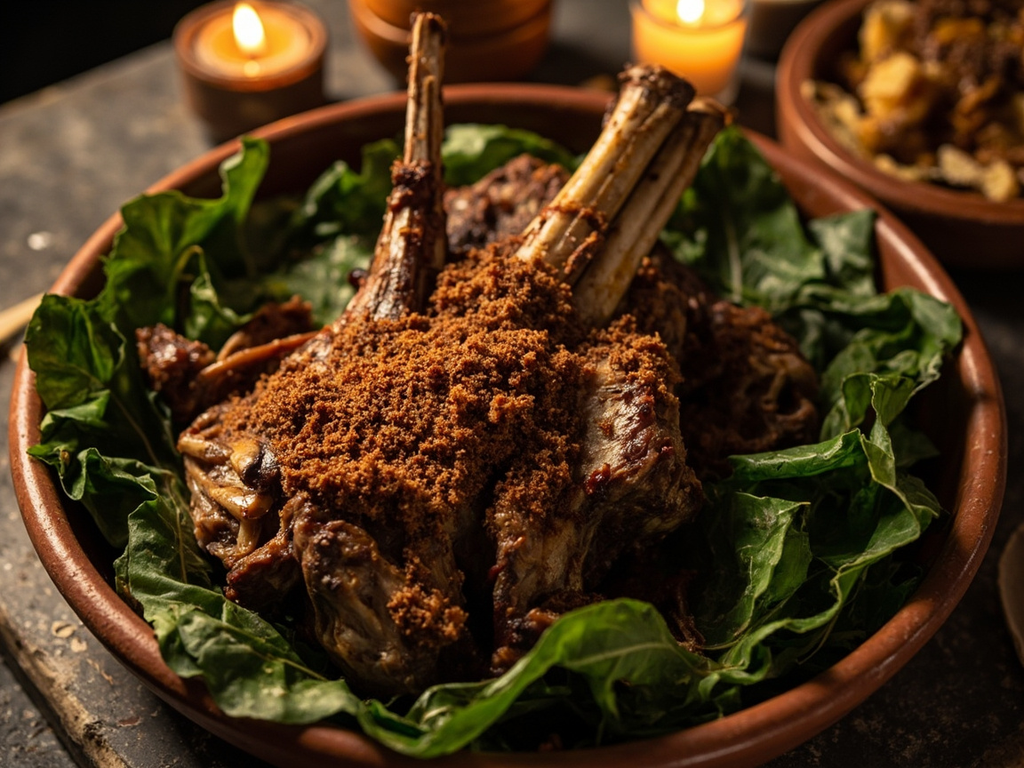
Roasted Lamb with Bitter Herbs from the Communion Banquet
Why this dish? The cult of Baal-Peor culminated, like all Levantine cults, with the slaughter of an animal whose flesh was roasted and shared in a banquet. Belphegor, prince who presides over feasts, symbolically heads this table of excess where austerity is forgotten.
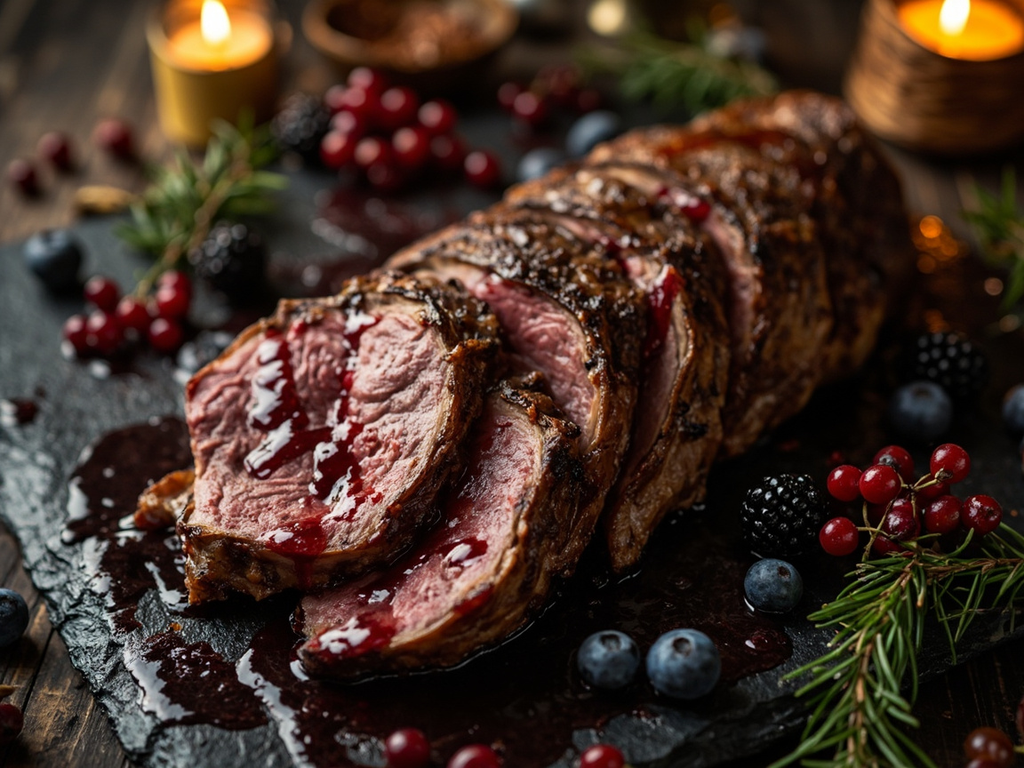
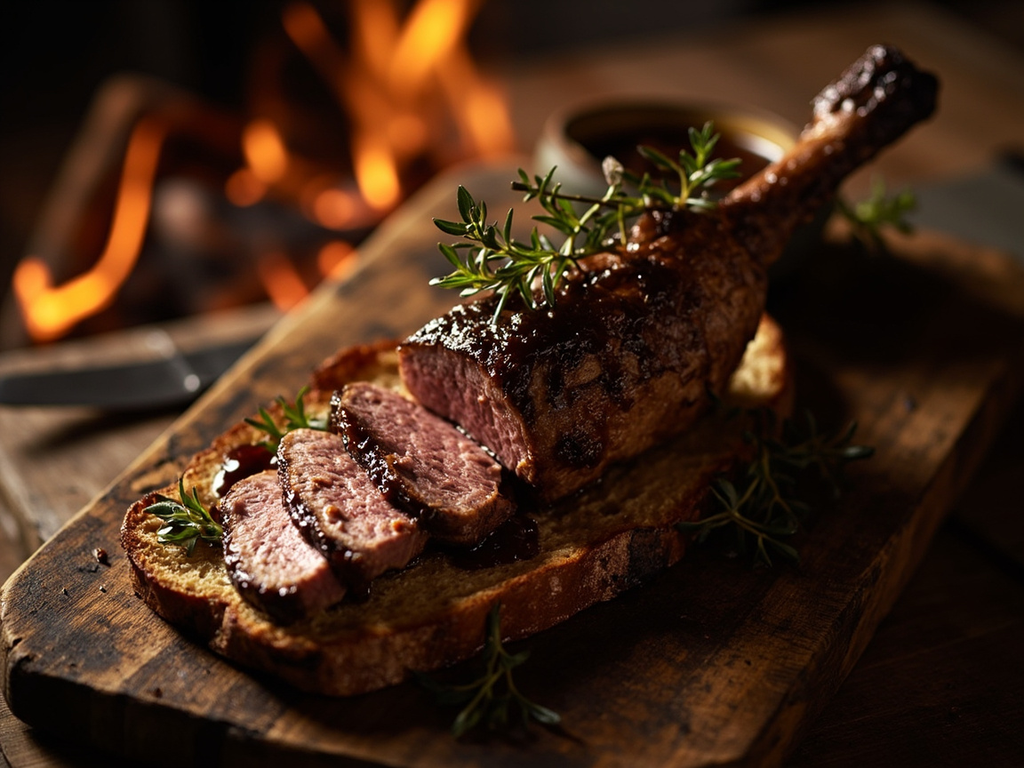
A lamb shoulder rubbed with cumin and coriander, slow-roasted and served on a bed of bitter herbs. The fat, tender meat against the green bitterness: the festive dish par excellence of the ancient Near East.
Do you see that fat beast turning over the embers? That is what men offered me on the mountain, and what I let them devour afterwards — for nothing ruins a soul like a full belly. Rub the meat with cumin, lay it on bitter herbs so that it seems even sweeter, and take your time: the slow fire rewards those who know how to wait without doing anything. Eat, friend, and let satiety close your eyes.
- •Lamb shoulder — one piece for the table (sacrificial meat)
- •Cumin — ground in a mortar (master spice)
- •Coriander seeds — ground (flavor)
- •Garlic — several cloves (aromatic)
- •Olive oil — generous (anointing and cooking)
- •Bitter herbs (wild rocket, hyssop, dandelion) — a large bunch (bed and contrast)
- •Salt — by hand (seasoning)
Roasted Lamb with Bitter Herbs from the Communion Banquet
A lamb shoulder rubbed with cumin and coriander, slow-roasted and served on a bed of bitter herbs. The fat, tender meat against the green bitterness: the festive dish par excellence of the ancient Near East.
Why this dish? The cult of Baal-Peor culminated, like all Levantine cults, with the slaughter of an animal whose flesh was roasted and shared in a banquet. Belphegor, prince who presides over feasts, symbolically heads this table of excess where austerity is forgotten.
Do you see that fat beast turning over the embers? That is what men offered me on the mountain, and what I let them devour afterwards — for nothing ruins a soul like a full belly. Rub the meat with cumin, lay it on bitter herbs so that it seems even sweeter, and take your time: the slow fire rewards those who know how to wait without doing anything. Eat, friend, and let satiety close your eyes.
Ingredients (period version)
- Lamb shoulder — one piece for the table (sacrificial meat)
- Cumin — ground in a mortar (master spice)
- Coriander seeds — ground (flavor)
- Garlic — several cloves (aromatic)
- Olive oil — generous (anointing and cooking)
- Bitter herbs (wild rocket, hyssop, dandelion) — a large bunch (bed and contrast)
- Salt — by hand (seasoning)
Ingredients
- Lamb shoulder — 1.5 kg (sacrificial meat)
- Ground cumin — 2 tsp (master spice)
- Ground coriander — 2 tsp (flavor)
- Garlic — 6 cloves, crushed (aromatic)
- Olive oil — 4 tbsp (anointing and cooking)
- Rocket + bitter greens (watercress, dandelion) — 200 g (bed and contrast)
- Salt — 2 tsp (seasoning)
- Juice of half a lemon — for the herbs (liveliness)
Method
- Mix oil, garlic, cumin, coriander, and salt into a paste, and rub it all over the shoulder. Let marinate for 1 hour (or overnight in the fridge).
- Preheat the oven to 160°C. Place the lamb in a dish with a little water, cover with parchment paper then aluminum foil.
- Roast for 3 hours, basting with juices every 45 minutes, until the meat falls apart with a fork.
- Uncover and increase to 220°C for 15 minutes to brown.
- Toss the bitter herbs with oil and lemon, spread on the serving platter, and lay the shredded lamb on top.
How it was made : The *zevah shelamim* (peace offering) was one of the few where the faithful ate their share: the fat was burned for the god and the rest roasted for the community. Cumin and coriander are among the oldest attested spices in the region, and meats were often accompanied by wild-picked herbs.
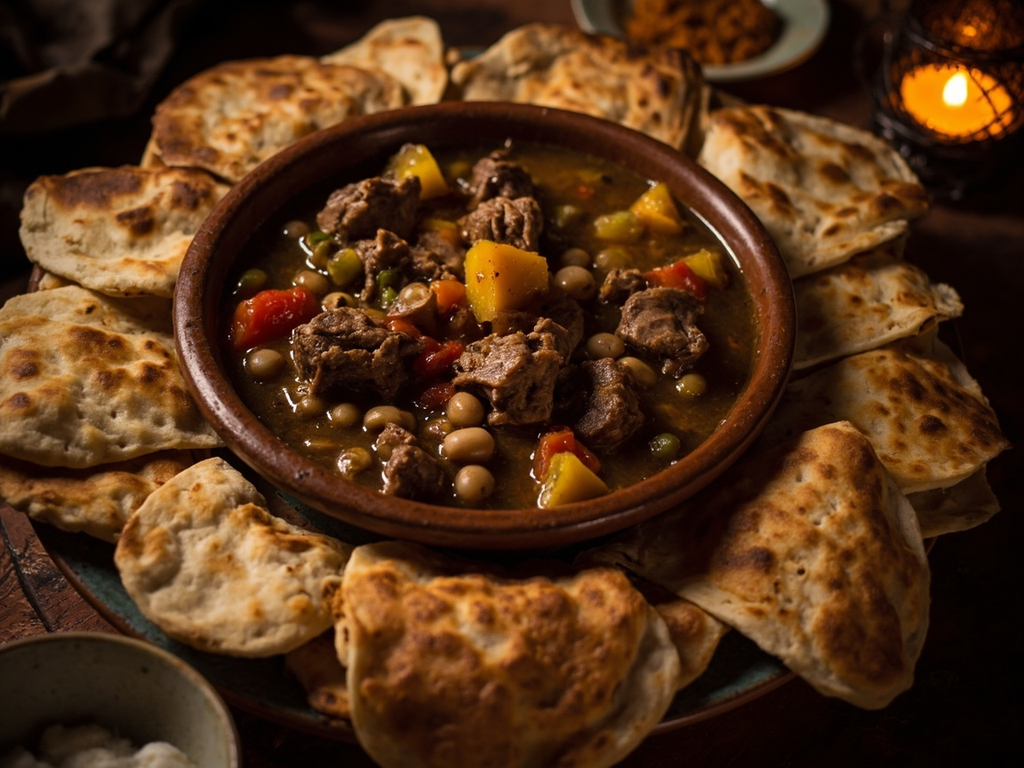
The contemporary twist : Served on a large communal board, eaten with the fingers in barley flatbreads (recipe r1) — the sharing table, modern version.
Sources : Bible, Leviticus 3 and 7 (peace offerings) · Nathan MacDonald, What Did the Ancient Israelites Eat?, Eerdmans, 2008
Belphegor · Charactorium