 flip
flipLacto-Fermented Vegetables in Brine (菹, zū)
Lacto-Fermented Vegetables in Brine (菹, zū)
Why this dish? An artisan household wastes nothing: in autumn, vegetables are jarred to last through winter. These 菹 accompany every bowl of Bi Sheng's porridge — and their methodical preparation, jar after jar, echoes the patient order of his type cases.
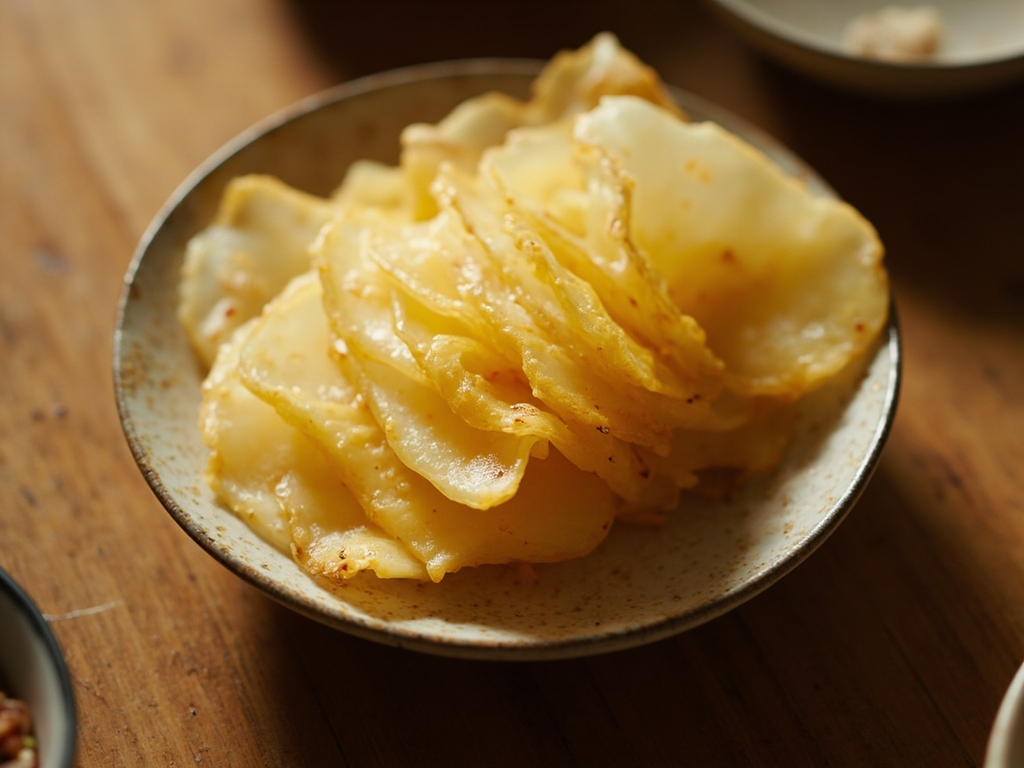
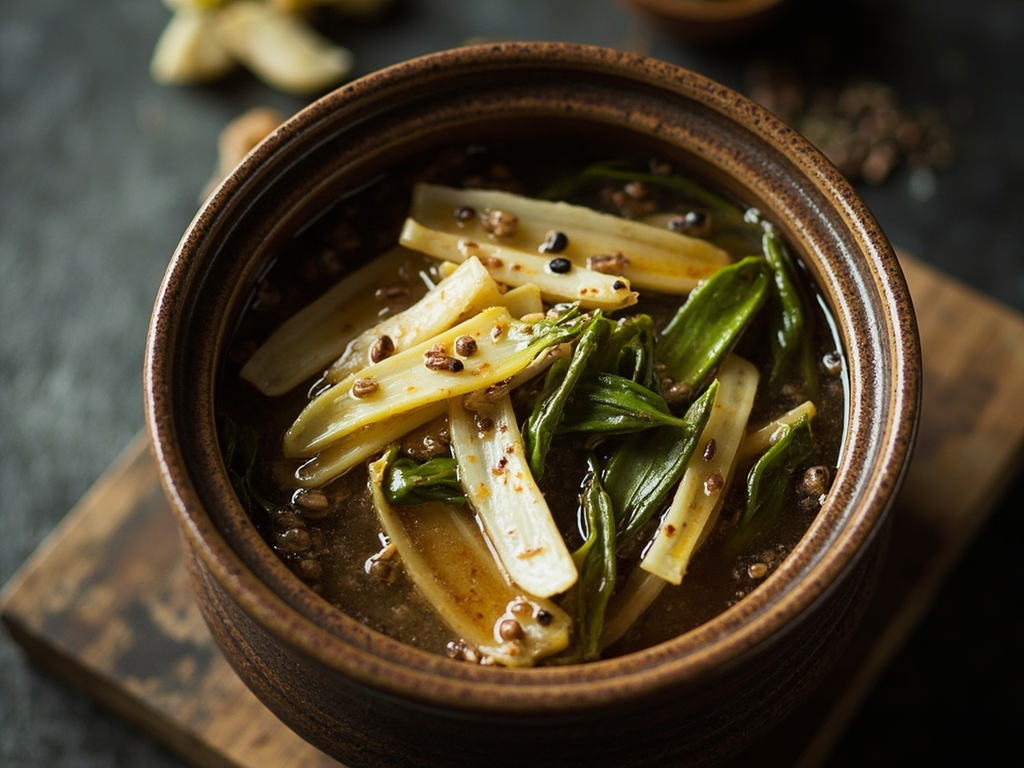
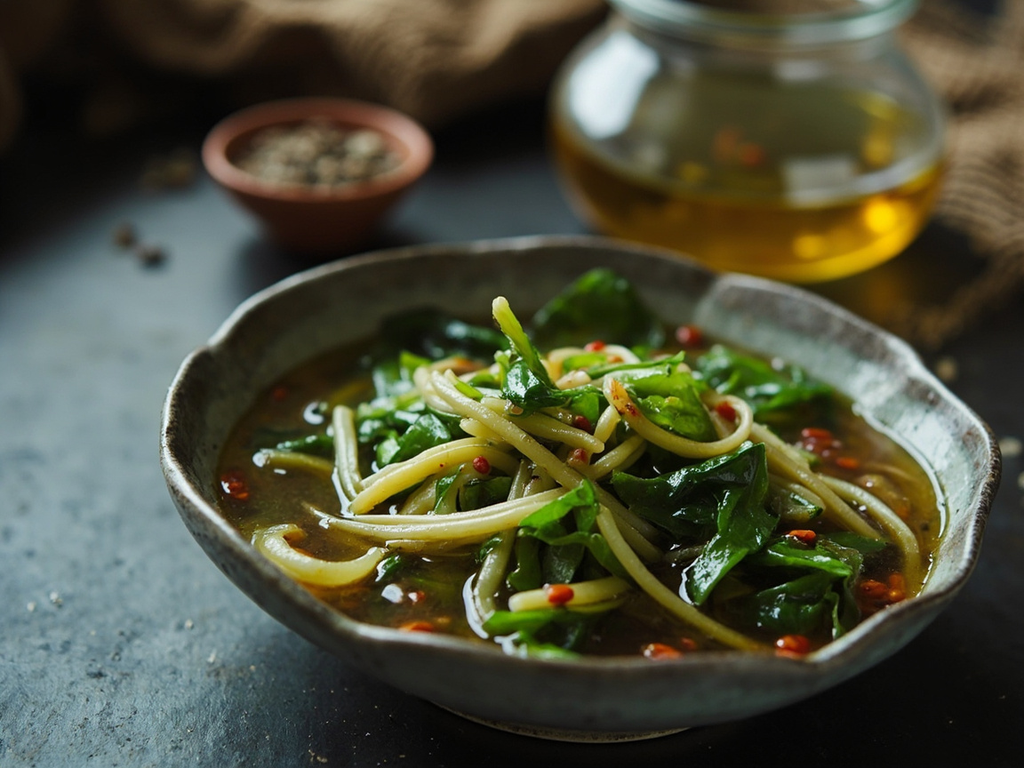
Leafy vegetables (mustard greens, cabbage) salted and left to ferment in brine until sour, crunchy, and deeply fragrant. The fundamental preserve of the Chinese pantry, adding a tangy note to the simplest winter meals.
When the late season comes, before the cold hardens the earth, I fill my jars as I fill my cases: each leaf in its place, nothing by chance. I salt, I press, I cover with water, and I let time do its silent work — patience, in cooking as at the press, never betrays. In the heart of winter, when fish is scarce and the purse is flat, a handful of these sour vegetables wakes up any porridge. Taste, friend: it is autumn stored away, keeping you company until spring.
- •Mustard greens or Chinese cabbage — one jar (vegetable to ferment)
- •Salt — the right measure (brine, preservation)
- •Water — to cover (brine)
- •Sichuan pepper (花椒) — a few grains (aroma, preservation)
Lacto-Fermented Vegetables in Brine (菹, zū)
Leafy vegetables (mustard greens, cabbage) salted and left to ferment in brine until sour, crunchy, and deeply fragrant. The fundamental preserve of the Chinese pantry, adding a tangy note to the simplest winter meals.
Why this dish? An artisan household wastes nothing: in autumn, vegetables are jarred to last through winter. These 菹 accompany every bowl of Bi Sheng's porridge — and their methodical preparation, jar after jar, echoes the patient order of his type cases.
When the late season comes, before the cold hardens the earth, I fill my jars as I fill my cases: each leaf in its place, nothing by chance. I salt, I press, I cover with water, and I let time do its silent work — patience, in cooking as at the press, never betrays. In the heart of winter, when fish is scarce and the purse is flat, a handful of these sour vegetables wakes up any porridge. Taste, friend: it is autumn stored away, keeping you company until spring.
Ingredients (period version)
- Mustard greens or Chinese cabbage — one jar (vegetable to ferment)
- Salt — the right measure (brine, preservation)
- Water — to cover (brine)
- Sichuan pepper (花椒) — a few grains (aroma, preservation)
Ingredients
- Mustard greens, Chinese cabbage, or leaf kohlrabi — 500 g (vegetable to ferment)
- Non-iodized salt — 30 g (≈ 3% of water+vegetable weight) (brine)
- Non-chlorinated water — ≈ 700 ml (to cover) (brine)
- Sichuan peppercorns (花椒) — 1 tsp (aroma, anti-mold)
- Ginger (optional) — 2 slices (aroma)
Method
- Wash the vegetables and let them wilt for a few hours.
- Dissolve the salt in water to make an approximately 3% brine.
- Pack the vegetables tightly into a clean jar with Sichuan peppercorns (and ginger), cover completely with brine.
- Weigh down with a clean weight so nothing floats above the liquid; close loosely to allow gas to escape.
- Ferment at room temperature for 5–10 days, tasting: it's ready when pleasantly sour. Then refrigerate.
How it was made : The *Qimin Yaoshu* (6th century), a great agricultural encyclopedia still copied and read under the Song, details dozens of methods for 菹 (zū), lacto-fermented vegetables in brine — evidence of the antiquity and importance of this preservation technique, vital before the cold arrived. It is the distant ancestor of today's paocai and kimchi.
The contemporary twist : Present the vegetables in small tight piles in a stoneware dish, with a few Sichuan peppercorns visible, as a precious condiment — the engraver's "autumn reserve."
Sources : Jia Sixie, Qimin Yaoshu (齐民要术), 6th cent. — methods for fermenting vegetables (菹)
Bi Sheng · Charactorium