 flip
flipTakuan — daikon radish pickled in rice bran
Takuan — daikon radish pickled in rice bran
Why this dish? No monastic meal without a slice of pickle: it accompanies the porridge, cleans the last bowl, and preserves vegetables from one season to the next. In a kitchen where nothing is wasted, fermenting daikon is the very art of the tenzo according to Dōgen.
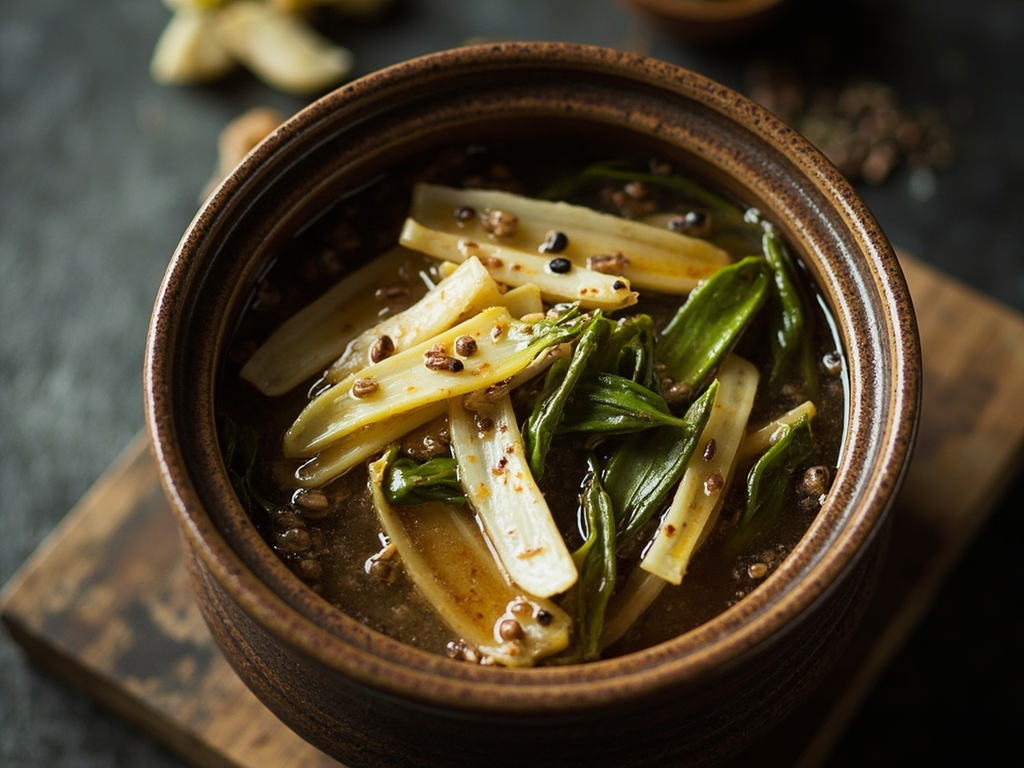
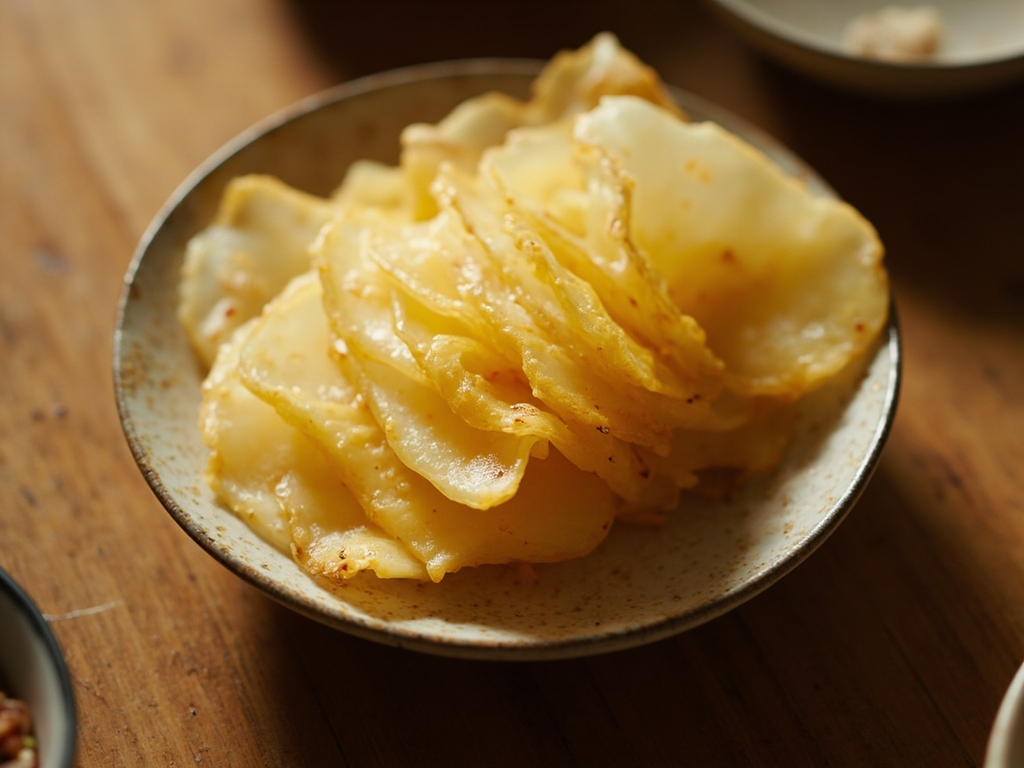
Long strips of daikon radish, dried then buried in salted rice bran, where they ferment to become crunchy, golden, tangy and deeply aromatic. The monastery's living reserve.
See this radish: firm and white today, tomorrow it will feed us in the heart of winter, when the earth yields nothing more. Hang it in the wind for a few days to soften, then lay it in the salted bran and let time do its patient work. Nothing is lost at the table of the Way; even the peel and the brine have their use. Bite into a piece with your morning porridge, and thank the root for having waited for you.
- •Whole daikon radishes — several (vegetable to preserve)
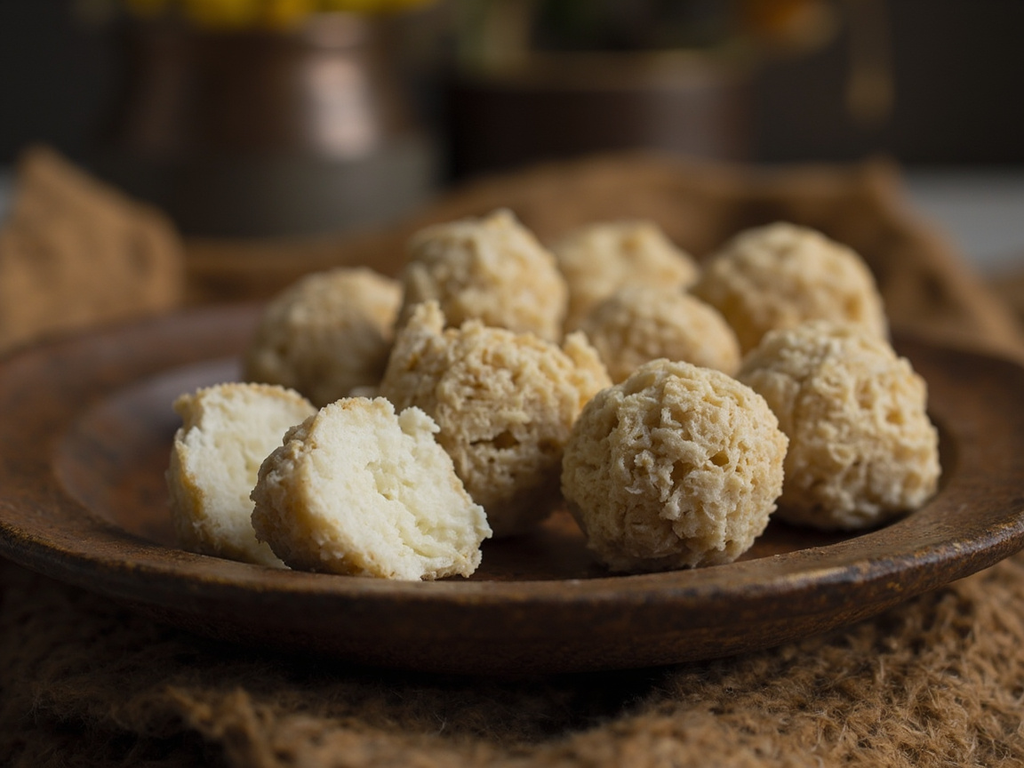
- •Rice bran (nuka) — a large bowl (fermentation medium)
- •Salt — generous (preservation)
- •Kombu seaweed and dried peels — a few (umami and fragrance)
Takuan — daikon radish pickled in rice bran
Long strips of daikon radish, dried then buried in salted rice bran, where they ferment to become crunchy, golden, tangy and deeply aromatic. The monastery's living reserve.
Why this dish? No monastic meal without a slice of pickle: it accompanies the porridge, cleans the last bowl, and preserves vegetables from one season to the next. In a kitchen where nothing is wasted, fermenting daikon is the very art of the tenzo according to Dōgen.
See this radish: firm and white today, tomorrow it will feed us in the heart of winter, when the earth yields nothing more. Hang it in the wind for a few days to soften, then lay it in the salted bran and let time do its patient work. Nothing is lost at the table of the Way; even the peel and the brine have their use. Bite into a piece with your morning porridge, and thank the root for having waited for you.
Ingredients (period version)
- Whole daikon radishes — several (vegetable to preserve)
- Rice bran (nuka) — a large bowl (fermentation medium)
- Salt — generous (preservation)
- Kombu seaweed and dried peels — a few (umami and fragrance)
Ingredients
- Daikon — 2 radishes (vegetable)
- Rice bran (nuka) — 300 g (fermentation)
- Salt — 50 g (preservation)
- Kombu — 1 piece (umami)
- Dried persimmon or apple peels (optional) — a handful (natural sweetness)
Method
- Hang the whole daikon in an airy place for 1–2 weeks, until they bend without breaking.
- Mix the rice bran, salt, crumbled kombu, and dried peels.
- In a container, alternate layers of salted bran and daikon, pressing well.
- Place a weight on top and cover with a cloth.
- Let ferment in a cool place for 3 weeks to 2 months, checking the smell (it should remain fresh and tangy).
- Remove a radish, brush off the bran, rinse, slice thinly and serve in small amounts.
How it was made : Takuan takes its name from the Zen monk Takuan Sōhō (later than Dōgen), but the technique of preserving roots in salted rice bran already existed in monasteries: an essential means of getting through winter without breaking the vegetarian precept.
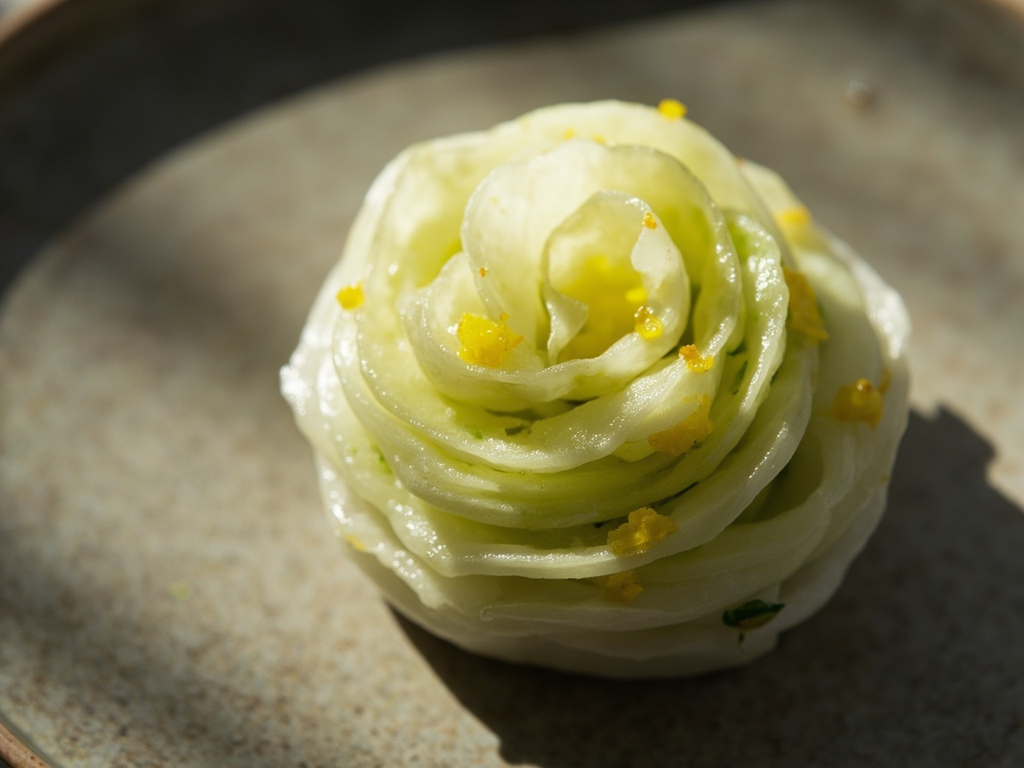
The contemporary twist : Cut into fine shavings and rolled into a small gunkan of vinegared rice: homemade takuan becomes a lively, crunchy bite for an aperitif.
Sources : Japanese tsukemono (pickle) tradition · Dōgen, Tenzo Kyōkun
Dogen · Charactorium