 flip
flipKommissbrot — The Black Ration Bread
Kommissbrot — The Black Ration Bread
Why this dish? 'Kommissbrot', a dense rye bread distributed as a ration (Kommiss = the army, the commissariat), accompanied every soldier of Blücher's. Heavy, sour, it kept for days in the cartridge pouch and nourished the man on forced march — exactly the mobility that Marshal 'Forward' demanded.
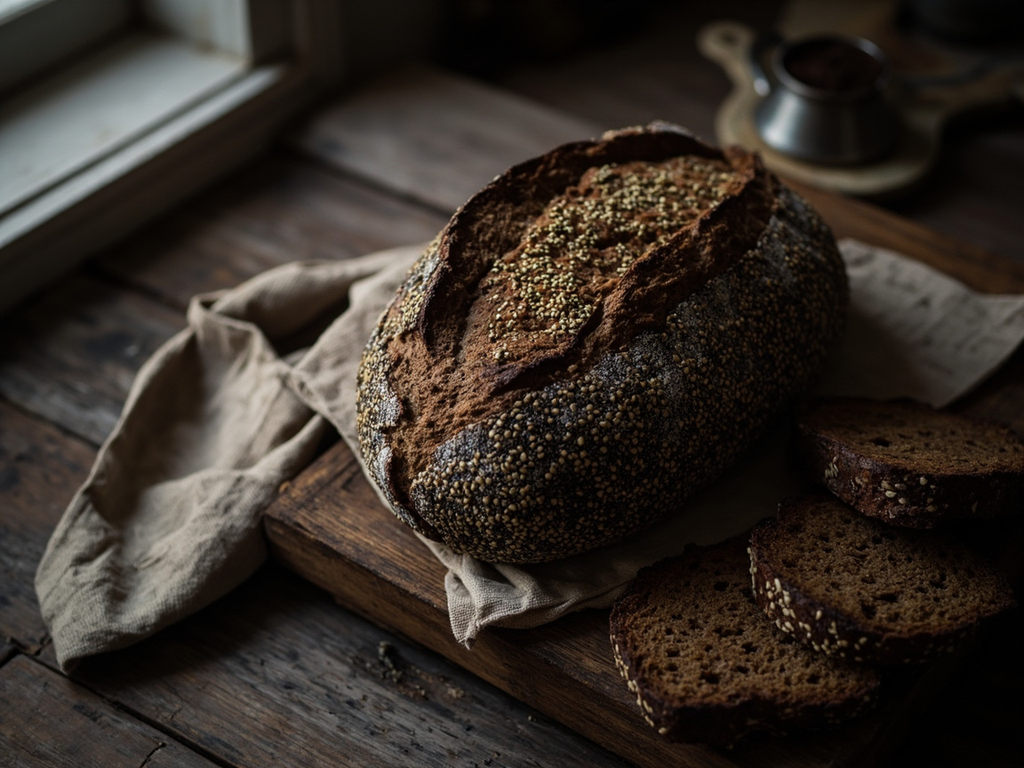
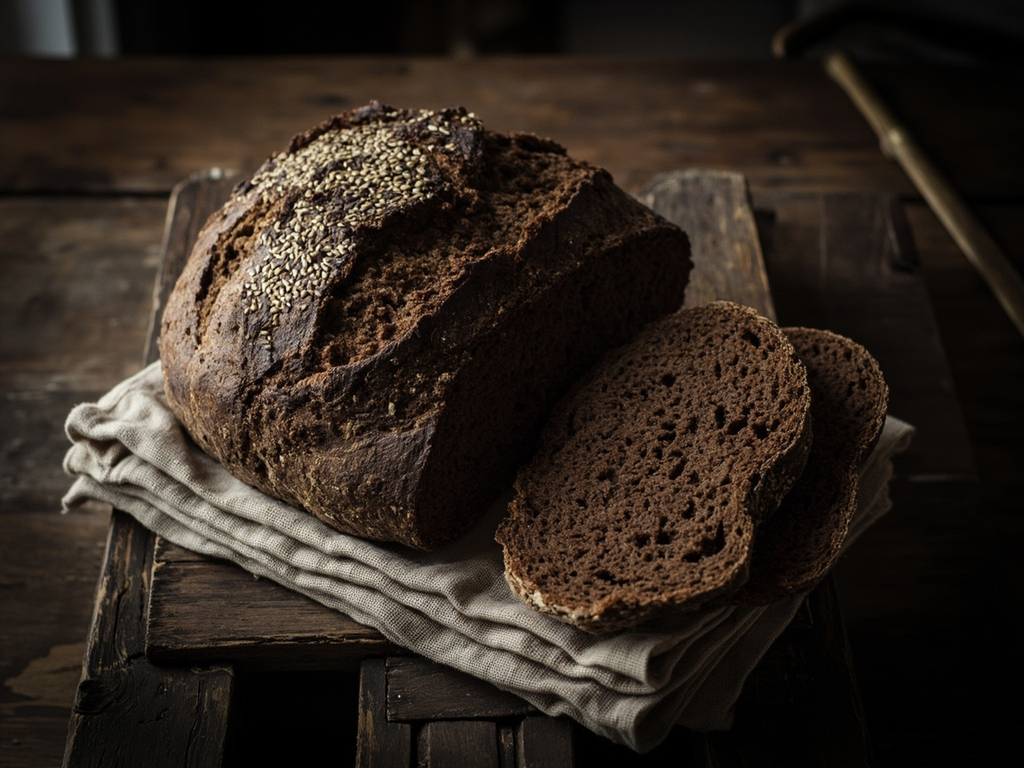
A rye sourdough bread, dense and compact, with a dark crumb and thick crust. Tangy from long fermentation, flavored with caraway, it keeps for a week or more.
This bread, my boy, is not the brioche of the Vienna salons! It is the soldier's bread: black, hard, heavy in the knapsack, but it keeps a man on his feet. You break it with a bayonet when it's stale, you dip it in soup or schnapps. I've shared more than one under the rain — and it's by chewing this bitter rye that you win battles, not by putting on airs.
- •Rye flour — the bulk of the dough (base, preservation)
- •Rye sourdough — a good piece from the previous batch (fermentation, acidity)
- •Caraway seed — a pinch (signature, flavor and digestion)
- •Salt — moderate (flavor, preservation)
- •Water — for a firm dough (hydration)
Kommissbrot — The Black Ration Bread
A rye sourdough bread, dense and compact, with a dark crumb and thick crust. Tangy from long fermentation, flavored with caraway, it keeps for a week or more.
Why this dish? 'Kommissbrot', a dense rye bread distributed as a ration (Kommiss = the army, the commissariat), accompanied every soldier of Blücher's. Heavy, sour, it kept for days in the cartridge pouch and nourished the man on forced march — exactly the mobility that Marshal 'Forward' demanded.
This bread, my boy, is not the brioche of the Vienna salons! It is the soldier's bread: black, hard, heavy in the knapsack, but it keeps a man on his feet. You break it with a bayonet when it's stale, you dip it in soup or schnapps. I've shared more than one under the rain — and it's by chewing this bitter rye that you win battles, not by putting on airs.
Ingredients (period version)
- Rye flour — the bulk of the dough (base, preservation)
- Rye sourdough — a good piece from the previous batch (fermentation, acidity)
- Caraway seed — a pinch (signature, flavor and digestion)
- Salt — moderate (flavor, preservation)
- Water — for a firm dough (hydration)
Ingredients
- Whole rye flour (T130/T170) — 400 g (base)
- Wheat flour (T80) — 100 g (crumb structure)
- Active rye sourdough — 150 g (fermentation, acidity)
- Caraway seed — 1 tsp (signature)
- Salt — 10 g (flavor)
- Warm water — 330 ml (hydration)
Method
- Mix flours, sourdough, salt, caraway, and water until a sticky, dense dough forms (rye is not kneaded like wheat).
- Let ferment 3 to 4 hours at room temperature, covered, until the dough rises and cracks.
- Shape into a tight rectangular loaf, place in a greased and floured loaf pan.
- Let rise 1 to 2 hours, then bake at 230°C with a little steam, reduce to 200°C.
- Bake 50 to 60 minutes (the loaf sounds hollow when tapped). Cool completely and wait 24 hours before slicing — it gains flavor and keeps for a week.
How it was made : Ration bread was baked in large batches by field bakeries (Feldbäckerei) then distributed stale so it would keep. Its density and acidity made it almost imperishable — a vital asset for armies on the move before canned preserves.
The contemporary twist : Sliced very thin and dried in the oven, it becomes a Prussian 'knäcke' to snack on with goose Schmalz from the previous recipe — the marshal's ration reinvented as an appetizer.
Blücher · Charactorium