 flip
flipKhleb Chyorny — Black Rye Sourdough Bread
Khleb Chyorny — Black Rye Sourdough Bread
Why this dish? Black bread is cited directly in Kollontai's diet. In Russia of revolutionary shortages and civil war, this dense rye bread, which kept for days, was the food-symbol of survival and solidarity, rationed but never absent.
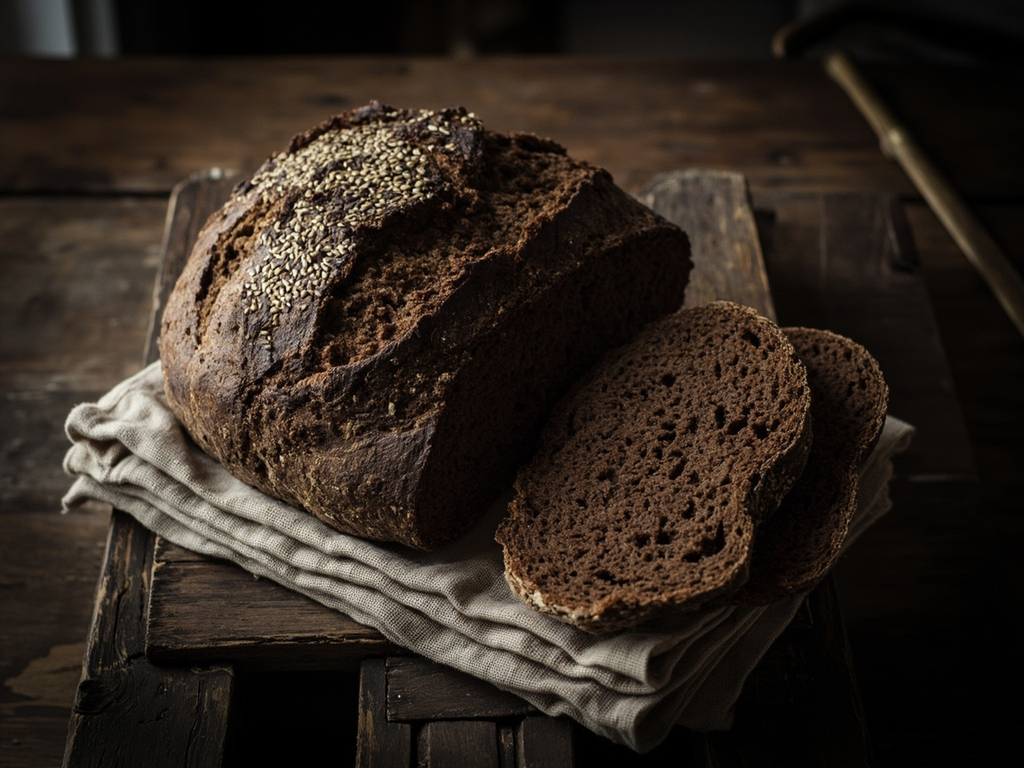
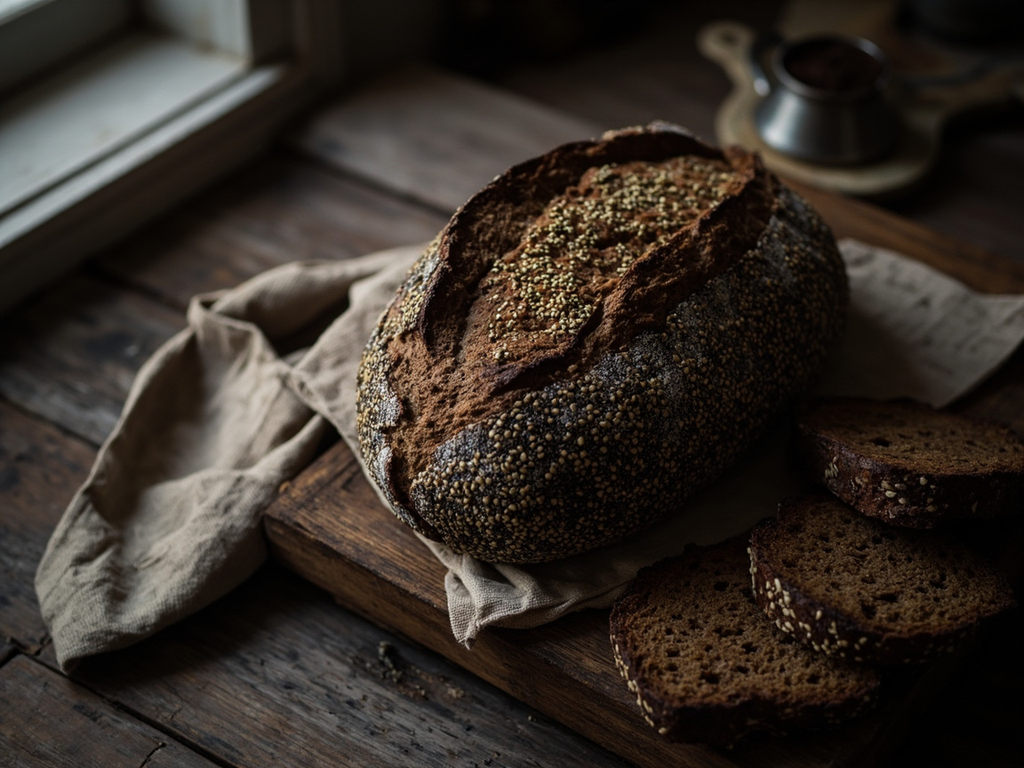
A compact, dark rye bread with natural sourdough, dense crumb and tangy acidity. Its thick crust protected it and preserved it: thin slices accompanied everything from soup to tea.
This bread — I have seen its price in the eyes of the people during the famine years. Rye does not demand rich soils or palace ovens — it grows, it nourishes, it keeps. You knead it dense, you let it sour with the leaven as our ideas matured in the underground, and its black crust defies time. A slice of this bread, a glass of tea, and you stand firm for the cause.
- •Rye flour — the bulk of the dough (base)
- •Rye sourdough starter (zakvaska) — a live portion (fermentation and acidity)
- •Wheat flour — a portion for structure (structure)
- •Rye malt or kvas — a dash (color and flavor)
- •Salt — to taste (seasoning)
- •Coriander seeds — a pinch (flavor (Borodinsky style))
Khleb Chyorny — Black Rye Sourdough Bread
A compact, dark rye bread with natural sourdough, dense crumb and tangy acidity. Its thick crust protected it and preserved it: thin slices accompanied everything from soup to tea.
Why this dish? Black bread is cited directly in Kollontai's diet. In Russia of revolutionary shortages and civil war, this dense rye bread, which kept for days, was the food-symbol of survival and solidarity, rationed but never absent.
This bread — I have seen its price in the eyes of the people during the famine years. Rye does not demand rich soils or palace ovens — it grows, it nourishes, it keeps. You knead it dense, you let it sour with the leaven as our ideas matured in the underground, and its black crust defies time. A slice of this bread, a glass of tea, and you stand firm for the cause.
Ingredients (period version)
- Rye flour — the bulk of the dough (base)
- Rye sourdough starter (zakvaska) — a live portion (fermentation and acidity)
- Wheat flour — a portion for structure (structure)
- Rye malt or kvas — a dash (color and flavor)
- Salt — to taste (seasoning)
- Coriander seeds — a pinch (flavor (Borodinsky style))
Ingredients
- Whole rye flour — 350 g (base)
- T80 wheat flour — 150 g (structure)
- Active rye sourdough starter — 150 g (fermentation)
- Warm water — 330 ml (hydration)
- Molasses or malt syrup — 1 tbsp (color and sweetness)
- Salt — 10 g (seasoning)
- Crushed coriander seeds — 1 tsp (flavor)
Method
- Refresh the rye sourdough starter the day before so it is very active.
- Mix flours, salt, coriander, then incorporate starter, warm water, and molasses into a sticky, dense dough.
- Let bulk ferment for 3-4 hours at room temperature (rye rises slowly).
- Shape into an oiled loaf pan, smooth the top with water, sprinkle with coriander.
- Proof for 1-2 hours, then bake at 200°C for 50-60 minutes.
- Unmold and wait 24 hours before slicing: rye needs to settle.
How it was made : Rye bread was baked in the communal village or apartment building oven, in large loaves that had to last the week. Its long sourdough fermentation made it more digestible and longer-lasting than white bread, which was reserved for feast days and the wealthy.
The contemporary twist : Serve in thin slices with demi-salt butter and a few herring eggs or sweet-sour jam — the « commissariat toast » between austerity and indulgence.
Sources : William Pokhlebkin, The Art of Russian Cuisine · Elena Molokhovets, A Gift to Young Housewives
Alexandra Kollontai · Charactorium