 flip
flipBuckwheat kasha with butter (grechnevaya kasha)
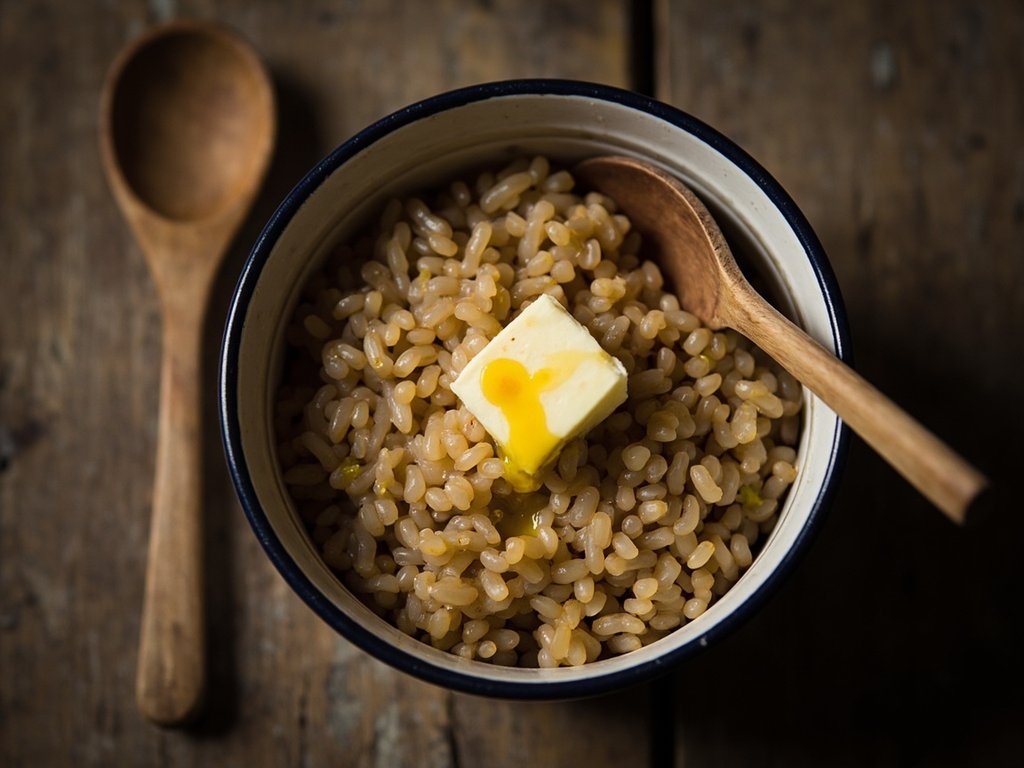
Buckwheat kasha with butter (grechnevaya kasha)
Why this dish? During the war, Pasternak was evacuated to Chistopol (1941-1943), far from Moscow, in destitution. Buckwheat kasha — nutritious, cheap, keeps and reheats — was the survival and travel food par excellence, the one you carried and shared in lean times. "Shchi and kasha, that's our food."
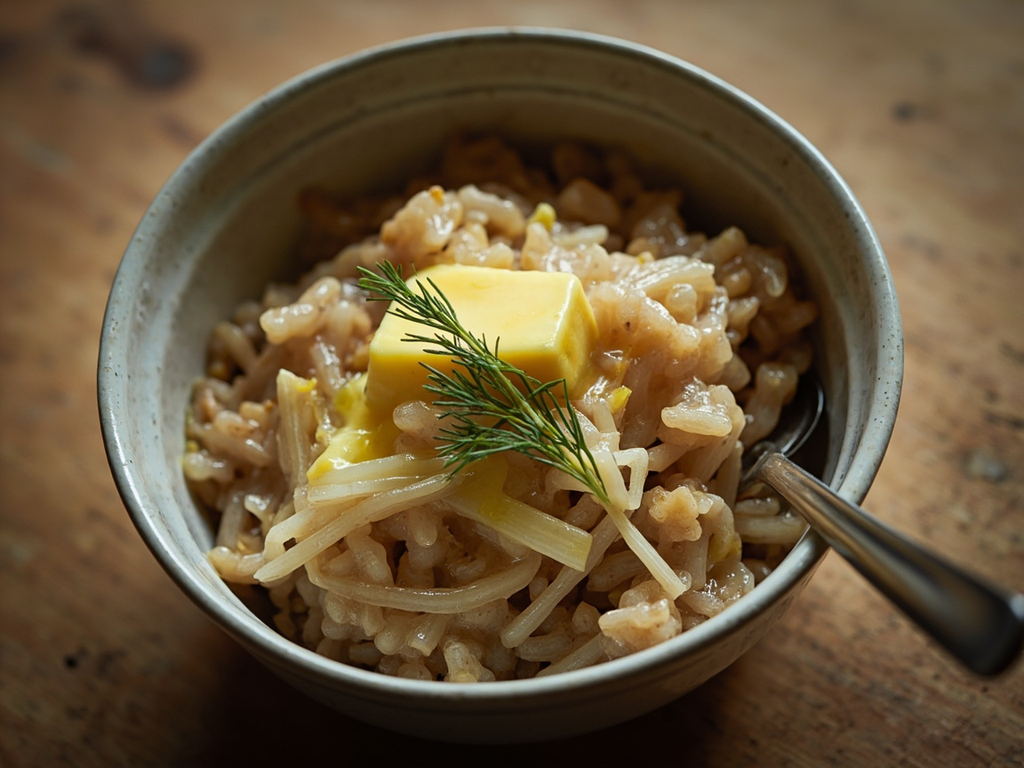
Toasted buckwheat groats swollen in water, bound with a knob of butter — a dense, earthy and comforting dish, eaten hot in the evening and cold on the road the next day.
In Chistopol, in those years when everything was scarce, buckwheat kasha kept us on our feet. First you toast the grains in a dry pan until they smell of hazelnut — that's the whole secret. Then water, the lid, and you let it swell in peace while you work. A knob of melted butter on top, and even the barest days had their share of warmth; cold, in a cloth, it made the journey the next day.
- •Buckwheat groats (grechka) — one bowl (base)
- •Water — twice the volume (cooking)
- •Butter — a good knob (richness)
- •Salt — to taste (seasoning)
Buckwheat kasha with butter (grechnevaya kasha)
Toasted buckwheat groats swollen in water, bound with a knob of butter — a dense, earthy and comforting dish, eaten hot in the evening and cold on the road the next day.
Why this dish? During the war, Pasternak was evacuated to Chistopol (1941-1943), far from Moscow, in destitution. Buckwheat kasha — nutritious, cheap, keeps and reheats — was the survival and travel food par excellence, the one you carried and shared in lean times. "Shchi and kasha, that's our food."
In Chistopol, in those years when everything was scarce, buckwheat kasha kept us on our feet. First you toast the grains in a dry pan until they smell of hazelnut — that's the whole secret. Then water, the lid, and you let it swell in peace while you work. A knob of melted butter on top, and even the barest days had their share of warmth; cold, in a cloth, it made the journey the next day.
Ingredients (period version)
- Buckwheat groats (grechka) — one bowl (base)
- Water — twice the volume (cooking)
- Butter — a good knob (richness)
- Salt — to taste (seasoning)
Ingredients
- Toasted buckwheat (kasha) — 200 g (base)
- Water or broth — 400 ml (cooking)
- Butter — 30-40 g (richness)
- Salt — 1 tsp (seasoning)
- Onion (optional) or mushrooms — 1 (garnish)
Method
- Toast the buckwheat in a dry pan for 3-4 min until it smells nutty (skip this step if the buckwheat is already toasted).
- Pour the boiling salted water over the grains in a saucepan, bring to a simmer.
- Cover and cook over very low heat for 15-18 min without stirring, until fully absorbed.
- Turn off the heat, place the butter on top, cover and let rest for 10 min so the grains plump up.
- Fluff with a fork, season with salt, optionally add browned onion or mushrooms. Serve hot — or pack into a cloth to take cold.
How it was made : Buckwheat, cultivated in Russia since the Middle Ages, was traditionally prepared in the Russian oven: the covered pot was placed in the declining heat for slow cooking that made the grains friable (*rassypchataya kasha*). A staple of soldiers and peasants, it traveled dry and was cooked anywhere.
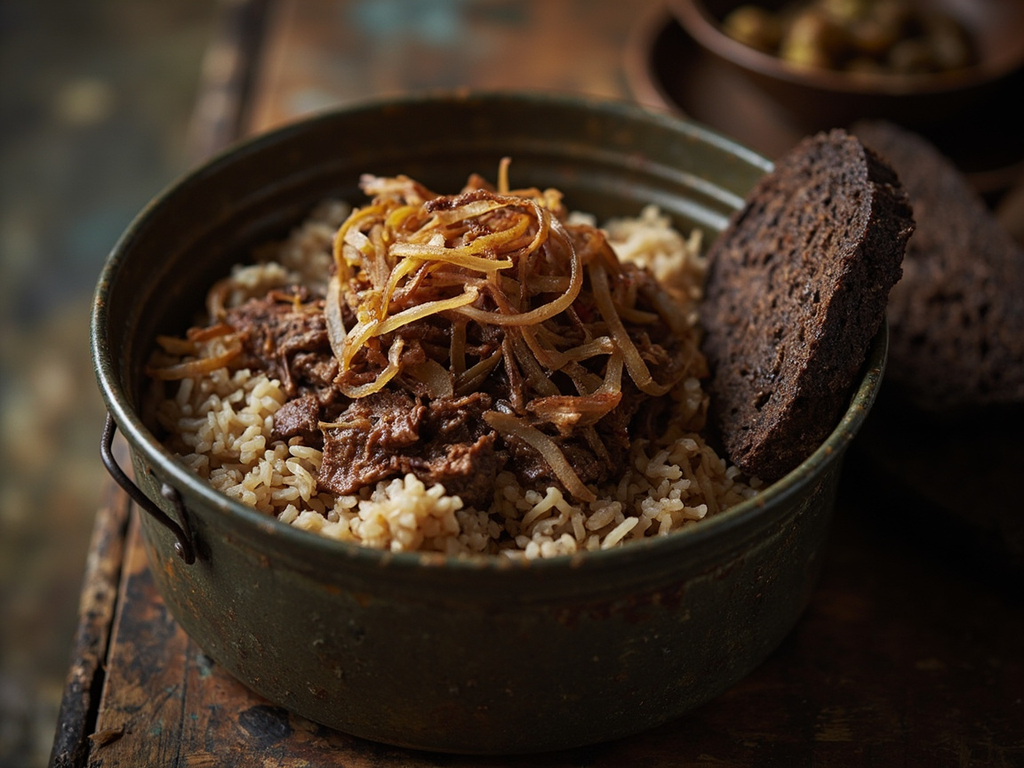
The contemporary twist : Serve the kasha in a bowl topped with a soft-boiled egg and crispy fried onions, a comforting "dacha bowl" version.
Sources : V. Pokhlebkin, *Национальные кухни наших народов* · V. Pokhlebkin, *История важнейших пищевых продуктов* (History of Major Food Products)
Boris Pasternak · Charactorium