 flip
flipPāyasa — The Festive Rice Pudding (Kṣīra)
Pāyasa — The Festive Rice Pudding (Kṣīra)
Why this dish? Pāyasa — rice slowly simmered in milk, sweetened and perfumed with ghee — has been since Indian antiquity the quintessential offering of joy, presented to the gods during great festivals and redistributed to the faithful. For Brahmā, god of creative abundance, it is the dish of plenitude.
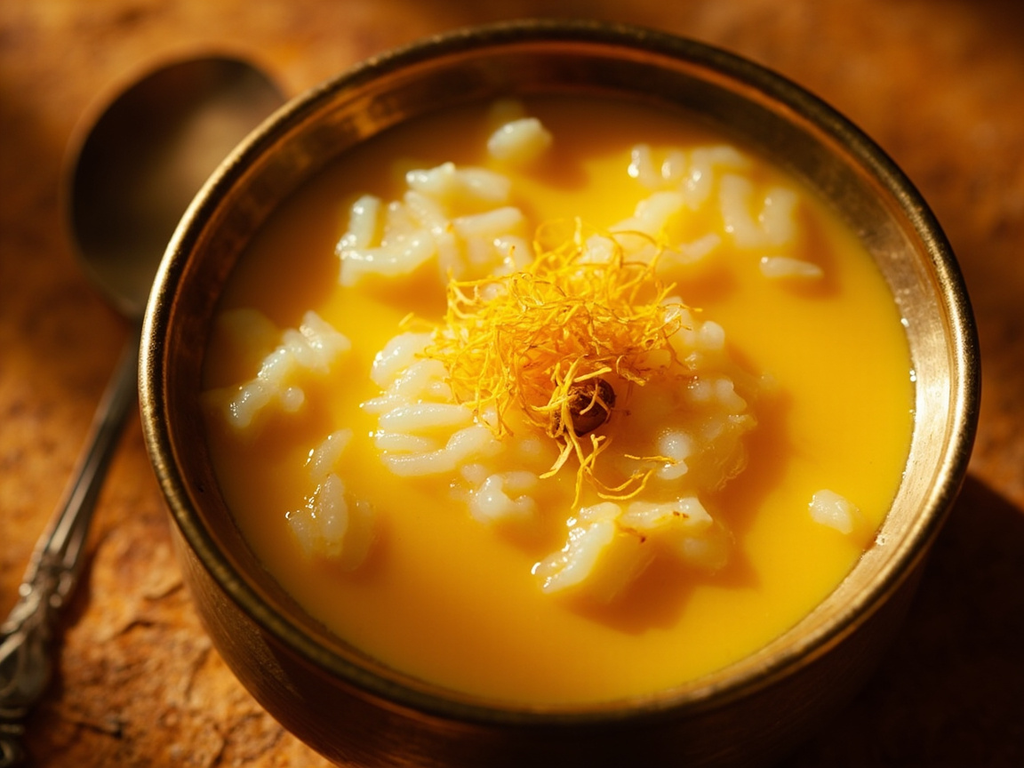
A melting rice cooked for hours in milk, bound with ghee, sweetened with jaggery, and fragrant with cardamom. Creamy, comforting, golden — sweetness made offering.
On the days when the world celebrates its own birth, the kṣīra is presented to me. Boil the milk long, my child, until it thickens and sings; throw in the rice and watch it like a sacred fire. Sweeten it with the hardened juice of the cane, perfume it with the seed of elā, and drown it all in a stream of clarified butter. When the spoon stands upright in the pot, only then may the feast begin.
- •Rice (taṇḍula) — a handful (base)
- •Milk (kṣīra) — plenty (cooking liquid)
- •Jaggery / cane sugar (śarkarā) — to taste (sweetness)
- •Ghee — a drizzle (aromatic binder)
- •Cardamom (elā) — a few seeds (fragrance)
Pāyasa — The Festive Rice Pudding (Kṣīra)
A melting rice cooked for hours in milk, bound with ghee, sweetened with jaggery, and fragrant with cardamom. Creamy, comforting, golden — sweetness made offering.
Why this dish? Pāyasa — rice slowly simmered in milk, sweetened and perfumed with ghee — has been since Indian antiquity the quintessential offering of joy, presented to the gods during great festivals and redistributed to the faithful. For Brahmā, god of creative abundance, it is the dish of plenitude.
On the days when the world celebrates its own birth, the kṣīra is presented to me. Boil the milk long, my child, until it thickens and sings; throw in the rice and watch it like a sacred fire. Sweeten it with the hardened juice of the cane, perfume it with the seed of elā, and drown it all in a stream of clarified butter. When the spoon stands upright in the pot, only then may the feast begin.
Ingredients (period version)
- Rice (taṇḍula) — a handful (base)
- Milk (kṣīra) — plenty (cooking liquid)
- Jaggery / cane sugar (śarkarā) — to taste (sweetness)
- Ghee — a drizzle (aromatic binder)
- Cardamom (elā) — a few seeds (fragrance)
Ingredients
- Short-grain rice (or basmati) — 100 g (base)
- Whole milk — 1 litre (cooking liquid)
- Jaggery (or whole cane sugar) — 100 g (sweetness)
- Ghee — 1 tbsp (binder)
- Ground green cardamom — ½ tsp (fragrance)
- Saffron (optional) — a few strands (color and aroma)
Method
- Rinse the rice. Sauté for 1 minute in ghee in a heavy-bottomed pot.
- Pour in the milk, bring to a simmer, and cook over low heat for 40-50 minutes, stirring often to prevent sticking.
- When the rice is very soft and the milk has thickened, add the grated jaggery and cardamom; stir off the heat until dissolved.
- If using, stir in saffron infused in a little warm milk.
- Serve warm or chilled; the pāyasa thickens as it cools.
How it was made : Pāyasa (from payas, 'milk') appears in ancient texts as a dish of rejoicing and offering. It was sweetened with jaggery or honey, never modern refined sugar, and bound with ghee. Dried fruits (almonds, raisins) were added later with trade.
The contemporary twist : Poured into verrines, topped with edible rose petals and a sprinkle of crushed pistachios — a festive contemporary pāyasa, betraying nothing of the original sweet spirit.
Sources : K.T. Achaya, A Historical Dictionary of Indian Food, Oxford University Press, 1998
Brahma · Charactorium