 flip
flipGibanica (fresh cheese pie)
Gibanica (fresh cheese pie)
Why this dish? Gibanica is the pie of great Serbian occasions — the slava (family patron saint day), baptisms, family gatherings. For a man born in Belgrade and raised on these rituals, it is the taste of childhood Sundays and tables that never end.
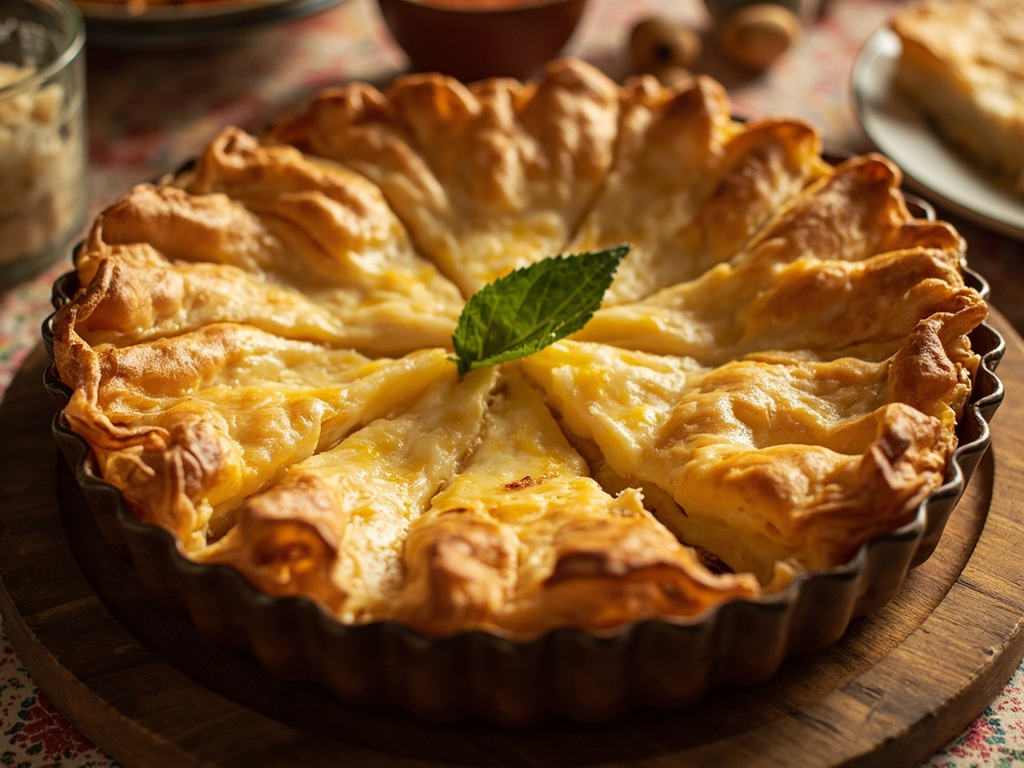
A generous pie made of thin pastry sheets (kore/filo) crumpled and layered with a mixture of fresh cheese, eggs, and kajmak, then baked until the top is golden and crispy while the heart remains soft and melting.
Gibanica was the dish we waited for all week. For slava, my family made a huge one, and the smell of cheese and butter would rise up the entire stairwell of the building. The trick is to crumple the pastry sheets like a handkerchief — never lay them flat — so it puffs and cracks under the tooth. We'd cut it into squares, piping hot, and you had to elbow your way in to get a corner piece, the most golden. Believe me: no well-being statistic captures the happiness of a warm slice of gibanica.
- •Thin pastry sheets (kore) — a generous packet (structure)
- •Fresh sheep/cow cheese (sir) — in large quantity (filling)
- •Kajmak (clotted cream) — as much as you like (richness)
- •Eggs — several (binder)
- •Butter or oil — generous (flakiness)
- •Sparkling water or milk — a little (softness)
Gibanica (fresh cheese pie)
A generous pie made of thin pastry sheets (kore/filo) crumpled and layered with a mixture of fresh cheese, eggs, and kajmak, then baked until the top is golden and crispy while the heart remains soft and melting.
Why this dish? Gibanica is the pie of great Serbian occasions — the slava (family patron saint day), baptisms, family gatherings. For a man born in Belgrade and raised on these rituals, it is the taste of childhood Sundays and tables that never end.
Gibanica was the dish we waited for all week. For slava, my family made a huge one, and the smell of cheese and butter would rise up the entire stairwell of the building. The trick is to crumple the pastry sheets like a handkerchief — never lay them flat — so it puffs and cracks under the tooth. We'd cut it into squares, piping hot, and you had to elbow your way in to get a corner piece, the most golden. Believe me: no well-being statistic captures the happiness of a warm slice of gibanica.
Ingredients (period version)
- Thin pastry sheets (kore) — a generous packet (structure)
- Fresh sheep/cow cheese (sir) — in large quantity (filling)
- Kajmak (clotted cream) — as much as you like (richness)
- Eggs — several (binder)
- Butter or oil — generous (flakiness)
- Sparkling water or milk — a little (softness)
Ingredients
- Filo pastry — 500 g (1 packet) (structure)
- Crumbled fresh cheese (feta + cottage cheese) — 500 g (filling)
- Thick sour cream (if no kajmak) — 200 g (richness)
- Eggs — 5 (binder)
- Sparkling water — 150 ml (lightness)
- Melted butter or oil — 100 ml (flakiness)
Method
- Beat the eggs with the crumbled cheese, cream, and sparkling water to make a smooth mixture.
- Butter a dish; lay one sheet of filo flat, brush with oil/butter.
- Lightly dip the following sheets in the mixture, crumple them, and arrange them in waves in the dish.
- Alternate crumpled soaked layers and drizzles of butter until all used, reserving one smooth sheet for the top.
- Pour any remaining mixture over the top, brush the top with butter.
- Bake at 180°C for about 40–45 minutes until the top is golden and crispy; let cool 10 minutes before cutting into squares.
How it was made : Gibanica is a pan-Balkan pie inherited from the "pita" tradition of hand-stretched pastry sheets (jufka), themselves heirs to Ottoman cuisine. In Serbia, it is inseparable from slava and major feasts; kajmak, a typical clotted cream, marks its richest version.
The contemporary twist : Cut into strictly equal pieces and randomly redistributed around the table — a "gibanica behind the veil of ignorance".
Branko Milanović · Charactorium