 flip
flipKwanga, Fermented Cassava Bread
Kwanga, Fermented Cassava Bread
Why this dish? This is the daily bread of the villages Büttner passes through as he heads inland. He who describes and presses the plants of the Congo basin eats this fermented cassava every day, handed to him by the porters and inhabitants, wrapped in its leaf like a specimen in his herbarium.
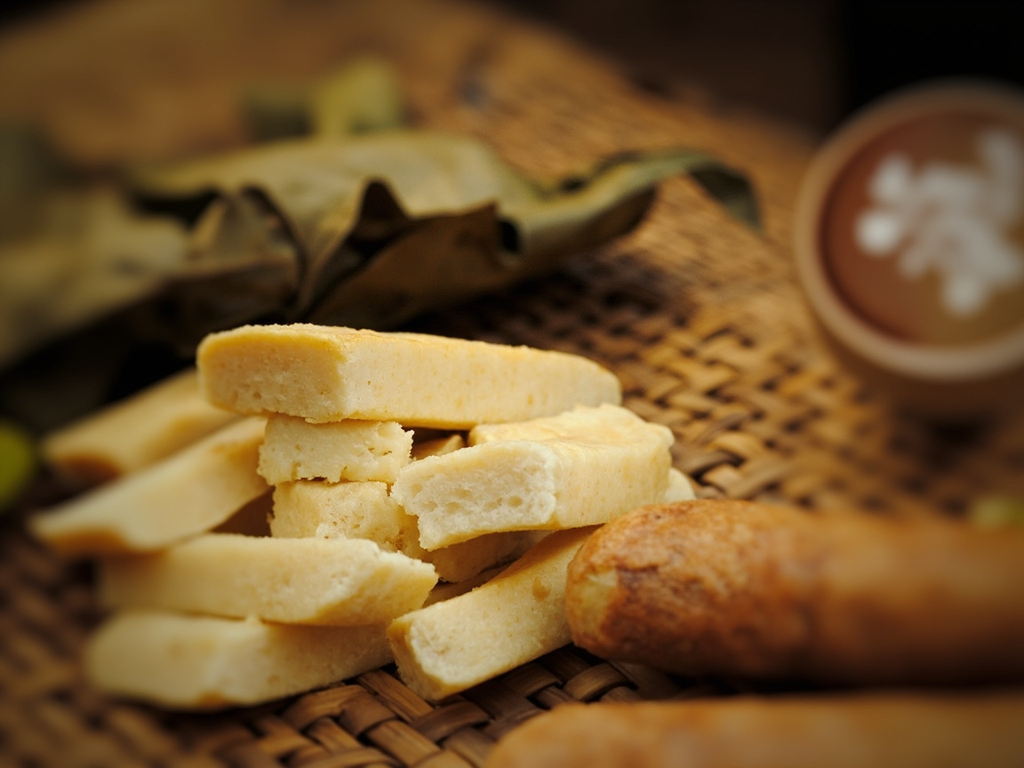
Cassava roots soaked for several days until fermented, pounded into a paste, then wrapped in leaves and steamed. The result is a dense, slightly sour stick that keeps and travels well — the marching bread of the African traveler.
Permettez que je vous présente le véritable pain de ces contrées, que les indigènes nomment kwanga. On laisse rouir la racine de manioc dans l'eau du marigot jusqu'à ce qu'elle s'amollisse et perde son principe vénéneux ; on la pile ensuite, et on la cuit dans des feuilles soigneusement repliées. J'ai noté dans mon carnet qu'aucune marche ne se fait sans lui : il tient au corps, il ne pourrit point, et son aigreur, déroutante au premier abord, devient familière au naturaliste qui parcourt ces forêts. Croyez-moi, on s'y attache plus qu'aux biscuits de Berlin.
- •Fresh cassava roots — several tubers (starchy base)
- •River water — to cover (soaking / fermentation)
- •Banana or marantaceae leaves — as needed (cooking wrap)
Kwanga, Fermented Cassava Bread
Cassava roots soaked for several days until fermented, pounded into a paste, then wrapped in leaves and steamed. The result is a dense, slightly sour stick that keeps and travels well — the marching bread of the African traveler.
Why this dish? This is the daily bread of the villages Büttner passes through as he heads inland. He who describes and presses the plants of the Congo basin eats this fermented cassava every day, handed to him by the porters and inhabitants, wrapped in its leaf like a specimen in his herbarium.
Permettez que je vous présente le véritable pain de ces contrées, que les indigènes nomment kwanga. On laisse rouir la racine de manioc dans l'eau du marigot jusqu'à ce qu'elle s'amollisse et perde son principe vénéneux ; on la pile ensuite, et on la cuit dans des feuilles soigneusement repliées. J'ai noté dans mon carnet qu'aucune marche ne se fait sans lui : il tient au corps, il ne pourrit point, et son aigreur, déroutante au premier abord, devient familière au naturaliste qui parcourt ces forêts. Croyez-moi, on s'y attache plus qu'aux biscuits de Berlin.
Ingredients (period version)
- Fresh cassava roots — several tubers (starchy base)
- River water — to cover (soaking / fermentation)
- Banana or marantaceae leaves — as needed (cooking wrap)
Ingredients
- Fresh cassava (or fermented cassava flour / cossettes) — 1 kg (starchy base)
- Water — 1.5 L (soaking and fermentation)
- Banana leaves — 4 to 6 large leaves (or parchment paper + string) (wrap)
- Fine salt — 1 pinch (seasoning (optional))
Method
- Peel the cassava, cut into large chunks, and cover with water in a bowl. Let ferment for 3 to 4 days at room temperature, until softened and giving off a sour smell.
- Drain, remove any central fibers, then pound with a pestle or blend into a smooth paste.
- Briefly cook the paste over low heat in a pot to firm it up, stirring.
- Shape into 15 cm sticks, roll tightly in banana leaves (passed over a flame) or parchment paper, and tie.
- Steam for 45 min. Let cool slightly: the paste sets into a sliceable stick. Serve as an accompaniment to a sauce.
How it was made : The soaking of cassava is not just a recipe: it is a chemical necessity. Bitter cassava contains cyanogenic compounds that fermentation and cooking eliminate. The women of the Congo villages mastered this process long before European chemists understood the mechanism.
The contemporary twist : Sliced and pan-fried in palm oil until golden, kwanga becomes a crispy-sour little dipper perfect for sauce.
Büttner · Charactorium