 flip
flipEisbein mit Sauerkraut — pork knuckle with sauerkraut
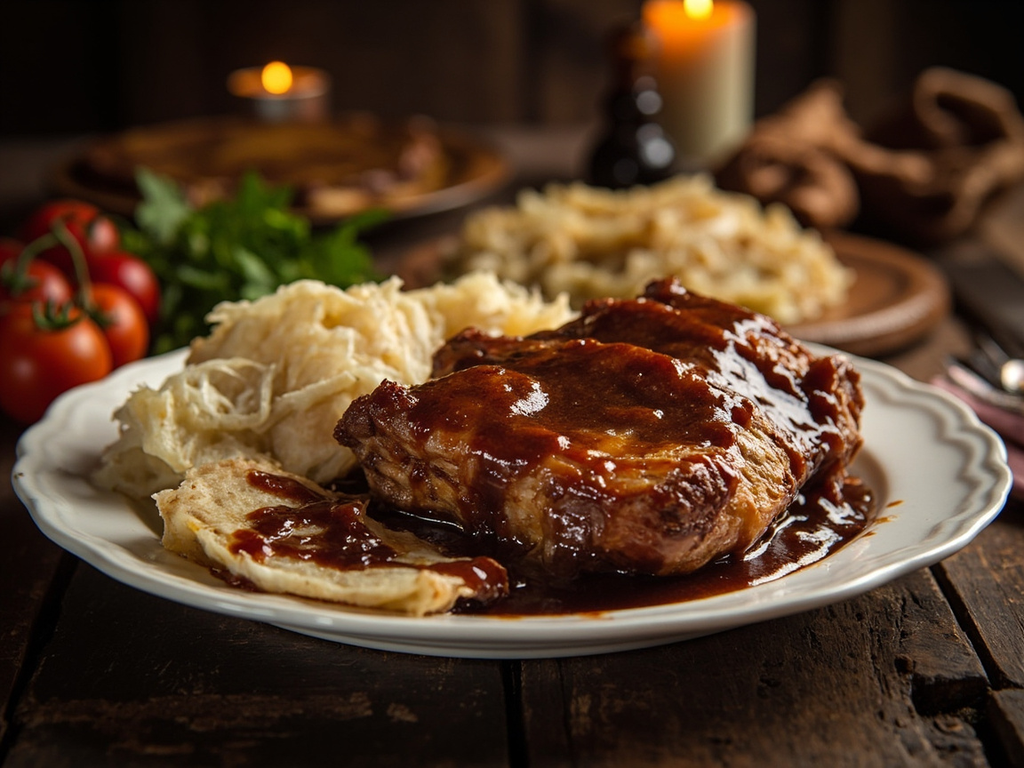
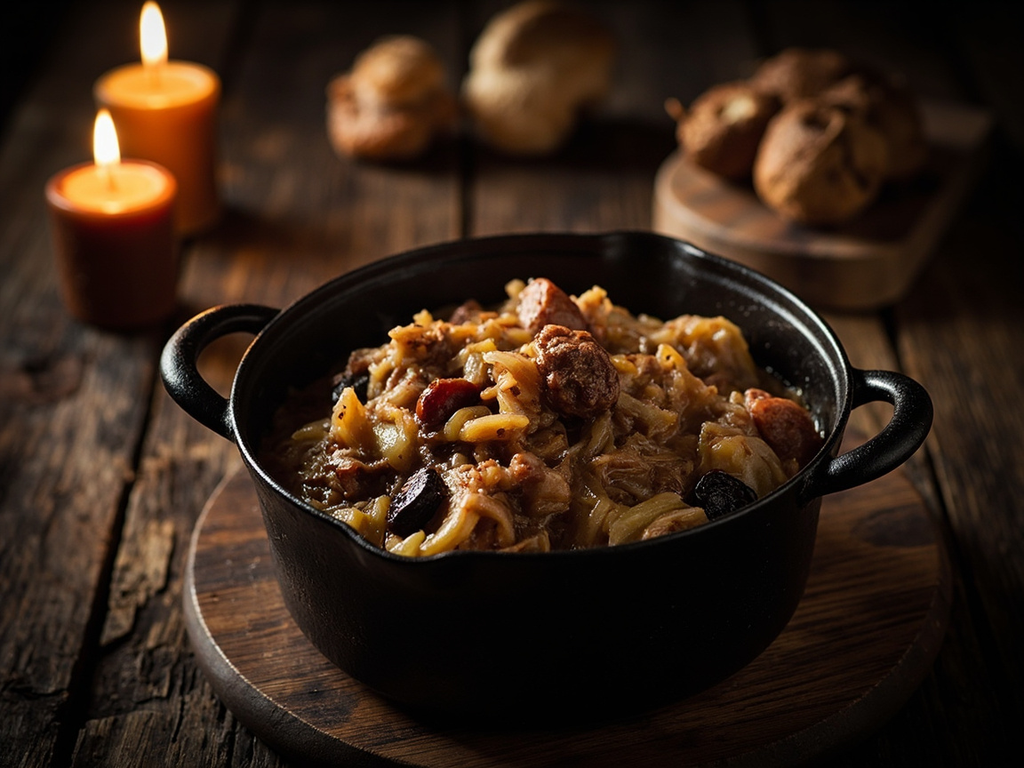
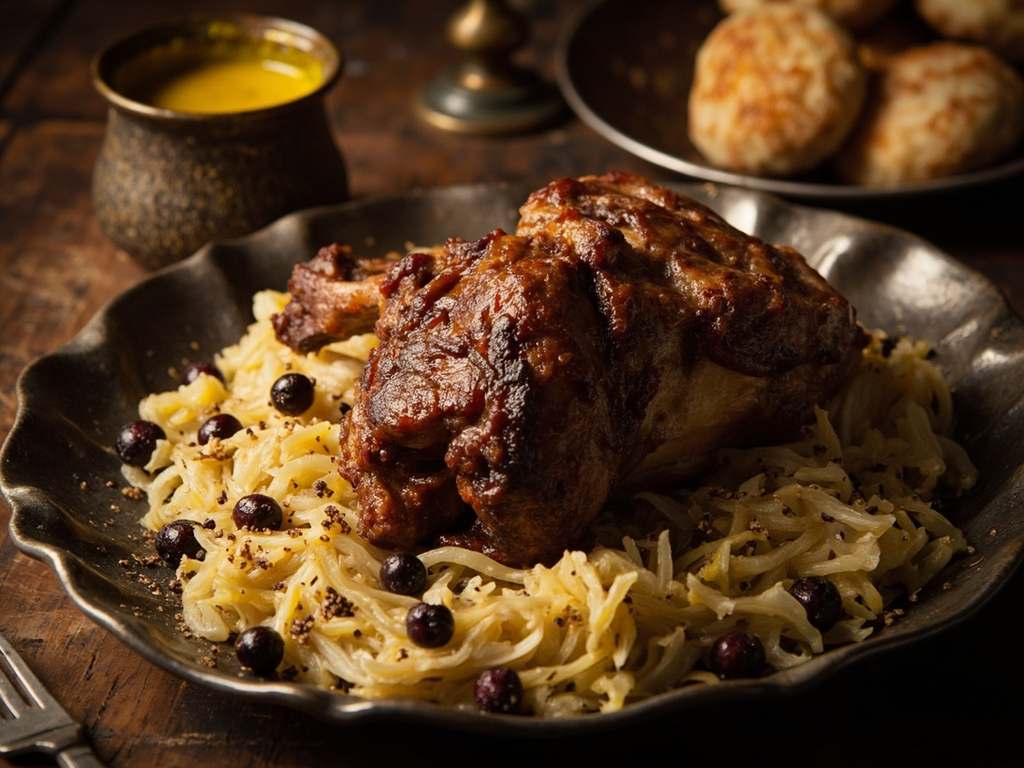
Eisbein mit Sauerkraut — pork knuckle with sauerkraut
Why this dish? Zelter directed the Sing-Akademie zu Berlin and received friends and musicians at his Berlin table. Eisbein, a huge pink knuckle enthroned on its bed of sauerkraut, was the quintessential reception dish of the Prussian bourgeoisie: generous, festive, made to feed a table of singers after rehearsal.
A pork knuckle long-simmered until the meat falls off the bone, served on tangy sauerkraut perfumed with caraway and juniper. The great sharing dish of Berlin, festive and comforting.
When my singers had pushed their chorales to exhaustion, I did not send them away without feeding them, you see! We placed on the table a knuckle as big as a blacksmith's fist, lying on its sour sauerkraut, and each one cut his own share. The secret is patience: you let the pork tenderize for hours, and you slip into the cabbage juniper berries and caraway, otherwise the stomach protests. Goethe himself, in Weimar, would not have turned up his nose at such a piece — though he preferred, the rascal, his Rhine wine to my Berlin beer!
- •Pork knuckle (cured) — one large piece (main meat)
- •Sauerkraut — a full bowl (fermented garnish)
- •Juniper berries — a handful (forest aroma)
- •Caraway (Kümmel) — a pinch (signature)
- •Bay leaf — two (aromatic)
- •Onion studded with cloves — one (aromatic base)
Eisbein mit Sauerkraut — pork knuckle with sauerkraut
A pork knuckle long-simmered until the meat falls off the bone, served on tangy sauerkraut perfumed with caraway and juniper. The great sharing dish of Berlin, festive and comforting.
Why this dish? Zelter directed the Sing-Akademie zu Berlin and received friends and musicians at his Berlin table. Eisbein, a huge pink knuckle enthroned on its bed of sauerkraut, was the quintessential reception dish of the Prussian bourgeoisie: generous, festive, made to feed a table of singers after rehearsal.
When my singers had pushed their chorales to exhaustion, I did not send them away without feeding them, you see! We placed on the table a knuckle as big as a blacksmith's fist, lying on its sour sauerkraut, and each one cut his own share. The secret is patience: you let the pork tenderize for hours, and you slip into the cabbage juniper berries and caraway, otherwise the stomach protests. Goethe himself, in Weimar, would not have turned up his nose at such a piece — though he preferred, the rascal, his Rhine wine to my Berlin beer!
Ingredients (period version)
- Pork knuckle (cured) — one large piece (main meat)
- Sauerkraut — a full bowl (fermented garnish)
- Juniper berries — a handful (forest aroma)
- Caraway (Kümmel) — a pinch (signature)
- Bay leaf — two (aromatic)
- Onion studded with cloves — one (aromatic base)
Ingredients
- Cured pork knuckle — 1.2 kg (main meat)
- Raw sauerkraut — 800 g (fermented garnish)
- Juniper berries — 8 (forest aroma)
- Caraway seeds — 1 tsp (signature)
- Bay leaf — 2 leaves (aromatic)
- Onion — 1, studded with 3 cloves (aromatic base)
- Dry white wine or pale beer — 250 ml (braising liquid for cabbage)
Method
- Cover the knuckle with cold water, add bay leaf, clove-studded onion, and half the juniper berries; simmer gently for 2.5 hours.
- Rinse the sauerkraut, place it in a pot with caraway, remaining juniper, and white wine or beer.
- Braise the sauerkraut covered for 45 minutes over low heat.
- Place the drained knuckle on the sauerkraut, cook together for another 30 minutes to marry flavors.
- Serve the whole knuckle in the center of the table on its bed of sauerkraut, with mustard and rye bread.
How it was made : Sauerkraut, fermented salted cabbage, was a vital winter reserve throughout Northern Europe: it preserved the vegetable and provided, though unknown at the time, vitamin C that protected against scurvy. Salted and then braised pork was the great festive piece of Prussian cities, where each family fattened its pig.
The contemporary twist : Serve the knuckle glazed with honey and mustard, finished in the oven for a few minutes for a golden, crispy skin.
Carl Friedrich Zelter · Charactorium