 flip
flipKönigsberger Klopse (Prussian Meatballs in Caper Sauce)
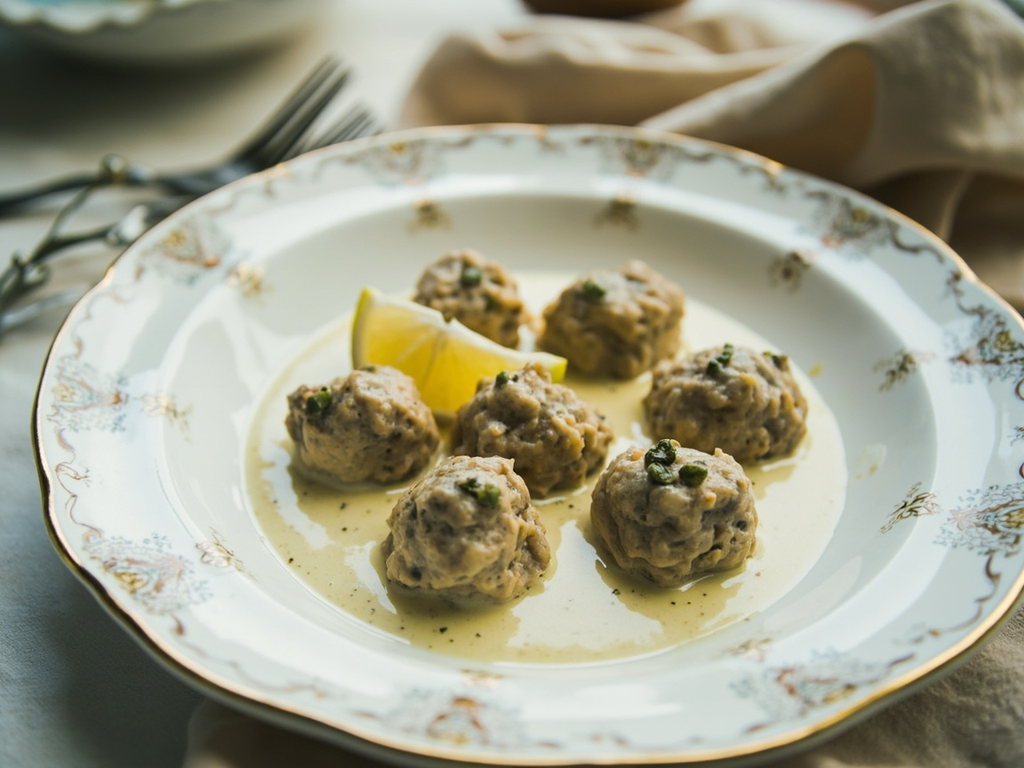
Königsberger Klopse (Prussian Meatballs in Caper Sauce)
Why this dish? Back in Europe, Humboldt, a Prussian born in Berlin, attended intellectual dinners. These meatballs in white sauce sharpened with capers are a classic of Prussian cuisine of his time: the German face of his table, in contrast to tropical rations.
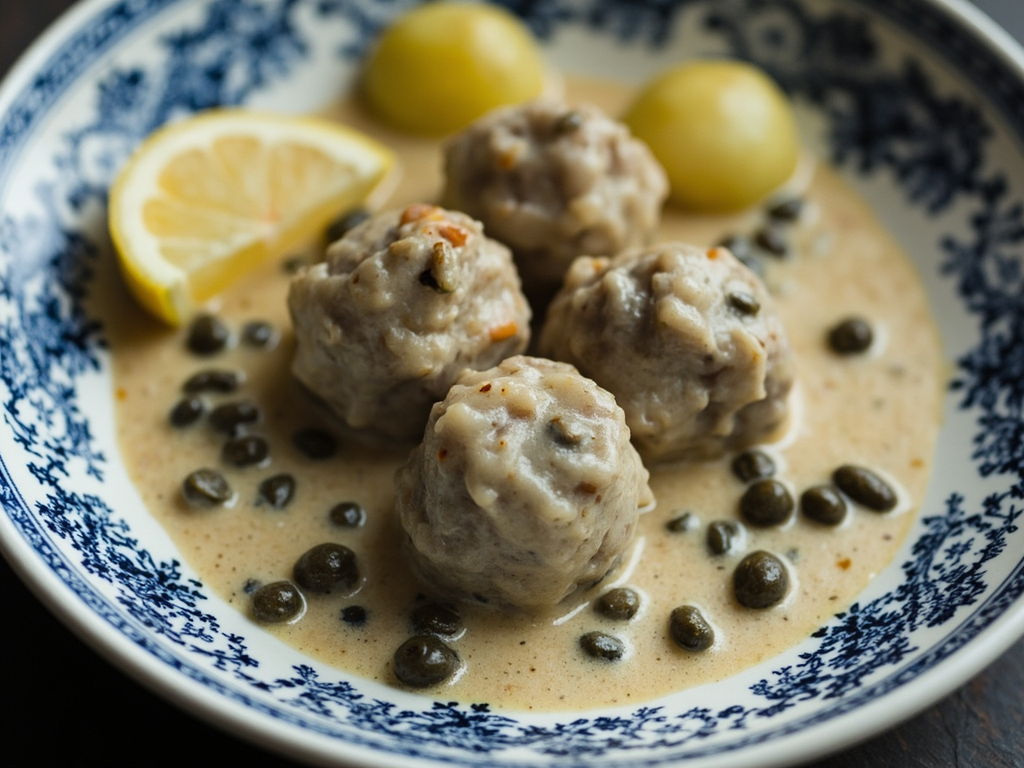
Tender meatballs poached in broth, coated in a tangy white sauce with capers and lemon. A bourgeois dish, refined and comforting, typical of 19th-century Prussia.
When I returned to Berlin, after the fevers and deserts, I found some pleasure in the dishes of my homeland. These Prussian meatballs are poached in a clear broth, then napped with a white sauce where capers and lemon juice provide their acidic point. I was not a man to linger over feasts; but in the conversation of scholars around such a table, I confess the weary traveler tasted a rest that no llano had offered him.
- •Ground veal (or veal and pork) — one pound (meatball base)
- •Soaked bread — one crumb (binder)
- •Egg — 1 (binder)
- •Capers — a spoonful (signature acidity)
- •Butter and flour — for the roux (sauce)
- •Lemon — juice of (acidity)
- •Meat broth — a potful (poaching and sauce)
Königsberger Klopse (Prussian Meatballs in Caper Sauce)
Tender meatballs poached in broth, coated in a tangy white sauce with capers and lemon. A bourgeois dish, refined and comforting, typical of 19th-century Prussia.
Why this dish? Back in Europe, Humboldt, a Prussian born in Berlin, attended intellectual dinners. These meatballs in white sauce sharpened with capers are a classic of Prussian cuisine of his time: the German face of his table, in contrast to tropical rations.
When I returned to Berlin, after the fevers and deserts, I found some pleasure in the dishes of my homeland. These Prussian meatballs are poached in a clear broth, then napped with a white sauce where capers and lemon juice provide their acidic point. I was not a man to linger over feasts; but in the conversation of scholars around such a table, I confess the weary traveler tasted a rest that no llano had offered him.
Ingredients (period version)
- Ground veal (or veal and pork) — one pound (meatball base)
- Soaked bread — one crumb (binder)
- Egg — 1 (binder)
- Capers — a spoonful (signature acidity)
- Butter and flour — for the roux (sauce)
- Lemon — juice of (acidity)
- Meat broth — a potful (poaching and sauce)
Ingredients
- Ground veal (or veal-pork mix) — 500 g (meatballs)
- White bread soaked in milk, squeezed — 1 slice (binder)
- Egg — 1 (binder)
- Onion — 1, finely chopped (aromatic)
- Butter + flour — 30 g + 30 g (roux)
- Meat broth — 500 ml (poaching and sauce)
- Capers — 2 tbsp (acidity)
- Lemon juice — 1 tbsp (acidity)
- Cream (optional) — 2 tbsp (smooth binder)
Method
- Mix the meat, squeezed bread, egg, onion, salt, and pepper; form walnut-sized meatballs.
- Bring the broth to a simmer and poach the meatballs for 10 minutes; remove and set aside. Strain and reserve the broth.
- Make a roux: melt the butter, add the flour, cook 2 minutes without browning.
- Gradually whisk in the warm broth for a smooth sauce; let thicken.
- Add the capers, lemon juice, and cream if desired; adjust seasoning.
- Return the meatballs to the sauce, warm gently, and serve.
How it was made : Königsberg, then capital of East Prussia, gave its name to this dish attested as early as the early 19th century. Capers and lemon, imported from the south, signaled a refined table. Traditionally served with boiled potatoes and beets.
The contemporary twist : Serve with buttered parsley rice and sprinkle with grated lemon zest for a brighter acidity and clean plating.
Alexander von Humboldt · Charactorium