 flip
flipSpegesild på rugbrød — Salted Herring on Rye Bread
Spegesild på rugbrød — Salted Herring on Rye Bread
Why this dish? Barrel-salted herring was the protein of every peasant household in Funen: cheap, preserved for months, it fed large families like Nielsen's. Desalted and placed on buttered rye, it was the ordinary lunch the child might have taken to Odense.
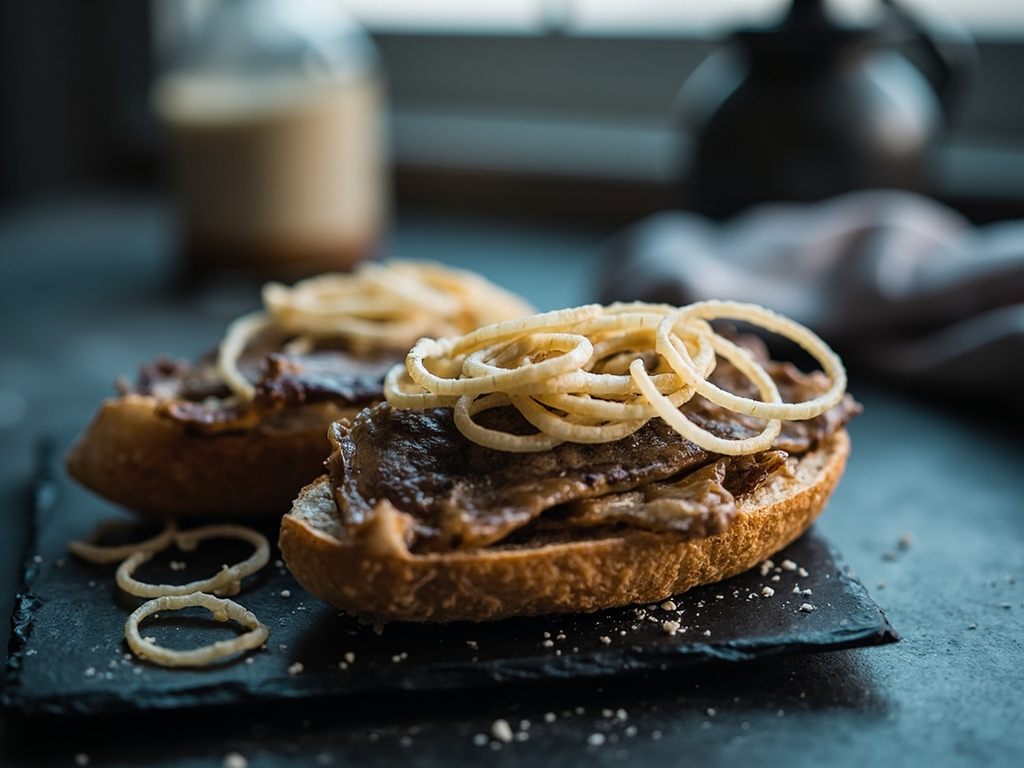
Fillet of long-salted herring, desalted then sliced, laid on a buttered slice of rye bread with raw onion rings. Salty, straightforward, slightly tangy: the humblest and most Danish of smørrebrød.
The herring, you see, we always had it on hand — in the salt barrel in the cellar. You had to soak it overnight to draw out the salt, then lay it on a thick slice of buttered rugbrød, with raw onion on top. It was poor people's food, and we were poor; but a herring and a hunk of black rye, a man could work all morning at the plough on that. I never forgot that taste, even when Copenhagen offered me finer tables.
- •Salted herring in brine (spegesild) — 1 per slice (preserved protein topping)
- •Rye bread (rugbrød) — 1 slice (base)
- •Butter — generously (binding and barrier)
- •Raw onion — a few rings (bite)
Spegesild på rugbrød — Salted Herring on Rye Bread
Fillet of long-salted herring, desalted then sliced, laid on a buttered slice of rye bread with raw onion rings. Salty, straightforward, slightly tangy: the humblest and most Danish of smørrebrød.
Why this dish? Barrel-salted herring was the protein of every peasant household in Funen: cheap, preserved for months, it fed large families like Nielsen's. Desalted and placed on buttered rye, it was the ordinary lunch the child might have taken to Odense.
The herring, you see, we always had it on hand — in the salt barrel in the cellar. You had to soak it overnight to draw out the salt, then lay it on a thick slice of buttered rugbrød, with raw onion on top. It was poor people's food, and we were poor; but a herring and a hunk of black rye, a man could work all morning at the plough on that. I never forgot that taste, even when Copenhagen offered me finer tables.
Ingredients (period version)
- Salted herring in brine (spegesild) — 1 per slice (preserved protein topping)
- Rye bread (rugbrød) — 1 slice (base)
- Butter — generously (binding and barrier)
- Raw onion — a few rings (bite)
Ingredients
- Salted herring fillets (or matjes, lightly sweet) — 2 fillets
- Dense rye bread — 2 slices
- Salted butter — for spreading
- Red or yellow onion — 1/2, thinly sliced
- Milk (for desalting) — enough to cover fillets
Method
- Desalt herring fillets for a few hours (or overnight) in milk or cold water, depending on saltiness; drain and pat dry.
- Generously spread rye bread with cold butter.
- Cut herring into pieces and arrange on the bread.
- Top with thin raw onion rings.
- Serve as is, eaten with knife and fork like a true smørrebrød.
How it was made : Herring salting is one of the oldest preservation techniques of the North and Baltic Seas. Stored in brine barrels, it lasted through winter and was an essential protein reserve in Danish rural areas. It was desalted before eating, often on sourdough rye bread.
The contemporary twist : A dollop of sour cream and a pinch of fresh dill to soften the salt, Nordic bistro style — without renouncing the sharp onion.
Sources : Carl Nielsen, Min fynske barndom (1927) · Kristine Marie Jensen, Frøken Jensens Kogebog (1901)
Carl Nielsen · Charactorium