 flip
flipKvashenaya Kapusta (Lacto-Fermented Cabbage)
Kvashenaya Kapusta (Lacto-Fermented Cabbage)
Why this dish? The autumn fermentation of cabbage is the survival food gesture of all Northern Russia: without it, no vitamins during the freezing months. For a rationed Leningrader like Akhmatova, this sour cabbage, drawn from the barrel, was both *zakuska*, source of vitamin C, and base for winter *shchi*.
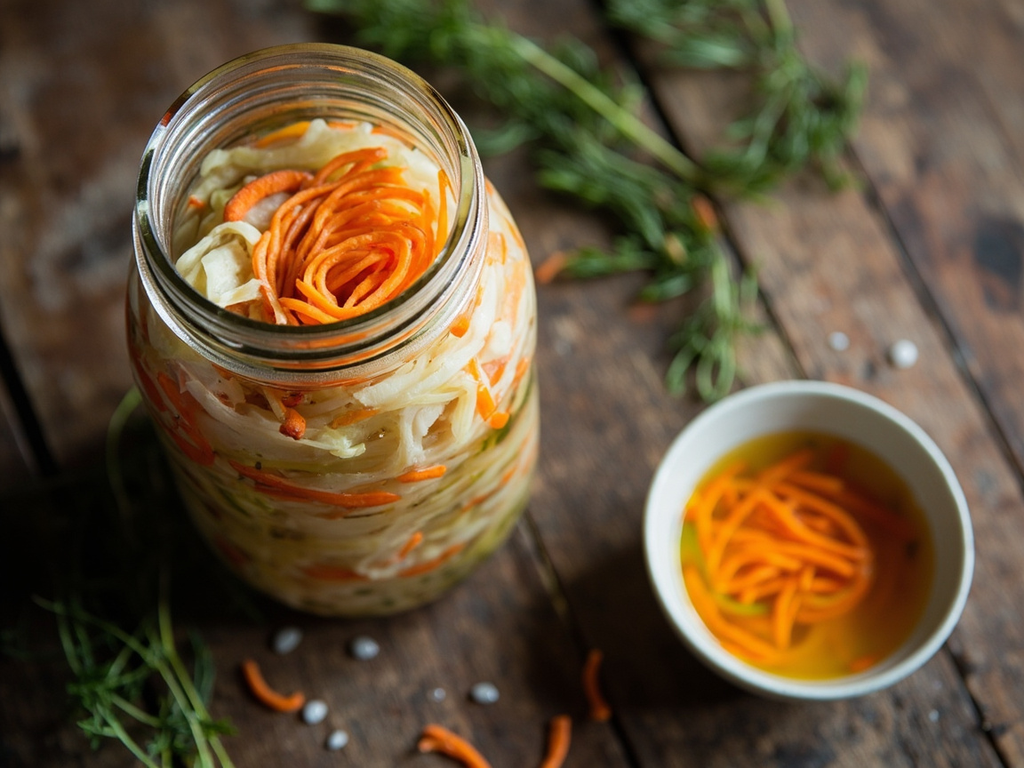
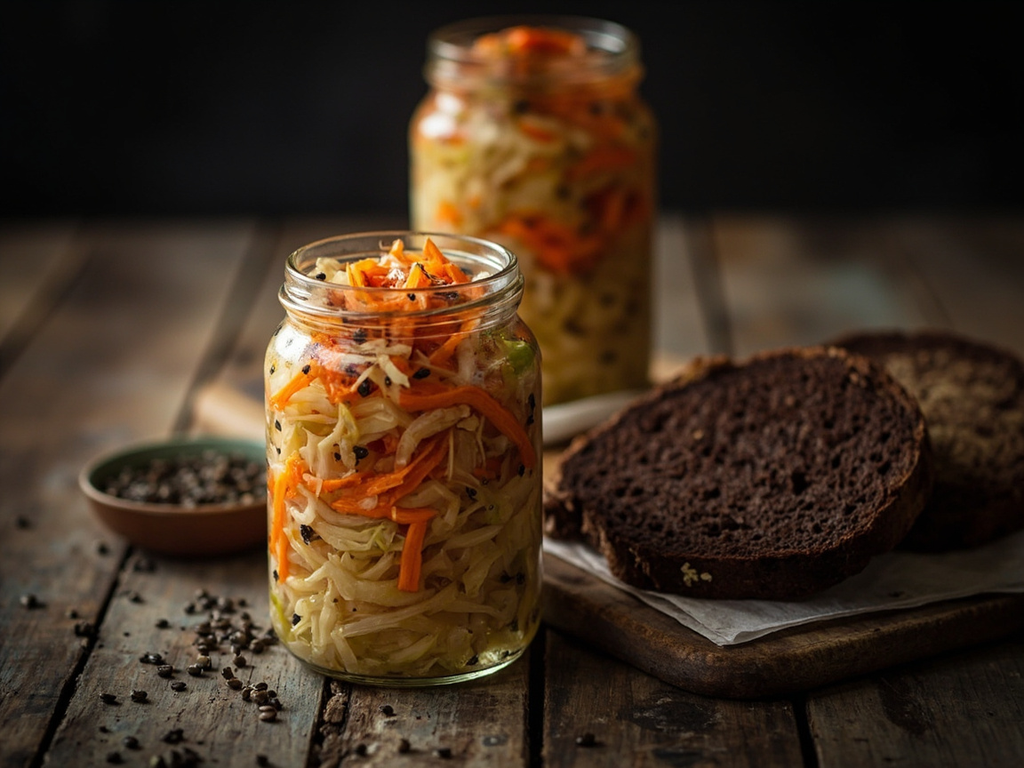
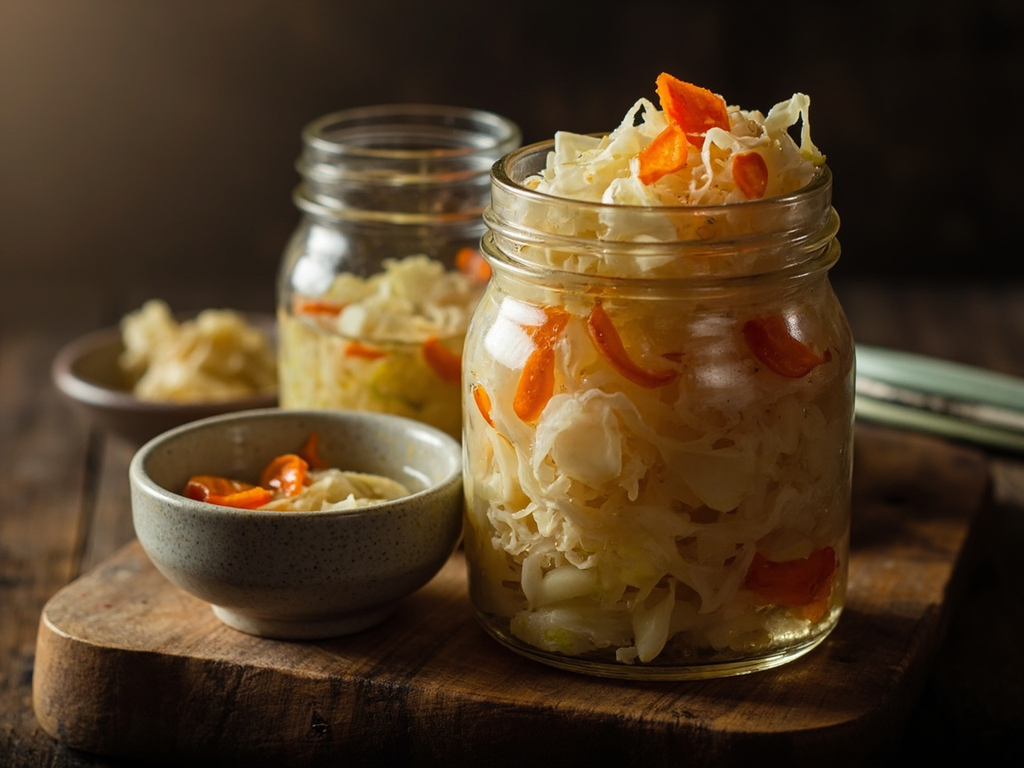
Finely shredded cabbage, massaged with salt and a little carrot, left to ferment for a few days at room temperature. Crunchy, tangy, alive: the simplest and most precious preserve of the Russian winter.
In autumn, one does not joke with cabbage: it decides whether you will survive the winter. I shred it fine, rub it with salt with bare hands until it releases its water and weeps, then I pack it tight into the pot with a little carrot for color. Every day you pierce it with a stick to release the air, and you wait for the sourness to rise. Bite into a cold handful over a hot potato — that's all of Leningrad standing tall right there.
- •White cabbage — one head (vegetable to ferment)
- •Carrot — one or two (color, sweetness)
- •Salt (non-iodized) — in proportion to cabbage (brine, preservation)
- •Dill or caraway seeds — a pinch (flavor (optional))
Kvashenaya Kapusta (Lacto-Fermented Cabbage)
Finely shredded cabbage, massaged with salt and a little carrot, left to ferment for a few days at room temperature. Crunchy, tangy, alive: the simplest and most precious preserve of the Russian winter.
Why this dish? The autumn fermentation of cabbage is the survival food gesture of all Northern Russia: without it, no vitamins during the freezing months. For a rationed Leningrader like Akhmatova, this sour cabbage, drawn from the barrel, was both *zakuska*, source of vitamin C, and base for winter *shchi*.
In autumn, one does not joke with cabbage: it decides whether you will survive the winter. I shred it fine, rub it with salt with bare hands until it releases its water and weeps, then I pack it tight into the pot with a little carrot for color. Every day you pierce it with a stick to release the air, and you wait for the sourness to rise. Bite into a cold handful over a hot potato — that's all of Leningrad standing tall right there.
Ingredients (period version)
- White cabbage — one head (vegetable to ferment)
- Carrot — one or two (color, sweetness)
- Salt (non-iodized) — in proportion to cabbage (brine, preservation)
- Dill or caraway seeds — a pinch (flavor (optional))
Ingredients
- White cabbage — 1 kg, finely shredded (vegetable to ferment)
- Carrot — 1 large, grated (color, sweetness)
- Fine non-iodized salt — 20 g (2% of cabbage weight) (brine, preservation)
- Caraway or dill seeds — 1 tsp (flavor (optional))
Method
- Shred the cabbage very finely, grate the carrot, mix in a large bowl with salt and seeds.
- Massage firmly with bare hands for 5–10 minutes, until the cabbage softens and releases its juice.
- Pack tightly into a clean jar so the brine covers the cabbage; weigh down with a weight (small jar of water) to keep it submerged.
- Cover with a cloth and let ferment at room temperature (18–22°C) for 5–10 days.
- Each day, press with a clean spoon to release gas bubbles and check that the cabbage remains under brine.
- When the acidity pleases you, close and store in the cold; serve cold as a *zakuska*, drizzled with a little oil.
How it was made : Cabbage was fermented in large quantities in autumn (the *kapustnitsa*), often with family or neighbors, in huge wooden barrels weighted with a stone. Lactic fermentation, without naming it scientifically, provided the main source of vitamin C in winter, preventing scurvy.
The contemporary twist : Serve the sour cabbage in a small nest topped with a thin slice of rye bread and a drizzle of sunflower oil: a minimalist *zakuska* worthy of a poets' salon.
Sources : Elena Molokhovets, A Gift to Young Housewives, 1861 · Darra Goldstein, Beyond the North Wind, 2020
Anna Akhmatova · Charactorium