 flip
flipBogobe le morogo (Pap and Wild Leafy Greens)
Bogobe le morogo (Pap and Wild Leafy Greens)
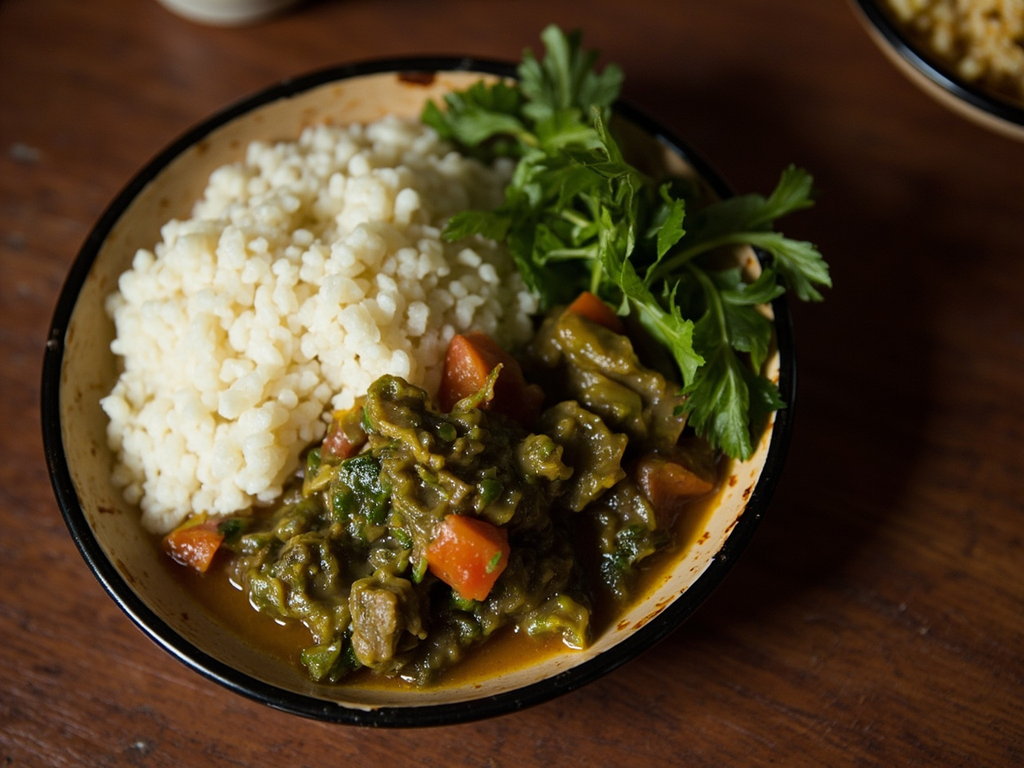
Why this dish? This is the everyday dish in her village of Ga-Masehlong, deep in Limpopo: the pap her family made at home, accompanied by morogo gathered at the edge of the fields. The meal that nourished the runner before she knew the Olympic stadiums.
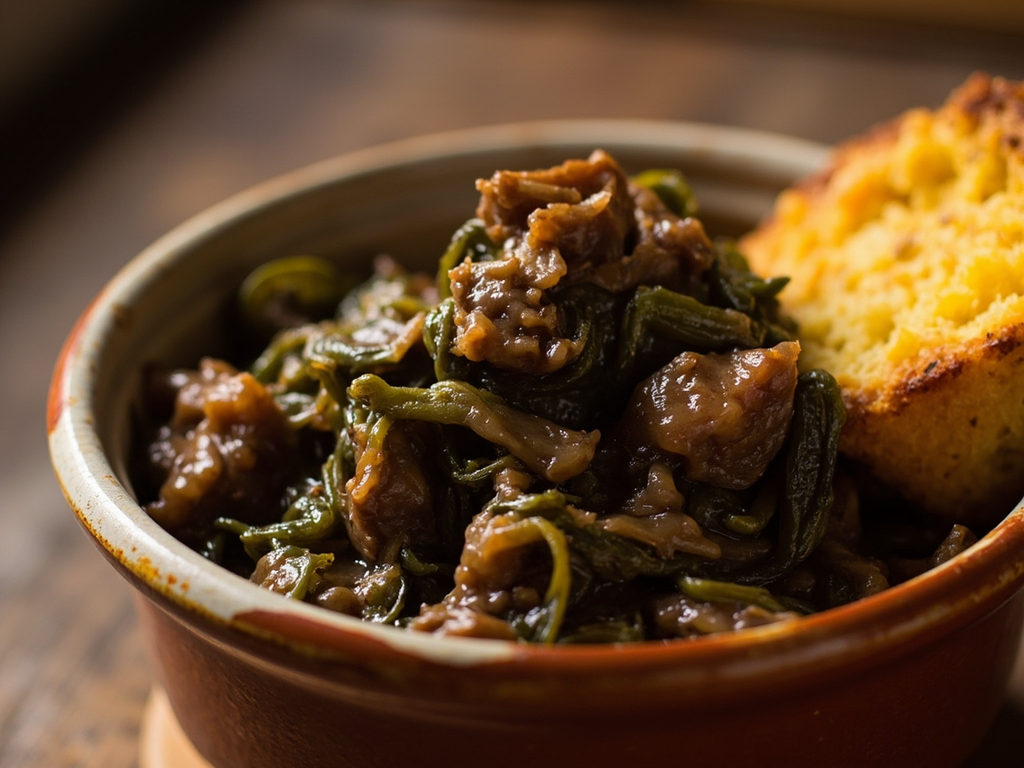
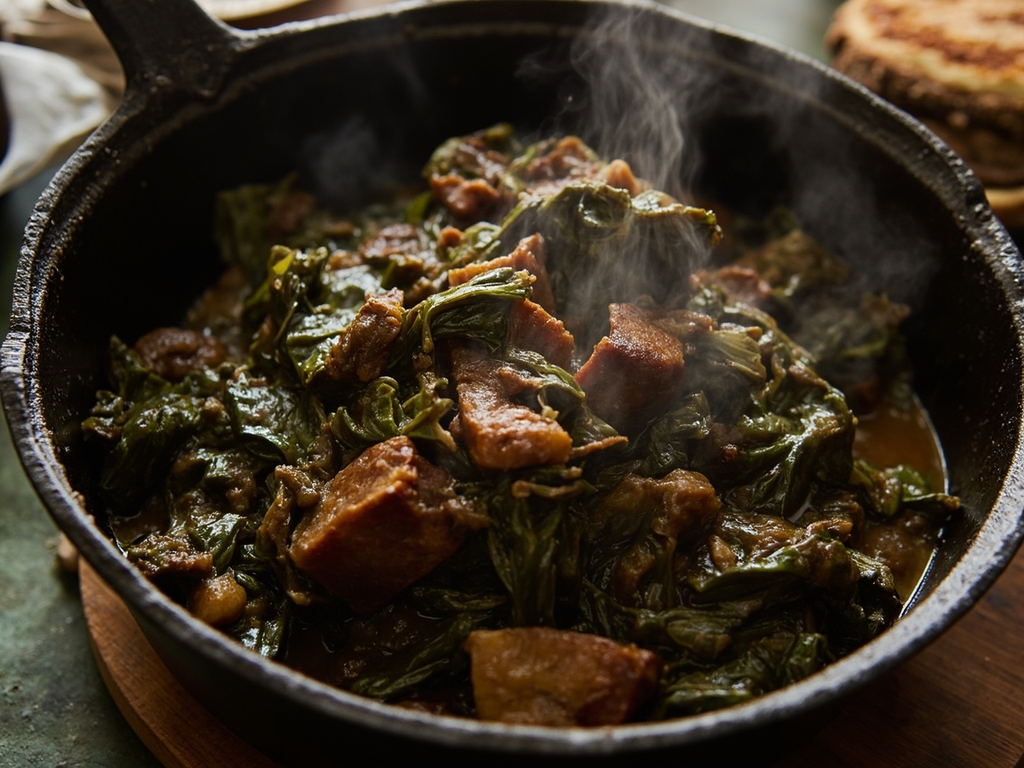
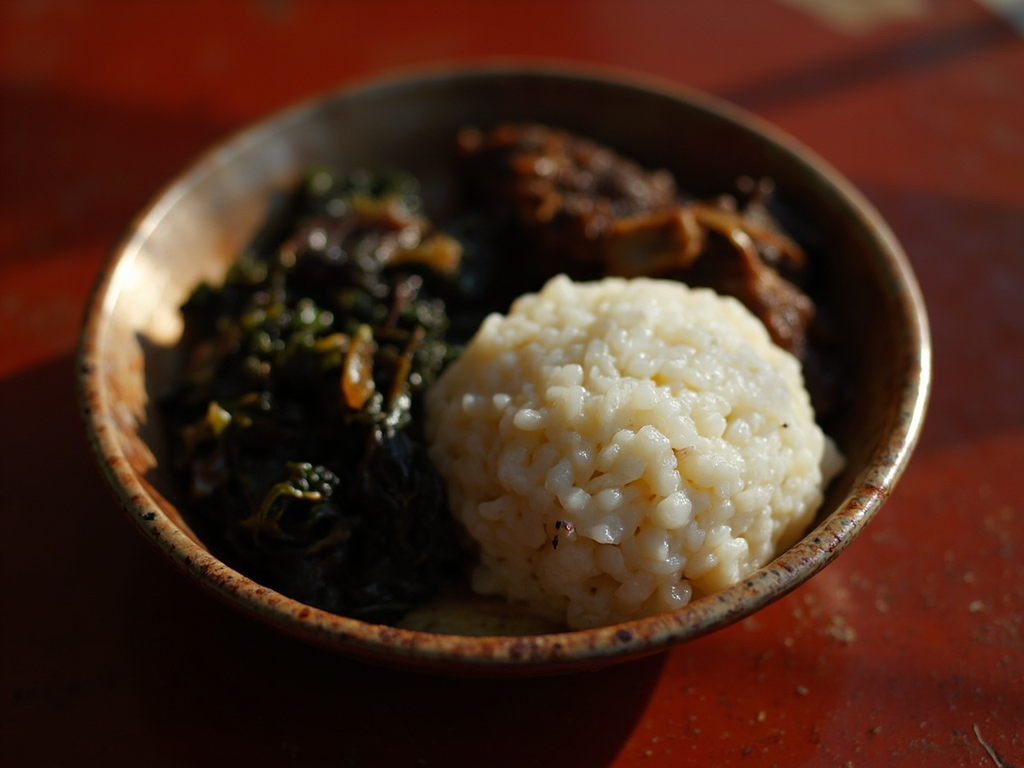
A firm, nourishing white maize porridge, rolled between the fingers and dipped into a panful of dark green leafy vegetables simmered with onion. The ultimate slow-release carbohydrate and a concentrate of iron and vitamins: exactly what a training body needs.
At home in Ga-Masehlong, pap is life — my mom made it every day in the big black pot, and we'd go pick the morogo ourselves at the edge of the fields, the leaves still covered with dew. You take a ball of pap in your right hand, dip it into the greens, and you feel the strength of the earth. When I win a medal, that's what I want to eat when I come home, nothing else. We're simple people, and it's this food that made me run.
- •White maize meal (mielie-meal) — two large handfuls per person (porridge base)
- •Water — as needed (cooking)
- •Morogo (wild leaves: amaranth, pumpkin, dandelion) — one large foraged basket (green accompaniment)
- •Onion — one (flavor)
- •Salt — a pinch (seasoning)
Bogobe le morogo (Pap and Wild Leafy Greens)
A firm, nourishing white maize porridge, rolled between the fingers and dipped into a panful of dark green leafy vegetables simmered with onion. The ultimate slow-release carbohydrate and a concentrate of iron and vitamins: exactly what a training body needs.
Why this dish? This is the everyday dish in her village of Ga-Masehlong, deep in Limpopo: the pap her family made at home, accompanied by morogo gathered at the edge of the fields. The meal that nourished the runner before she knew the Olympic stadiums.
At home in Ga-Masehlong, pap is life — my mom made it every day in the big black pot, and we'd go pick the morogo ourselves at the edge of the fields, the leaves still covered with dew. You take a ball of pap in your right hand, dip it into the greens, and you feel the strength of the earth. When I win a medal, that's what I want to eat when I come home, nothing else. We're simple people, and it's this food that made me run.
Ingredients (period version)
- White maize meal (mielie-meal) — two large handfuls per person (porridge base)
- Water — as needed (cooking)
- Morogo (wild leaves: amaranth, pumpkin, dandelion) — one large foraged basket (green accompaniment)
- Onion — one (flavor)
- Salt — a pinch (seasoning)
Ingredients
- White maize meal (mielie-meal, or fine white polenta) — 250 g (porridge base)
- Water — 1 liter (cooking)
- Spinach or Swiss chard (if morogo unavailable) — 400 g (leafy green)
- Onion — 1 medium, sliced (flavor)
- Sunflower oil — 2 tbsp (cooking greens)
- Salt — 1 tsp (seasoning)
Method
- Bring salted water to a boil in a large pot.
- Sprinkle in the maize meal while whisking to prevent lumps.
- Lower the heat, cover, and let swell for 10 minutes, then stir with a wooden spoon until a firm mass pulls away from the sides (about 25-30 minutes).
- Meanwhile, sauté the onion in oil, add the washed and roughly chopped leaves.
- Cover and let wilt over low heat for 8-10 minutes, salt.
- Serve a large ball of pap alongside the morogo: eat with your fingers, dipping the pap into the greens.
How it was made : Morogo refers to a whole range of edible leaves foraged from the wild or growing spontaneously in maize fields. Dried in the sun, they were stored for the dry season. Pap was cooked in a three-legged pot (potjie) placed on the coals, stirred with a special porridge stick.
The contemporary twist : A spoonful of amasi (fermented milk) placed alongside adds freshness and protein — a "pap-morogo" athlete recovery version.
Caster Semenya · Charactorium