 flip
flipPayday Oysters
Payday Oysters
Why this dish? A dandy even in poverty, Baudelaire frequented the restaurants of the Latin Quarter on good days. Oysters, abundant and popular in 19th-century Paris, were the accessible pleasure of good days — a flash of the sea on a bohemian table.
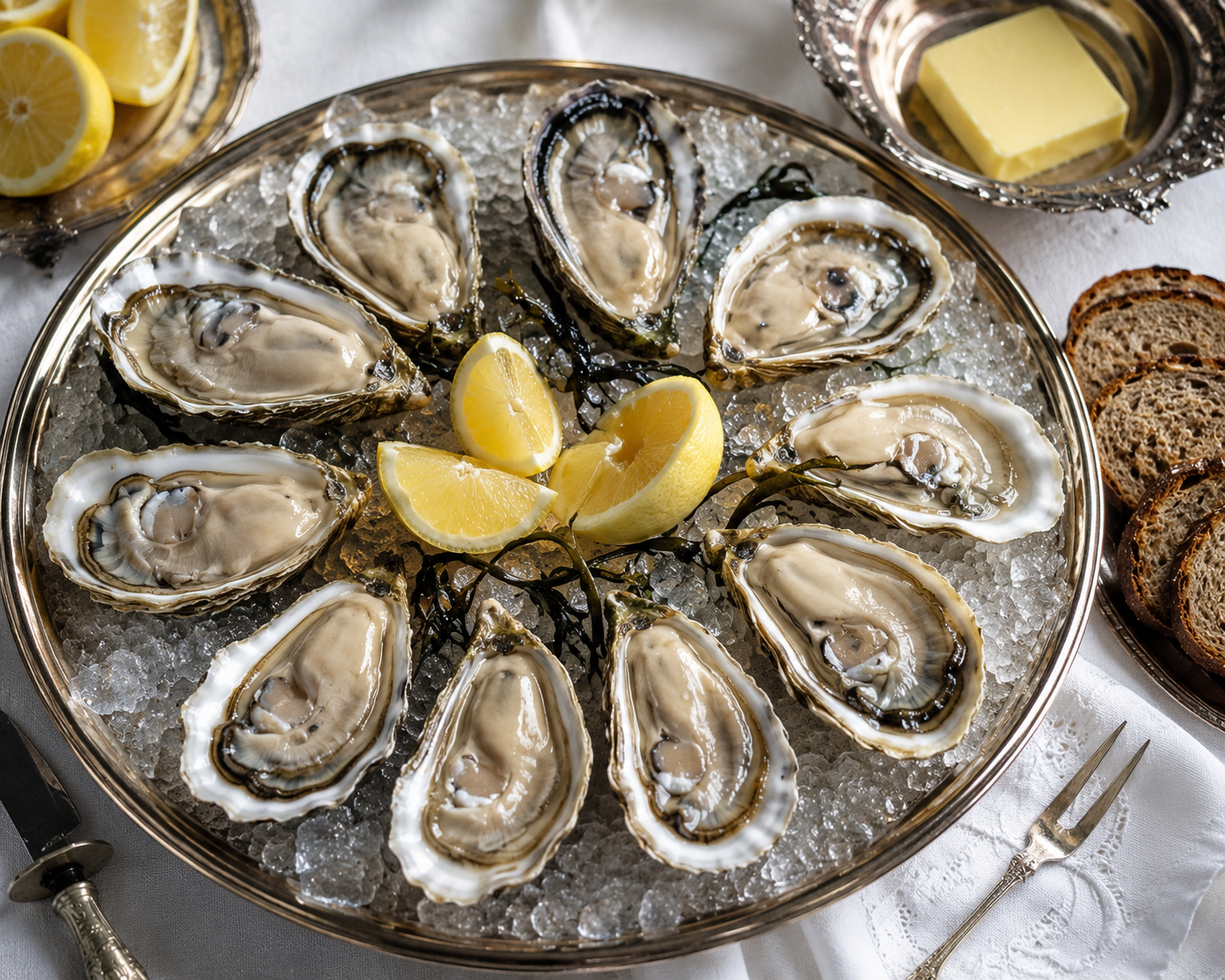
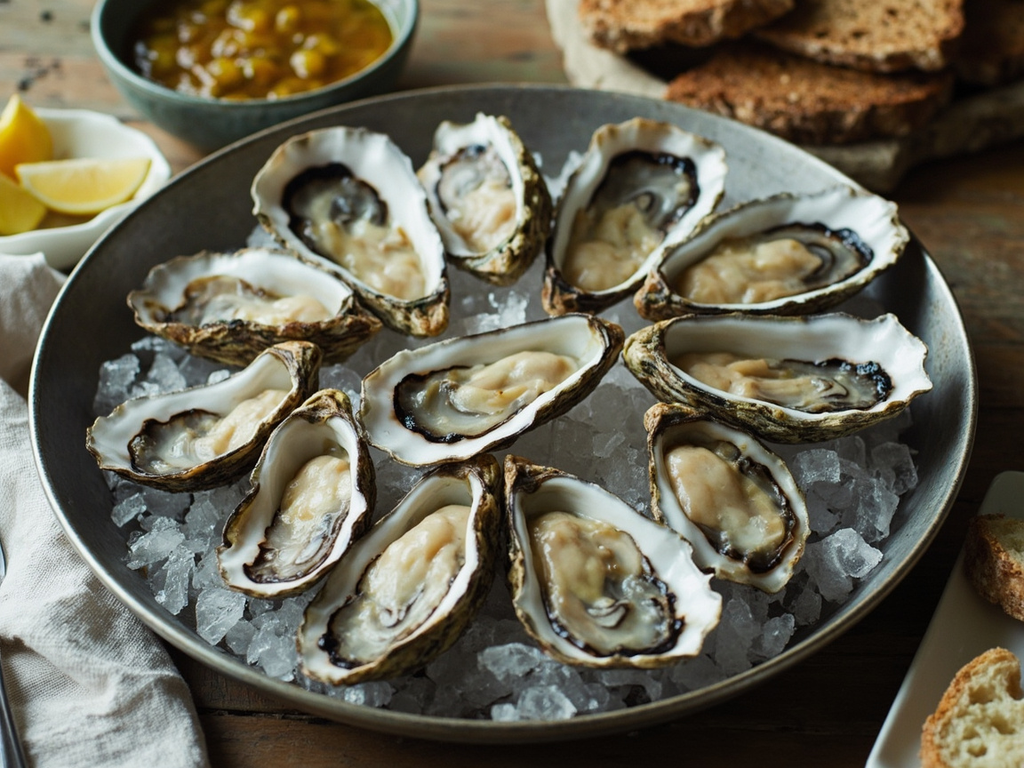
A dozen fresh oysters, shallot vinegar and lemon, buttered rye bread and pale white wine. The simple yet refined feast of one who knows how to enjoy without ceremony.
The day a bookseller finally deigns to pay me, I dash to the Latin Quarter to claim my due pleasure: a dozen oysters, fresh as the tide, which I douse with a squeeze of lemon and a glass of pale wine. They are swallowed without ceremony, the buttered rye bread held in hand. For a ruined dandy, that is all the luxury allowed — and believe me, it is worth any other.
- •Fresh oysters — a dozen (heart of the feast)
- •Lemon — one (acidity)
- •Shallot, wine vinegar — one shallot, a dash (mignonnette)
- •Rye bread — a few slices (accompaniment)
- •Salted butter — a knob (spread)
- •Dry white wine — a glass (pairing drink)
Payday Oysters
A dozen fresh oysters, shallot vinegar and lemon, buttered rye bread and pale white wine. The simple yet refined feast of one who knows how to enjoy without ceremony.
Why this dish? A dandy even in poverty, Baudelaire frequented the restaurants of the Latin Quarter on good days. Oysters, abundant and popular in 19th-century Paris, were the accessible pleasure of good days — a flash of the sea on a bohemian table.
The day a bookseller finally deigns to pay me, I dash to the Latin Quarter to claim my due pleasure: a dozen oysters, fresh as the tide, which I douse with a squeeze of lemon and a glass of pale wine. They are swallowed without ceremony, the buttered rye bread held in hand. For a ruined dandy, that is all the luxury allowed — and believe me, it is worth any other.
Ingredients (period version)
- Fresh oysters — a dozen (heart of the feast)
- Lemon — one (acidity)
- Shallot, wine vinegar — one shallot, a dash (mignonnette)
- Rye bread — a few slices (accompaniment)
- Salted butter — a knob (spread)
- Dry white wine — a glass (pairing drink)
Ingredients
- Oysters, n°3 — 12 (heart of the feast)
- Lemon — 1, cut into wedges (acidity)
- Gray shallot — 1, minced (mignonnette)
- Red wine vinegar — 3 tbsp (mignonnette)
- Rye bread — 4 slices (accompaniment)
- Salted butter — 50 g (spread)
- Muscadet or other dry white wine — 1 glass per person (pairing)
Method
- Prepare the mignonnette: mix the minced shallot and vinegar, refrigerate for 15 minutes.
- Shuck the oysters (flat blade under the hinge), discard the first water, keep the shells well nestled on a bed of coarse salt or ice.
- Butter the slices of rye bread.
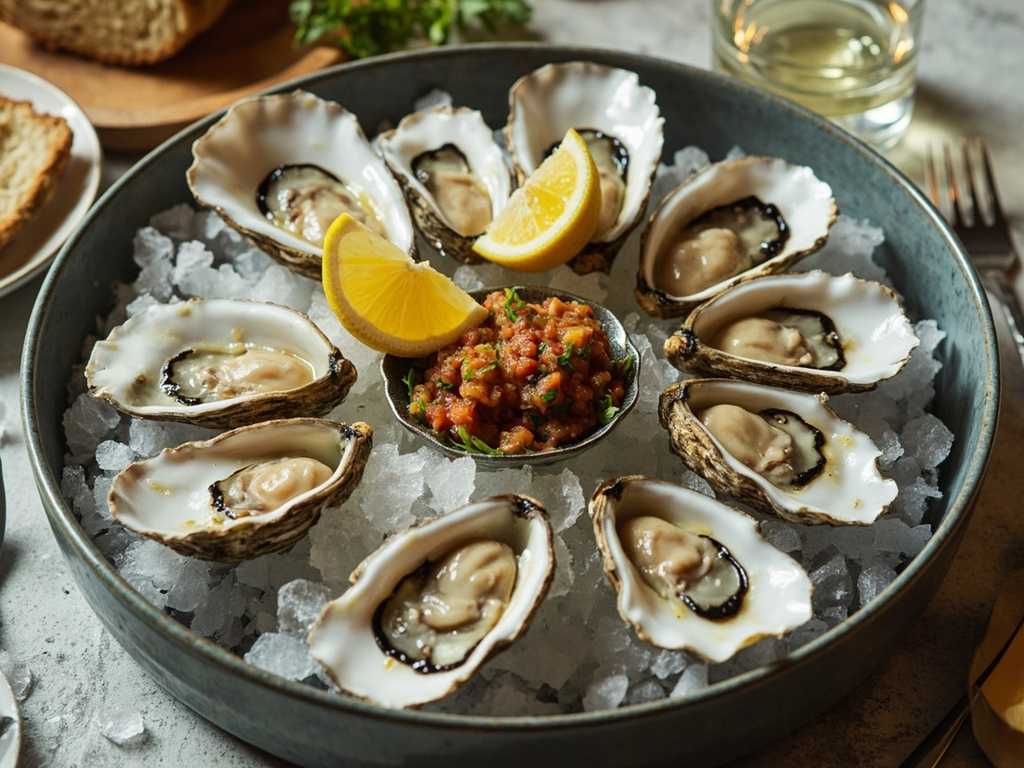
- Arrange the oysters on a platter, place lemon wedges and mignonnette in the center.
- Serve immediately, very cold, with the buttered bread and a glass of white wine.
How it was made : In 19th-century Paris, oysters were sold by the dozen in the streets and in popular restaurants as well as in chic establishments; they were eaten raw, with lemon or vinegar, with brown bread and white wine. It was one of the few luxuries the bohemian could afford.
The contemporary twist : Arrange the twelve oysters in a crown around a small glass of wine, like an "offering to payday," and number them like poems in a collection.
Charles Baudelaire · Charactorium