 flip
flipBouzigues oysters with mignonnette
Bouzigues oysters with mignonnette
Why this dish? The oyster is one of the most famous poems in "Le Parti pris des choses" (1942): Ponge describes this "obstinately closed world", its mother-of-pearl, its inner firmament. Born near Montpellier, he knew the oysters from the Thau lagoon, raised in Bouzigues just a stone's throw from his native Mediterranean.
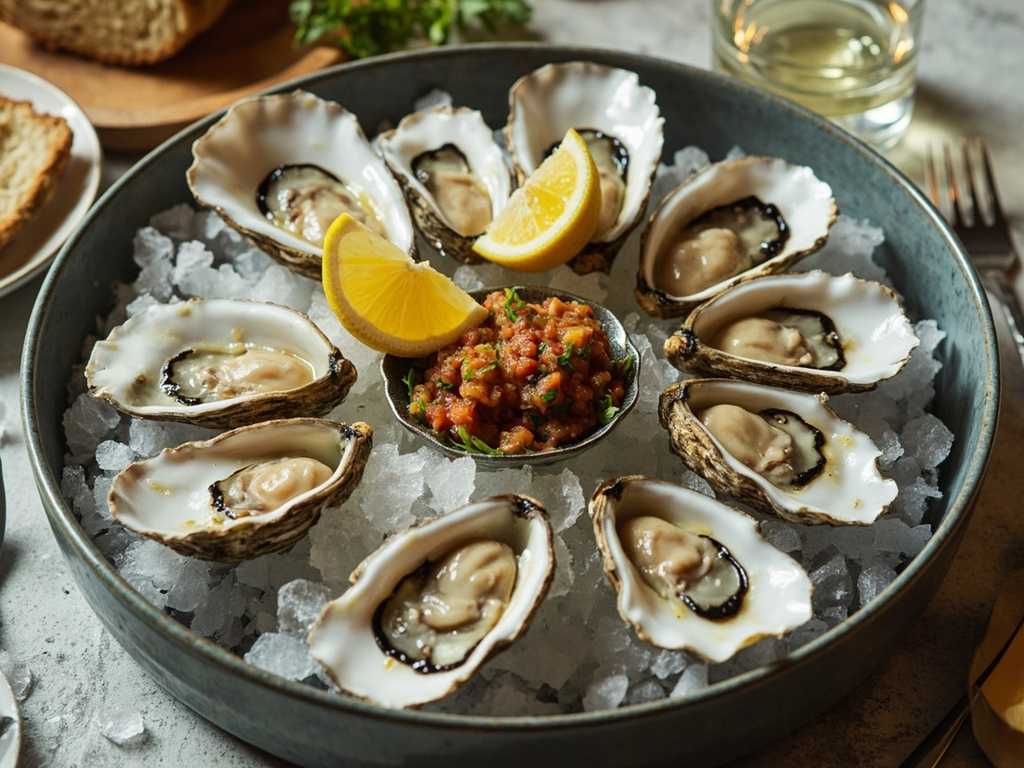
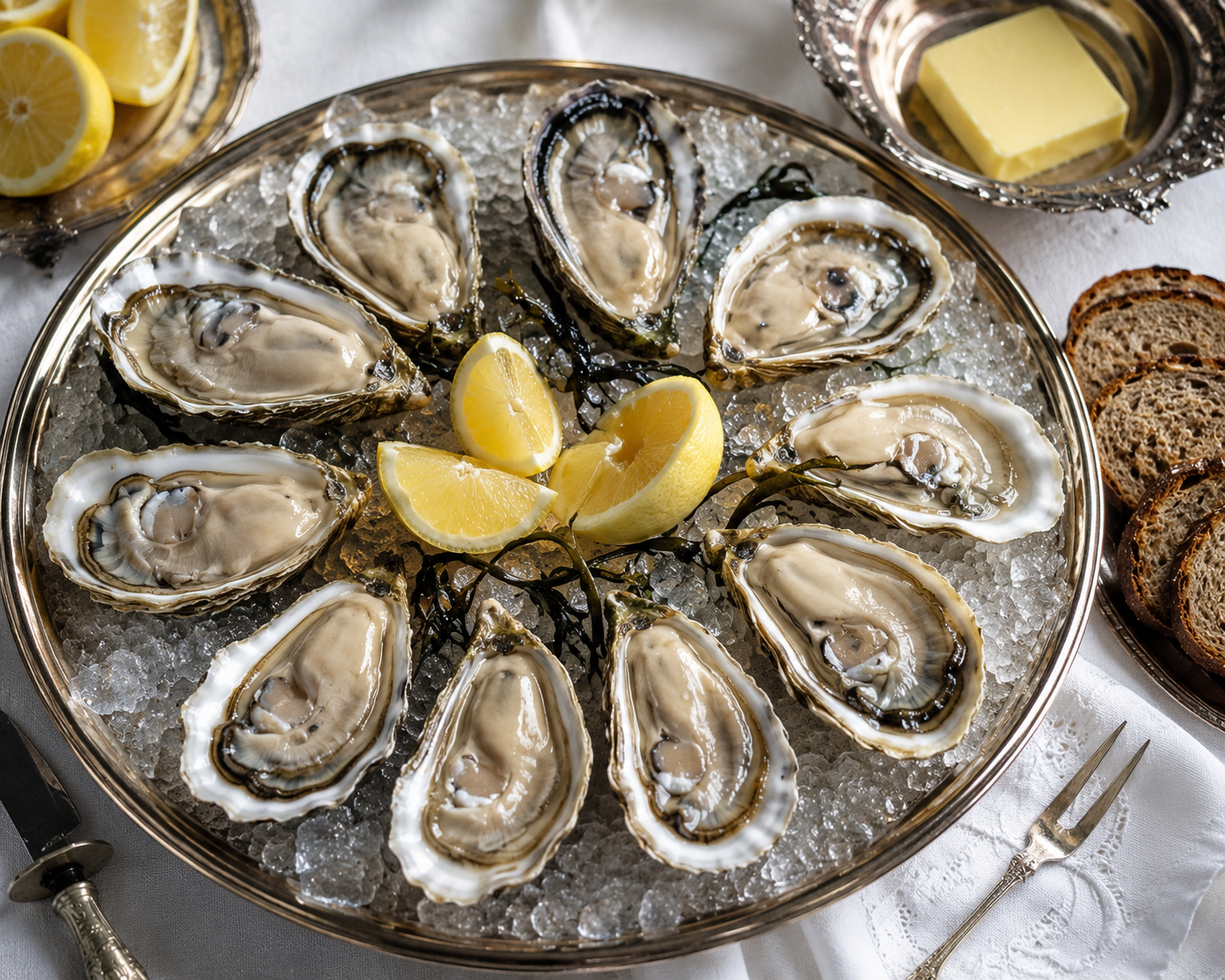
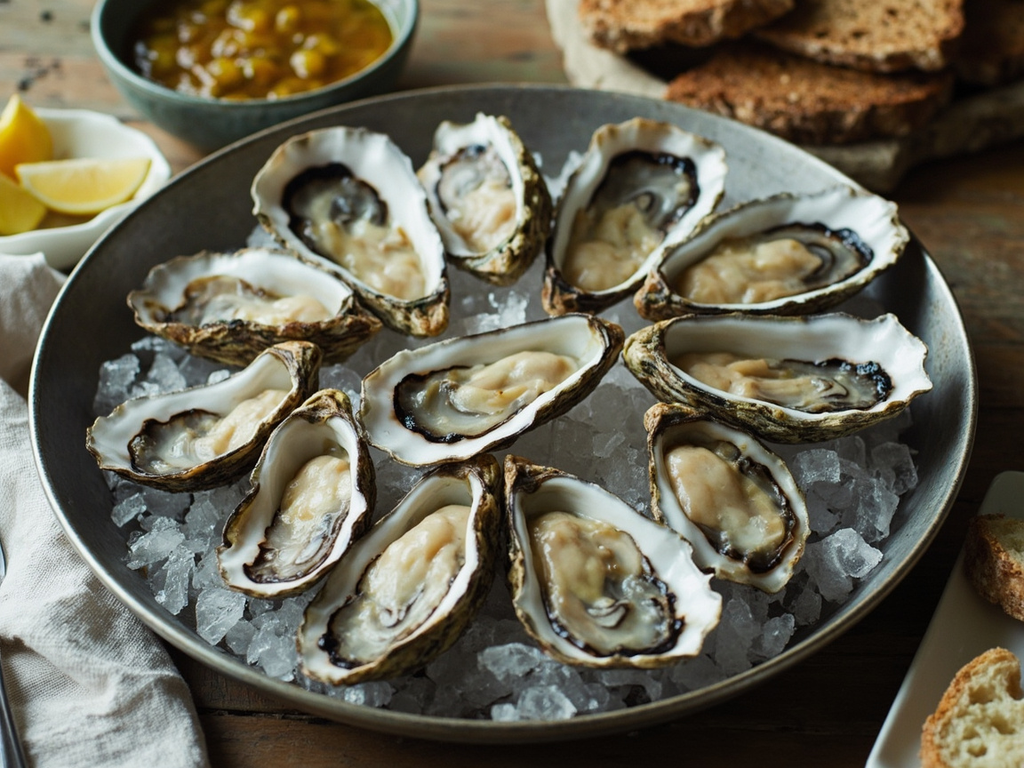
Bouzigues oysters served live on a bed of ice, accompanied by a mignonnette of vinegar and shallot, a lemon wedge, and buttered rye bread. The closed thing that you open with a knife to find a whole firmament inside.
See this thing: a pebble rougher than any other, obstinately closed. You have to try several times to open it, and you often cut your fingers — the shells from the Thau lagoon do not surrender without a fight. But once forced, what a sky inside: a greenish pool, a sachet of mother-of-pearl, and that taste of salt water which is the sea itself, reduced to a mouthful. I only add a dash of shallot vinegar, never more: you do not correct something so right.
- •Bouzigues oysters (Thau lagoon) — two dozen (the main thing)
- •Wine vinegar — a little (mignonnette)
- •Grey shallot — one (mignonnette)
- •Lemon — one (acidity)
- •Rye bread and butter — as needed (accompaniment)
Bouzigues oysters with mignonnette
Bouzigues oysters served live on a bed of ice, accompanied by a mignonnette of vinegar and shallot, a lemon wedge, and buttered rye bread. The closed thing that you open with a knife to find a whole firmament inside.
Why this dish? The oyster is one of the most famous poems in "Le Parti pris des choses" (1942): Ponge describes this "obstinately closed world", its mother-of-pearl, its inner firmament. Born near Montpellier, he knew the oysters from the Thau lagoon, raised in Bouzigues just a stone's throw from his native Mediterranean.
See this thing: a pebble rougher than any other, obstinately closed. You have to try several times to open it, and you often cut your fingers — the shells from the Thau lagoon do not surrender without a fight. But once forced, what a sky inside: a greenish pool, a sachet of mother-of-pearl, and that taste of salt water which is the sea itself, reduced to a mouthful. I only add a dash of shallot vinegar, never more: you do not correct something so right.
Ingredients (period version)
- Bouzigues oysters (Thau lagoon) — two dozen (the main thing)
- Wine vinegar — a little (mignonnette)
- Grey shallot — one (mignonnette)
- Lemon — one (acidity)
- Rye bread and butter — as needed (accompaniment)
Ingredients
- Bouzigues oysters (or Thau rock oysters) — 24 pieces (size 3) (the main thing)
- Red wine vinegar — 4 tbsp (mignonnette)
- Grey shallot, finely chopped — 1 large (mignonnette)
- Black pepper from the mill — a few turns (mignonnette)
- Lemon — 1, cut into wedges (acidity)
- Rye bread + demi-salt butter — 6 slices (accompaniment)
Method
- Prepare the mignonnette: mix the chopped shallot, vinegar, and pepper; let infuse for 15 minutes in the fridge.
- Open the oysters with a flat knife, protecting your hand with a cloth; cut the muscle and discard the first water.
- Arrange the shells on a bed of crushed ice, making sure they sit flat.
- Serve immediately with the mignonnette, lemon wedges, and buttered rye bread, each person seasoning to taste.
How it was made : Oysters were eaten raw and alive, opened at the last minute. On the Languedoc coast, oysters from the Thau lagoon (Bouzigues, Mèze) have been rope-grown since the early 20th century; in Ponge's time, they were simply consumed with vinegar or lemon, without fuss.
The contemporary twist : Arrange the twelve oysters in a circle, each on a handwritten label bearing a word — like a notebook where each shell is a definition to be opened.
Sources : Francis Ponge, « L'Huître », dans Le Parti pris des choses, Gallimard, 1942 · J.-B. Reboul, La Cuisinière provençale, 1897
Francis Ponge · Charactorium