 flip
flipArmadillo Roasted in Its Shell, Beagle-Style
Armadillo Roasted in Its Shell, Beagle-Style
Why this dish? During the five-year voyage of the Beagle (1831-1836), the young Darwin shared the gauchos' fire in Patagonia and tasted unknown meats: armadillo, puma, iguana, and the great rhea. He recounted that armadillos were roasted in their own shells, 'like in a casserole.' It was even while eating a rhea that he realised, too late, that he was dining on a new species — he saved its bones, which described Rhea darwinii.
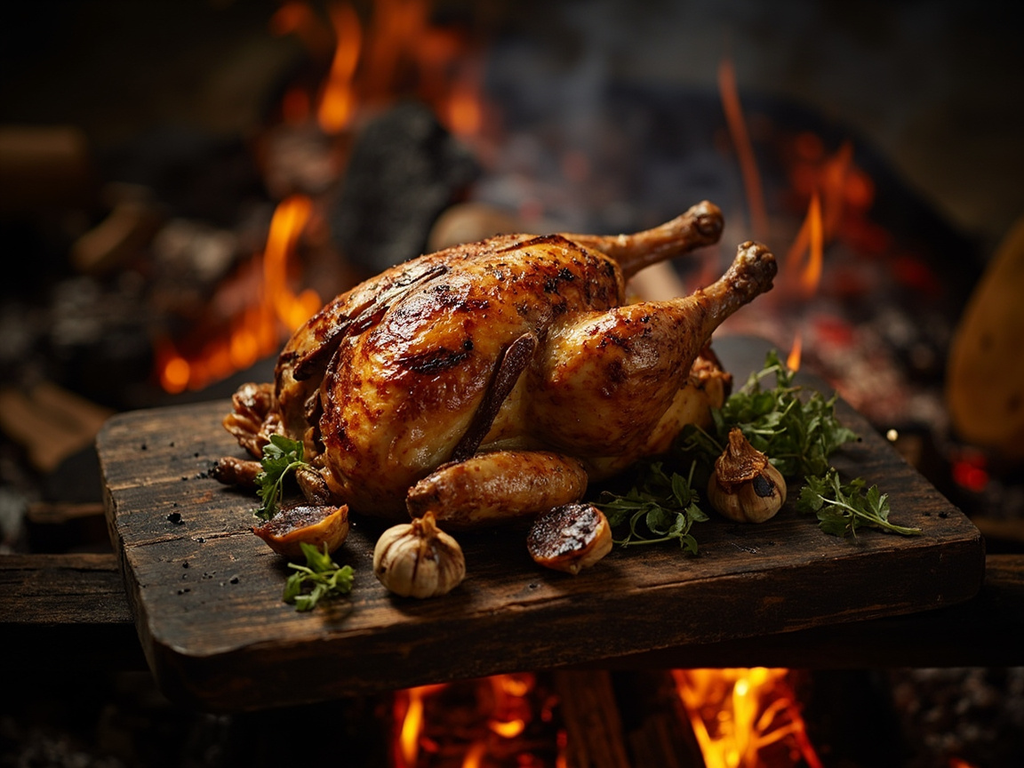
Meat slowly roasted on embers in its natural shell, simply salted, in the manner of the South American gauchos who feasted the expedition. For today: a farm chicken roasted with crispy skin, as a tribute.
South of the pampas, I lived at the rude table of the gauchos, and I assure you that a hungry naturalist is not fussy. They roasted armadillos right in their shells, placed on the embers like an earthenware dish, and the flesh came out tender and tasty, seasoned only with the salt of the pampa. One evening, I was devouring a bird I thought common, when I realised halfway through that it was an unknown species — I quickly saved the head and legs! Of all my observations, few cost me a meal; this one almost did.
- •Whole armadillo (or rhea) — one (game meat)
- •Salt — by hand (sole seasoning)
- •Wood embers — a good fire (slow cooking)
Armadillo Roasted in Its Shell, Beagle-Style
Meat slowly roasted on embers in its natural shell, simply salted, in the manner of the South American gauchos who feasted the expedition. For today: a farm chicken roasted with crispy skin, as a tribute.
Why this dish? During the five-year voyage of the Beagle (1831-1836), the young Darwin shared the gauchos' fire in Patagonia and tasted unknown meats: armadillo, puma, iguana, and the great rhea. He recounted that armadillos were roasted in their own shells, 'like in a casserole.' It was even while eating a rhea that he realised, too late, that he was dining on a new species — he saved its bones, which described Rhea darwinii.
South of the pampas, I lived at the rude table of the gauchos, and I assure you that a hungry naturalist is not fussy. They roasted armadillos right in their shells, placed on the embers like an earthenware dish, and the flesh came out tender and tasty, seasoned only with the salt of the pampa. One evening, I was devouring a bird I thought common, when I realised halfway through that it was an unknown species — I quickly saved the head and legs! Of all my observations, few cost me a meal; this one almost did.
Ingredients (period version)
- Whole armadillo (or rhea) — one (game meat)
- Salt — by hand (sole seasoning)
- Wood embers — a good fire (slow cooking)
Ingredients
- Whole guinea fowl (or free-range chicken) — 1 (modern substitute for wild meat)
- Coarse salt — 1 tbsp (seasoning)
- Butter or lard — 40 g (crispy skin)
- Thyme and rosemary — a few sprigs (garrigue fragrance)
- Garlic — 1 head (aromatic base)
- Black pepper — to grind (lift)
Method
- Take the bird out 1 hour before to bring to room temperature; pat the skin dry.
- Rub with lard, coarse salt and pepper; place thyme, rosemary and garlic in the cavity.
- Sear ideally over embers (barbecue) for the campfire spirit, or start in the oven at 220 °C.
- Roast at 180 °C for about 1 hour 15 (guinea fowl), basting regularly with juices.
- Check doneness (clear juices at the thigh), rest 10 minutes under foil.
- Carve and serve with very crispy skin and deglazed pan juices.
How it was made : The gauchos of Patagonia cooked game over an open fire, asado-style, with only salt as seasoning. The armadillo, protected by its bony shell, lent itself to 'natural casserole' cooking on the embers. Darwin describes these meals in the Journal of the Voyage of the Beagle — armadillo, agouti, puma ('like veal'), and rhea.
The contemporary twist : Serve the bird on a rustic wooden board with a fresh herb chimichurri — a nod to the pampas where Darwin made these discoveries.
Sources : Charles Darwin, Journal of Researches (The Voyage of the Beagle), 1839
Charles Darwin · Charactorium