 flip
flipSpelt Porridge with Cheese and Bacon
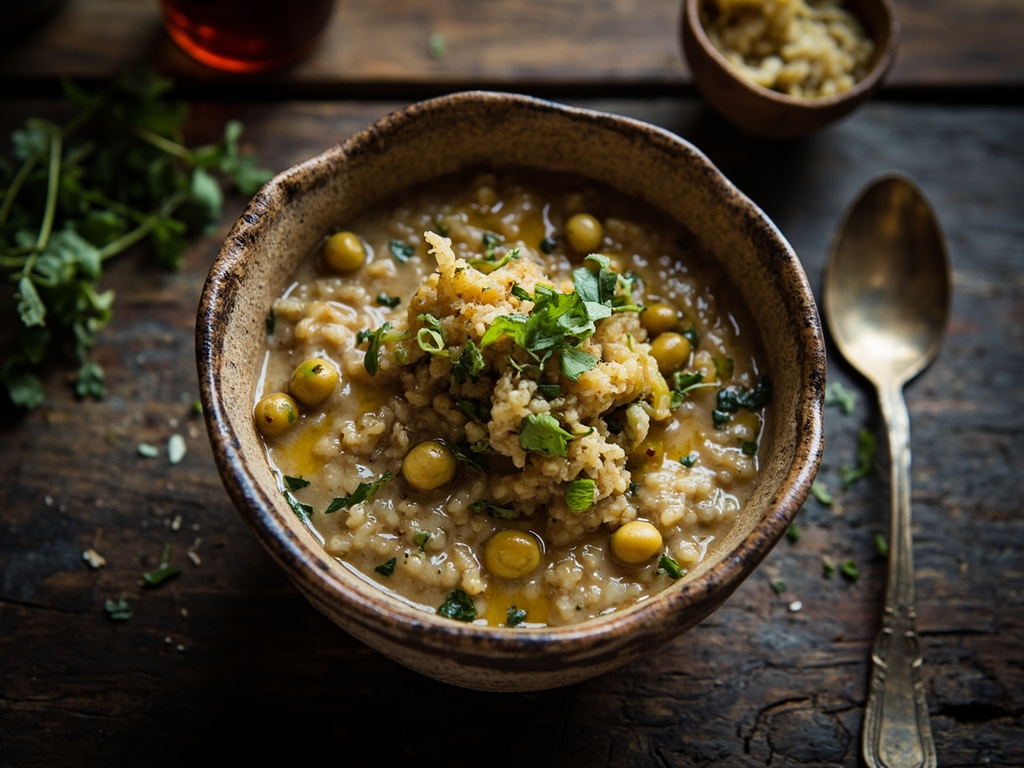
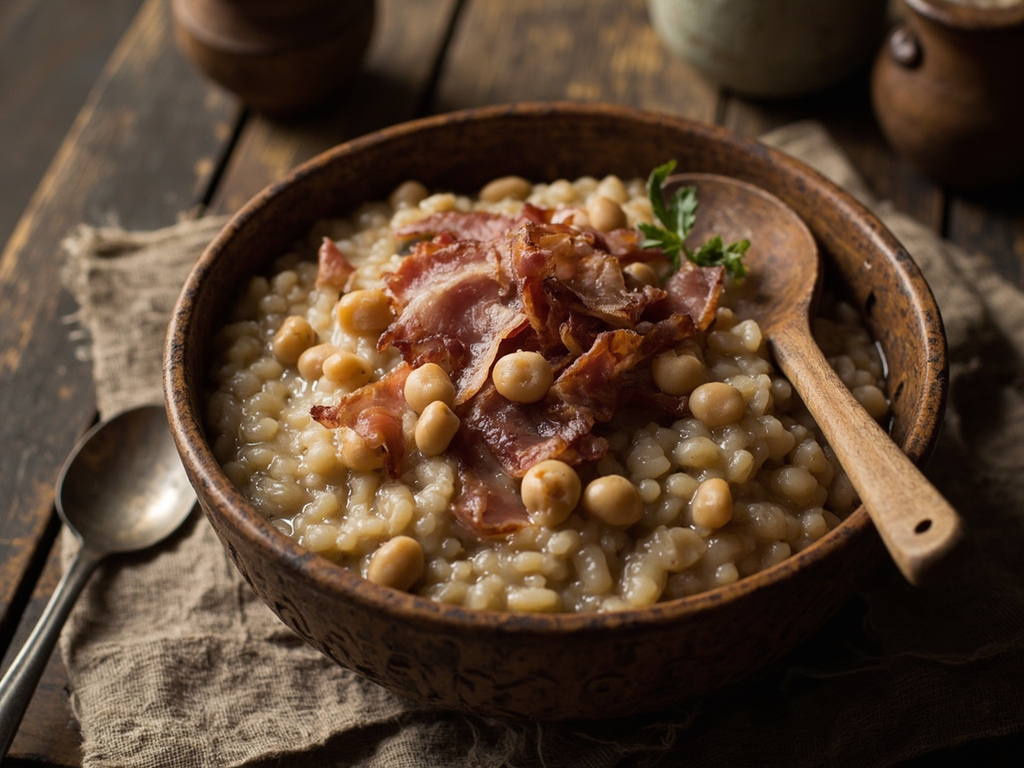
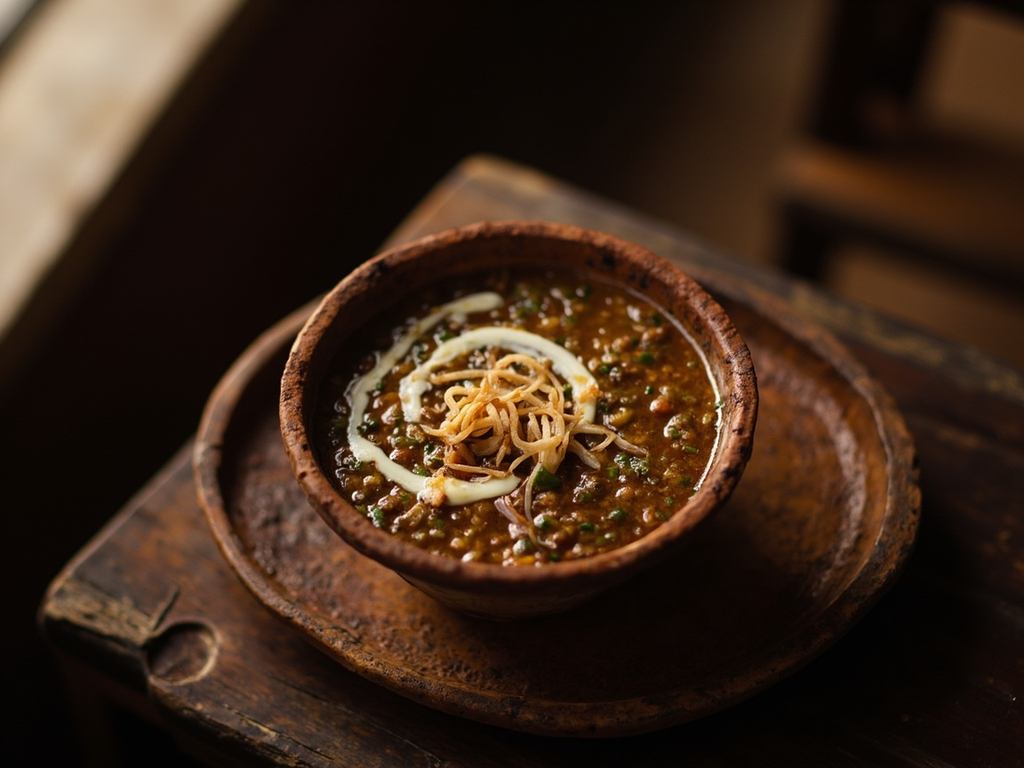
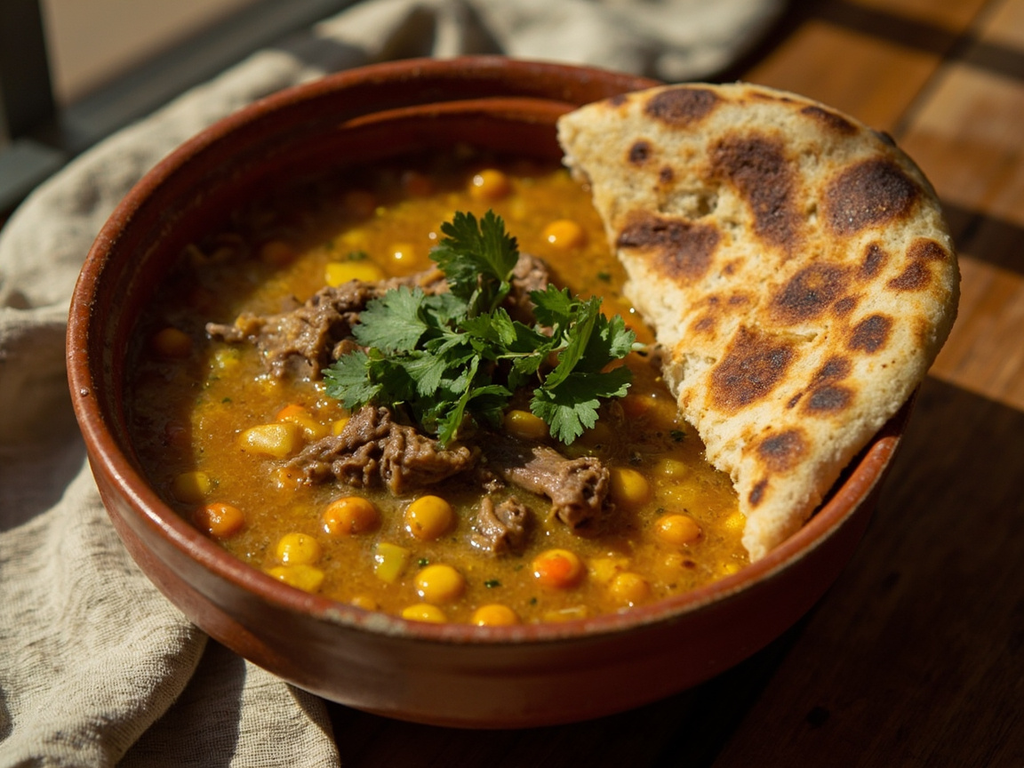
Spelt Porridge with Cheese and Bacon
Why this dish? Beneath the festive game roasts, it was the cereal porridge that truly nourished, day after day, the household and guard of Charles Martel. Even a mayor of the palace often began his day with this thick puls, inherited from the Gauls and Romans.
A thick spelt porridge simmered in milk, bound with fresh cheese and enlivened with grilled bacon bits. Comforting, nourishing, it is the solid belly of the men of the North before a long day in the saddle or on the worksite.
The wild boar is for days of glory. But do you know what keeps a man on his feet from sunrise to sunset? That porridge. My mother would thicken it over a low fire, we would throw in fresh cheese from our stables and a few bacon bits, and we would scrape the bowl down to the wood. Give it to a boy every morning, and in ten years you will have a warrior. Eat it hot; the winter of Austrasia does not forgive empty bellies.
- •Spelt or hulled barley — two handfuls per man (base cereal)
- •Milk — as needed (cooking liquid)
- •Fresh cheese — a piece (binder and flavor)
- •Bacon — a few dice (fat and umami)
- •Salt — a pinch (seasoning)
Spelt Porridge with Cheese and Bacon
A thick spelt porridge simmered in milk, bound with fresh cheese and enlivened with grilled bacon bits. Comforting, nourishing, it is the solid belly of the men of the North before a long day in the saddle or on the worksite.
Why this dish? Beneath the festive game roasts, it was the cereal porridge that truly nourished, day after day, the household and guard of Charles Martel. Even a mayor of the palace often began his day with this thick puls, inherited from the Gauls and Romans.
The wild boar is for days of glory. But do you know what keeps a man on his feet from sunrise to sunset? That porridge. My mother would thicken it over a low fire, we would throw in fresh cheese from our stables and a few bacon bits, and we would scrape the bowl down to the wood. Give it to a boy every morning, and in ten years you will have a warrior. Eat it hot; the winter of Austrasia does not forgive empty bellies.
Ingredients (period version)
- Spelt or hulled barley — two handfuls per man (base cereal)
- Milk — as needed (cooking liquid)
- Fresh cheese — a piece (binder and flavor)
- Bacon — a few dice (fat and umami)
- Salt — a pinch (seasoning)
Ingredients
- Cracked spelt (or pearl barley) — 200 g (cereal)
- Whole milk — 70 cl (creamy cooking)
- Water — 30 cl (adjusts texture)
- Fresh goat or cow cheese — 120 g (binder)
- Smoked bacon lardons — 100 g (umami and crunch)
- Salt — to taste (seasoning)
- A few lovage or celery leaves — 1 tbsp (fragrance (optional))
Method
- Rinse the cracked spelt. Pour it into a saucepan with the milk and water.
- Bring to a simmer then cook over low heat for 30 to 40 minutes, stirring often, until a thick creamy porridge is obtained.
- Meanwhile, dry-fry the lardons in a pan until golden.
- Off the heat, stir the fresh cheese into the porridge to bind it. Season with salt.
- Serve very hot in bowls, scatter with the lardons and their fat, and a little lovage.
How it was made : The puls (cereal porridge) was the fundamental daily food of late Antiquity and the early Middle Ages, long before bread dominated. Spelt, barley or millet were used, cooked slowly in water or milk. Fresh cheeses and bacon provided fat and protein for the majority, while game remained an aristocratic luxury.
The contemporary twist : Served as a savory winter porridge, rustic 'bowl' style, with a soft-boiled egg on top for the indulgent.
Charles Martel · Charactorium