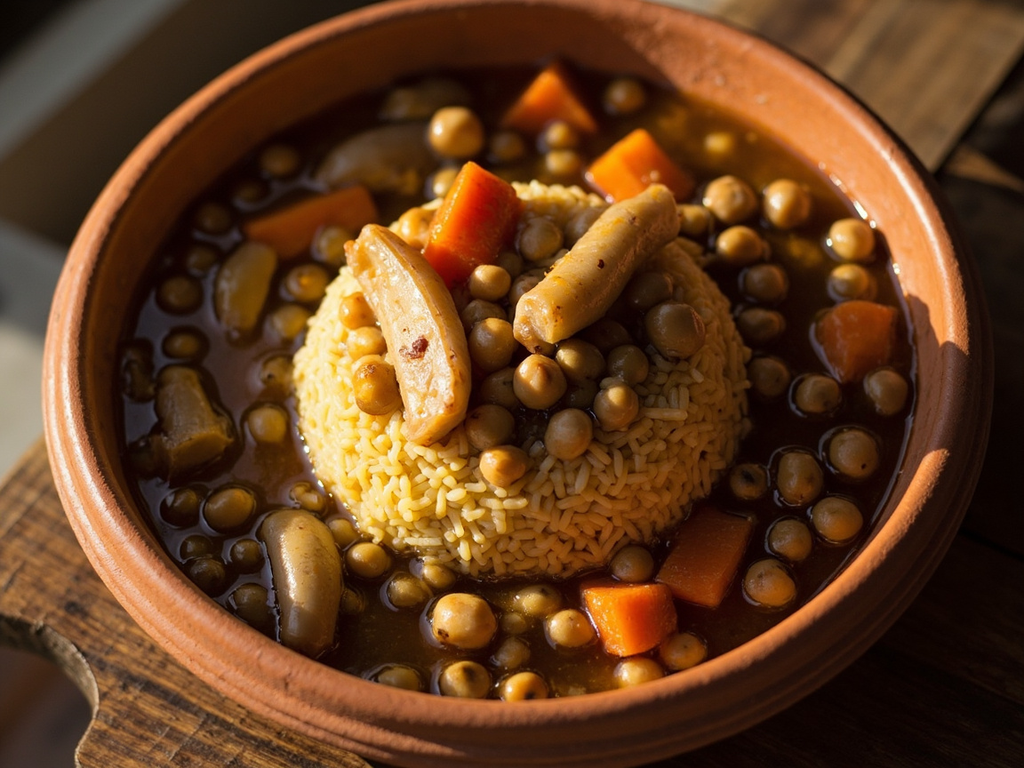
 flip
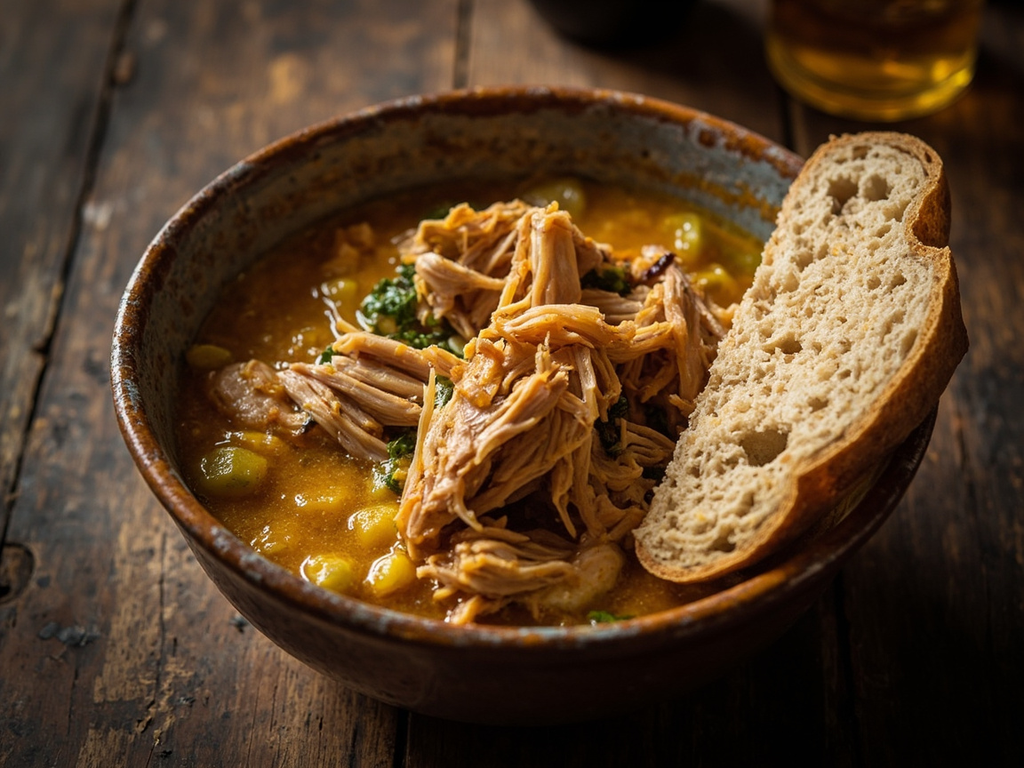
flipChicken Pottage with Bread
Chicken Pottage with Bread
Why this dish? Hugh Capet did not grow up in a marble palace: Duke of the Franks before becoming king, he long lived the life of a warrior lord, riding between Paris, Senlis, and Noyon. The pottage — a thick soup where bread binds the broth — was the daily dish of this nobility, nourishing and warm, eaten as much in camp as in castle.
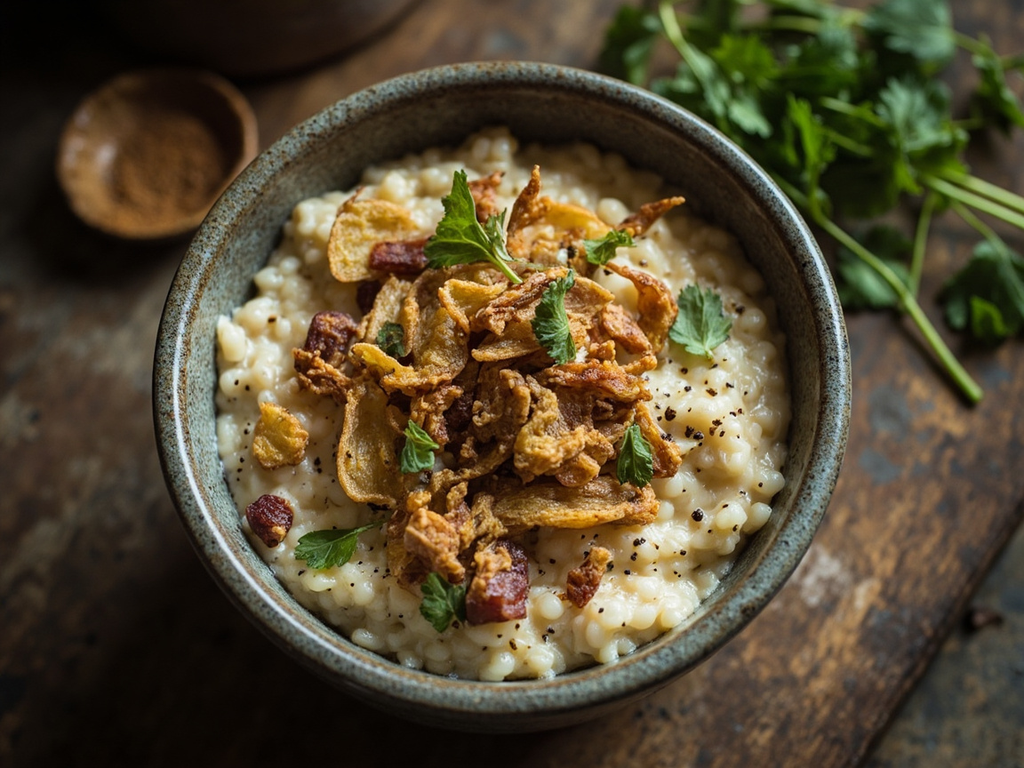
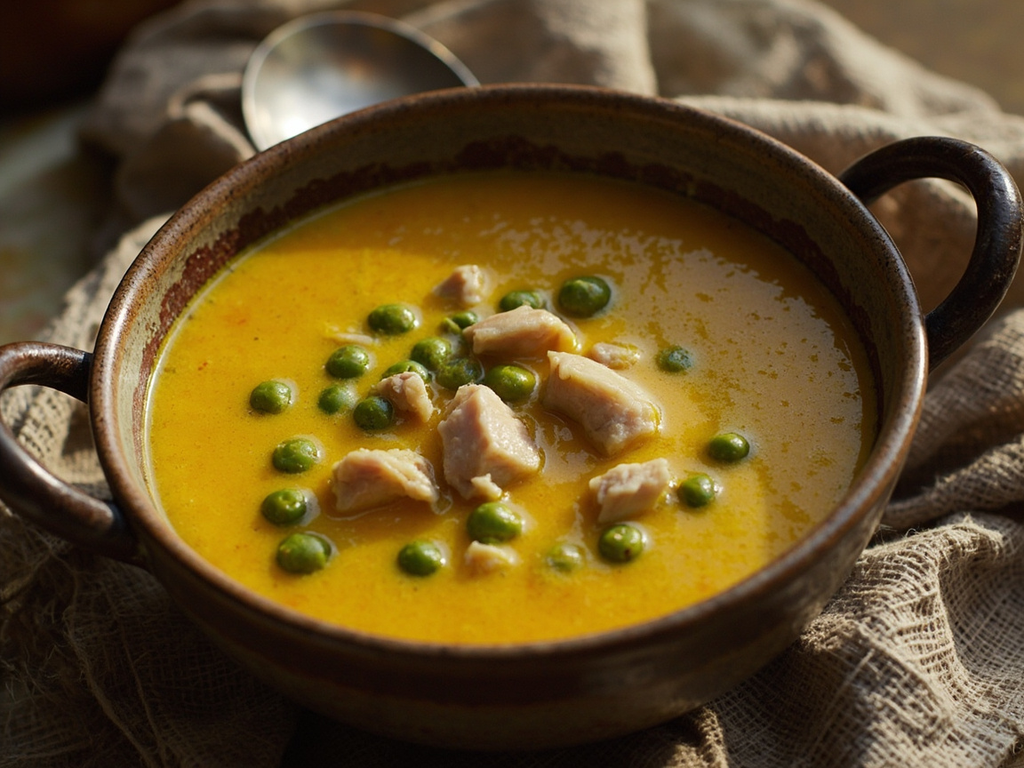
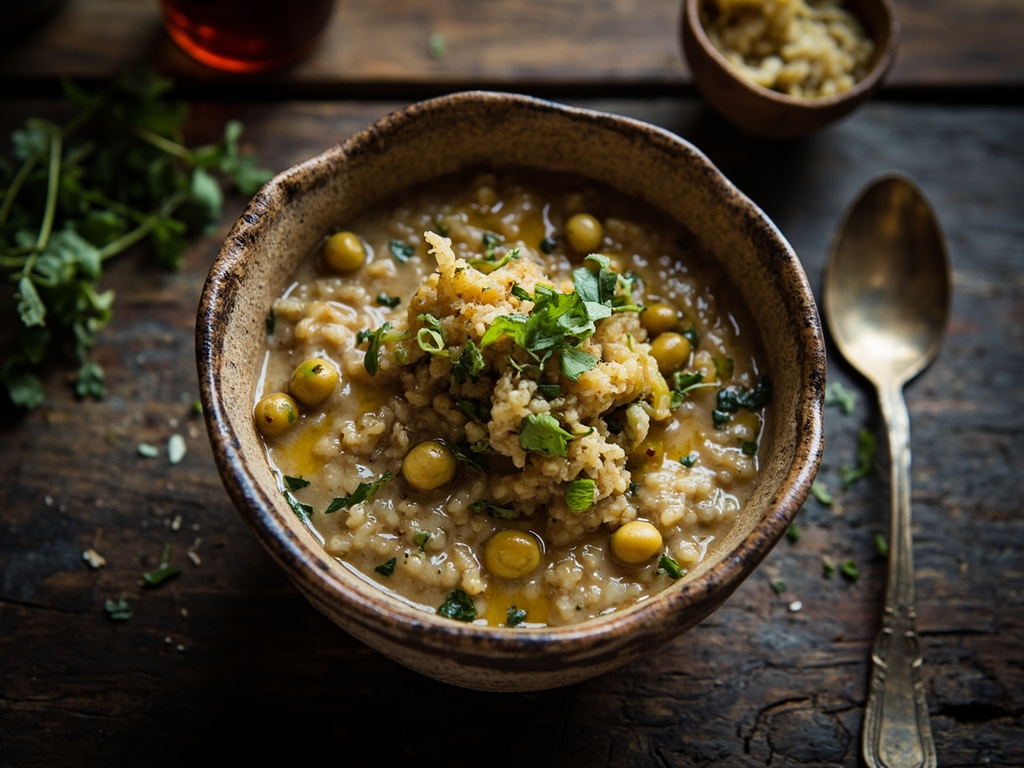
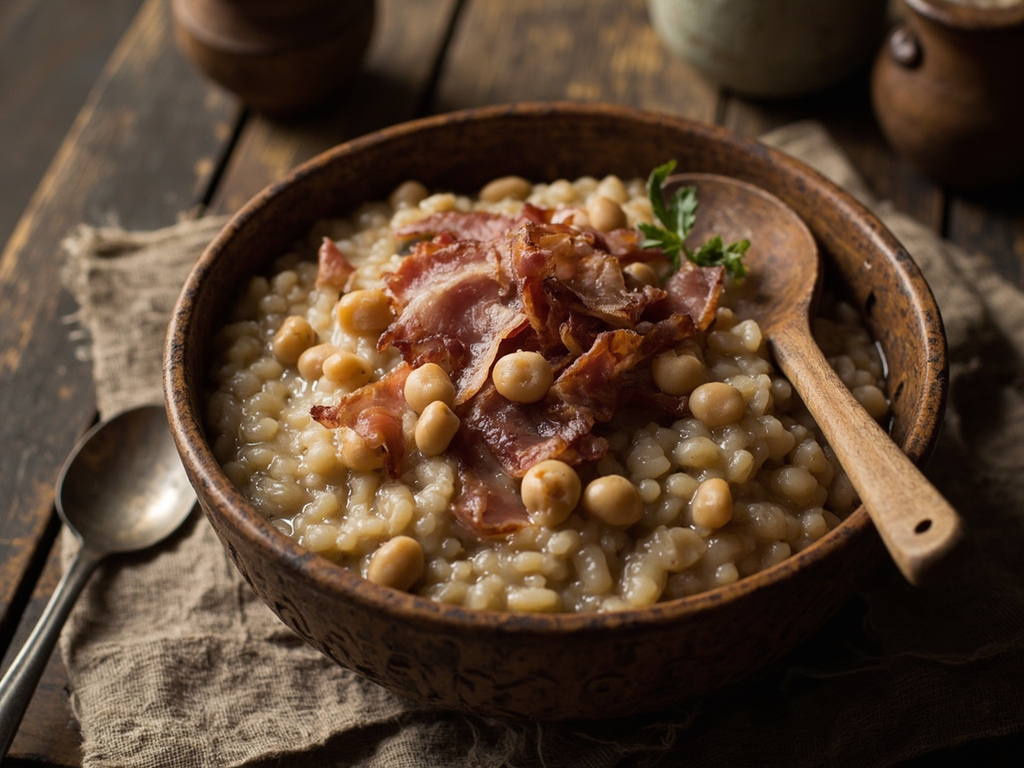
A chicken simmered for a long time, its fragrant broth thickened with breadcrumbs and spiced with a hint of ginger. Comforting, golden, simple: the true taste of Frankish seigneurial kitchens.
Know, you who read this, that before the crown I rode through cold and mud, and that at evening nothing warms a weary man better than a good steaming pottage. My cooks would take a fat hen, boil it all day, then thicken the juice with soaked breadcrumbs, and throw in a pinch of ginger from far away. Dip your bread in it, drink your wine on top, and you will be warmed to the bone as your king was.
- •Fat hen (chicken) — one whole bird (meat and broth)
- •Wheat breadcrumbs — a few stale slices (thickener)
- •Powdered ginger — a pinch (prestige spice)
- •Salt — to taste (seasoning)
- •White wine or verjuice — a small cup (acidity)
Chicken Pottage with Bread
A chicken simmered for a long time, its fragrant broth thickened with breadcrumbs and spiced with a hint of ginger. Comforting, golden, simple: the true taste of Frankish seigneurial kitchens.
Why this dish? Hugh Capet did not grow up in a marble palace: Duke of the Franks before becoming king, he long lived the life of a warrior lord, riding between Paris, Senlis, and Noyon. The pottage — a thick soup where bread binds the broth — was the daily dish of this nobility, nourishing and warm, eaten as much in camp as in castle.
Know, you who read this, that before the crown I rode through cold and mud, and that at evening nothing warms a weary man better than a good steaming pottage. My cooks would take a fat hen, boil it all day, then thicken the juice with soaked breadcrumbs, and throw in a pinch of ginger from far away. Dip your bread in it, drink your wine on top, and you will be warmed to the bone as your king was.
Ingredients (period version)
- Fat hen (chicken) — one whole bird (meat and broth)
- Wheat breadcrumbs — a few stale slices (thickener)
- Powdered ginger — a pinch (prestige spice)
- Salt — to taste (seasoning)
- White wine or verjuice — a small cup (acidity)
Ingredients
- Chicken thighs and wings (or stewing hen) — 1 kg (meat and broth)
- Stale country bread, crust removed — 100 g (thickener)
- Ground ginger — 1/2 tsp (prestige spice)
- Dry white wine — 10 cl (acidity)
- Salt — to taste (seasoning)
- Water — 1.5 L (broth)
Method
- Place the chicken in a large pot, cover with cold water, add salt, and bring to a simmer.
- Skim the surface, then let it simmer gently for 1.5 to 2 hours, until the meat falls off the bone.
- Remove the chicken, shred the meat, and set aside. Strain the broth.
- Soak the breadcrumbs in a ladle of broth, mash with a fork, then stir into the pot to thicken.
- Add the white wine and ginger, return the shredded meat, adjust salt, and simmer for 10 minutes.
- Serve very hot, with bread for dipping.
How it was made : Before sugar and before the triumph of butter, medieval cooks thickened their sauces with bread: it was economical, filling, and ubiquitous from the 10th to the 15th century. Chicken broth spiced with rare ingredients was both everyday fare and a discreet display of wealth, depending on whether ginger was added.
The contemporary twist : Serve the pottage in a deep bowl with a large slice of grilled garlic-rubbed bread placed across it, a revisited 'trencher' style.
Sources : Massimo Montanari, La faim et l'abondance. Histoire de l'alimentation en Europe, Seuil · Bruno Laurioux, Manger au Moyen Âge, Hachette
Hugh Capet · Charactorium