 flip
flipTarichos, salt mackerel with garos
Tarichos, salt mackerel with garos
Why this dish? The Chimera raged in Lycia, a coastal land on the eastern Aegean, and near Corinth whence Bellerophon came — two worlds of fishermen. Salt fish, tarichos, was the store that allowed people to hold out far from the flocks the monster devastated.
Mackerel fillets salted then briefly marinated, served with a dash of garos (Greek fermented fish sauce), a veil of vinegar, oil, and oregano — a bold, iodized opson that keeps.
You think I ate only the steaming flesh of beasts? I saw the Lycian fishermen pile their fish in salt, there where my flames could not reach them, to defy hunger and winter. That is their cunning against chaos: what salt guards, time does not devour. Taste this tarichos, mortal, with a drop of their garos that smells of fermented sea and a splash of vinegar. This is how you survive when a monster roams the heights: you salt, you store, you hold firm.
- •Fatty fish (mackerel, tuna) — a few pieces (item to preserve)
- •Sea salt — in abundance (salting and preservation)
- •Garos (fermented fish sauce) — a dash (umami seasoning)
- •Wine vinegar — a drizzle (acidity and preservation)
- •Olive oil — a drizzle (binder and softener)
- •Oregano — a pinch (aromatic herb)
Tarichos, salt mackerel with garos
Mackerel fillets salted then briefly marinated, served with a dash of garos (Greek fermented fish sauce), a veil of vinegar, oil, and oregano — a bold, iodized opson that keeps.
Why this dish? The Chimera raged in Lycia, a coastal land on the eastern Aegean, and near Corinth whence Bellerophon came — two worlds of fishermen. Salt fish, tarichos, was the store that allowed people to hold out far from the flocks the monster devastated.
You think I ate only the steaming flesh of beasts? I saw the Lycian fishermen pile their fish in salt, there where my flames could not reach them, to defy hunger and winter. That is their cunning against chaos: what salt guards, time does not devour. Taste this tarichos, mortal, with a drop of their garos that smells of fermented sea and a splash of vinegar. This is how you survive when a monster roams the heights: you salt, you store, you hold firm.
Ingredients (period version)
- Fatty fish (mackerel, tuna) — a few pieces (item to preserve)
- Sea salt — in abundance (salting and preservation)
- Garos (fermented fish sauce) — a dash (umami seasoning)
- Wine vinegar — a drizzle (acidity and preservation)
- Olive oil — a drizzle (binder and softener)
- Oregano — a pinch (aromatic herb)
Ingredients
- Fresh mackerel fillets — 4 fillets (main fish)
- Coarse sea salt — 200 g (for salting) (salting)
- Fish sauce (garos, or nuoc-mam as substitute) — 1–2 tsp (fermented umami)
- Wine vinegar — 2 tbsp (acidic marinade)
- Olive oil — 3 tbsp (marinade)
- Dried oregano — 1 tsp (herb)
Method
- Bury the mackerel fillets in coarse salt and refrigerate for 1.5 to 2 hours to firm them.
- Rinse the fillets thoroughly under cold water and pat dry.
- Place them in a dish, drizzle with vinegar, and let marinate for 20 minutes.
- Drain, coat with olive oil, add a dash of garos, and sprinkle with oregano.
- Serve cold, in small portions, with maza or bread.
How it was made : Tarichos (salted or dried fish) was a major trade in the Greek world: it fed cities far from the coast and was a cheap opson. Garos, the Greek ancestor of Roman garum, was an ubiquitous fermented fish sauce, the ancient equivalent of a flavor enhancer. Salting and fermentation were the great preservation techniques before refrigeration.
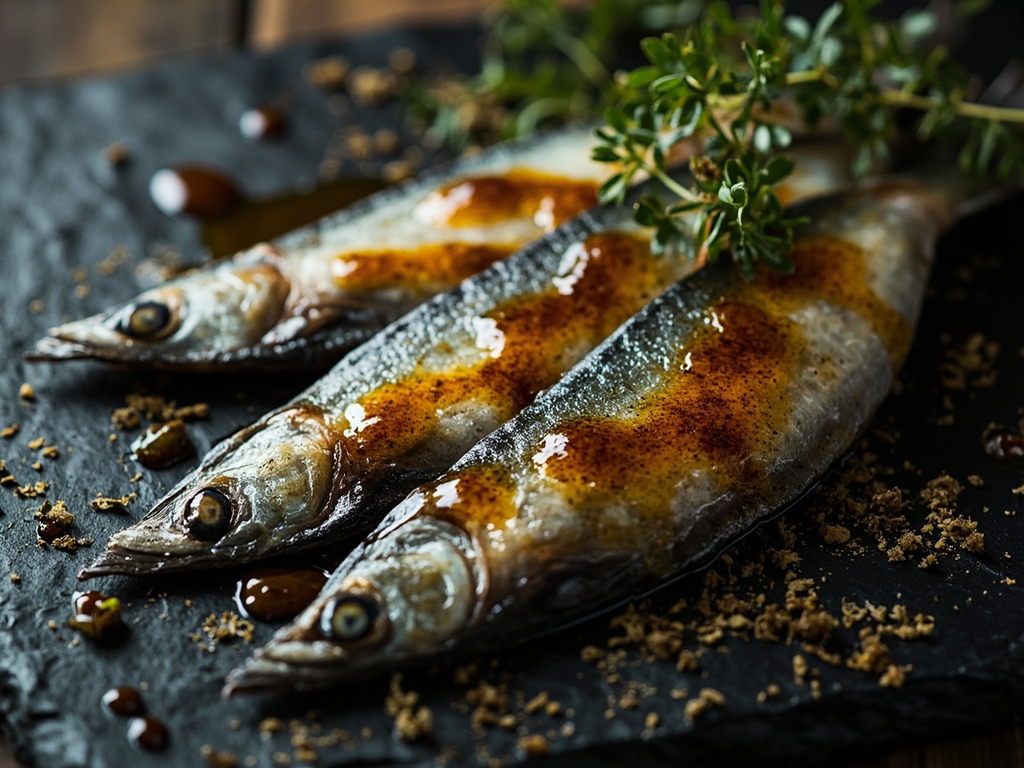
The contemporary twist : Arrange the glossy fillets in a fan on a slate, with a dash of garos and a rain of oregano: an "ancient ceviche" that surprises guests used to modern raw preparations.
Sources : Athenaeus of Naucratis, The Deipnosophists (salted fish and garos) · Robert I. Curtis, Garum and Salsamenta: Production and Commerce in Materia Medica (1991)
Chimera · Charactorium