 flip
flipCracked olives in oikos brine
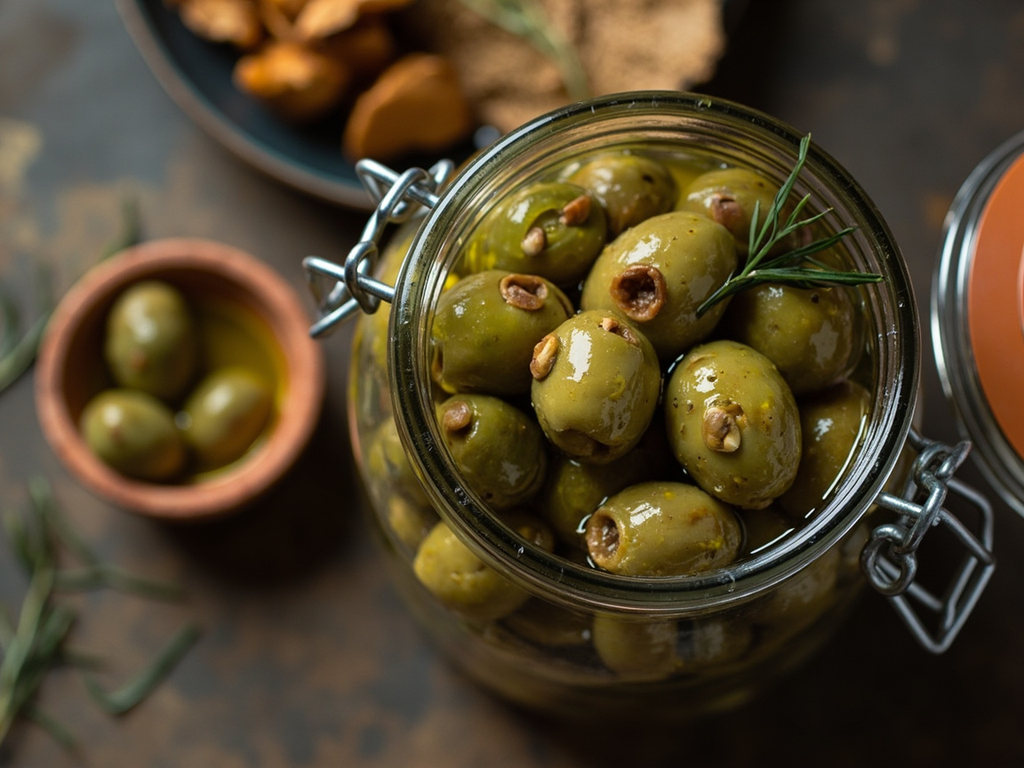
Cracked olives in oikos brine
Why this dish? The olive is Athena's tree, the goddess's gift to the city: no Athenian table, rich or poor, goes without it. Managing the oikos meant knowing how to preserve the autumn harvest in brine to last the whole year — a housewifely skill that Agariste passed on to her servants.
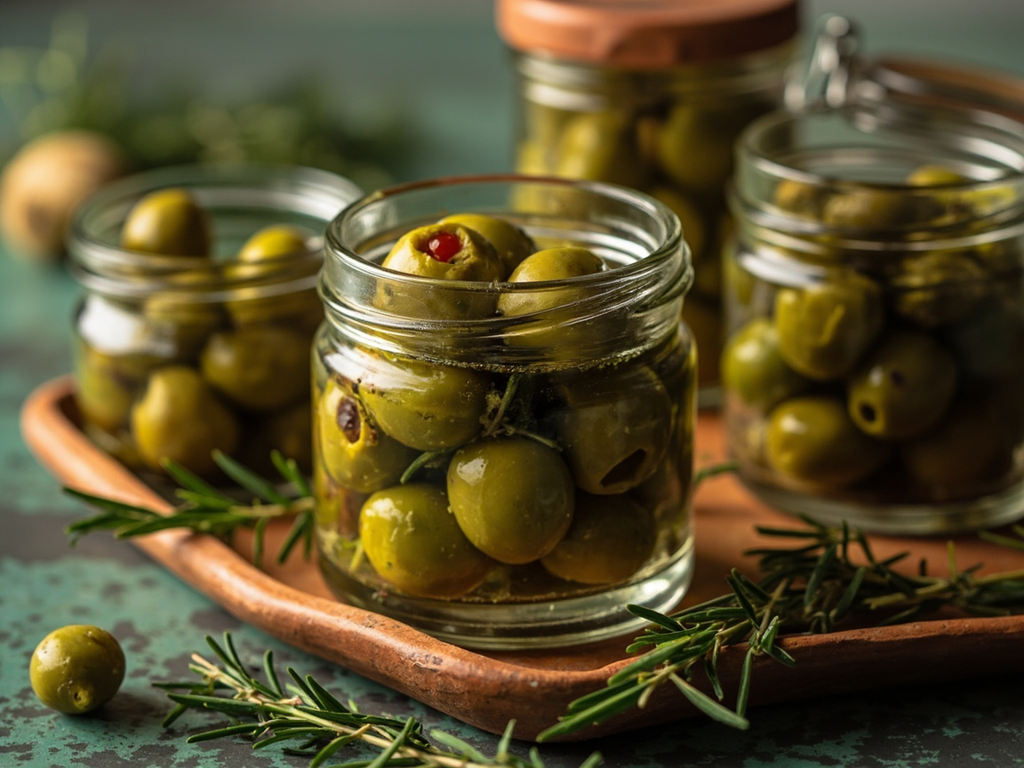
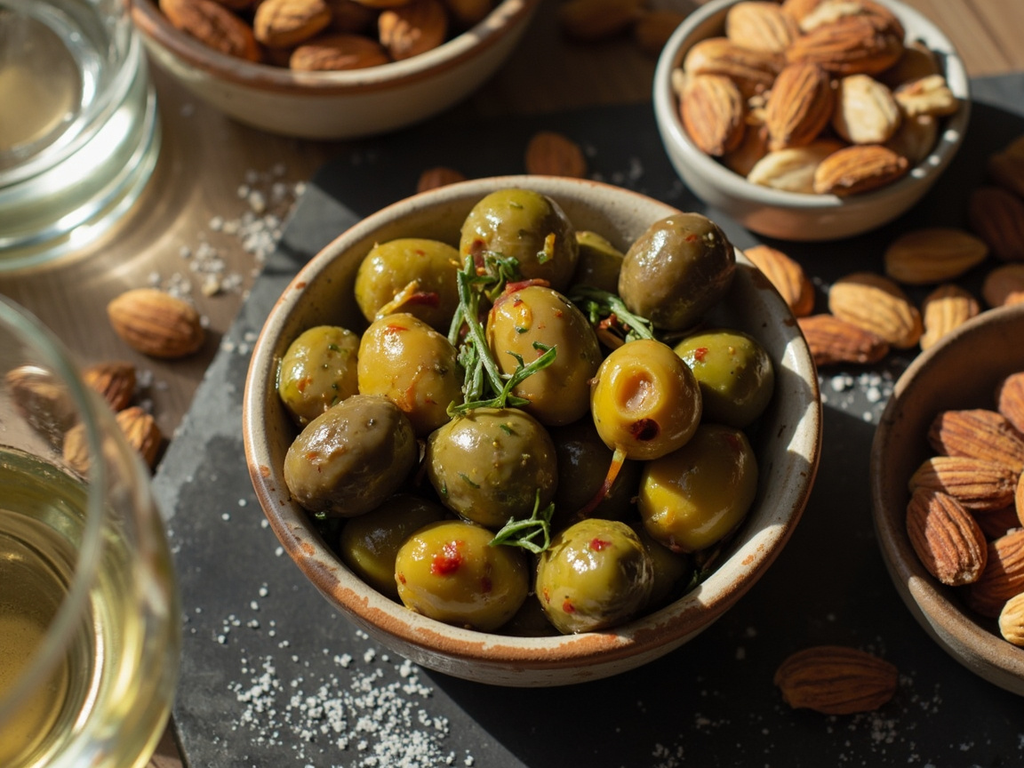
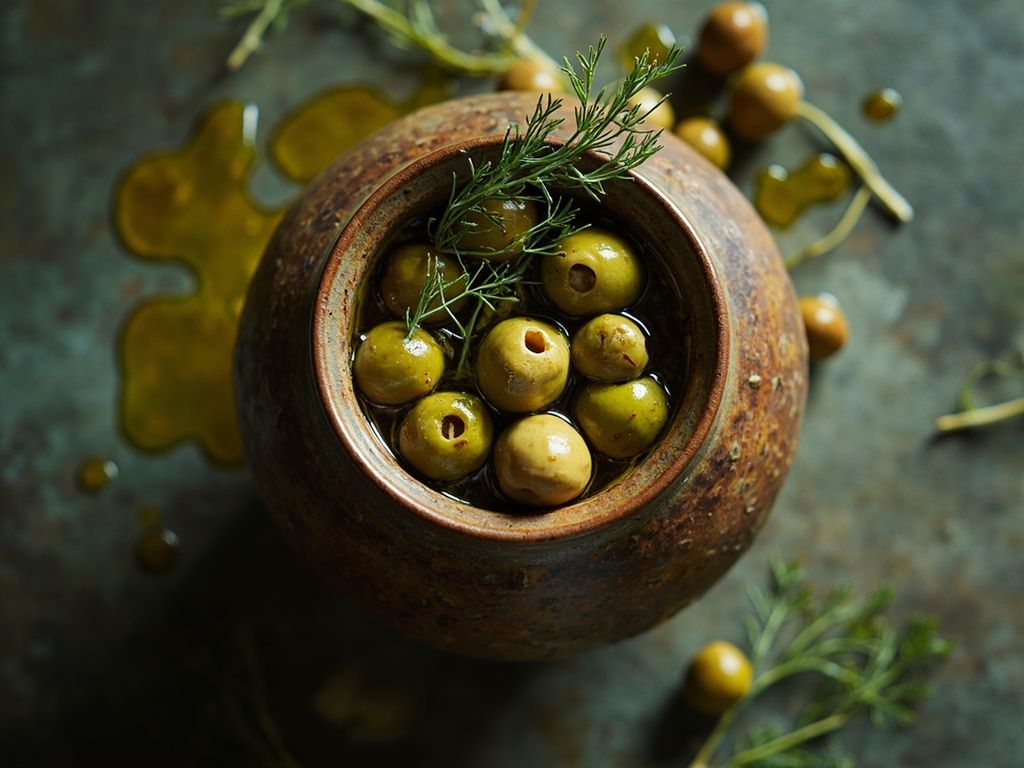
Green olives split, purged of bitterness, then preserved in a brine perfumed with fennel and vinegar. Salty, still slightly sharp, vividly tart: the preserve that lasts through winter.
The olive tree, Athena herself planted it for us: woe to the house that wastes its fruit. In autumn, I have the olives split with a blow of stone, then we bathe them and bathe them again to remove the bitterness, day after day, patiently. Then the brine, the fennel, a dash of vinegar, and we seal the jar. When winter bites and fish is scarce, we open the store: that is how a city holds together, through the foresight of women.
- •Fresh green olives — full basket (product to preserve)
- •Sea salt — generously (brine)
- •Spring water — to cover (brine)
- •Fennel and aromatic twigs — a few stalks (flavor)
- •Wine vinegar — a dash (acidity and preservation)
Cracked olives in oikos brine
Green olives split, purged of bitterness, then preserved in a brine perfumed with fennel and vinegar. Salty, still slightly sharp, vividly tart: the preserve that lasts through winter.
Why this dish? The olive is Athena's tree, the goddess's gift to the city: no Athenian table, rich or poor, goes without it. Managing the oikos meant knowing how to preserve the autumn harvest in brine to last the whole year — a housewifely skill that Agariste passed on to her servants.
The olive tree, Athena herself planted it for us: woe to the house that wastes its fruit. In autumn, I have the olives split with a blow of stone, then we bathe them and bathe them again to remove the bitterness, day after day, patiently. Then the brine, the fennel, a dash of vinegar, and we seal the jar. When winter bites and fish is scarce, we open the store: that is how a city holds together, through the foresight of women.
Ingredients (period version)
- Fresh green olives — full basket (product to preserve)
- Sea salt — generously (brine)
- Spring water — to cover (brine)
- Fennel and aromatic twigs — a few stalks (flavor)
- Wine vinegar — a dash (acidity and preservation)
Ingredients
- Fresh green olives (untreated) — 500 g (product to preserve)
- Salt — 100 g per liter water (brine)
- Water — about 1 liter (brine)
- Fennel seeds and stalks — 1 tbsp (flavor)
- Wine vinegar — 5 tbsp (acidity)
Method
- Split each olive with a cut (or lightly crush) to open the flesh.
- Cover with cold water and change the water daily for 7 to 10 days to remove bitterness — taste to judge.
- Prepare a brine (100 g salt per liter water), boil then cool.
- Place the purged olives in a jar with fennel, cover with brine, and add vinegar.
- Seal and let mature in a cool place for 3 to 4 weeks before tasting; drizzle with olive oil when serving.
How it was made : Olives were preserved by splitting (kolymbades, 'divers') or whole in brine and vinegar, after a long soaking in fresh water to remove bitter oleuropein. Flavored with fennel, savory, or mastic, they formed an essential store of the oikos and an everyday opson.
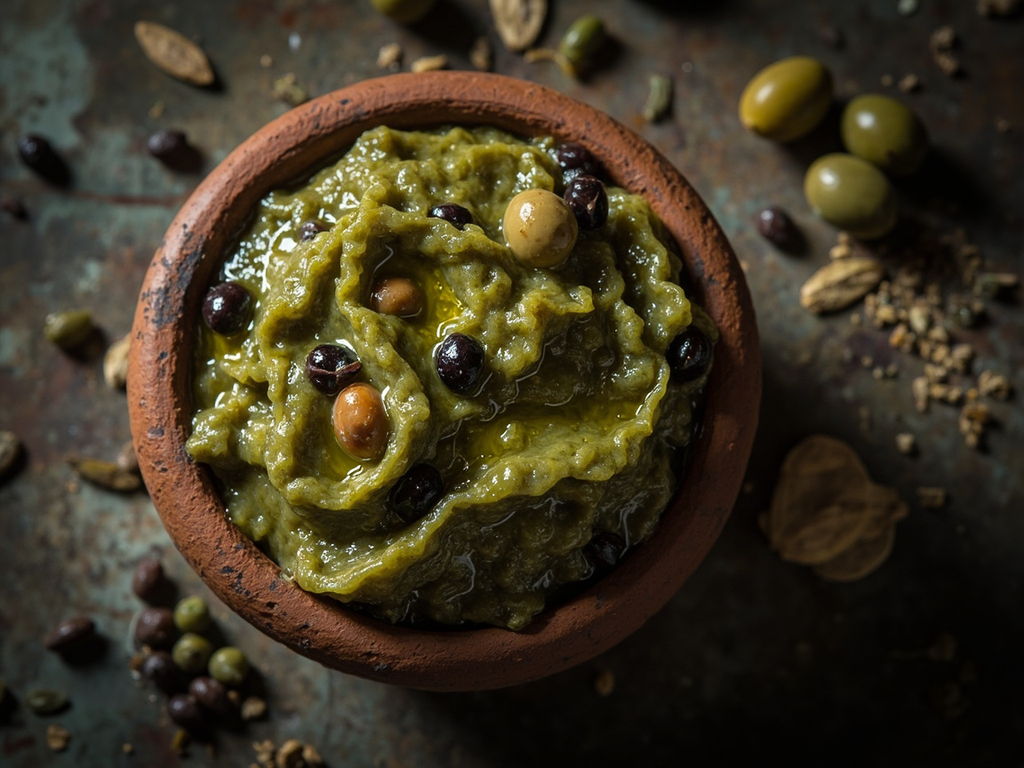
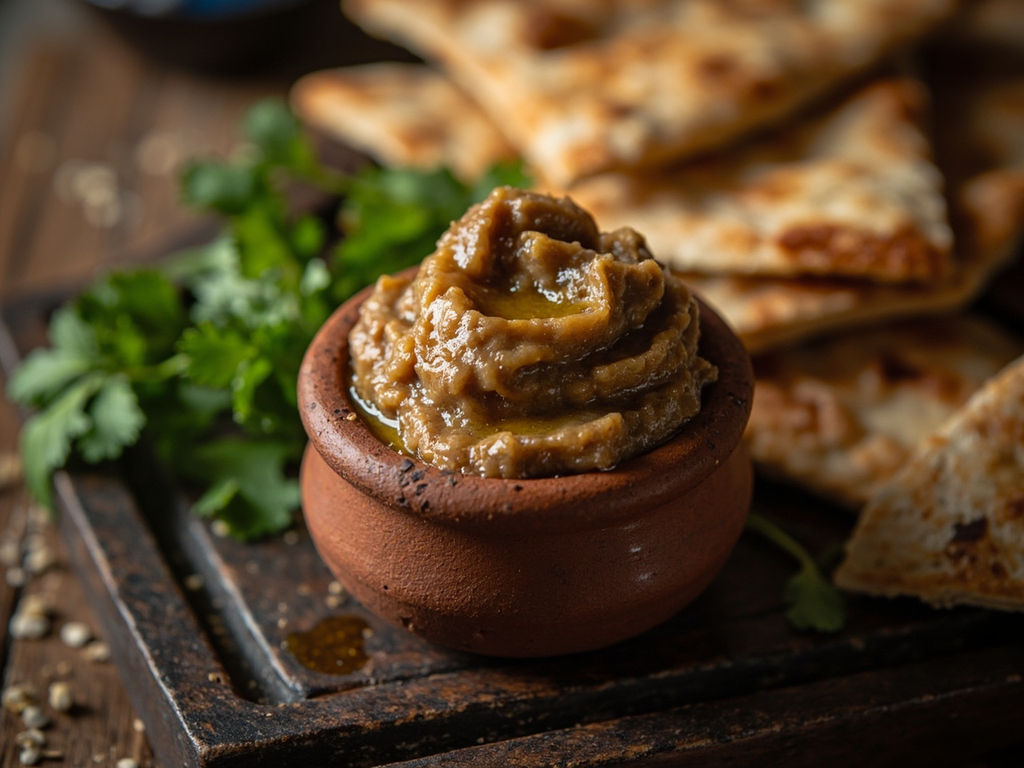
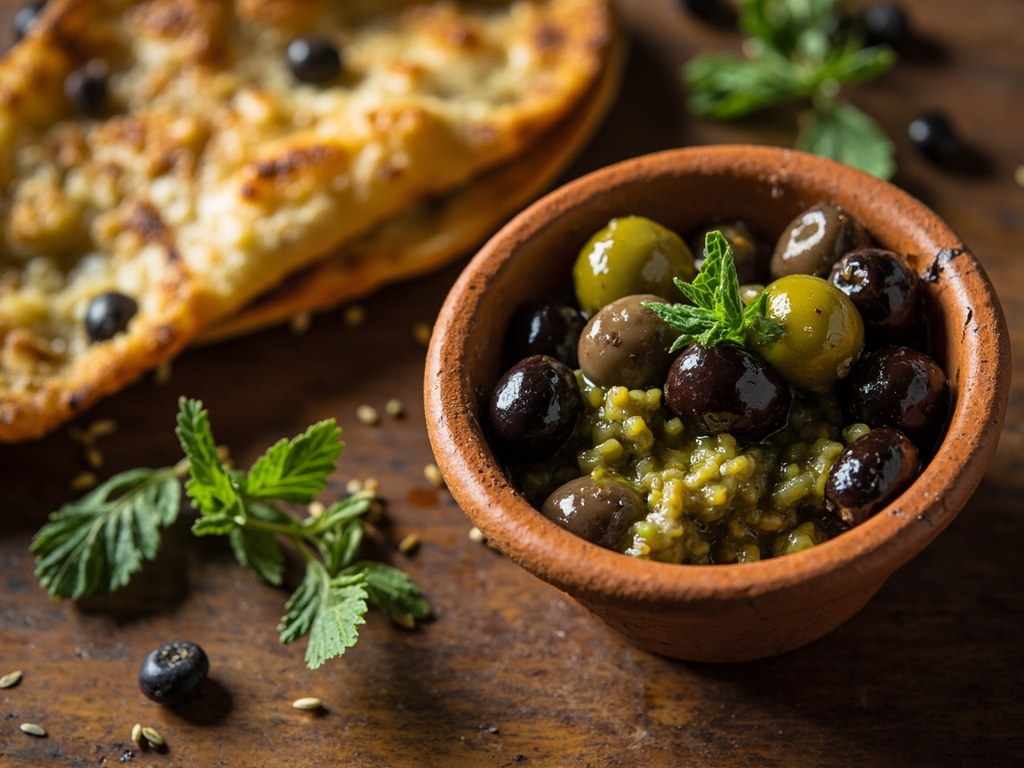
The contemporary twist : Once ready, crush a few olives with oil, oregano, and a little vinegar: an Ancient tapenade, with nothing the Greeks would not have known.
Sources : Columella, De re rustica (preparation of olives in brine) · Andrew Dalby, Food in the Ancient World from A to Z (2003)
Agariste · Charactorium