 flip
flipChristina's Roman Pasta with Oil and Fish
Christina's Roman Pasta with Oil and Fish
Why this dish? Settled in Rome after her abdication, Christina adopted Italian cuisine — 'fish, vegetables, pasta' — and preferred it for its simplicity, eating quickly to return to her books. This unpretentious dish resembles her: nourishing, without ostentation.
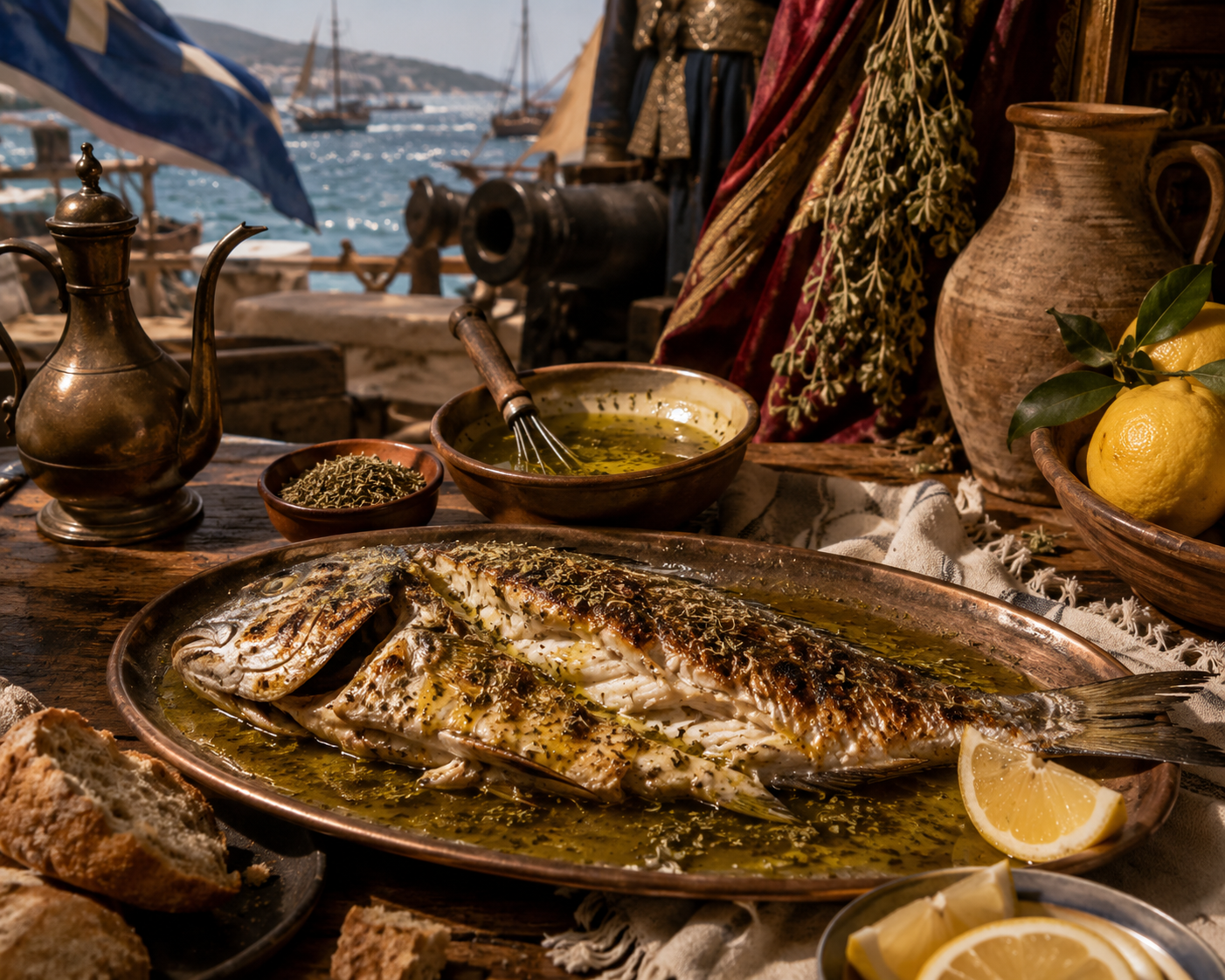
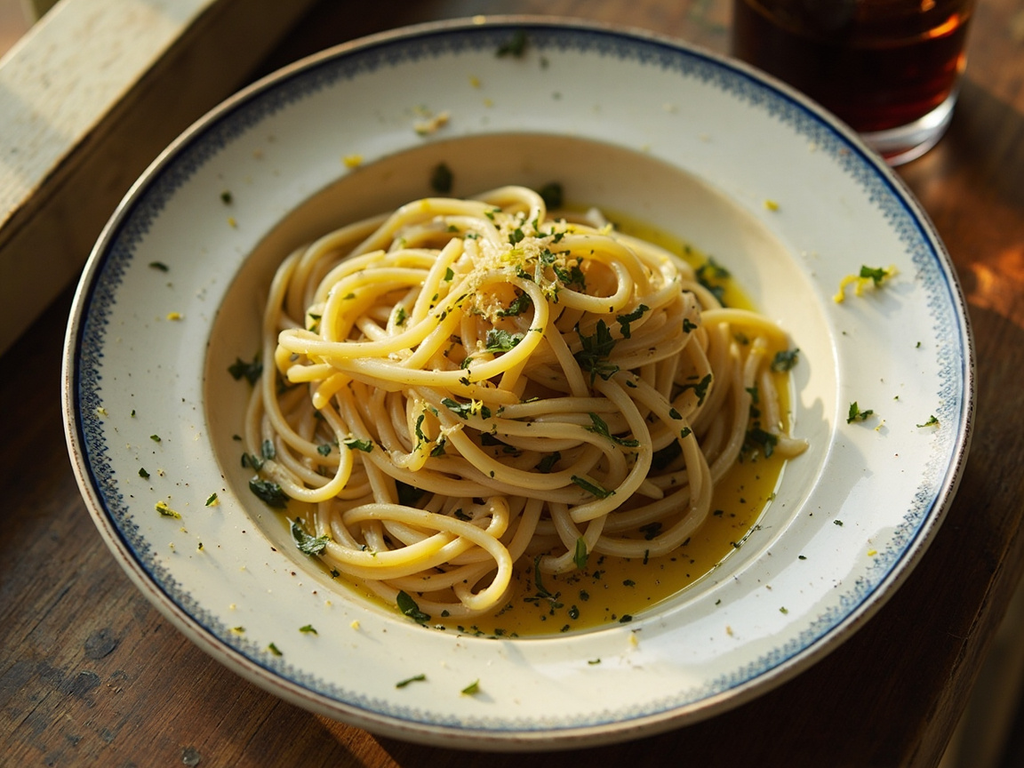
Long pasta dressed with olive oil, garlic, herbs, and crumbled salted fish, brightened with a squeeze of lemon juice. An everyday dish in 17th-century Rome, a world away from the Nordic banquets the queen had fled.
Since I left my snowy kingdom for the Eternal City, I have grown accustomed to these pastas that the Romans dress with oil, garlic, and a little preserved fish. Do not think me gluttonous: I eat quickly, my mind already back to Plato and my manuscripts. A dash of lemon, a pinch of herbs, and there is my table of a queen without a crown — I have abdicated a throne, not the taste for sobriety.
- •Long pasta (vermicelli) — a handful per guest (base)
- •Olive oil — to taste (fat, binder)
- •Garlic — a few cloves (aromatic)
- •Salted anchovies or sardines — a few (umami, salt)
- •Parsley and mint — a bunch (freshness)
- •Lemon — 1 (acidity)
Christina's Roman Pasta with Oil and Fish
Long pasta dressed with olive oil, garlic, herbs, and crumbled salted fish, brightened with a squeeze of lemon juice. An everyday dish in 17th-century Rome, a world away from the Nordic banquets the queen had fled.
Why this dish? Settled in Rome after her abdication, Christina adopted Italian cuisine — 'fish, vegetables, pasta' — and preferred it for its simplicity, eating quickly to return to her books. This unpretentious dish resembles her: nourishing, without ostentation.
Since I left my snowy kingdom for the Eternal City, I have grown accustomed to these pastas that the Romans dress with oil, garlic, and a little preserved fish. Do not think me gluttonous: I eat quickly, my mind already back to Plato and my manuscripts. A dash of lemon, a pinch of herbs, and there is my table of a queen without a crown — I have abdicated a throne, not the taste for sobriety.
Ingredients (period version)
- Long pasta (vermicelli) — a handful per guest (base)
- Olive oil — to taste (fat, binder)
- Garlic — a few cloves (aromatic)
- Salted anchovies or sardines — a few (umami, salt)
- Parsley and mint — a bunch (freshness)
- Lemon — 1 (acidity)
Ingredients
- Spaghetti — 320 g (base)
- Extra virgin olive oil — 5 tbsp (fat)
- Garlic — 3 cloves (aromatic)
- Anchovy fillets in oil — 6 fillets (umami, salt)
- Flat-leaf parsley — 1 small bunch (freshness)
- Lemon (juice + zest) — 1 (acidity)
- Black pepper — to taste (spice)
Method
- Cook the pasta in a large pot of salted water until al dente.
- Meanwhile, gently melt the minced garlic in olive oil without browning.
- Add the anchovies and mash them with a fork until they dissolve into the oil.
- Drain the pasta, reserving a little cooking water, and toss it into the pan, mixing with a splash of the water to bind.
- Off the heat, add chopped parsley, lemon zest and juice, and pepper. Serve immediately.
How it was made : In 17th-century Rome, dried pasta was already a popular and cheap food. It was simply seasoned with oil, cheese, spices, or salted fish — the tomato, from America, would not enter Italian cuisine until much later. Salt-preserved anchovies and sardines provided the 'deep saltiness' before the common use of sauces.
The contemporary twist : A few capers and a golden breadcrumb topping (the *mollica*, poor man's breadcrumbs) for crunch, in homage to the queen's professed frugality.
Sources : Bartolomeo Scappi, Opera (1570)
Christina of Sweden · Charactorium