 flip
flipPeking Lacquered Duck (北京烤鸭)
Peking Lacquered Duck (北京烤鸭)
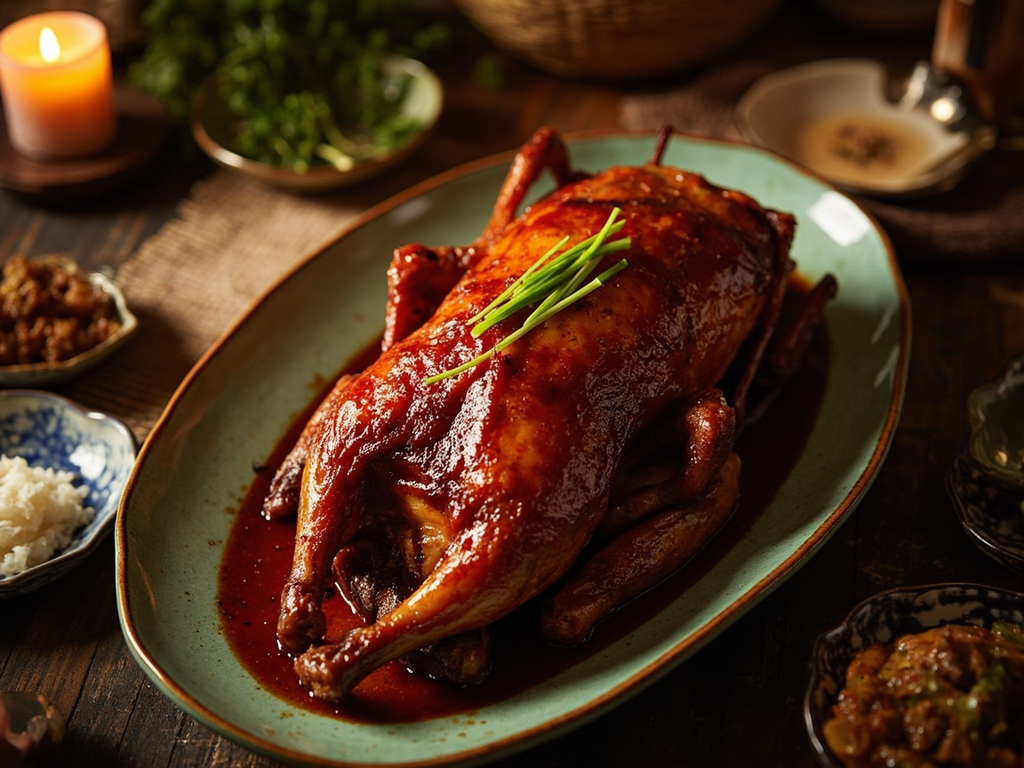
Why this dish? Lacquered duck was among Cixi's favorite dishes, served at grand banquets in the Forbidden City. The Peking duck, fattened on imperial farms along the canals, was the pride of the Manchu table.
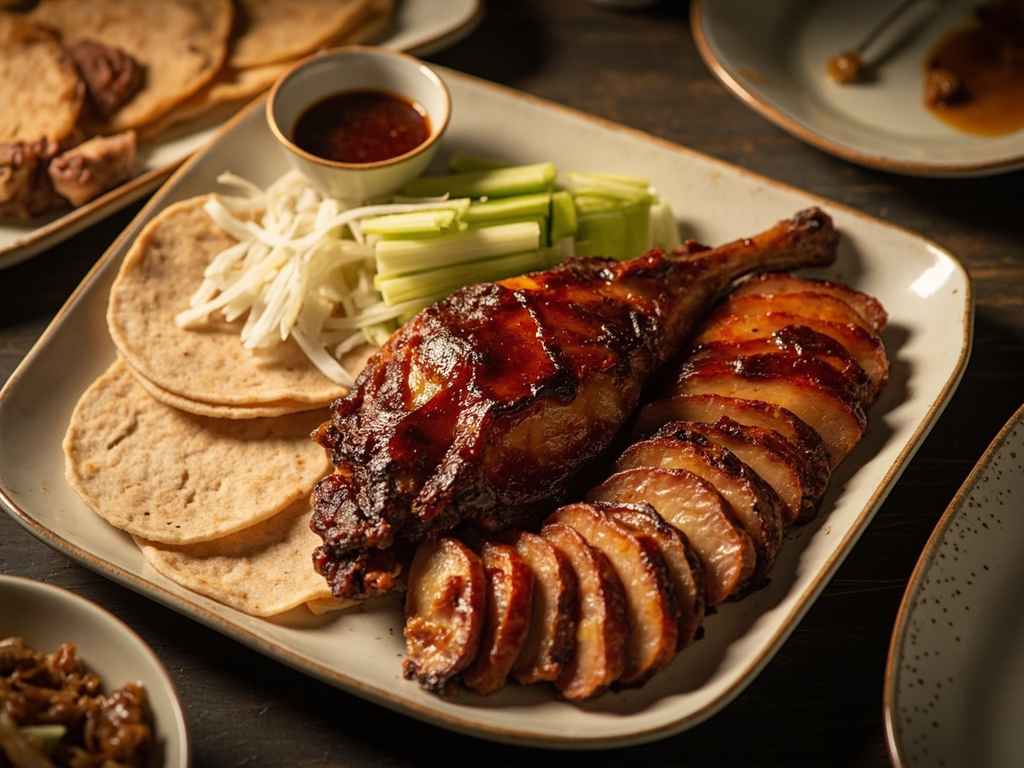
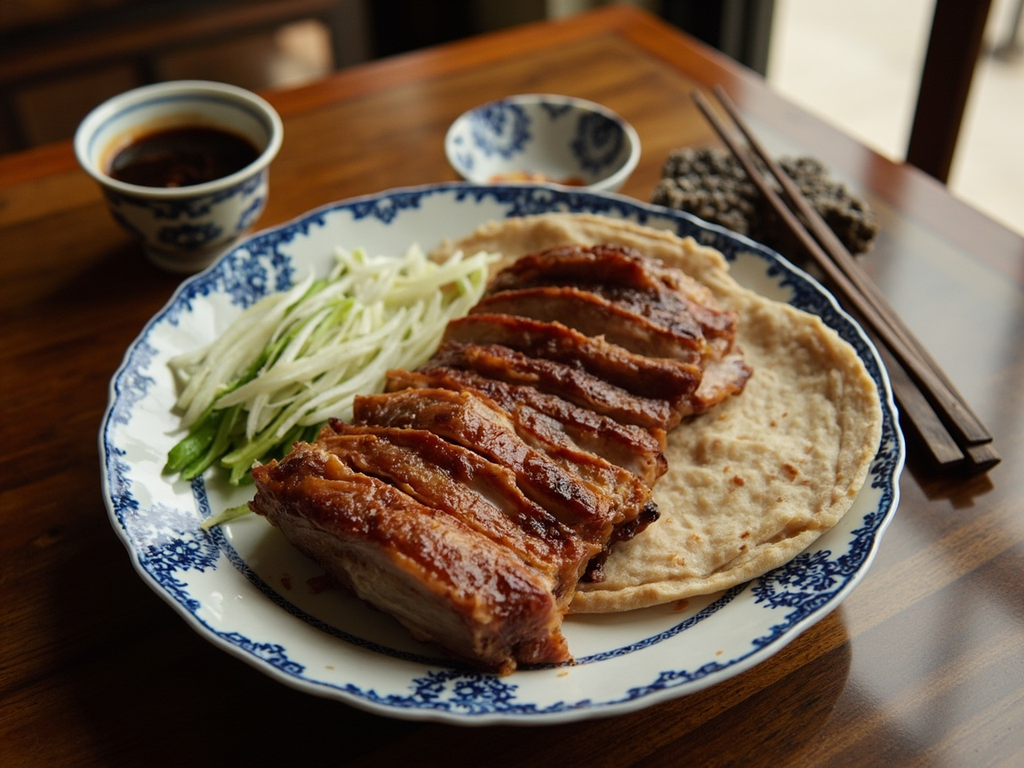
A duck inflated with air, blanched, glazed with malt syrup, then roasted until the skin is amber and crackling. The crispy skin is separated and rolled in a thin pancake with leek and sweet soybean sauce.
Come closer and see how this skin shines—that is what Our table deserves. In the Forbidden City, no one served this duck without first inflating it with a breath to separate the skin from the flesh: that is the whole secret, which the Southern cooks ignore. It was brushed with malt syrup, again and again, then hung over fruitwood fire until it sang under the knife. You will take only the skin, rolled in the pancake; the flesh is left for the hasty. Remember: abundance is not devoured, it is contemplated.
- •Fattened Peking duck — 1 whole (centerpiece)
- •Malt syrup (maltose) — for brushing (sweet lacquer)
- •Rice vinegar — a dash (sets skin color)
- •Young leek (or scallion) — a few stalks (freshness)
- •Wheat pancakes — a stack (wrapper)
- •Sweet fermented soybean paste (tianmianjiang) — a bowl (umami condiment)
Peking Lacquered Duck (北京烤鸭)
A duck inflated with air, blanched, glazed with malt syrup, then roasted until the skin is amber and crackling. The crispy skin is separated and rolled in a thin pancake with leek and sweet soybean sauce.
Why this dish? Lacquered duck was among Cixi's favorite dishes, served at grand banquets in the Forbidden City. The Peking duck, fattened on imperial farms along the canals, was the pride of the Manchu table.
Come closer and see how this skin shines—that is what Our table deserves. In the Forbidden City, no one served this duck without first inflating it with a breath to separate the skin from the flesh: that is the whole secret, which the Southern cooks ignore. It was brushed with malt syrup, again and again, then hung over fruitwood fire until it sang under the knife. You will take only the skin, rolled in the pancake; the flesh is left for the hasty. Remember: abundance is not devoured, it is contemplated.
Ingredients (period version)
- Fattened Peking duck — 1 whole (centerpiece)
- Malt syrup (maltose) — for brushing (sweet lacquer)
- Rice vinegar — a dash (sets skin color)
- Young leek (or scallion) — a few stalks (freshness)
- Wheat pancakes — a stack (wrapper)
- Sweet fermented soybean paste (tianmianjiang) — a bowl (umami condiment)
Ingredients
- Duck (fat type, 2 to 2.5 kg) — 1 (centerpiece)
- Malt syrup (or honey thinned with water) — 3 tbsp + water (lacquer)
- Rice vinegar — 2 tbsp (color and shine)
- Scallions — 1 bunch (garnish)
- Thin wheat pancakes (bing type) — 16 (wrapper)
- Tianmianjiang sauce — 100 g (condiment)
Method
- Blanch the duck for a few seconds to tighten the skin, then pat dry thoroughly.
- Mix malt syrup, vinegar, and water; brush all over the skin, then let dry in a cool place for 6 to 12 hours (in front of a fan, ideally).
- Roast in the oven at 190°C, duck suspended or on a rack, for 70 to 90 minutes, until the skin is amber and crispy.
- Slice the skin and flesh into thin strips.
- Serve with warm pancakes, scallion sticks, and sweet sauce; each person rolls their own bite.
How it was made : In the imperial kitchens (御膳房), the duck was inflated between skin and flesh, lacquered several times, and roasted over fruitwood charcoal in closed ovens. The separation of skin and flesh, the service in pancakes—all of this codifies an art already ancient under the Qing.
The contemporary twist : "Three-service" presentation as in today's great Peking houses: crispy skin with fine sugar, flesh in pancakes, carcass in clear broth.
Sources : Princess Der Ling, Two Years in the Forbidden City (1911)
Cixi · Charactorium