 flip
flipSoy-Paste Glazed Roasted Venison (酱烧鹿肉, jiàngshāo lùròu)
Soy-Paste Glazed Roasted Venison (酱烧鹿肉, jiàngshāo lùròu)
Why this dish? The Qing dynasty was Manchu: its emperors retained a taste for roasted game meats, prestige dishes at grand banquets. Serving venison at Guangxu's table was to recall the steppes and forests from which his lineage came, at the very heart of the Forbidden City.
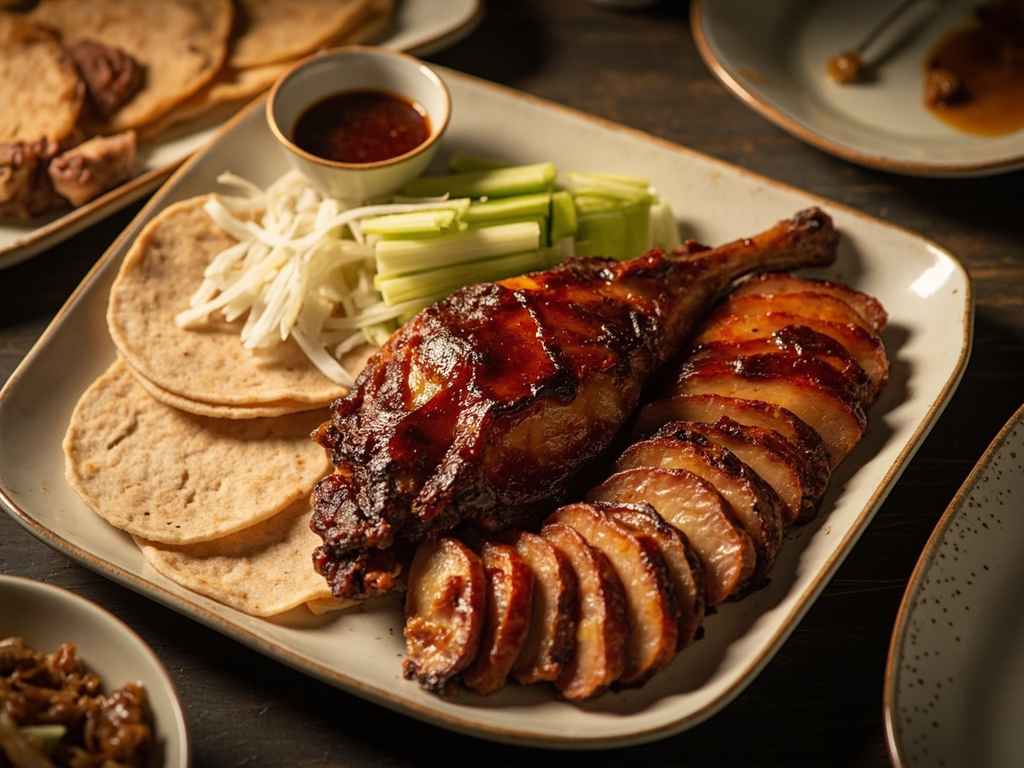
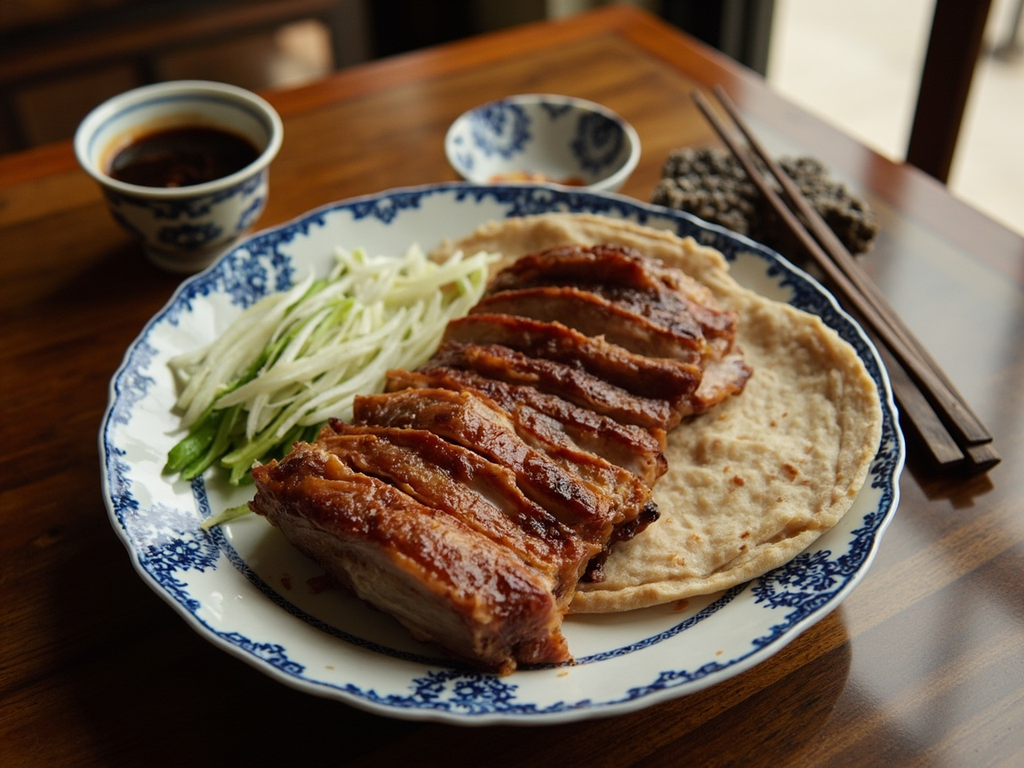
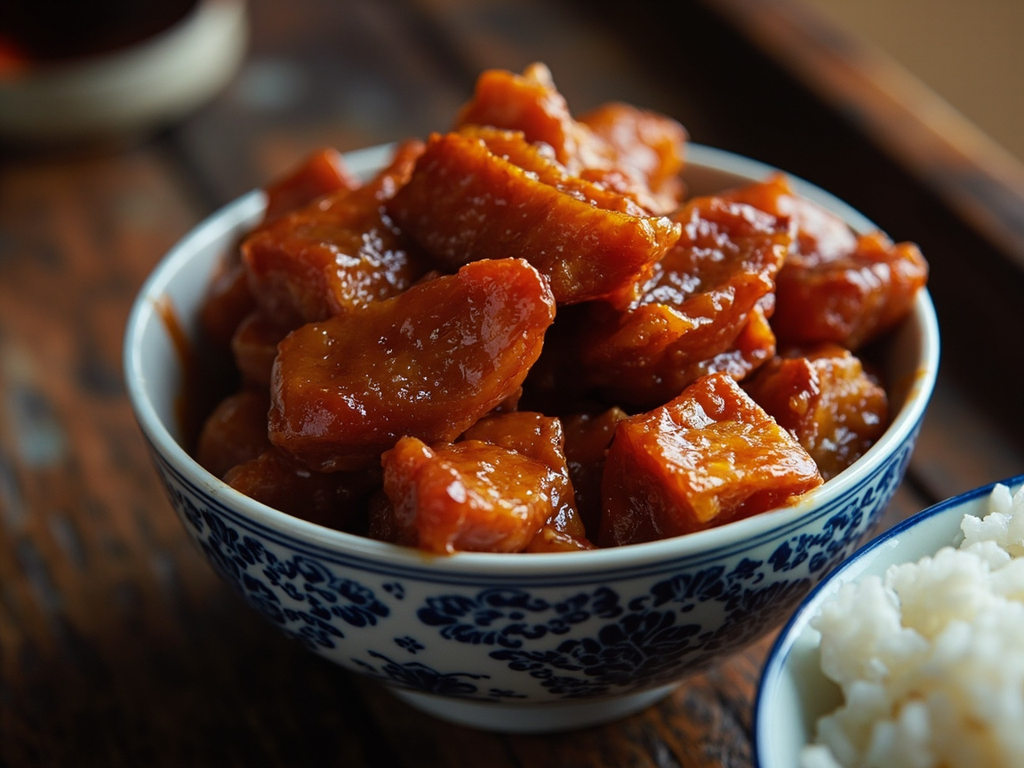
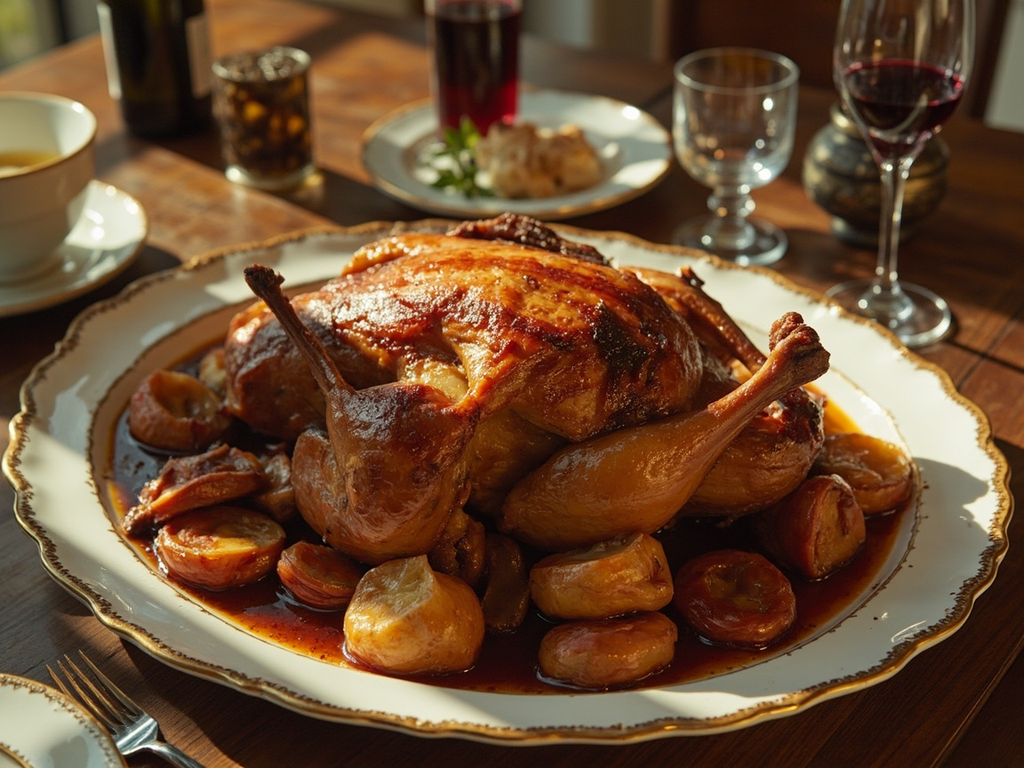
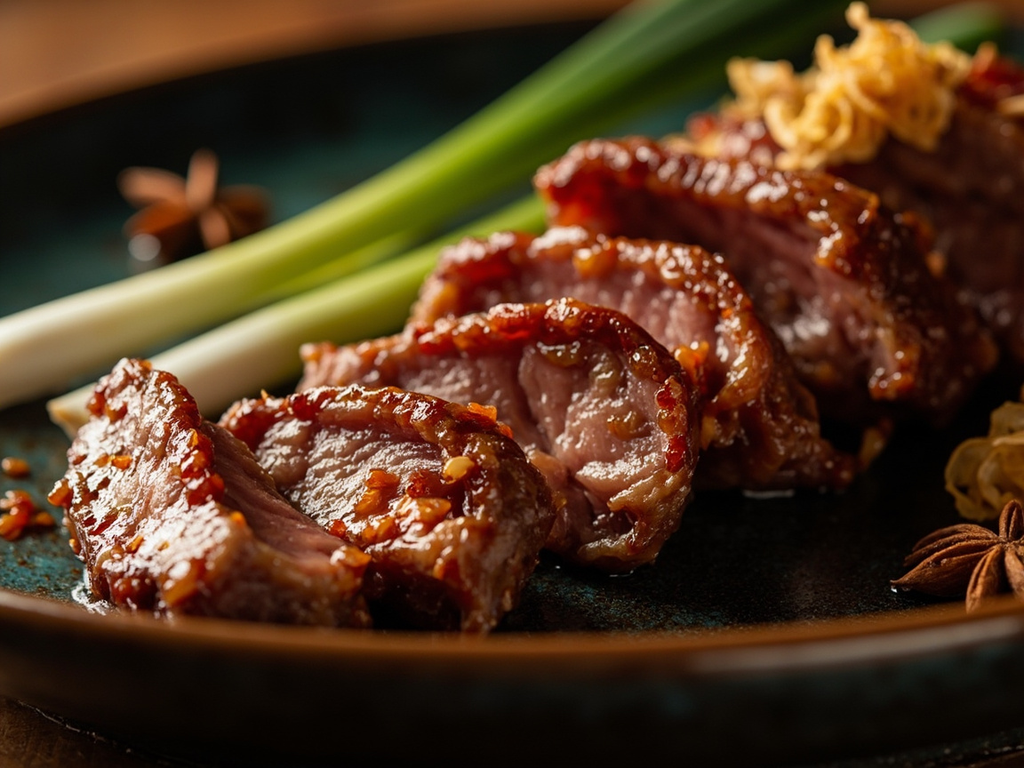
A piece of venison seared then lacquered with a sauce of fermented soybean paste, honey, and warm spices, roasted until the surface becomes shiny and caramelized. A noble, tender meat with an amber crust.
Our ancestors galloped through the forests of the North and brought back the deer to camp for the evening feast; We, prisoner within these vermilion walls, remember it through this dish. Coat the flesh with soybean paste and a little honey, let it take the color of amber over the fire, and baste it again and again so it shines. It is a warrior's dish served to an emperor who never made war.
- •Haunch of venison — one piece (noble game meat)
- •Fermented soybean paste (jiàng) — as needed (savory-umami base)
- •Honey — a little (lacquer, caramelization)
- •Ginger, spring onion, star anise, Chinese cinnamon — to taste (aromatics)
- •Grain wine (huangjiu) — a splash (marinade)
Soy-Paste Glazed Roasted Venison (酱烧鹿肉, jiàngshāo lùròu)
A piece of venison seared then lacquered with a sauce of fermented soybean paste, honey, and warm spices, roasted until the surface becomes shiny and caramelized. A noble, tender meat with an amber crust.
Why this dish? The Qing dynasty was Manchu: its emperors retained a taste for roasted game meats, prestige dishes at grand banquets. Serving venison at Guangxu's table was to recall the steppes and forests from which his lineage came, at the very heart of the Forbidden City.
Our ancestors galloped through the forests of the North and brought back the deer to camp for the evening feast; We, prisoner within these vermilion walls, remember it through this dish. Coat the flesh with soybean paste and a little honey, let it take the color of amber over the fire, and baste it again and again so it shines. It is a warrior's dish served to an emperor who never made war.
Ingredients (period version)
- Haunch of venison — one piece (noble game meat)
- Fermented soybean paste (jiàng) — as needed (savory-umami base)
- Honey — a little (lacquer, caramelization)
- Ginger, spring onion, star anise, Chinese cinnamon — to taste (aromatics)
- Grain wine (huangjiu) — a splash (marinade)
Ingredients
- Venison roast (or beef for braising as substitute) — 800 g (meat)
- Yellow soybean paste (huangdoujiang) or thick soy sauce — 3 tbsp (umami base)
- Honey — 2 tbsp (lacquer)
- Rice wine (Shaoxing) — 3 tbsp (marinade)
- Fresh ginger — 4 slices (aromatic)
- Spring onions — 2 (aromatic)
- Star anise — 2 (spice)
- Chinese cinnamon stick — 1 (spice)
Method
- Marinate the meat for 2 hours in rice wine, soybean paste, ginger, and spring onions.
- Sear the meat on all sides in a hot pot to brown.
- Add water to half-submerge, add star anise and cinnamon, cover, and braise gently for 1.5 hours over very low heat.
- Mix honey with a little cooking liquid and brush over the meat.
- Roast in a hot oven (220°C) for 10-15 minutes, brushing with glaze two or three times, until the crust is shiny and amber.
- Let rest, then slice and drizzle with reduced pan juices.
How it was made : The Manchu-Han banquets (满汉全席) of the Qing featured many roasted meats, including game, a direct inheritance from Manchu hunting traditions. Fermented soybean paste served as the base for countless court sauces.
The contemporary twist : Served in thin slices on a slate board with a drizzle of lacquered jus and a few shoots, in the spirit of a revisited "imperial banquet."
Guangxu · Charactorium