 flip
flipPuls with Fava Beans and Garum
Puls with Fava Beans and Garum
Why this dish? Puls, a cereal porridge, was the basic dish of the Roman people long before bread. For a bishop living among the artisans and freedmen of Trastevere, this salty porridge seasoned with garum and fava beans was everyday fare, far from the excesses of imperial banquets.
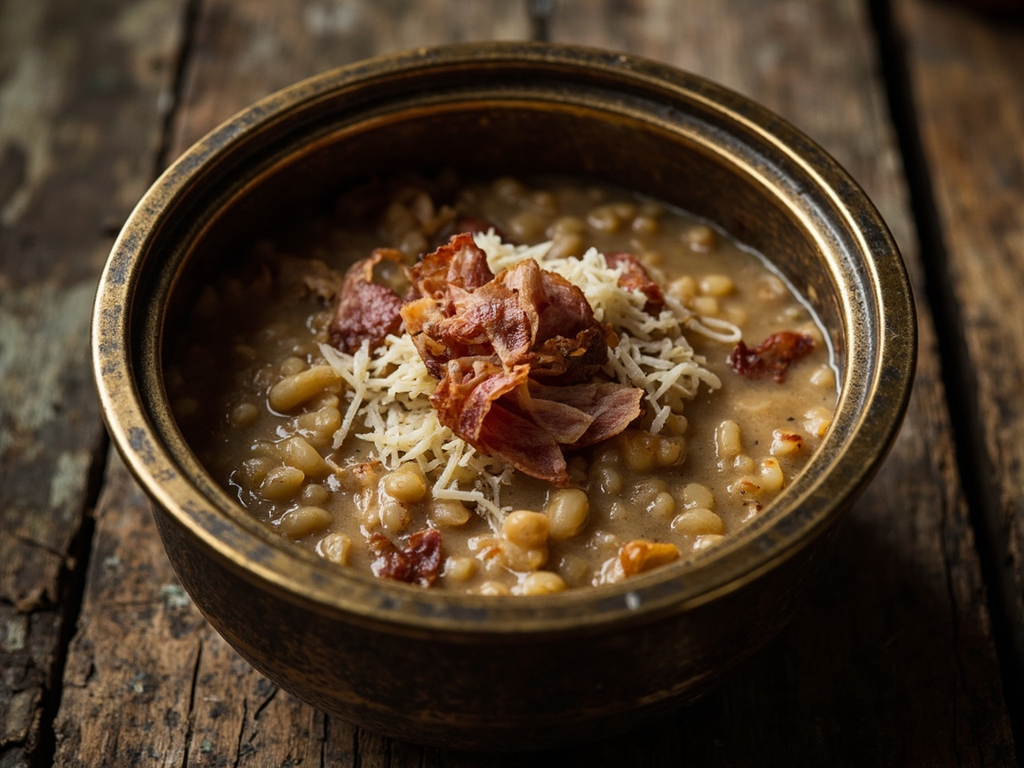
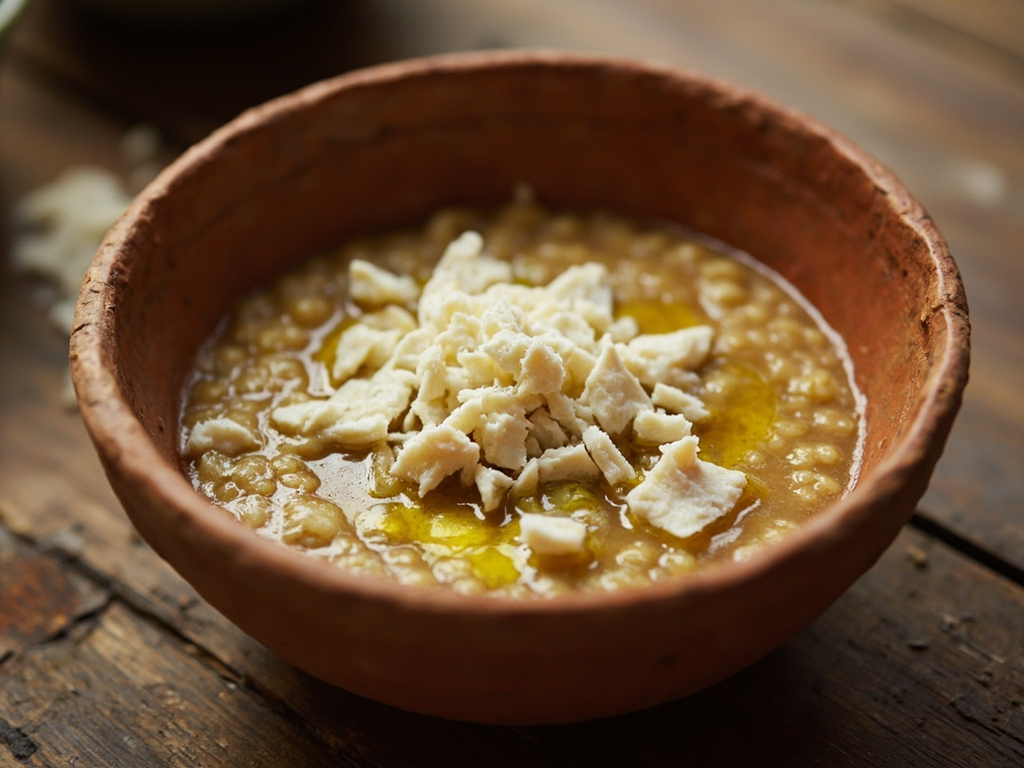
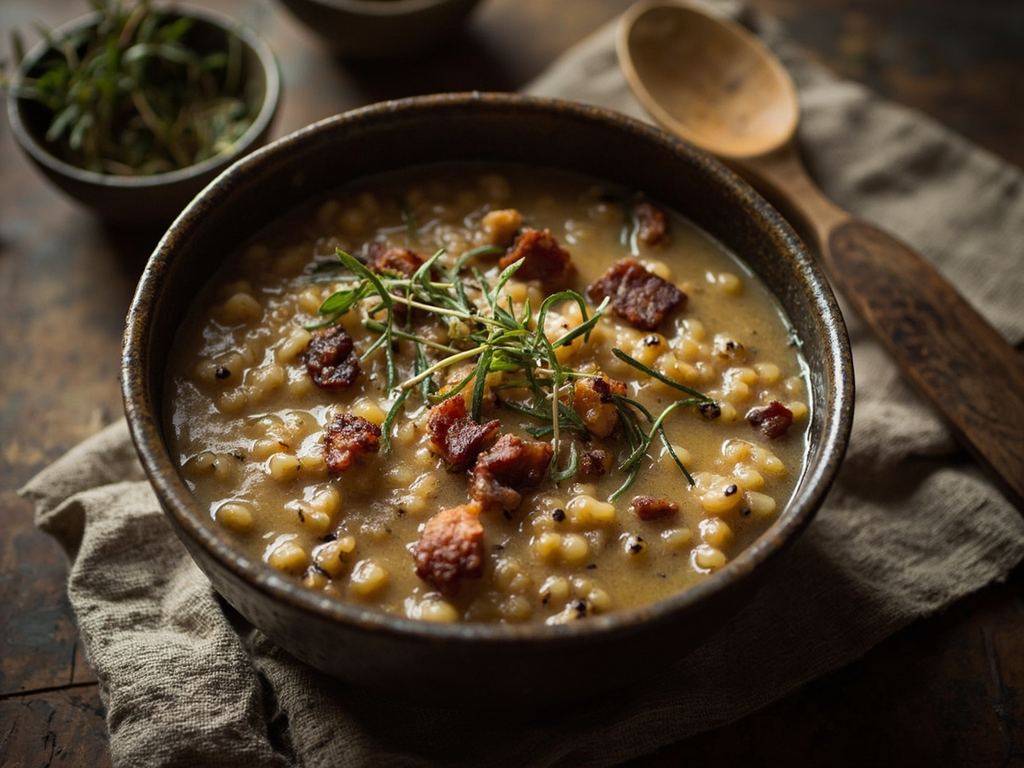
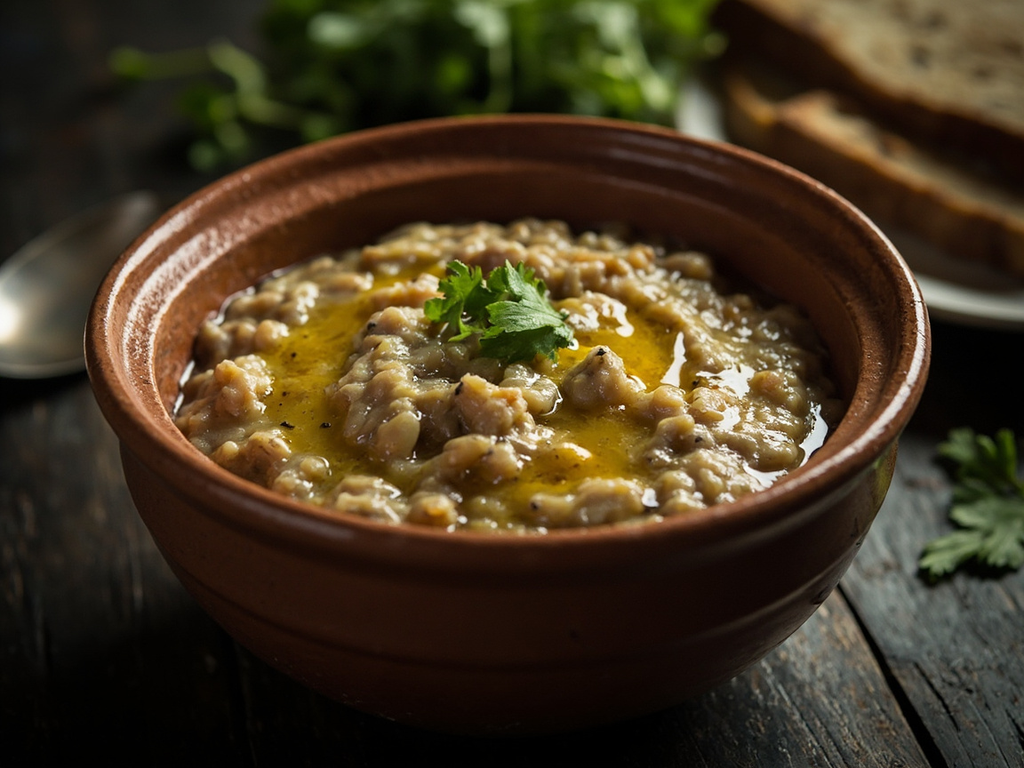
A thick spelt porridge, cooked slowly, enriched with fava beans and a few vegetables, lifted with a dash of garum and a drizzle of olive oil. The full belly of the ordinary Roman.
Come closer, my brother, and do not scorn this humble dish. We Romans ate puls long before we knew bread: it is the food of our fathers, the food that nourishes the worker and the bishop alike. Pour your spelt into boiling water, stir it without cease with a patient hand until it thickens, then throw in the fava beans and a drop of garum. Remember: he who shares his puls with the poor shares the bread of the Lord.
- •Crushed spelt (alica) — two handfuls per guest (base cereal)
- •Dried fava beans — a good handful (nourishing legume)
- •Garum — a dash (umami seasoning)
- •Olive oil — a drizzle (fat)
- •Leek and celery leaves — as available from the garden (aromatics)
Puls with Fava Beans and Garum
A thick spelt porridge, cooked slowly, enriched with fava beans and a few vegetables, lifted with a dash of garum and a drizzle of olive oil. The full belly of the ordinary Roman.
Why this dish? Puls, a cereal porridge, was the basic dish of the Roman people long before bread. For a bishop living among the artisans and freedmen of Trastevere, this salty porridge seasoned with garum and fava beans was everyday fare, far from the excesses of imperial banquets.
Come closer, my brother, and do not scorn this humble dish. We Romans ate puls long before we knew bread: it is the food of our fathers, the food that nourishes the worker and the bishop alike. Pour your spelt into boiling water, stir it without cease with a patient hand until it thickens, then throw in the fava beans and a drop of garum. Remember: he who shares his puls with the poor shares the bread of the Lord.
Ingredients (period version)
- Crushed spelt (alica) — two handfuls per guest (base cereal)
- Dried fava beans — a good handful (nourishing legume)
- Garum — a dash (umami seasoning)
- Olive oil — a drizzle (fat)
- Leek and celery leaves — as available from the garden (aromatics)
Ingredients
- Crushed spelt (or spelt semolina) — 150 g (base cereal)
- Dried split fava beans — 120 g (soaked overnight) (legume)
- Asian fish sauce (nuoc mam, garum substitute) — 1 tsp (umami seasoning)
- Olive oil — 2 tbsp (fat)
- Leek, sliced — 1 white part (aromatic)
- Celery stalk — 1 stalk with leaves (aromatic)
- Water or broth — 1 liter (cooking liquid)
- Salt — to taste (seasoning)
Method
- Soak the fava beans overnight, then cook them in water for 40 minutes until tender.
- In a large pot, sweat the leek and celery in olive oil.
- Add the spelt and cover with water or broth; cook over low heat for 30–40 minutes, stirring often, until a thick porridge forms.
- Fold in the cooked fava beans, then season with a dash of fish sauce and adjust the salt.
- Serve hot, drizzled with a final splash of olive oil.
How it was made : Puls was so central that the Greeks called the Romans 'porridge-eaters' (pultiphagi). It was cooked in an earthenware pot over the hearth, and each family varied it according to their means: plain for the poor, enriched with cheese, eggs, or meat for the wealthier.
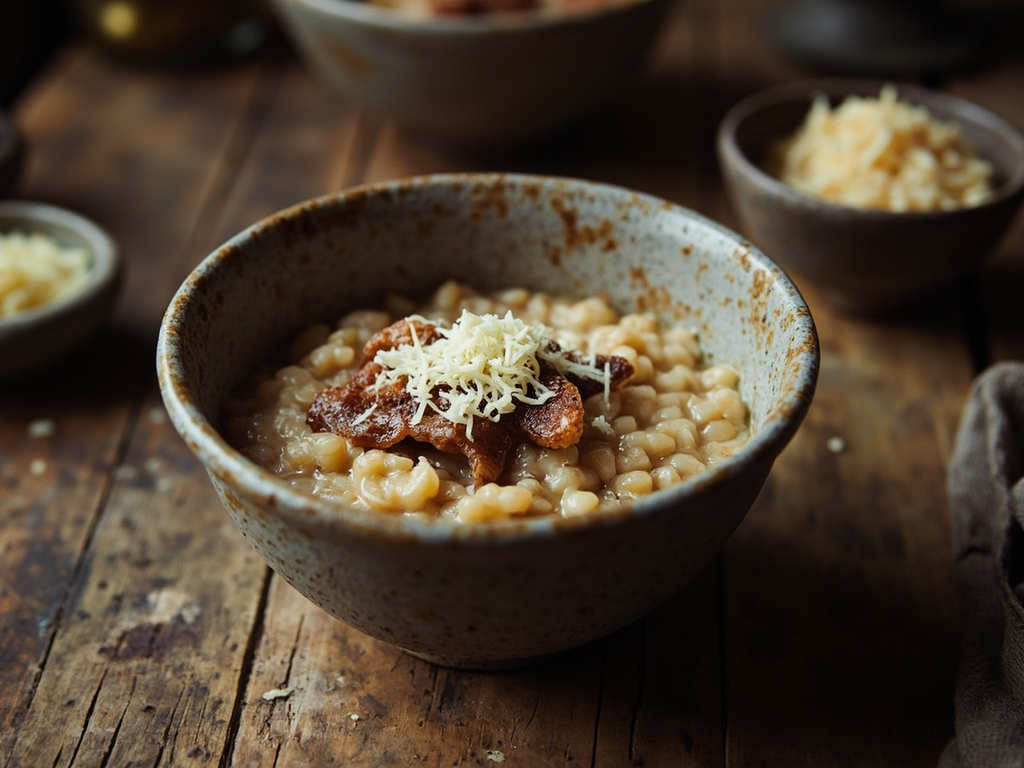
The contemporary twist : Serve in a bowl like a rustic risotto, topped with pecorino shavings and a drizzle of new olive oil — the puls reimagined as a 'savory porridge' in a bistro style.
Sources : Pliny the Elder, Natural History, Book XVIII · Cato the Elder, De Agricultura
Clement of Rome · Charactorium