 flip
flipFava Bean Purée with Cumin and Garum
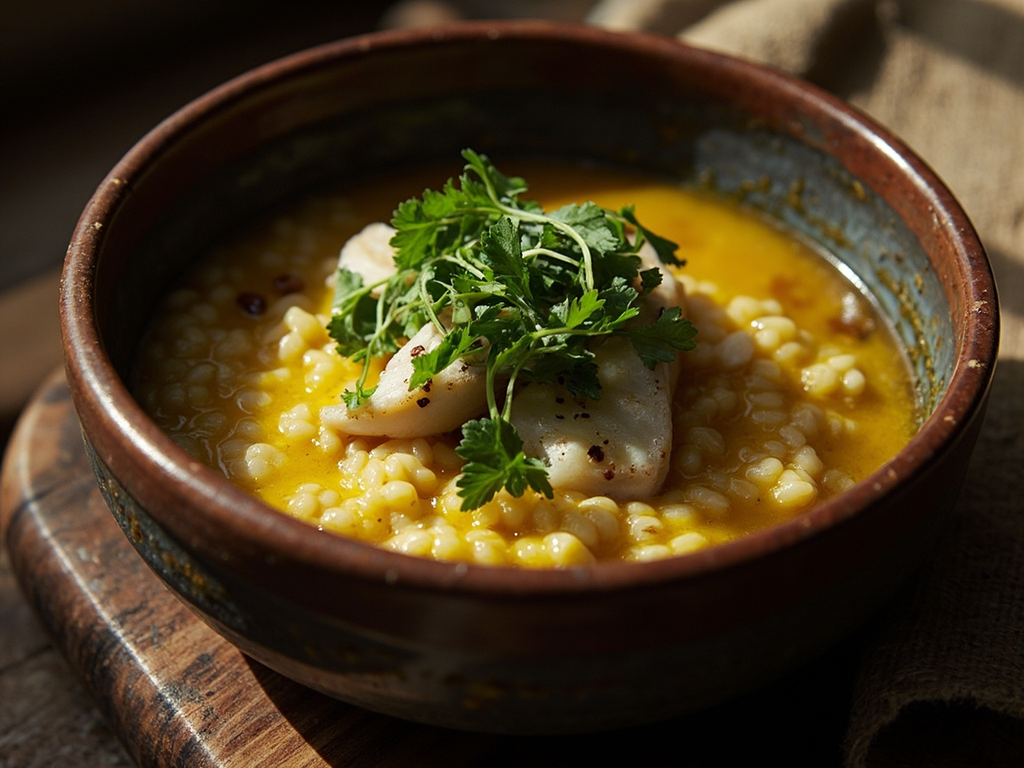
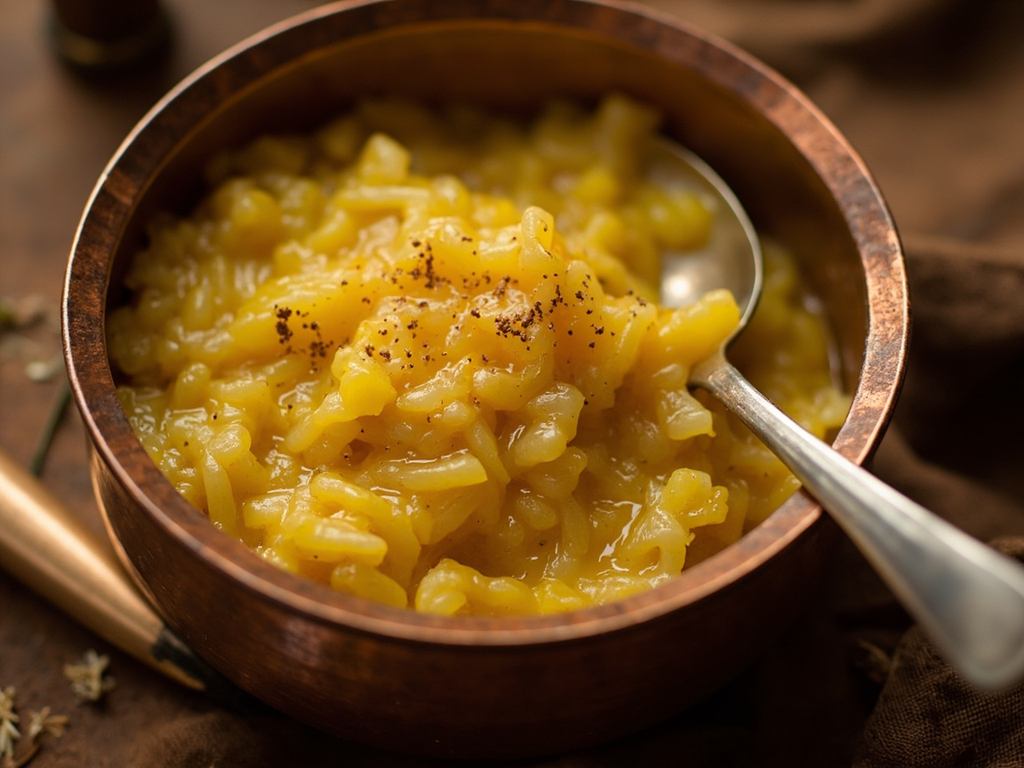
Fava Bean Purée with Cumin and Garum
Why this dish? The fava bean has been the nourishing foundation of Egypt for millennia: even in a palace where goose and rare fish were enjoyed, this humble and filling dish remained present, a link between the Greek queen and the Nile people she governed — and whose language, alone of her dynasty, she took the trouble to learn.
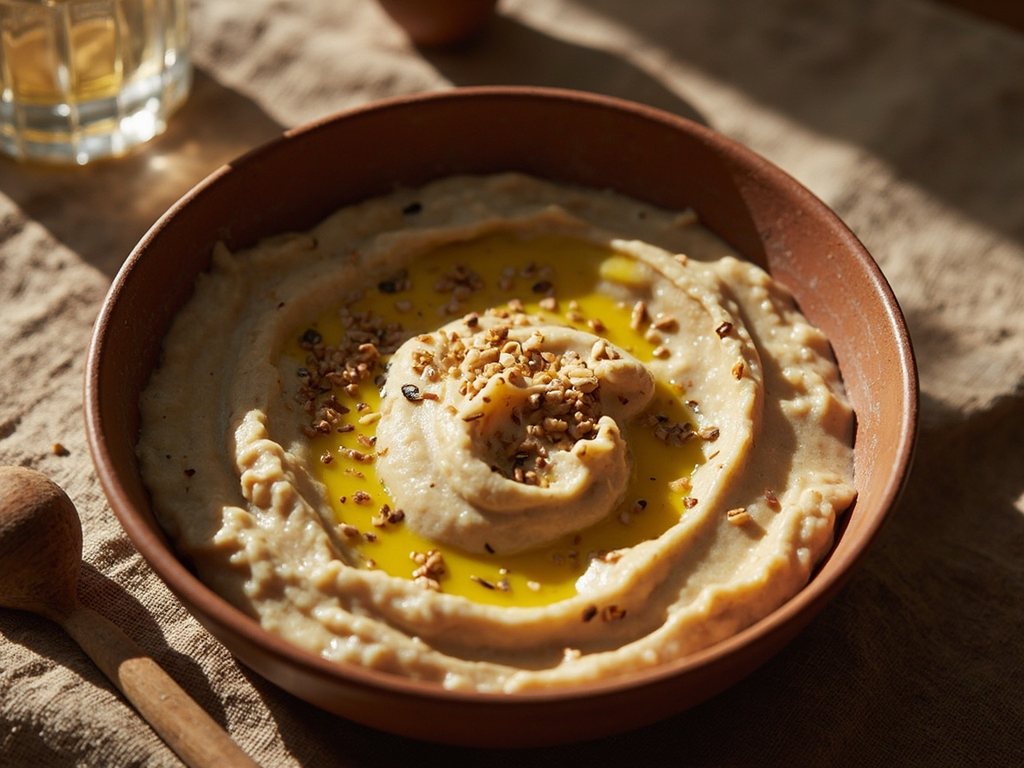
A creamy purée of long-simmered fava beans, spiced with cumin, a drizzle of oil, and a few drops of garum, the fermented fish sauce that brought deep umami to the ancient world. Simple, comforting, timeless — the direct ancestor of today's Egyptian ful.
Do not think a queen ignores the farmer's dish. These beans, my people have cooked since the time of the pyramid builders, and I did not disdain to learn their language to understand their table. They are left to melt all day over the embers, then crushed, oil and that fish sauce the merchants call garum poured over — a few drops suffice, it awakens everything. Eat: what nourishes Egypt also nourishes its sovereign.
- •Dried fava beans — a full bowl (base)
- •Garum (fermented fish sauce) — a dash (umami, salt)
- •Oil (olive or safflower) — a good drizzle (binder, smoothness)
- •Cumin — a pinch (spice)
- •Nile water — as needed (cooking)
Fava Bean Purée with Cumin and Garum
A creamy purée of long-simmered fava beans, spiced with cumin, a drizzle of oil, and a few drops of garum, the fermented fish sauce that brought deep umami to the ancient world. Simple, comforting, timeless — the direct ancestor of today's Egyptian ful.
Why this dish? The fava bean has been the nourishing foundation of Egypt for millennia: even in a palace where goose and rare fish were enjoyed, this humble and filling dish remained present, a link between the Greek queen and the Nile people she governed — and whose language, alone of her dynasty, she took the trouble to learn.
Do not think a queen ignores the farmer's dish. These beans, my people have cooked since the time of the pyramid builders, and I did not disdain to learn their language to understand their table. They are left to melt all day over the embers, then crushed, oil and that fish sauce the merchants call garum poured over — a few drops suffice, it awakens everything. Eat: what nourishes Egypt also nourishes its sovereign.
Ingredients (period version)
- Dried fava beans — a full bowl (base)
- Garum (fermented fish sauce) — a dash (umami, salt)
- Oil (olive or safflower) — a good drizzle (binder, smoothness)
- Cumin — a pinch (spice)
- Nile water — as needed (cooking)
Ingredients
- Dried split fava beans — 250 g (base)
- Fish sauce (nuoc-mam or colatura) — 1 to 2 tsp (umami, replaces garum)
- Olive oil — 4 tbsp (creaminess)
- Ground cumin — 1 tsp (signature spice)
- Lemon juice (optional) — a squeeze (freshness)
- Water — about 1 liter (cooking)
Method
- Soak the beans the night before in plenty of water.
- Drain, cover with fresh water, and simmer gently for 1.5 to 2 hours until soft enough to mash.
- Mash coarsely with a pestle or fork for a rustic texture.
- Stir in olive oil, cumin, and fish sauce; taste and adjust.
- Serve warm, drizzled with a final splash of oil and, if desired, a squeeze of lemon.
How it was made : The fava bean (Vicia faba) was a fundamental legume of ancient Egypt, eaten as purée or in cakes. Garum, a sauce made by fermenting fish entrails with salt in the sun, circulated throughout the Mediterranean and served as a universal flavor enhancer — the ancient equivalent of soy sauce. In Alexandria, it was both produced and imported in high quality.
The contemporary twist : Serve in a bowl with a soft-boiled egg, toasted cumin seeds, and a drizzle of oil: the ful medames of today has barely changed in two thousand years.
Sources : Darby, Ghalioungui & Grivetti, Food: The Gift of Osiris (1977) · Apicius, De re coquinaria (use of garum)
Cleopatra · Charactorium