 flip
flipSalted and Dried Nile Fish
Salted and Dried Nile Fish
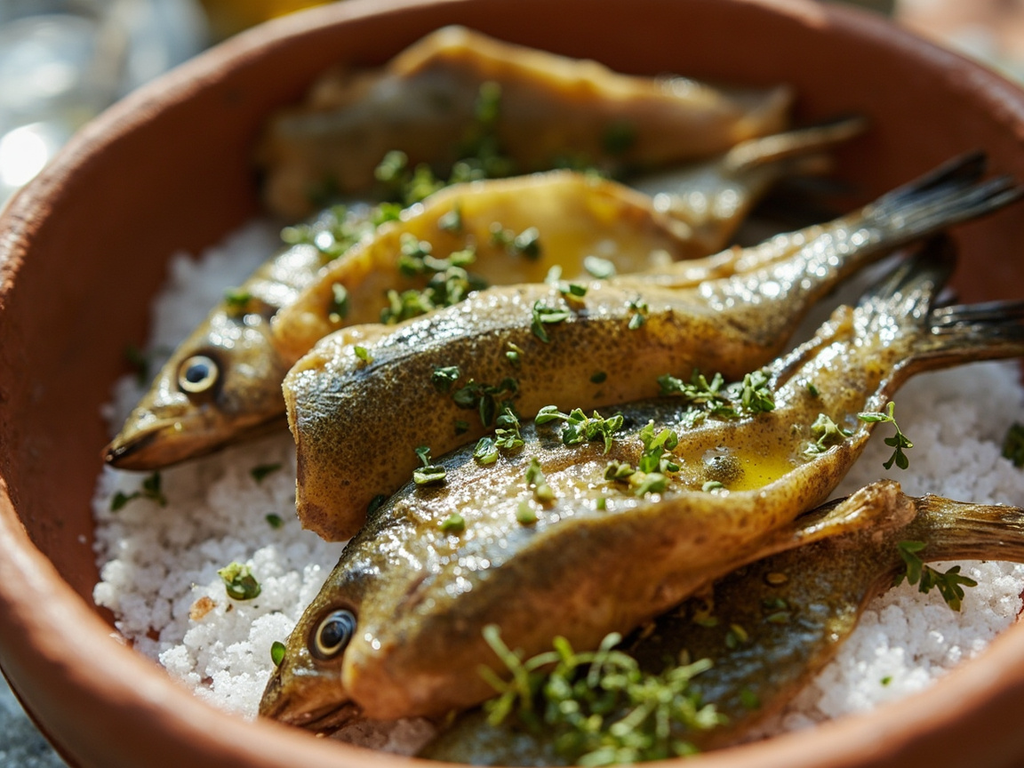
Why this dish? The Nile fed Egypt with its fish, and salting made it possible to preserve this wealth all year round — on the markets of Alexandria as in the palace stores. This age-old technique, which Cleopatra encountered daily in her riverine kingdom, speaks to Egypt's deep dependence on its nourishing river.
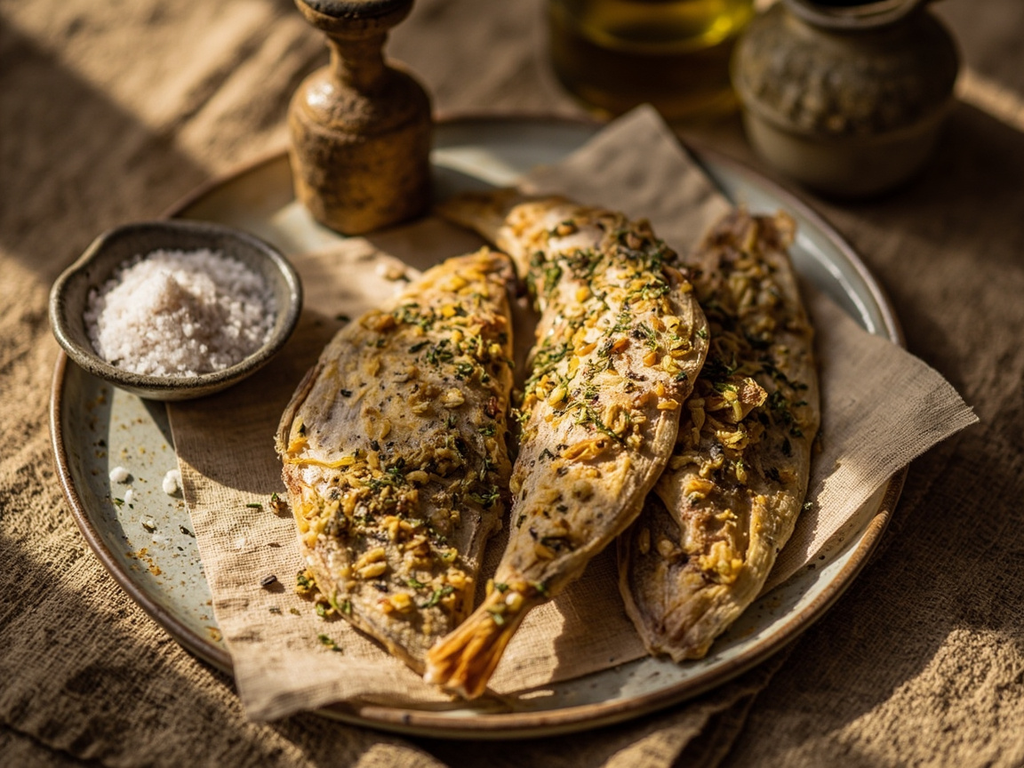
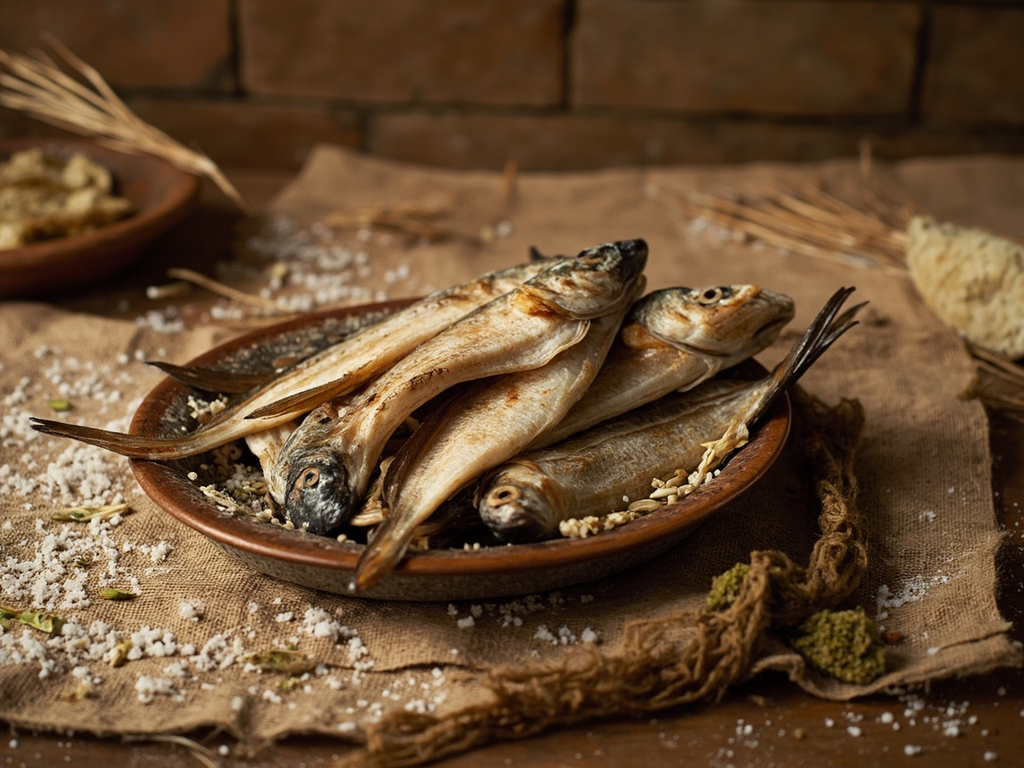
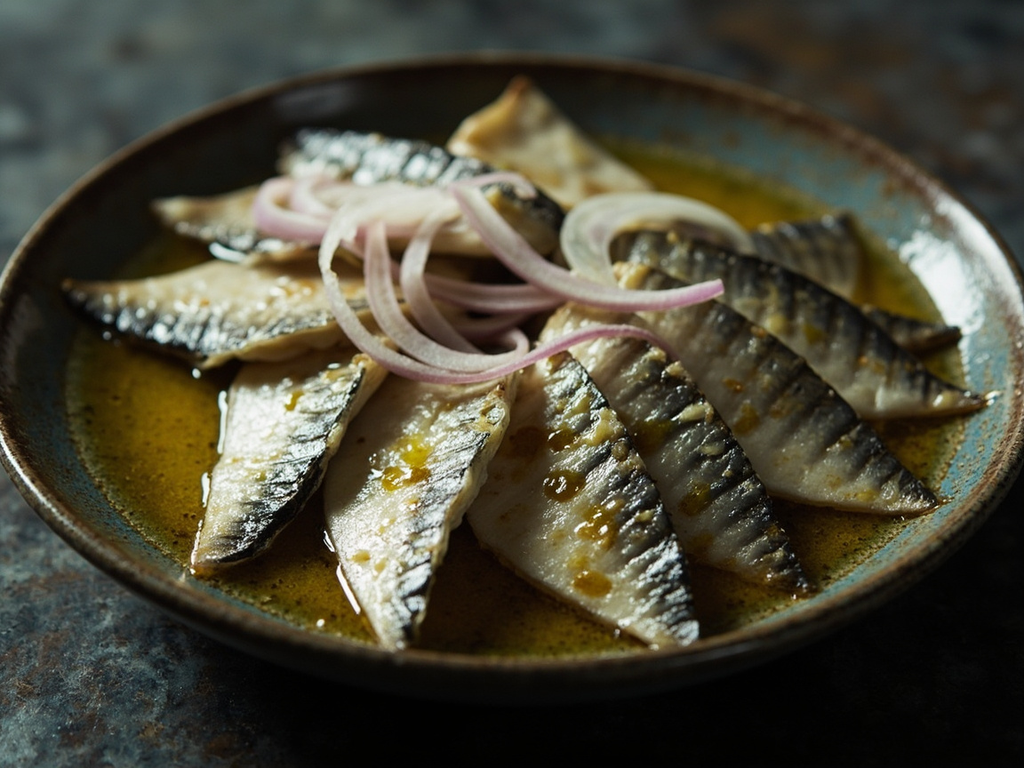
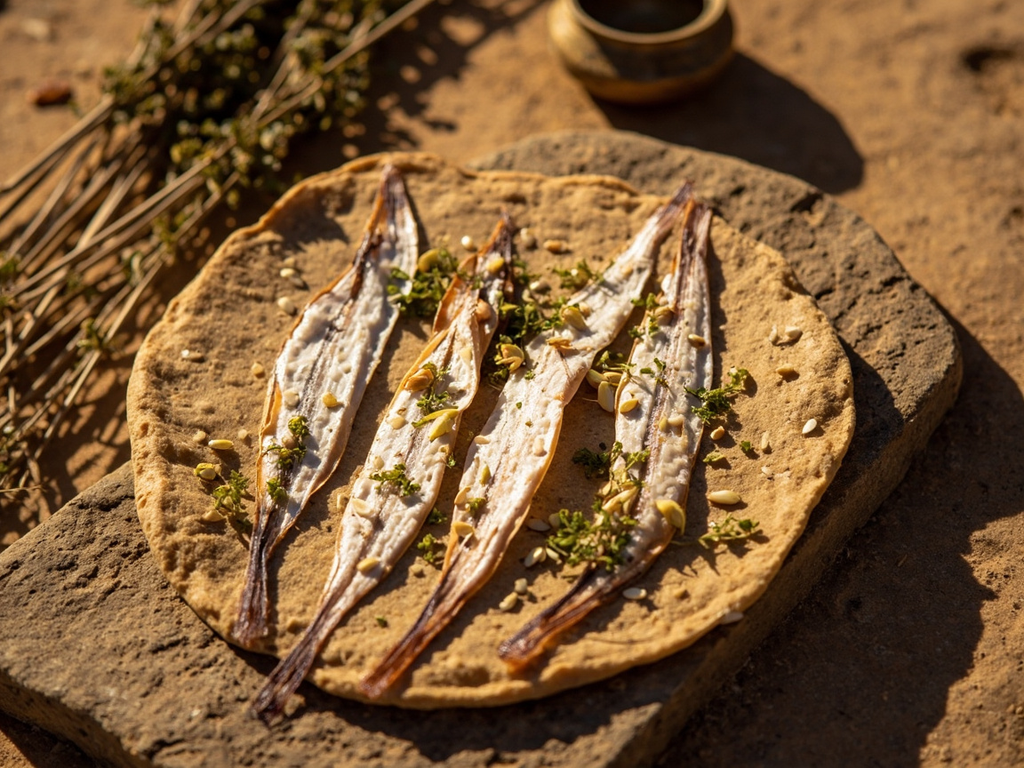
Fish cleaned, heavily salted, then dried, transformed into a savory and durable provision. With a powerful taste, salty and slightly fermented, it is eaten in small bites with bread and oil — the ancestor of the *fesikh* that Egyptians still prepare today.
The Nile gives everything to Egypt, and we give thanks by wasting none of its gifts. See these fish: they are gutted, buried under salt, then left to the sun and wind until they keep for an entire season. The people fill their jars with them, and even at the palace they are served with bread and oil. Taste little, for the flavor is strong — it is the very taste of my river, the one that does not die.
- •Nile fish (mullet, tilapia) — several (item to preserve)
- •Salt — in large quantity (preservation)
Salted and Dried Nile Fish
Fish cleaned, heavily salted, then dried, transformed into a savory and durable provision. With a powerful taste, salty and slightly fermented, it is eaten in small bites with bread and oil — the ancestor of the *fesikh* that Egyptians still prepare today.
Why this dish? The Nile fed Egypt with its fish, and salting made it possible to preserve this wealth all year round — on the markets of Alexandria as in the palace stores. This age-old technique, which Cleopatra encountered daily in her riverine kingdom, speaks to Egypt's deep dependence on its nourishing river.
The Nile gives everything to Egypt, and we give thanks by wasting none of its gifts. See these fish: they are gutted, buried under salt, then left to the sun and wind until they keep for an entire season. The people fill their jars with them, and even at the palace they are served with bread and oil. Taste little, for the flavor is strong — it is the very taste of my river, the one that does not die.
Ingredients (period version)
- Nile fish (mullet, tilapia) — several (item to preserve)
- Salt — in large quantity (preservation)
Ingredients
- Very fresh mullet or mackerel fillets — 4 fillets (base)
- Coarse salt — 500 g (enough to coat) (salting)
- Olive oil — for serving (accompaniment)
- Bread — as needed (serving base)
Method
- Rinse and thoroughly dry the very fresh fish fillets.
- Line a dish with coarse salt, place the fillets on top, and cover completely with salt.
- Refrigerate for 24 to 48 hours so the salt draws out water and firms the flesh (safe, mild version).
- Briefly rinse, pat dry, and let firm up in cool air for a few hours.
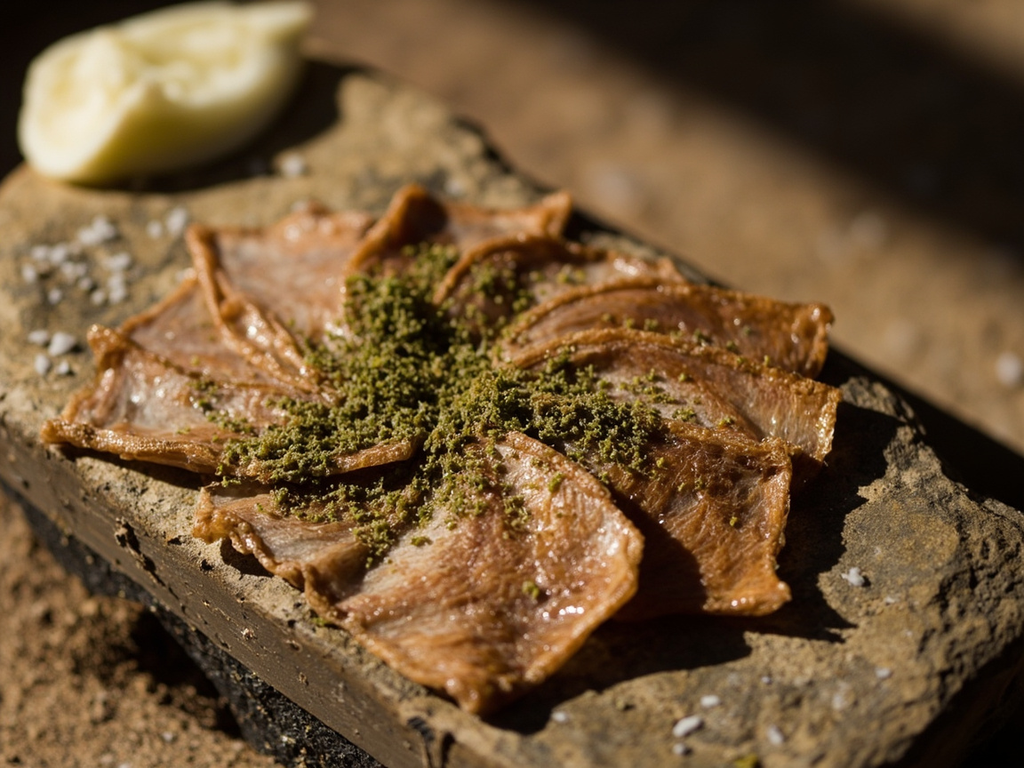
- Slice thinly and serve with a drizzle of olive oil and bread. (Note: traditional extended fermentation is risky — this version is a safe salting.)
How it was made : Salting and drying fish is attested in Egypt from the earliest times: depictions of workers gutting and salting fish on the Nile bank have been found. Dried fish was an essential protein reserve and trade item. The modern *fesikh*, a highly salted fermented mullet, descends directly from it — but its artisanal preparation requires precise know-how to avoid any danger.
The contemporary twist : Crumble over fava bean purée with a squeeze of lemon for a briny toast, bridging the Mediterranean and the Nile Valley.
Sources : Darby, Ghalioungui & Grivetti, Food: The Gift of Osiris (1977) · Herodotus, Histories, Book II (Nile fish)
Cleopatra · Charactorium