 flip
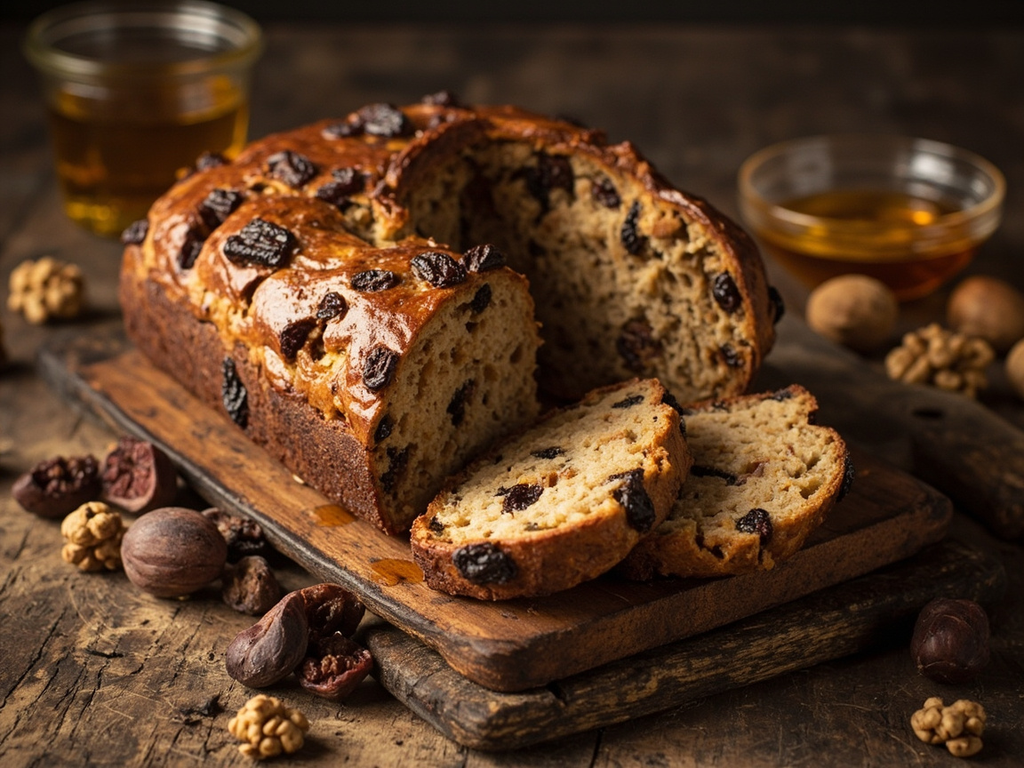
flipFestive Honey, Walnut, and Dried Fruit Bread
Festive Honey, Walnut, and Dried Fruit Bread
Why this dish? No attested pastry is known from Clovis's table, but honey, walnuts, and dried fruits abounded. Evoking the sweetness that closed a victory banquet or the evening of a Christian feast — perhaps around the baptism of Reims in 496 — is to imagine sweets as the Frankish court might have known them, without cane sugar or cocoa.
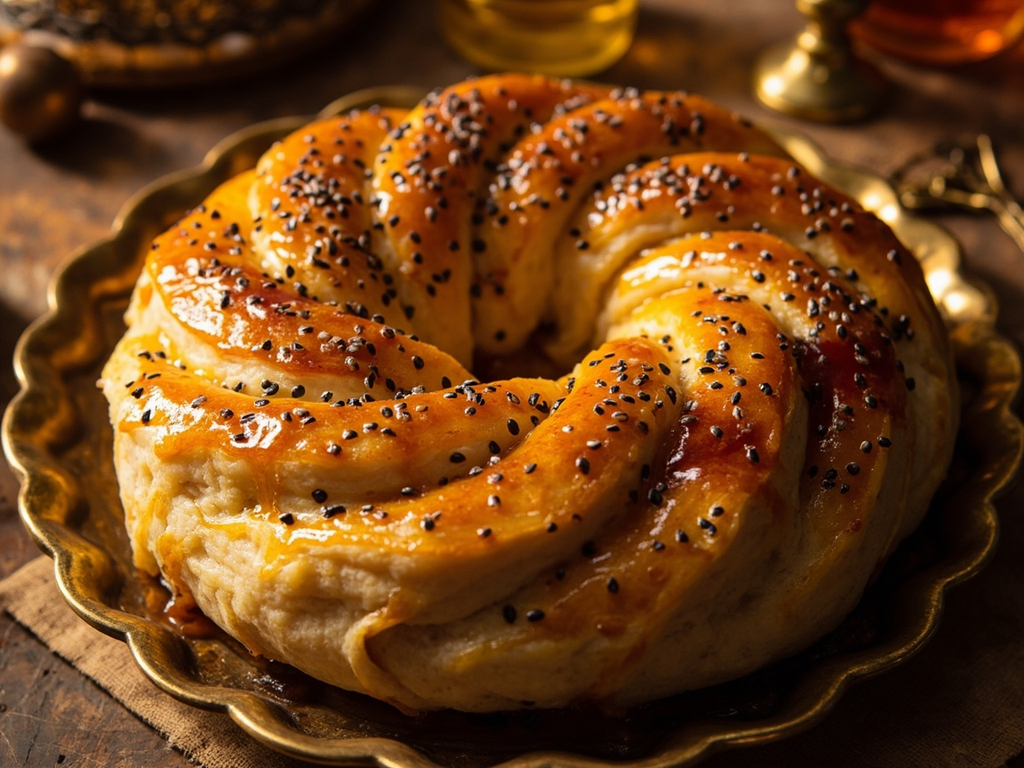
A dense, moist bread, sweetened with honey, studded with walnuts and dried fruits (figs, raisins), perfumed with trade spices. An evocative sweet to represent the sweet part of the Frankish royal table, at a time when honey was the only true sweetener.
The great meal ends, the cups empty, and here is what I love to offer to finish: a bread kneaded with honey, sown with walnuts from our trees and fruits that merchants bring from the South. On the day of my baptism at Reims, Bishop Remigius spoke of sweetness and light — well, honey is the sweetness God placed in our forests. Break off a piece, chew it slowly: a king knows that after iron and fire, there must also be a little honey on the tongue.
- •Spelt flour — as needed (bread base)
- •Honey — generously (sweetener, moistness)
- •Walnuts — a handful (filling)
- •Dried figs and raisins — a handful (sweet fruits)
- •Eggs — a few (binder)
- •Cinnamon, anise (trade spices) — a pinch (flavor)
Festive Honey, Walnut, and Dried Fruit Bread
A dense, moist bread, sweetened with honey, studded with walnuts and dried fruits (figs, raisins), perfumed with trade spices. An evocative sweet to represent the sweet part of the Frankish royal table, at a time when honey was the only true sweetener.
Why this dish? No attested pastry is known from Clovis's table, but honey, walnuts, and dried fruits abounded. Evoking the sweetness that closed a victory banquet or the evening of a Christian feast — perhaps around the baptism of Reims in 496 — is to imagine sweets as the Frankish court might have known them, without cane sugar or cocoa.
The great meal ends, the cups empty, and here is what I love to offer to finish: a bread kneaded with honey, sown with walnuts from our trees and fruits that merchants bring from the South. On the day of my baptism at Reims, Bishop Remigius spoke of sweetness and light — well, honey is the sweetness God placed in our forests. Break off a piece, chew it slowly: a king knows that after iron and fire, there must also be a little honey on the tongue.
Ingredients (period version)
- Spelt flour — as needed (bread base)
- Honey — generously (sweetener, moistness)
- Walnuts — a handful (filling)
- Dried figs and raisins — a handful (sweet fruits)
- Eggs — a few (binder)
- Cinnamon, anise (trade spices) — a pinch (flavor)
Ingredients
- Spelt flour — 300 g (base)
- Honey — 150 g (sweetener)
- Eggs — 2 (binder)
- Melted butter or oil — 60 g (moistness)
- Chopped walnuts — 80 g (filling)
- Dried figs and raisins — 100 g (fruits)
- Cinnamon + ground anise — 1 tsp (spices)
- Baking powder — 1 packet (10-12 g) (leavening (modern shortcut))
Method
- Beat the eggs with honey and melted butter until smooth.
- Fold in the spelt flour, spices, and baking powder to form a thick batter.
- Add the walnuts, chopped figs, and raisins; mix without overworking.
- Pour into a lined loaf pan and bake at 170°C for about 40 minutes (a knife should come out clean).
- Let cool slightly, brush with a little honey to glaze the crust, and serve in thick slices.
How it was made : Before cane sugar arrived in Europe (widespread much later), honey was the only sweetener available, and the boundary between bread and pastry did not exist as it does today. Breads enriched with honey, dried fruits, and nuts are the ancestors of medieval gingerbreads and festive cakes. This recipe is an evocation: no document precisely describes the sweets of Clovis's court, but its ingredients were indeed available.
The contemporary twist : Present it as a round loaf scored with a golden honey cross, a nod to the baptism of Reims, and serve with fresh cheese drizzled with honey.
Sources : Bruno Laurioux, Le Moyen Âge à table · Massimo Montanari, La faim et l'abondance
Clovis · Charactorium