 flip
flipSweet Onion, Cucumber, and Nile Coriander Salad
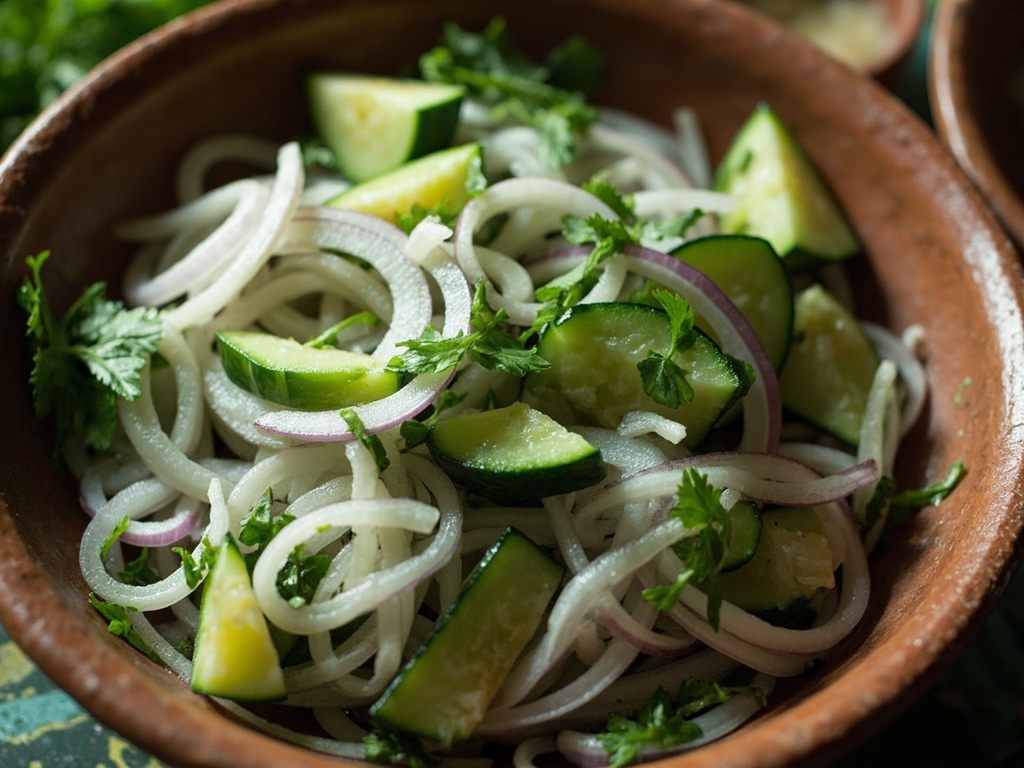
Sweet Onion, Cucumber, and Nile Coriander Salad
Why this dish? Onion, leek, and cucumber grow thick in the waterlogged black silt — the very flesh of Geb. The onion was so sacred that it was placed in tombs; this fresh greenery is the most direct offering from the earth-god's garden.
A crunchy freshness of cucumbers and sweet onions, lifted with fresh coriander, salt, and a dash of wine vinegar. The light, lively counterpoint to rich dishes, straight from the vegetable gardens irrigated by the flood.
Not everything is roasted, traveler. Go into my gardens, where the floodwater has left its silt: there you will find sweet onion, water-swollen cucumber, leek, and green coriander. Slice them fine, sprinkle a pinch of salt and a dash of turned wine, crush the coriander between your fingers to wake its scent. It is fresh, it is sharp, it cleanses the mouth after the fat of the goose. The onion especially, hold it in honor: it is laid on the eyes of the dead so that its strength may awaken them.
- •Sweet onions — several (base)
- •Cucumbers — two or three (freshness)
- •Fresh coriander — one bunch (herb)
- •Wine vinegar — a dash (acidity)
- •Sea salt and safflower oil — by hand (seasoning)
Sweet Onion, Cucumber, and Nile Coriander Salad
A crunchy freshness of cucumbers and sweet onions, lifted with fresh coriander, salt, and a dash of wine vinegar. The light, lively counterpoint to rich dishes, straight from the vegetable gardens irrigated by the flood.
Why this dish? Onion, leek, and cucumber grow thick in the waterlogged black silt — the very flesh of Geb. The onion was so sacred that it was placed in tombs; this fresh greenery is the most direct offering from the earth-god's garden.
Not everything is roasted, traveler. Go into my gardens, where the floodwater has left its silt: there you will find sweet onion, water-swollen cucumber, leek, and green coriander. Slice them fine, sprinkle a pinch of salt and a dash of turned wine, crush the coriander between your fingers to wake its scent. It is fresh, it is sharp, it cleanses the mouth after the fat of the goose. The onion especially, hold it in honor: it is laid on the eyes of the dead so that its strength may awaken them.
Ingredients (period version)
- Sweet onions — several (base)
- Cucumbers — two or three (freshness)
- Fresh coriander — one bunch (herb)
- Wine vinegar — a dash (acidity)
- Sea salt and safflower oil — by hand (seasoning)
Ingredients
- Sweet onions (or scallions) — 2 (base)
- Cucumber — 2 (freshness)
- Fresh coriander — 1 bunch (herb)
- White wine vinegar — 2 tbsp (acidity)
- Oil (safflower, sesame, or olive) — 2 tbsp (binder)
- Salt — to taste (seasoning)
Method
- Finely slice the sweet onions and slice cucumbers into thin rounds.
- Salt the cucumbers and let them drain 10 min, then pat dry.
- Mix onions, cucumbers, and chopped coriander.
- Dress with vinegar, oil, and salt; toss.
- Let rest 15 min in a cool place before serving alongside hot dishes.
How it was made : Onions, leeks, garlic, cucumbers, lettuce, and coriander formed the heart of the Egyptian vegetable garden, irrigated by flood canals. The onion carried strong symbolic weight: it has been found in burials, sometimes placed on the eyes or in mummy cavities, its concentric layers perhaps evoking eternity. Coriander, both seed and leaf, perfumed daily cooking.
The contemporary twist : Arrange in concentric circles of onion and cucumber reminiscent of the funerary onion's layers — a fresh, graphic 'eternity' plate.
Sources : William J. Darby, Paul Ghalioungui, Louis Grivetti, 'Food: The Gift of Osiris', Academic Press, 1977 · Hilary Wilson, 'Egyptian Food and Drink', Shire Publications, 1988
Geb · Charactorium