 flip
flipCuradmír — Cauldron-Boiled Pork Leg, Honey-Glazed
Curadmír — Cauldron-Boiled Pork Leg, Honey-Glazed
Why this dish? In Bricriu's Feast (Fled Bricrenn), Cúchulainn fiercely contests the curadmír—the hero's portion—against the other champions of Ulster, and wins it. Pork, a prestige meat of the Celtic nobility, was the honor dish reserved for the bravest: this is THE dish of Cúchulainn par excellence.
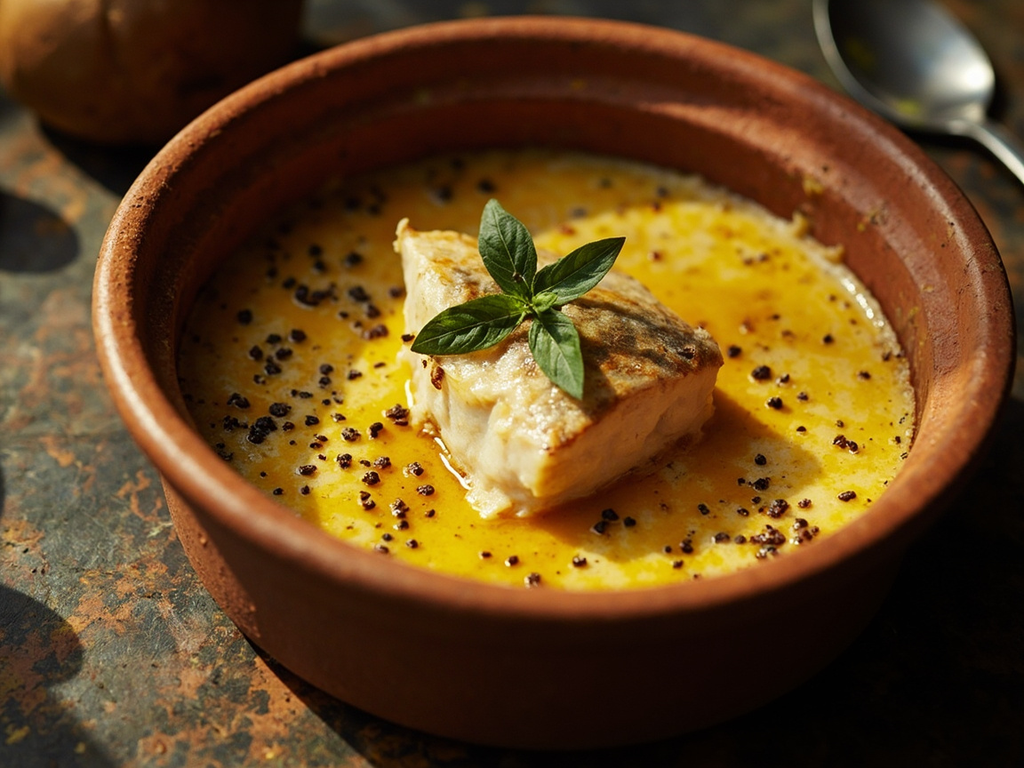
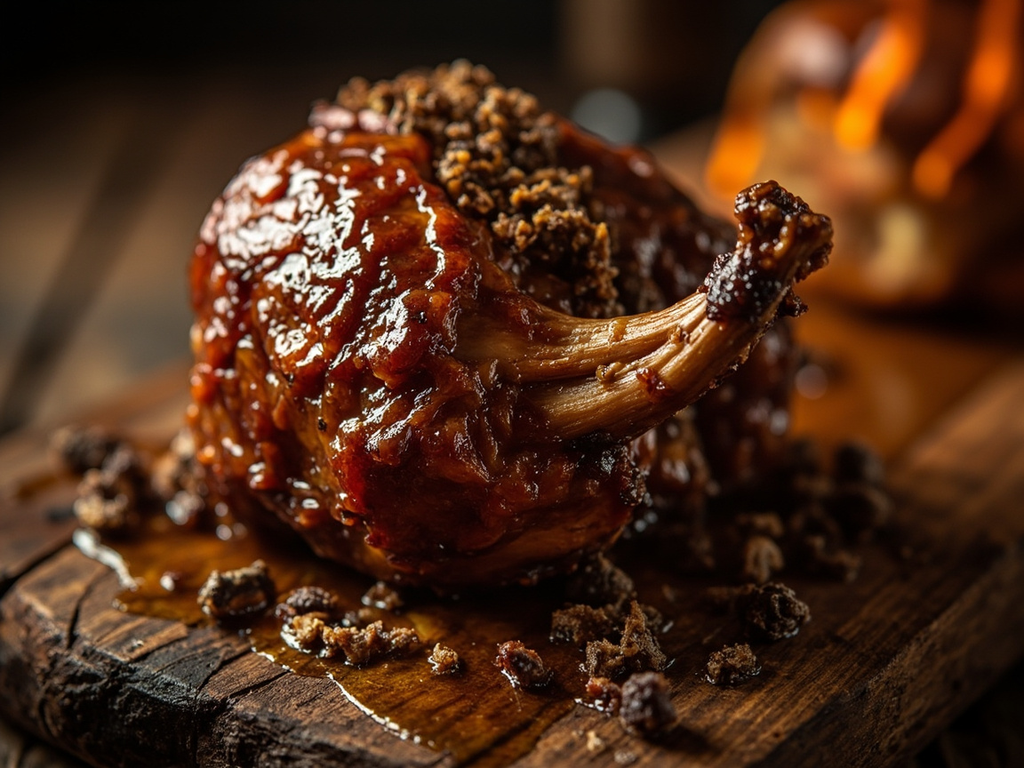
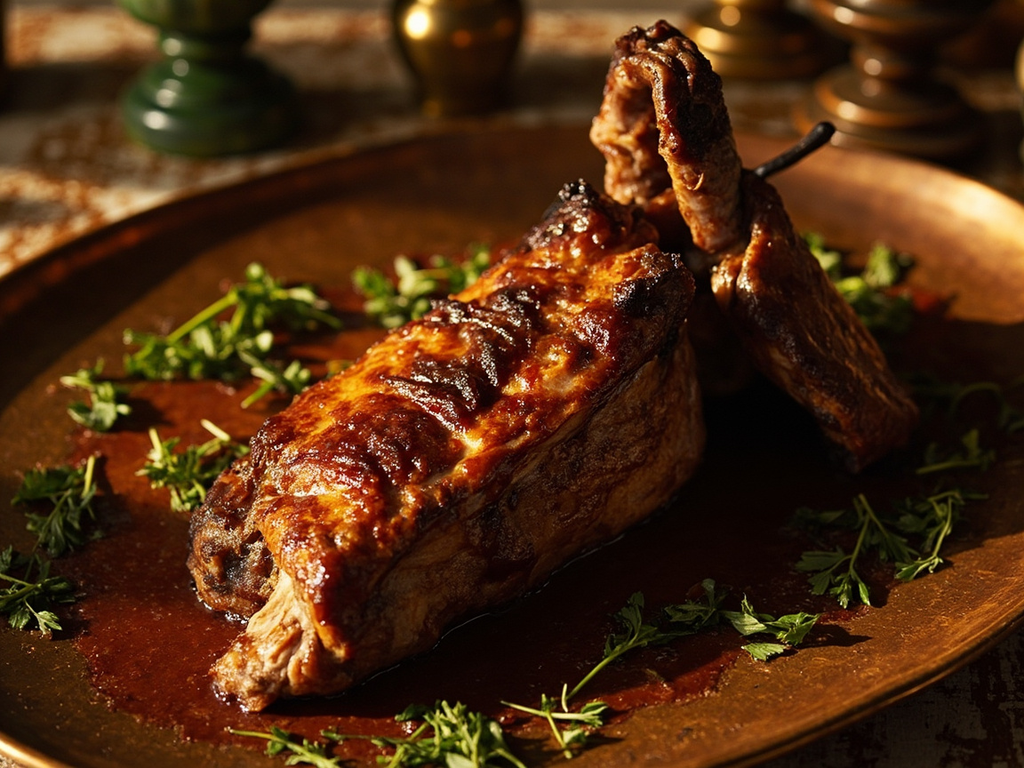
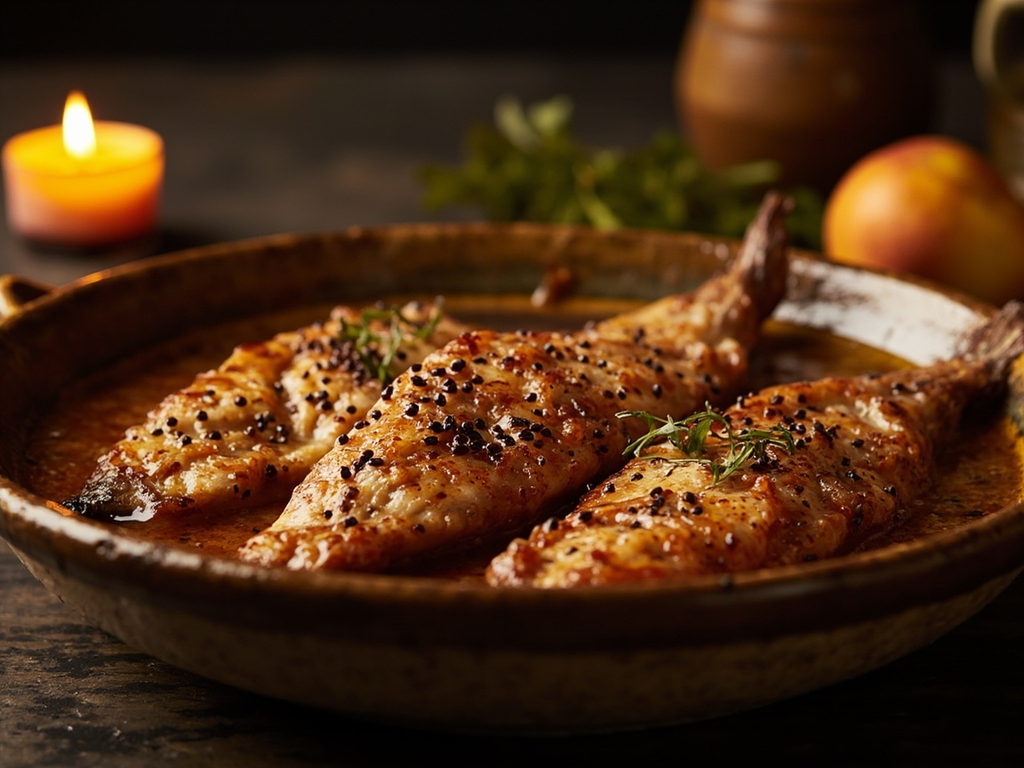
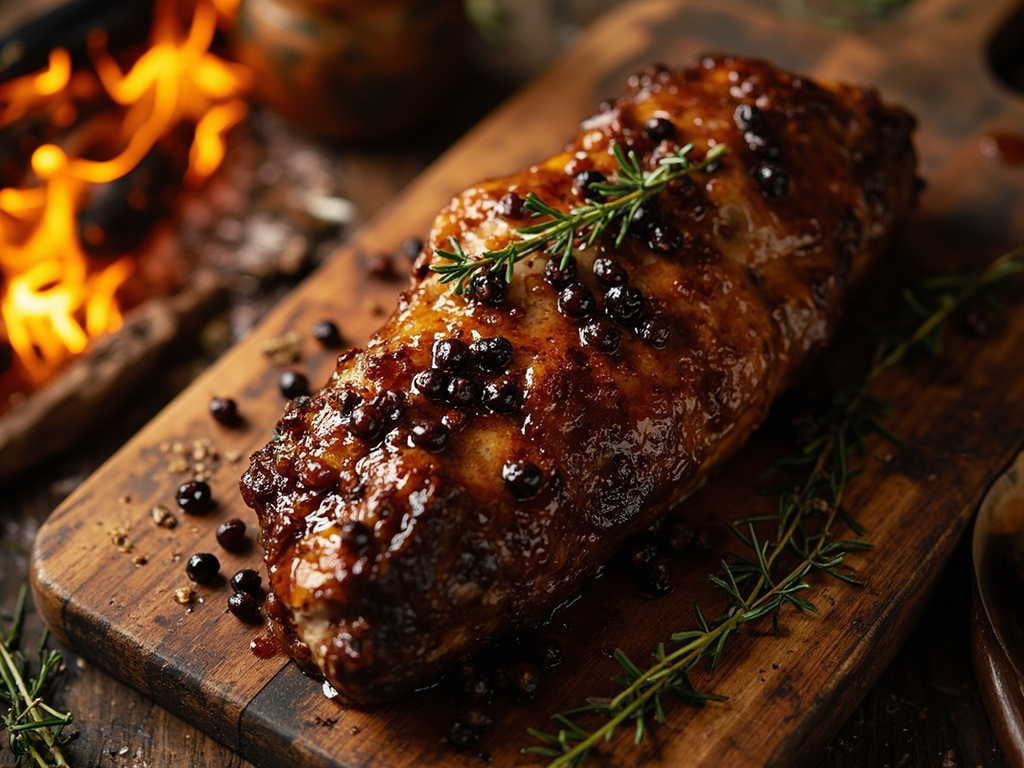
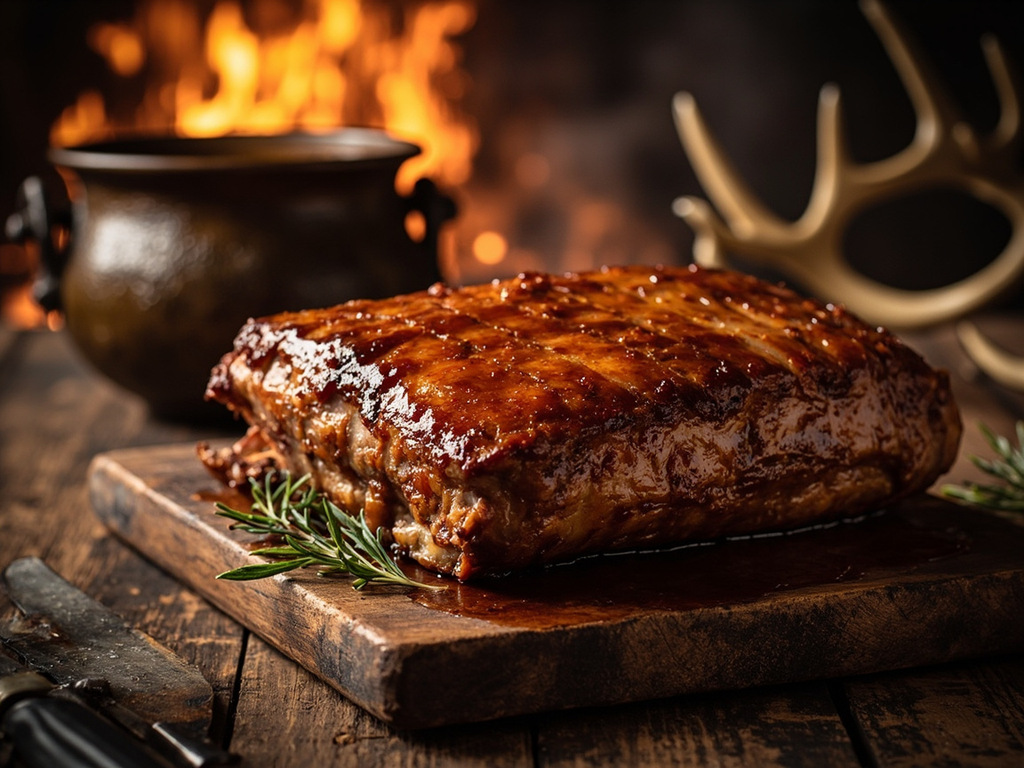
A generous piece of pork long boiled in a cauldron then glazed with honey and wild herbs, until the skin becomes golden and sticky. The cut that was fought over at swordpoint.
Approach, and look well: this thigh is mine, for none in Emain Macha has struck harder than I. It is plunged whole into the great cauldron until the flesh falls from the bone, then anointed with honey from the summer hives before being passed over the embers. Let the other champions grumble—the hero's portion goes to him who deserves it, and I have won it fairly. Eat with me, stranger, but know that I do not share twice.
- •Pork leg with skin — one piece for the banquet (prestige meat, heart of the dish)
- •Wild honey — a good splash (golden sweet glaze)
- •Sea salt — by hand (seasoning and preservation)
- •Ramsons and wild thyme — a handful (scent of the meat)
- •Spring water — enough to cover (cauldron broth)
Curadmír — Cauldron-Boiled Pork Leg, Honey-Glazed
A generous piece of pork long boiled in a cauldron then glazed with honey and wild herbs, until the skin becomes golden and sticky. The cut that was fought over at swordpoint.
Why this dish? In Bricriu's Feast (Fled Bricrenn), Cúchulainn fiercely contests the curadmír—the hero's portion—against the other champions of Ulster, and wins it. Pork, a prestige meat of the Celtic nobility, was the honor dish reserved for the bravest: this is THE dish of Cúchulainn par excellence.
Approach, and look well: this thigh is mine, for none in Emain Macha has struck harder than I. It is plunged whole into the great cauldron until the flesh falls from the bone, then anointed with honey from the summer hives before being passed over the embers. Let the other champions grumble—the hero's portion goes to him who deserves it, and I have won it fairly. Eat with me, stranger, but know that I do not share twice.
Ingredients (period version)
- Pork leg with skin — one piece for the banquet (prestige meat, heart of the dish)
- Wild honey — a good splash (golden sweet glaze)
- Sea salt — by hand (seasoning and preservation)
- Ramsons and wild thyme — a handful (scent of the meat)
- Spring water — enough to cover (cauldron broth)
Ingredients
- Pork roast from shoulder or shank, with skin — 1.5 kg (main meat)
- Liquid honey — 4 tbsp (glaze)
- Coarse salt — 2 tsp (seasoning)
- Garlic (or fresh ramsons) — 4 cloves (aromatic)
- Fresh thyme — 4 sprigs (aromatic)
- Water — 2 litres (broth)
Method
- Place the pork in a large pot, cover with water, add salt, crushed garlic and thyme.
- Bring to a gentle simmer and cook slowly for 1½ to 2 hours, until the meat is tender.
- Drain, pat the skin dry and score it in a crosshatch pattern.
- Brush generously with honey and roast at 220°C (or under the broiler) for 15–20 minutes, basting, until the glaze is golden and crackling.
- Slice and serve the finest piece to the 'hero' of the table.
How it was made : Among the Celtic nobility, pork was the meat of honor; Irish texts abound with banquets where huge pieces are boiled in bronze cauldrons. The curadmír (champion's portion) is explicitly described in the Ulster Cycle: the best cut rewarded the bravest, a source of bloody rivalries.
The contemporary twist : Serve the honor piece on an oak board with a small 'hero's portion' flag—each guest must prove their bravery of the day to be entitled to it.
Sources : Fled Bricrenn (Bricriu's Feast), Ulster Cycle · Táin Bó Cúailnge (The Cattle Raid of Cooley) · A. T. Lucas, Irish Food before the Potato, 1960
Cúchulainn · Charactorium