 flip
flipPatina of Red Mullet with Garum and Honey
Patina of Red Mullet with Garum and Honey
Why this dish? Architect of Trajan, Apollodorus frequented the imperial table and the banquets of high Roman society. Mediterranean fish, sharpened with garum and sweetened with honey, was a prestige dish there—the salty-sweet contrast that the elite loved, served in finest tableware.
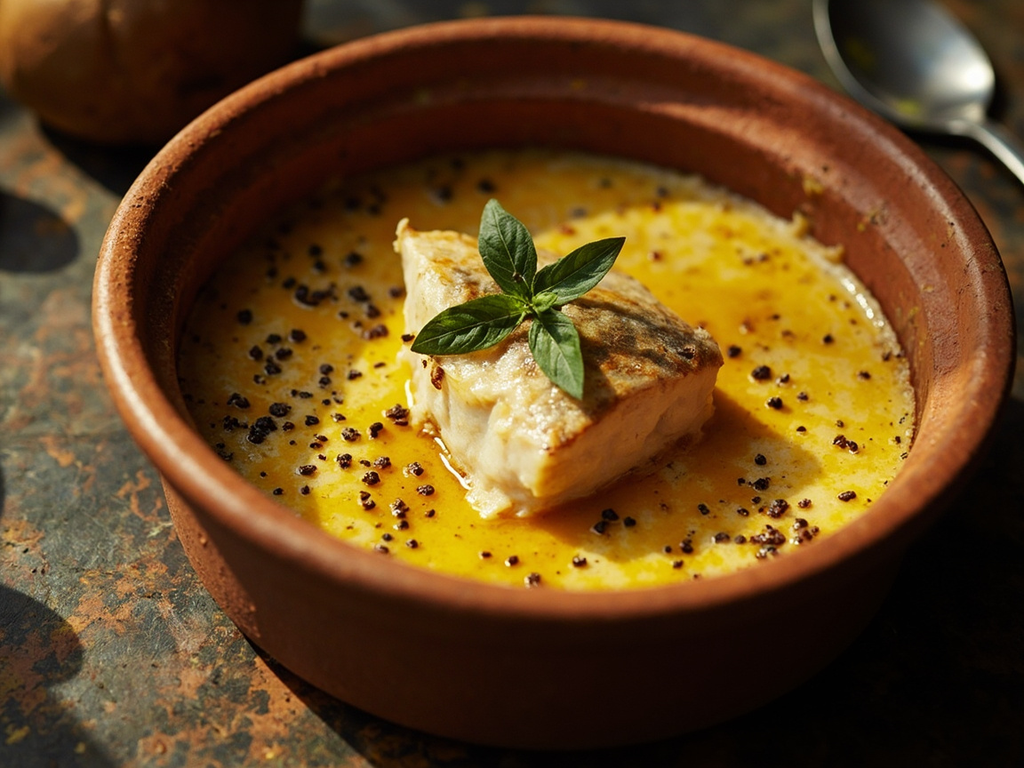
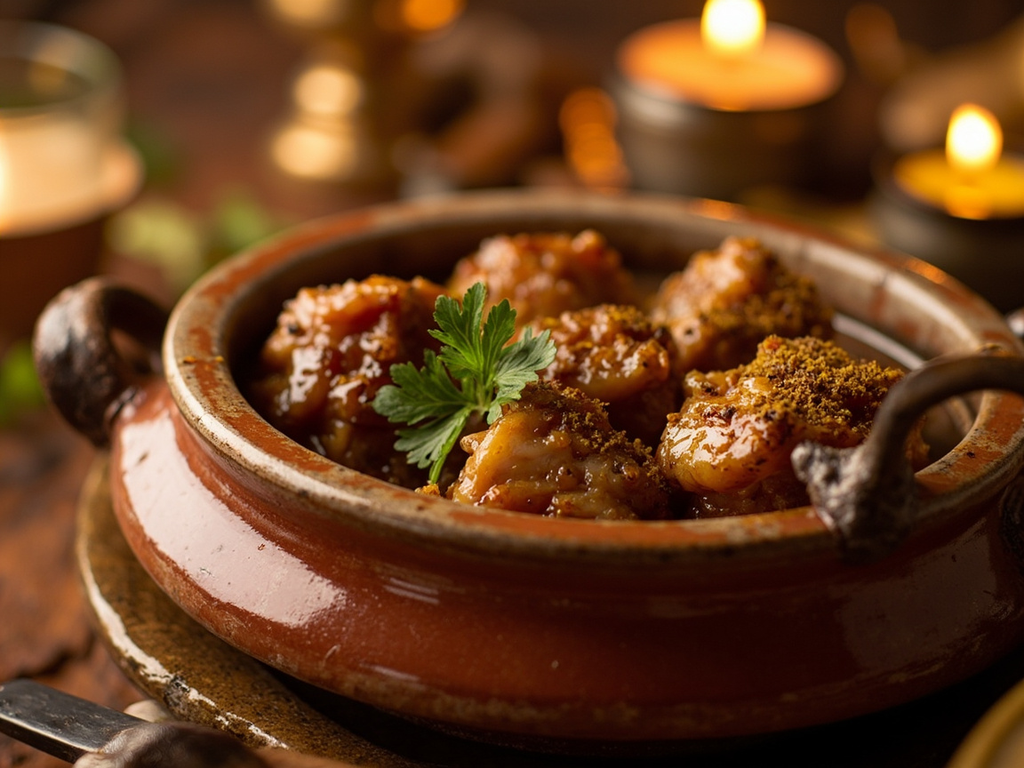
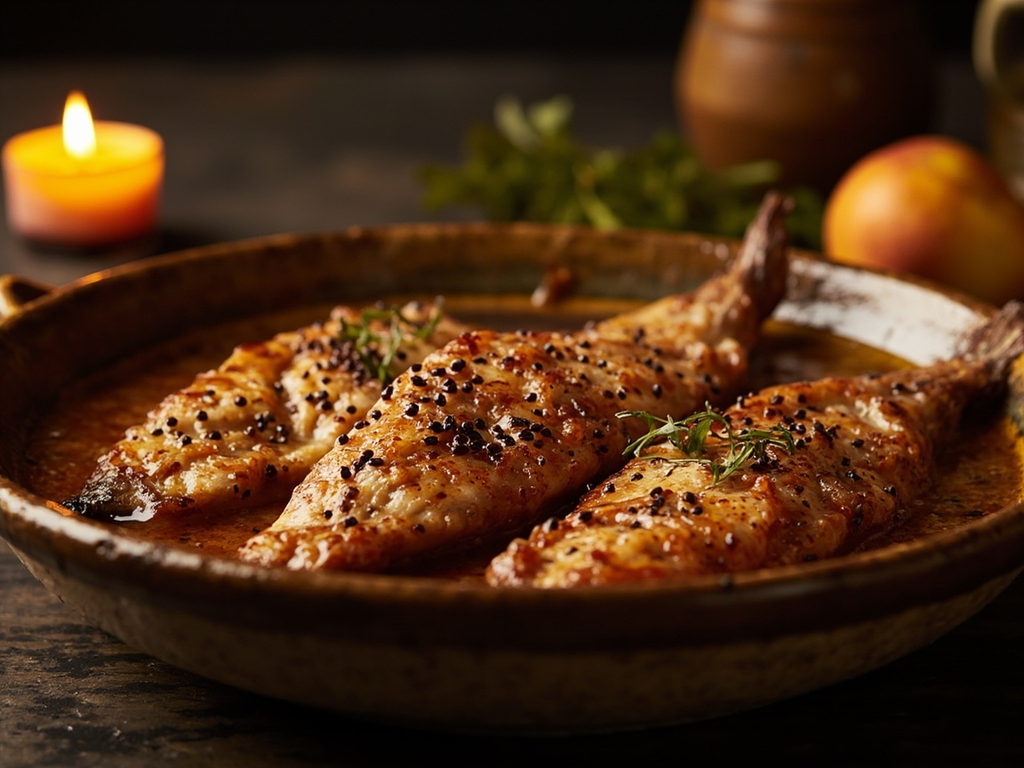
Red mullet fillets gently cooked in a sauce where salty garum answers honey and wine, perfumed with pepper and herbs. The salty-sweet-umami balance typical of great Roman cuisine, as recorded in the book of Apicius.
At the emperor's table, one does not serve a fish as one lines up bricks: balance is needed. I want the garum for depth, the honey for roundness, the wine for structure—three forces that counterbalance each other like the thrusts of a vault. Too much salt and the work collapses; too much honey and it sags. A shower of pepper on top, and I present the steaming dish: a morsel worthy of a Forum, thought out as one thinks out a framework.
- •Red mullet (or other rock fish) — a few pieces (noble product)
- •Garum (liquamen) — a dash (umami salt)
- •Honey — a spoonful (sweetness)
- •White wine and passum (raisin wine) — a little of each (sauce)
- •Pepper, lovage, oregano — to taste (spices and herbs)
- •Olive oil — a drizzle (cooking)
Patina of Red Mullet with Garum and Honey
Red mullet fillets gently cooked in a sauce where salty garum answers honey and wine, perfumed with pepper and herbs. The salty-sweet-umami balance typical of great Roman cuisine, as recorded in the book of Apicius.
Why this dish? Architect of Trajan, Apollodorus frequented the imperial table and the banquets of high Roman society. Mediterranean fish, sharpened with garum and sweetened with honey, was a prestige dish there—the salty-sweet contrast that the elite loved, served in finest tableware.
At the emperor's table, one does not serve a fish as one lines up bricks: balance is needed. I want the garum for depth, the honey for roundness, the wine for structure—three forces that counterbalance each other like the thrusts of a vault. Too much salt and the work collapses; too much honey and it sags. A shower of pepper on top, and I present the steaming dish: a morsel worthy of a Forum, thought out as one thinks out a framework.
Ingredients (period version)
- Red mullet (or other rock fish) — a few pieces (noble product)
- Garum (liquamen) — a dash (umami salt)
- Honey — a spoonful (sweetness)
- White wine and passum (raisin wine) — a little of each (sauce)
- Pepper, lovage, oregano — to taste (spices and herbs)
- Olive oil — a drizzle (cooking)
Ingredients
- Red mullet fillets (or whole red mullet) — 4 to 6 fillets (noble product)
- Fish sauce (nuoc-mam or colatura, failing garum) — 1 tbsp (umami salt)
- Liquid honey — 1 tbsp (sweetness)
- Dry white wine — 100 ml (sauce)
- Sweet wine (like muscat) — 3 tbsp (sweet roundness)
- Ground black pepper — 1/2 tsp (spice)
- Dried oregano + a little chopped celery stalk (in place of lovage) — 1 tsp (herbs)
- Olive oil — 2 tbsp (cooking)
Method
- In a pan, heat the oil and briefly sear the red mullet fillets skin-side down, then set aside.
- Deglaze with the white wine and sweet wine, add the fish sauce and honey.
- Let reduce for 3-4 minutes to obtain a coating sauce, season generously with pepper and add the herbs.
- Return the fillets to the sauce, cover, and cook over low heat for 3-4 minutes until just cooked through.
- Serve immediately, napped with sauce, in a warm serving dish.
How it was made : The recipe collection attributed to Apicius (De re coquinaria) abounds in fish "patinae" where liquamen, honey, and cooked wine (defrutum/passum) mingle. Wealthy Romans adored these salty-sweet combinations, unthinkable to us but a sign of refinement at the time.
The contemporary twist : A grating of bitter orange zest over the final service awakens the sauce—a nod to the citrus that Rome was just beginning to know.
Sources : Apicius, De re coquinaria, Book IV (Patinae) and Book X (fish)
Apollodorus of Damascus · Charactorium