 flip
flipRoasted wild boar shoulder with honey and juniper berries
Roasted wild boar shoulder with honey and juniper berries
Why this dish? After the annihilation of Varus's three legions in 9 AD, Germanic chieftains gathered for great banquets where whole game was roasted. Arminius, the war leader crowned with glory, presided over these feasts where hunting meat sealed alliances between tribes.
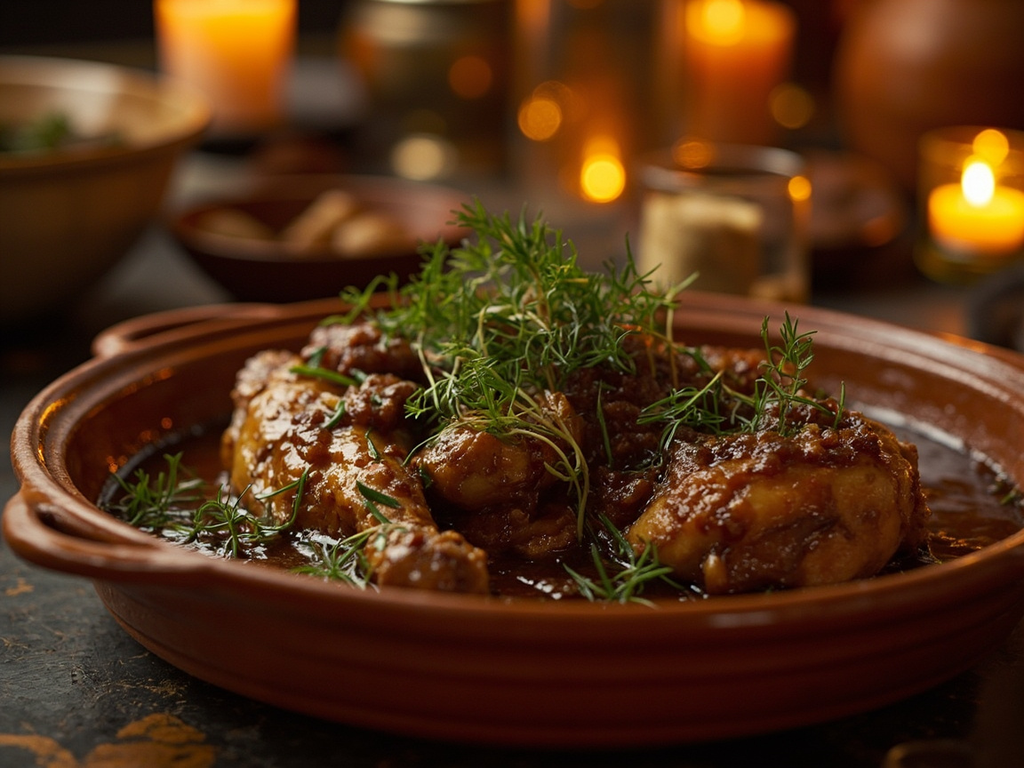
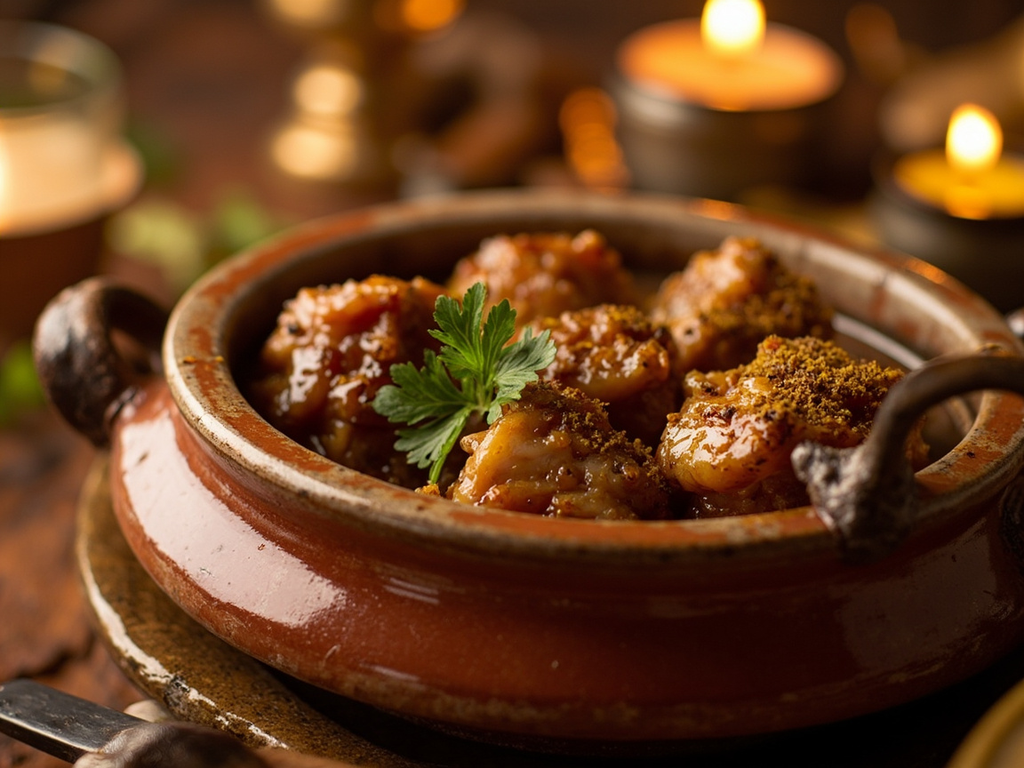
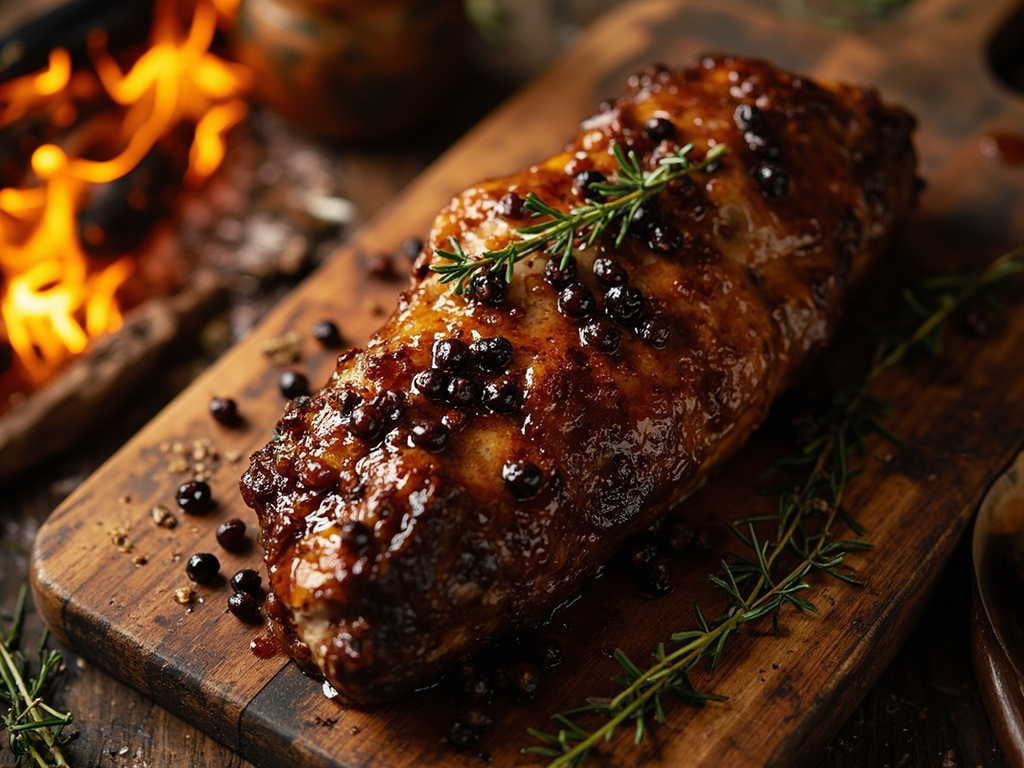
A wild boar shoulder slow-roasted near the embers, basted with honey and rubbed with crushed juniper berries. Smoky meat, caramelized crust, resinous scent of the Germanic forests.
Tonight we feast! Varus and his eagles sleep under our trees, and we eat the beast the forest gave us. Look at this boar: I turned it myself near the embers, rubbed with juniper as my fathers did, and glazed with honey from our hives. Tear your share with your fingers, drain your horn in one gulp, and sing with my warriors — a man who has won back his freedom has the right to feast like a king!
- •Wild boar shoulder — one quarter (centerpiece)
- •Wild honey — a ladleful (glaze, sugar)
- •Juniper berries — a handful, crushed (resinous flavor)
- •Salt — as much as available (seasoning)
- •Forest herbs (wild thyme, berries) — as needed (flavor)
Roasted wild boar shoulder with honey and juniper berries
A wild boar shoulder slow-roasted near the embers, basted with honey and rubbed with crushed juniper berries. Smoky meat, caramelized crust, resinous scent of the Germanic forests.
Why this dish? After the annihilation of Varus's three legions in 9 AD, Germanic chieftains gathered for great banquets where whole game was roasted. Arminius, the war leader crowned with glory, presided over these feasts where hunting meat sealed alliances between tribes.
Tonight we feast! Varus and his eagles sleep under our trees, and we eat the beast the forest gave us. Look at this boar: I turned it myself near the embers, rubbed with juniper as my fathers did, and glazed with honey from our hives. Tear your share with your fingers, drain your horn in one gulp, and sing with my warriors — a man who has won back his freedom has the right to feast like a king!
Ingredients (period version)
- Wild boar shoulder — one quarter (centerpiece)
- Wild honey — a ladleful (glaze, sugar)
- Juniper berries — a handful, crushed (resinous flavor)
- Salt — as much as available (seasoning)
- Forest herbs (wild thyme, berries) — as needed (flavor)
Ingredients
- Wild boar shoulder (or pork shoulder as substitute) — 1.5 kg (centerpiece)
- Honey — 3 tbsp (caramelized glaze)
- Juniper berries — 2 tbsp, crushed (resinous flavor)
- Thyme — a few sprigs (flavor)
- Coarse salt — 2 tsp (seasoning)
- Lard or oil — 2 tbsp (cooking fat)
Method
- Rub the meat with salt, crushed juniper, and thyme; let rest for a few hours (ideally overnight in the fridge).
- Sear the meat in hot lard on all sides.
- Roast at 150 °C (or cook near gentle embers) for 2.5 to 3 hours, basting regularly with the juices.
- During the last half hour, brush with honey several times to form a caramelized, shiny crust.
- Let rest 15 minutes, then slice or let tear by hand.
How it was made : Game — boar, deer, aurochs — held a central place in Germanic diet and prestige: hunting was an honor reserved for free men. Whole pieces were roasted on spits or directly over embers. Honey, the only source of sugar, and juniper berries, abundant in northern forests, flavored the meats. Banquets cemented bonds of loyalty between a chief and his warriors.
The contemporary twist : Presented on a large wooden board with a few fresh berries and a drizzle of warm honey, as a sharing piece: the "Teutoburg banquet" version for a friends' table.
Sources : Tacitus, Germania, ch. 5 and 22 · Archaeozoological studies of Iron Age Germanic sites
Arminius · Charactorium